
Dates: 15 August, 2010 to 25 August, 2010
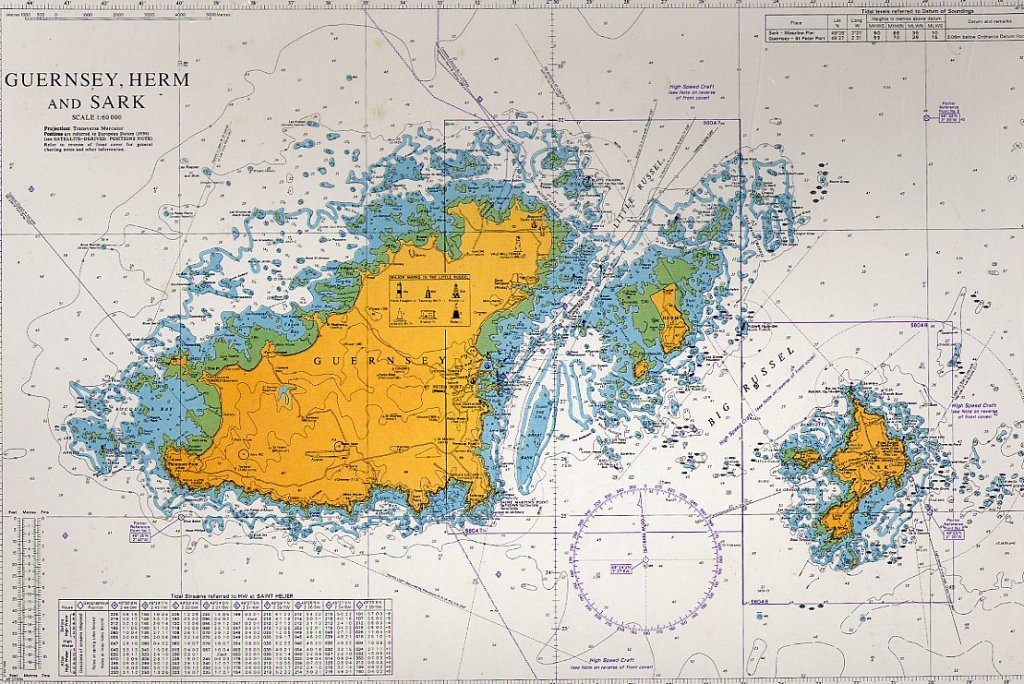
Guernsey was a chance to change down a gear after last year’s annual vacation which took us across the USA from west coast to east coast. This year in Guernsey we didn’t just go from one coast to another we managed to go around the island and off it as well with day trips to Herm and Sark.
Sunday Service
Sunday, 15 August, 2010 – London, UK
Bags packed by Sue. Doors locked by Tony. Excitement and laughter by Josh and Gracie! Airport transfer by Canon Cars. We’re flying out from London Gatwick to Guernsey with Flybe on the BE909 which departs at 11:50, hopefully landing at Guernsey an hour later at 12:50.
Flying in with Flybe
Sunday, 15 August, 2010 – St Peter Port, Channel Islands, UK
Flight of fancy
As we swoop down to land our plane narrowly misses the new terminal building. With rapid reflexes the captain instructs the cabin crew to deploy the duty free trolley and issue the passengers with a complimentary drink and snack. Of course I have a dry martini with a black olive and a small bag of pretzels… The next thing I hear is: “…cabin crew, doors to manual…”
It was an uneventful flight and uneventful landing, so much so that I fell asleep – in the holiday mood already – getting ready for sleepy Guernsey. I thought we’d be arriving in about 1950, the year rather than the time, but it’s 12:50 and we’re in the recently built terminal building. It looks like a glass and metal cathedral – well it is Sunday. Reunited with our bags we meet with our taxi driver who takes us to Les Rocquettes Hotel which is on Les Gravees, St Peter Port, and less than 15 minutes away.
Les Rocquettes
Within a few minutes of arriving at Les Rocquettes Hotel we are checked in and heading up to our family room. It’s compact with a small double bed and bunk bed for Josh and Grace.
Built in 1765 as a country mansion it was transformed into a hotel in 1946. The property has been developed and extended to provide additional accommodation and facilities, including an indoor swimming pool and fitness room. Unfortunately the character of the original property has been compromised and the additions, at least to me, are not particularly sympathetic or attractive. There is a bar, the Oak Bar, attached to the hotel which is open to the public and probably accounts for many of the cars in the car park with local plates.
Speaking of plates makes me think of dinner which we decide to take in the hotel restaurant. There’s a good choice on the Table d’Hôte menu, but it will certainly get expensive if we eat in here every evening. After dinner we take a short walk, just around the block really, before turning in for bed and looking forward to exploring St Peter Port tomorrow.
Port and Castle
Monday, 16 August, 2010 – St Peter Port, Channel Islands, UK
Bailiwick Breakfast
After a sound night’s sleep we’re ready for breakfast. The hotel’s breakfast room is well laid out and we enjoy a good full English breakfast with equally good service.
Walking to St Peter Port
Our plan for the day is to explore St Peter Port, but first we have to get there. It’s a fifteen minute walk downhill, but we’re not in any hurry. The weather is fine, bright and warm enough to walk without a coat. The harbour is picturesque and full of old fashioned charm as well as a variety of both commercial and pleasure boats. There are yachts, fishing boats as well as ferries which ply between the mainland (England and France) and the islands of Herm and Sark.
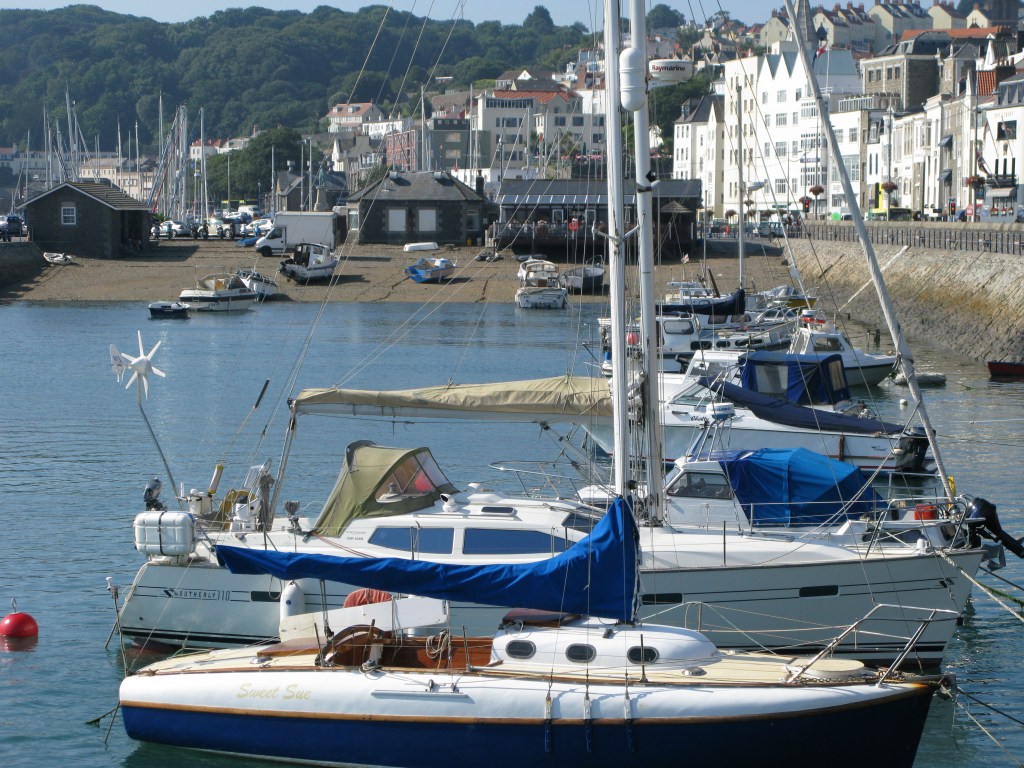
Yachts – St Peter Port, Guernsey 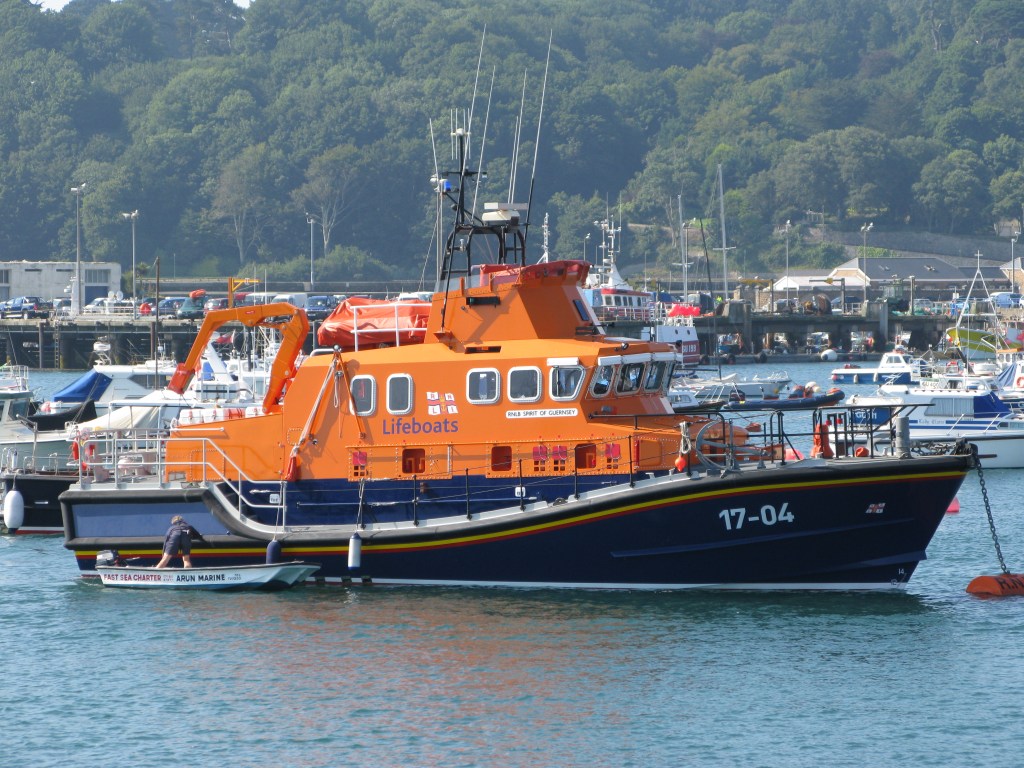
Lifeboat – St Peter Port, Guernsey 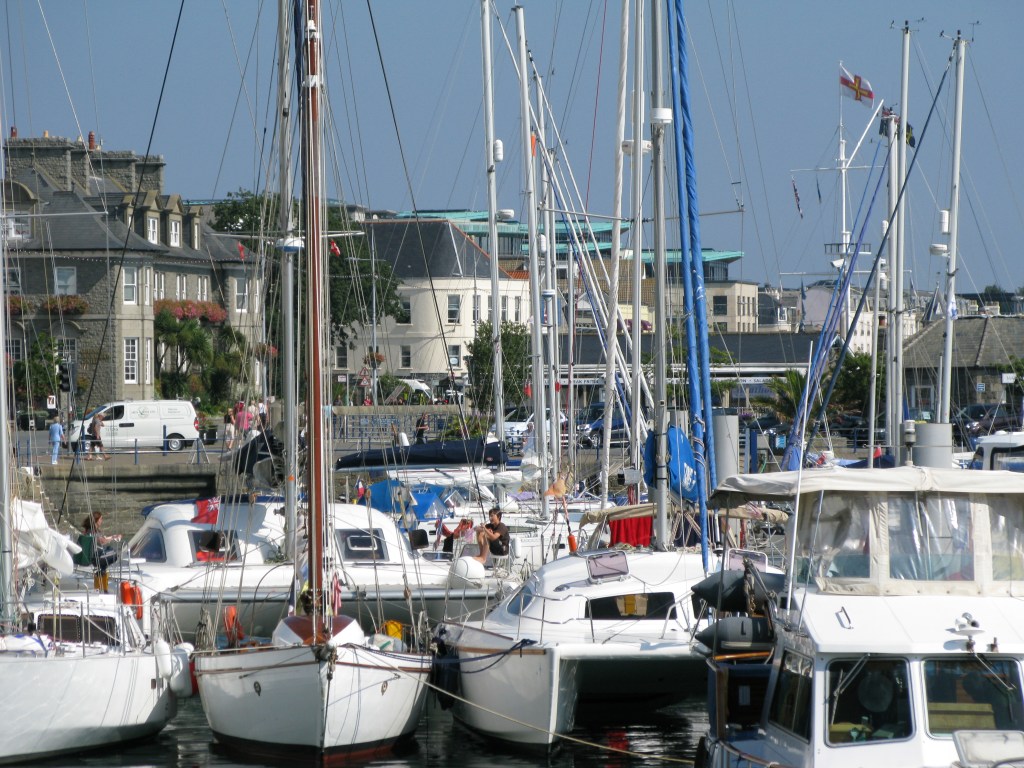
Yachts – St Peter Port, Guernsey 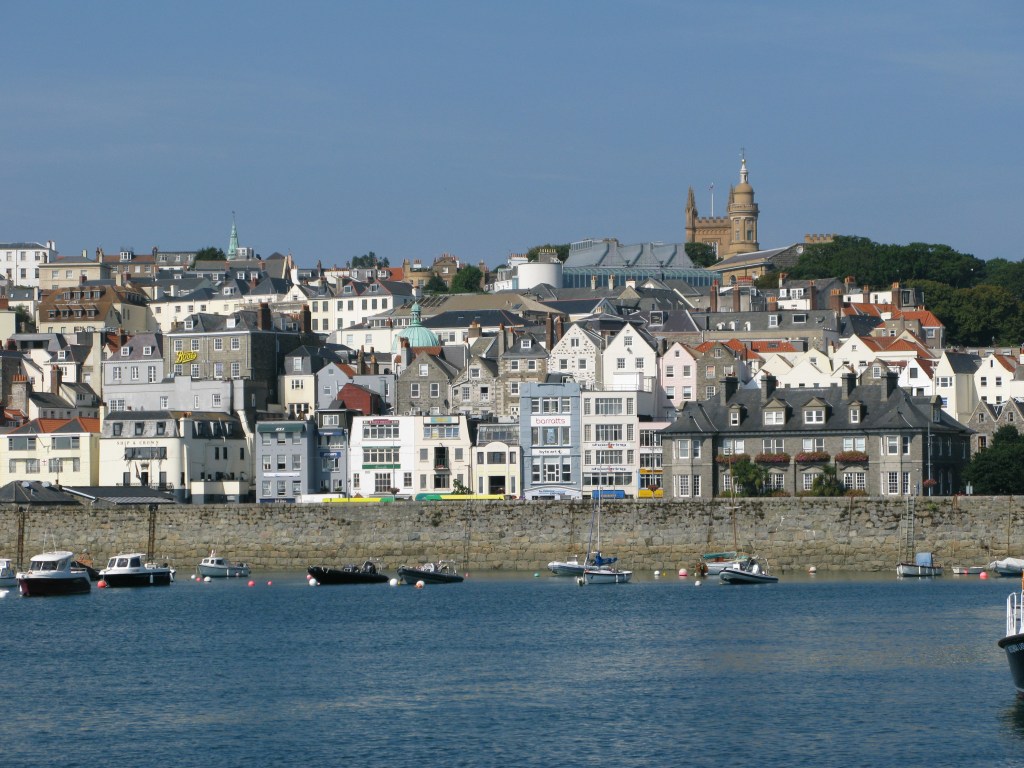
St Peter Port, Guernsey
Walking along Victoria Pier we look back at St Peter Port. Set on the hillside it has steep narrow streets and steps, which so far we’ve only walked down!
We wander back into St Peter Port exploring the high street as well as some of the narrow lanes. It’s just after eleven so we decide that we need caffeine and wifi, we find both in Costa Coffee with comfortable sofas and a view.
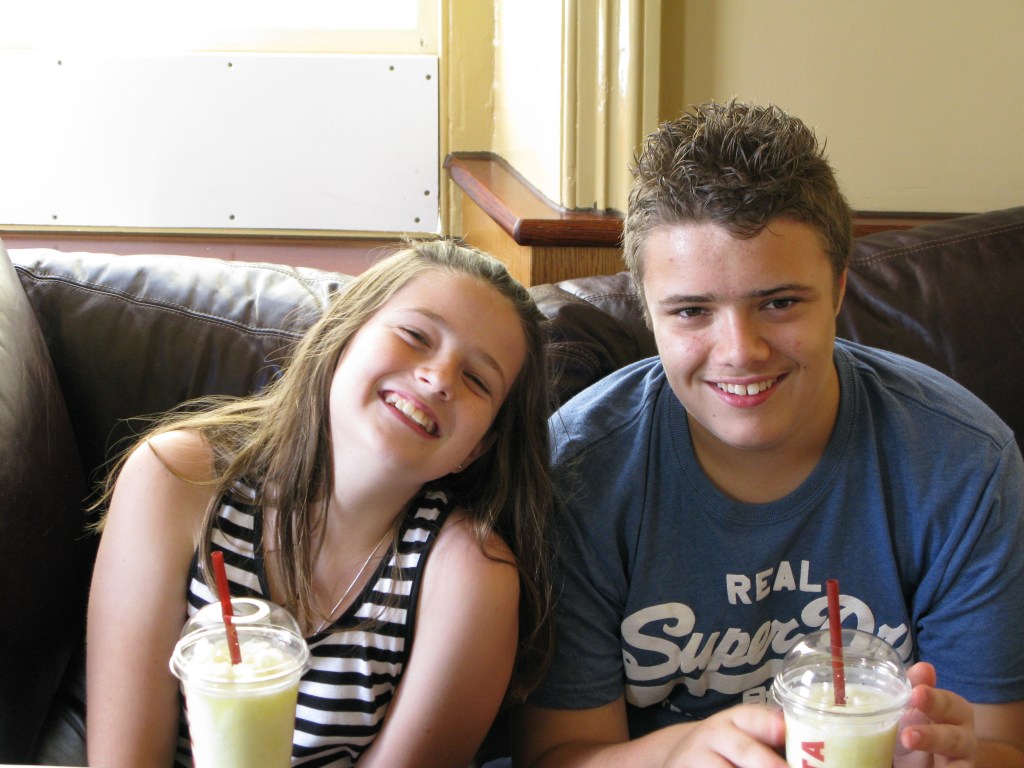
Grace & Josh – Costa Coffee – St Peter Port 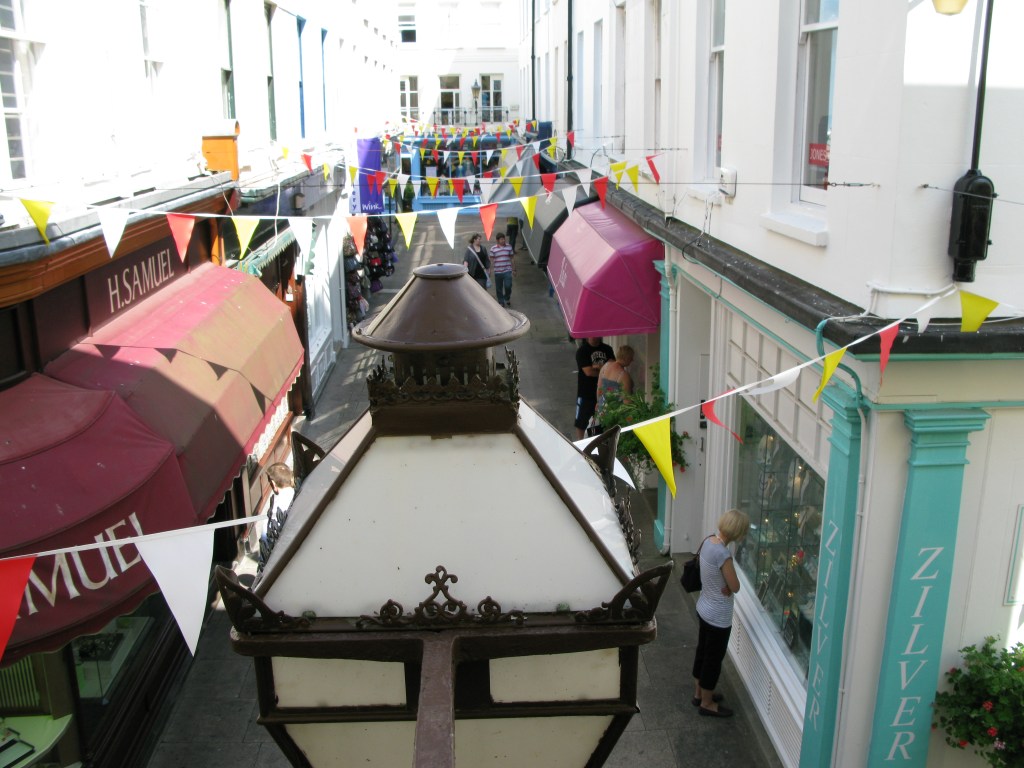
View from Costa – St Peter Port, Guernsey
After coffee we head back to the harbour to continue along the esplanade and onto Castle Pier. At the end of the pier we look across the Channel from the base of the Castle Pier Lighthouse towards Jethou, Herm and Sark beyond. After watching one of the Condor Ferries leaving the harbour we make our way to Castle Cornet.
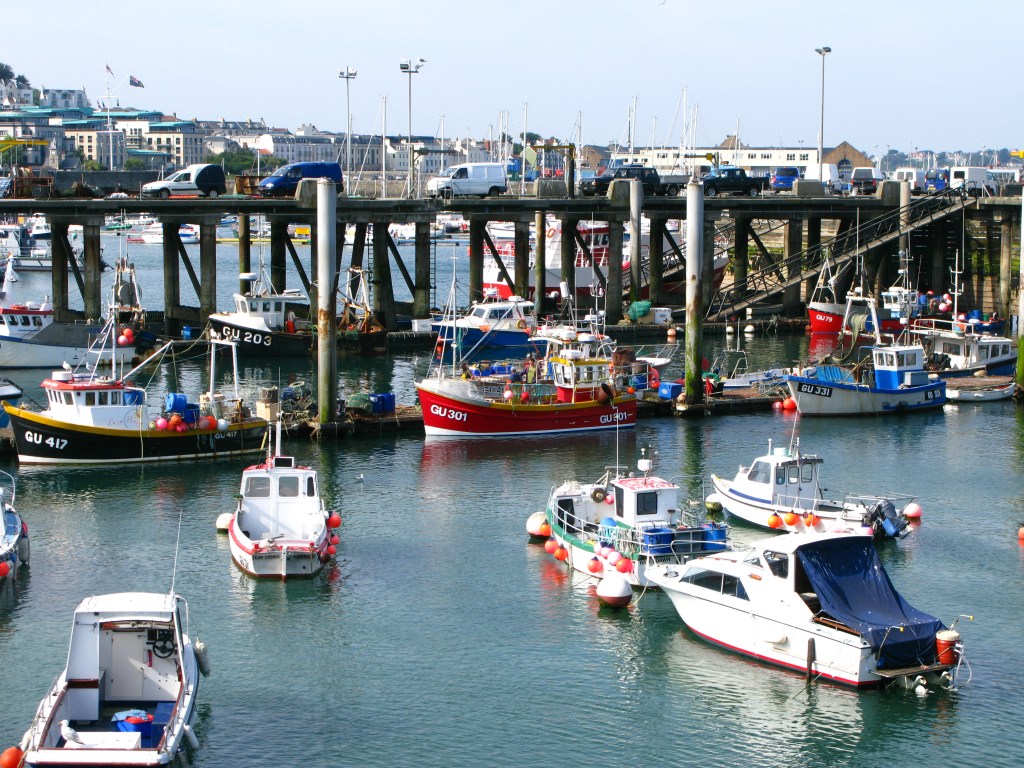
Fishing boats – St Peter Port, Guernsey 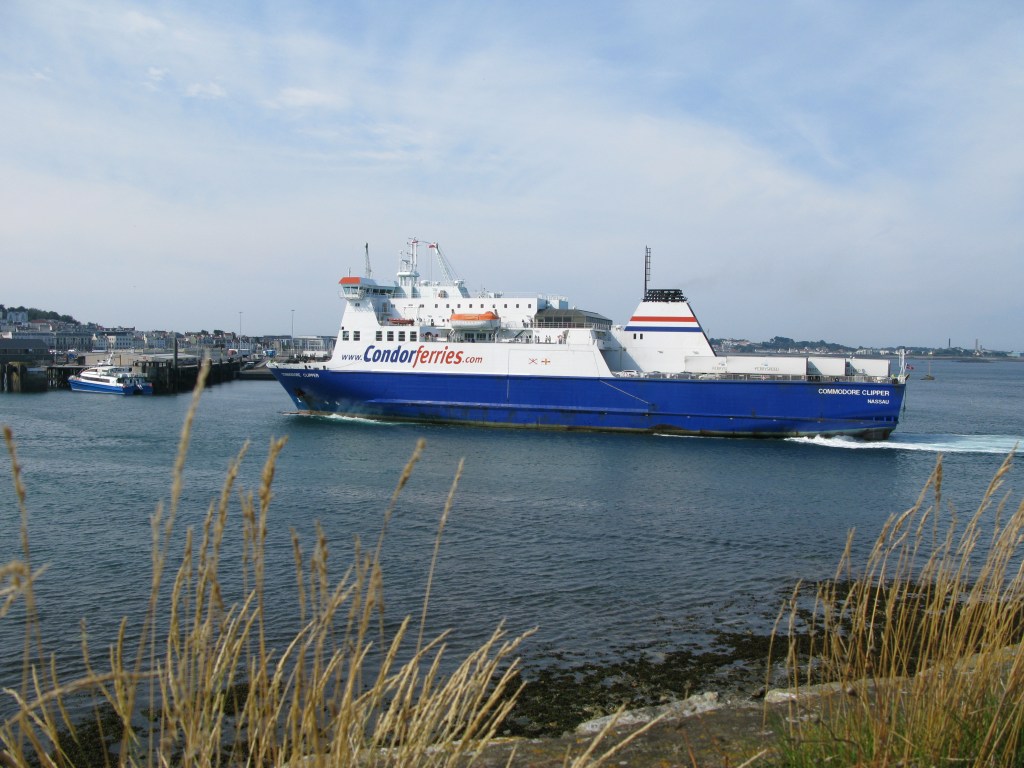
Condor Ferry – St Peter Port, Guernsey
Castle Cornet
The castle houses not one but five museums, so we buy our tickets and begin a walk through the the castle’s 800 year history. There’s a variety of artefacts, some of which are displayed in “lifelike dioramas” – some are more convincing and lifelike than others – the most successful are those which are able to exploit the quality of the setting in order to maximise the impact of the objects. There were ample text panels which were generally well sited with well written and accessible content.
The castle itself is as interesting as the museums it houses. Over 800 years the castle has witnessed many comings and goings and has itself been subject to many changes and additions.
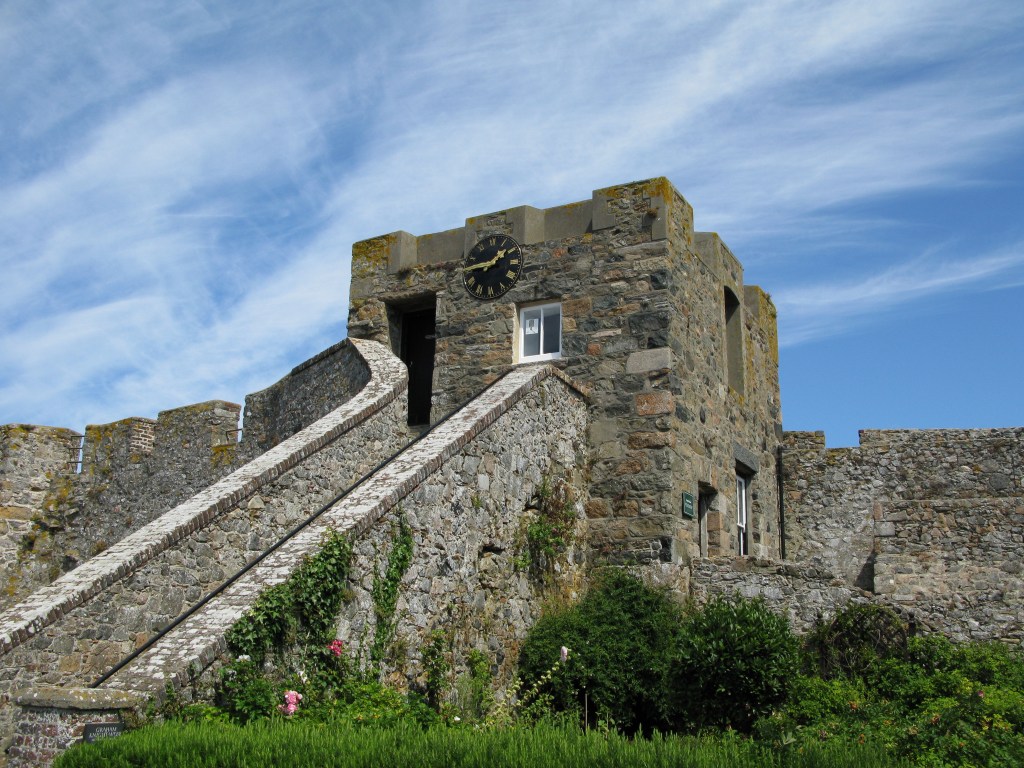
Town Prison Castle Cornet, St Peter Port 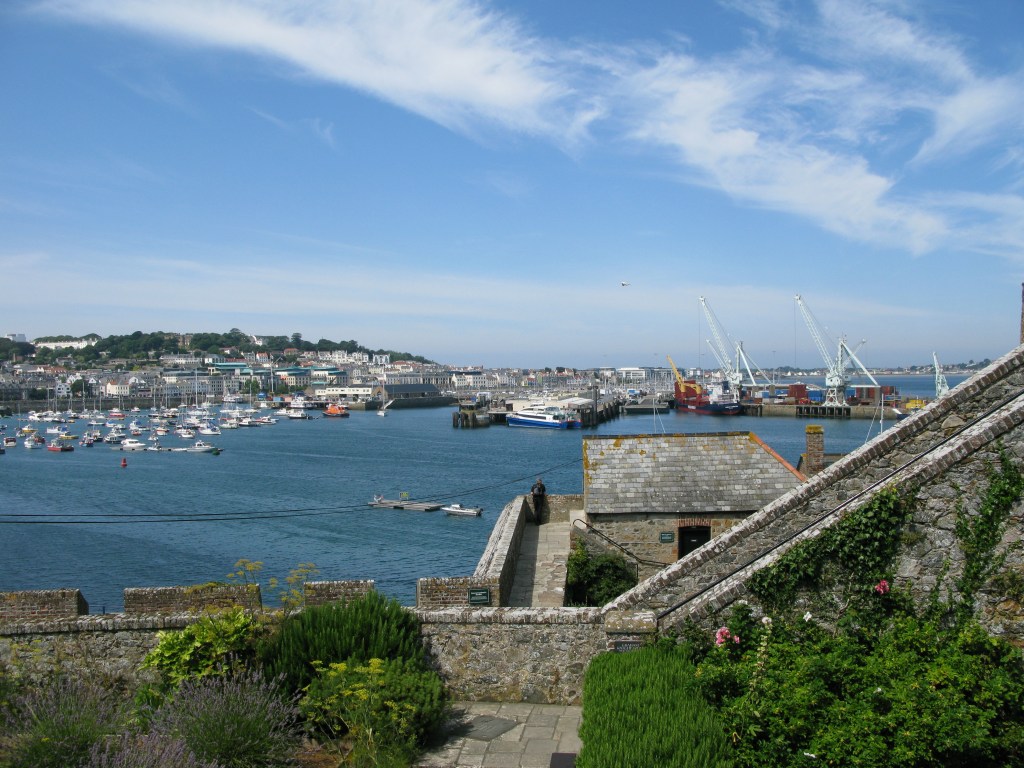
View from Castle Cornet – St Peter Port 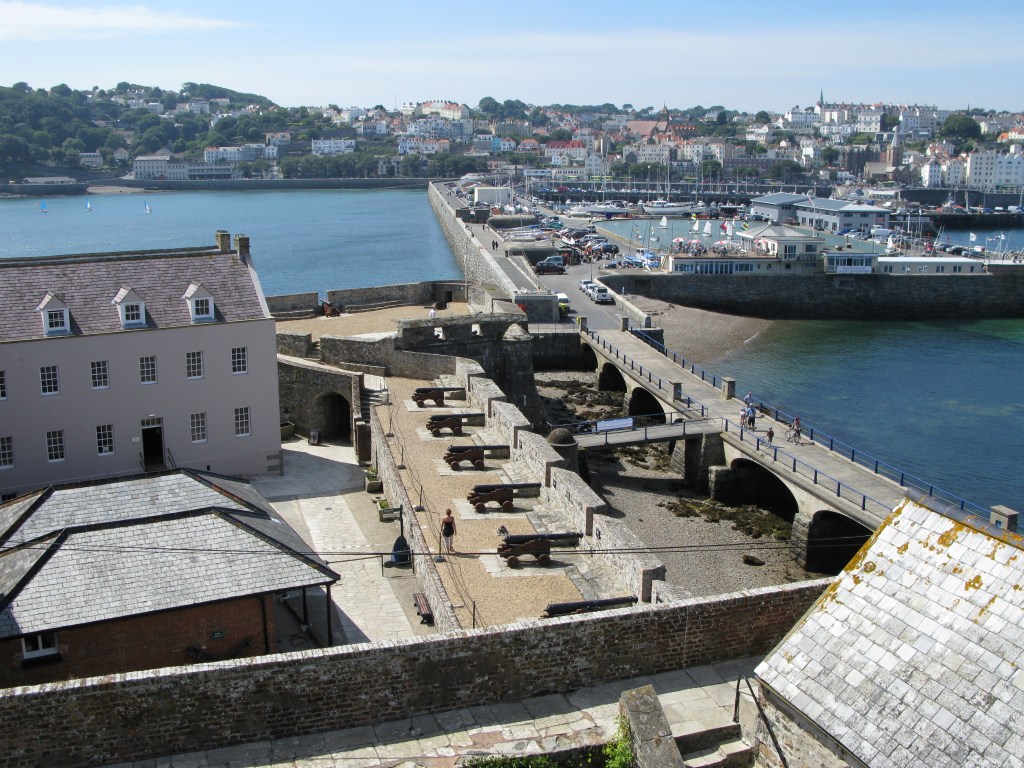
View of Castle Cornet – St Peter Port 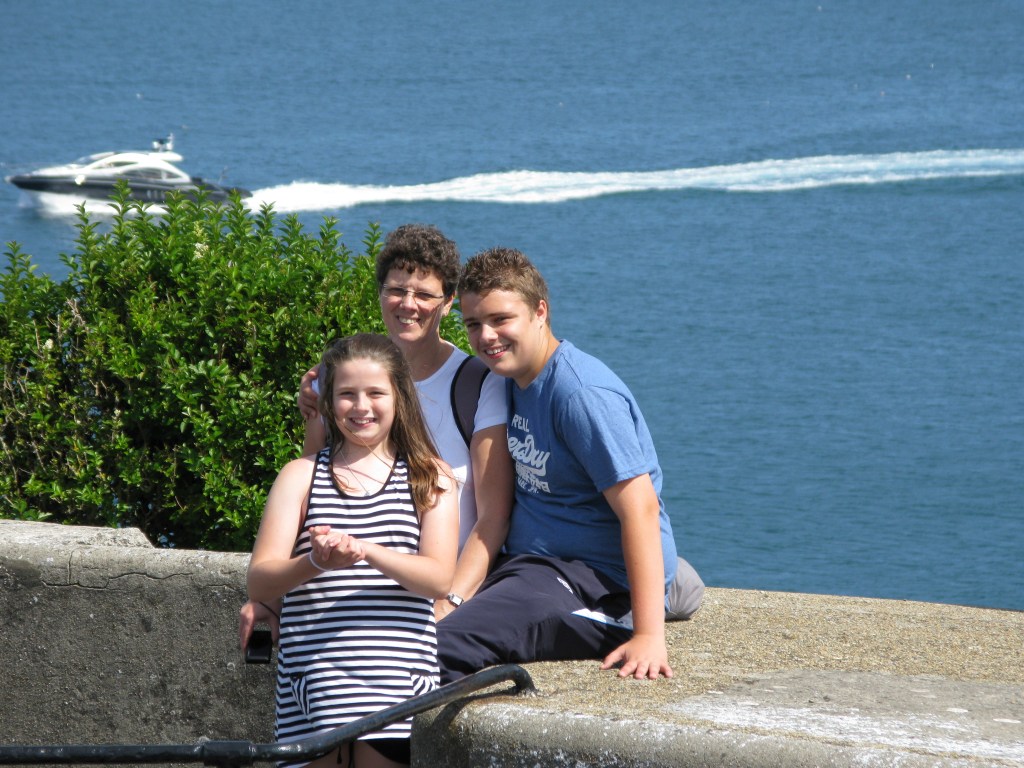
Grace, Sue & Josh – Castle Cornet 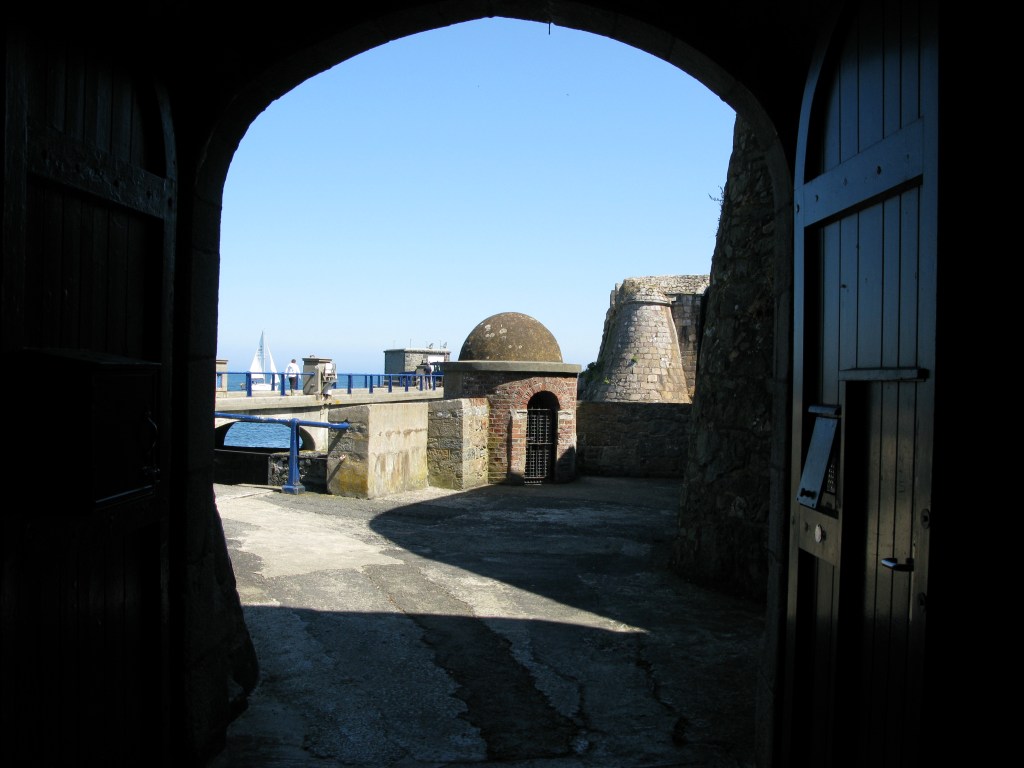
Castle Cornet – St Peter Port 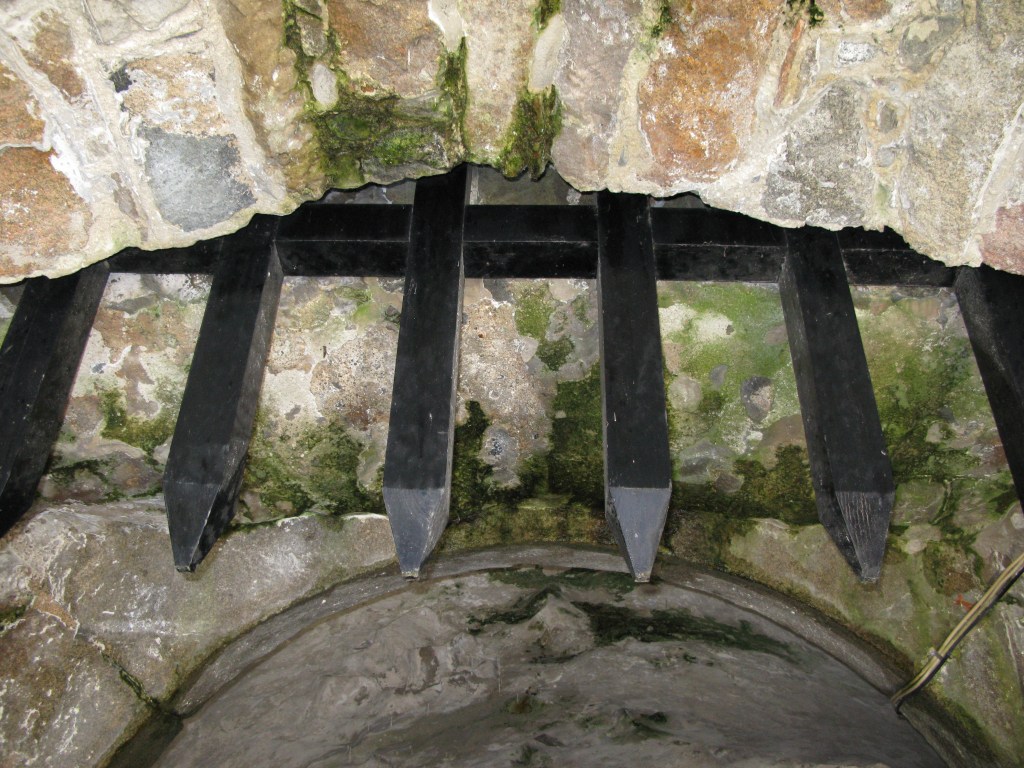
Castle Cornet – St Peter Port 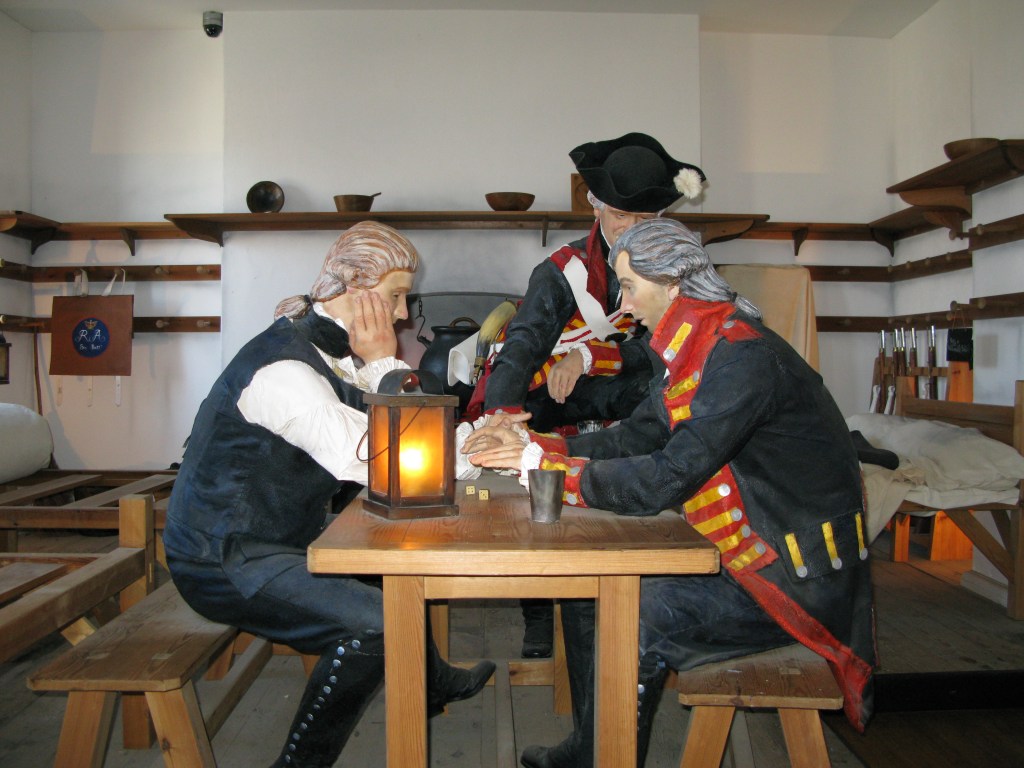
Castle Cornet – St Peter Port
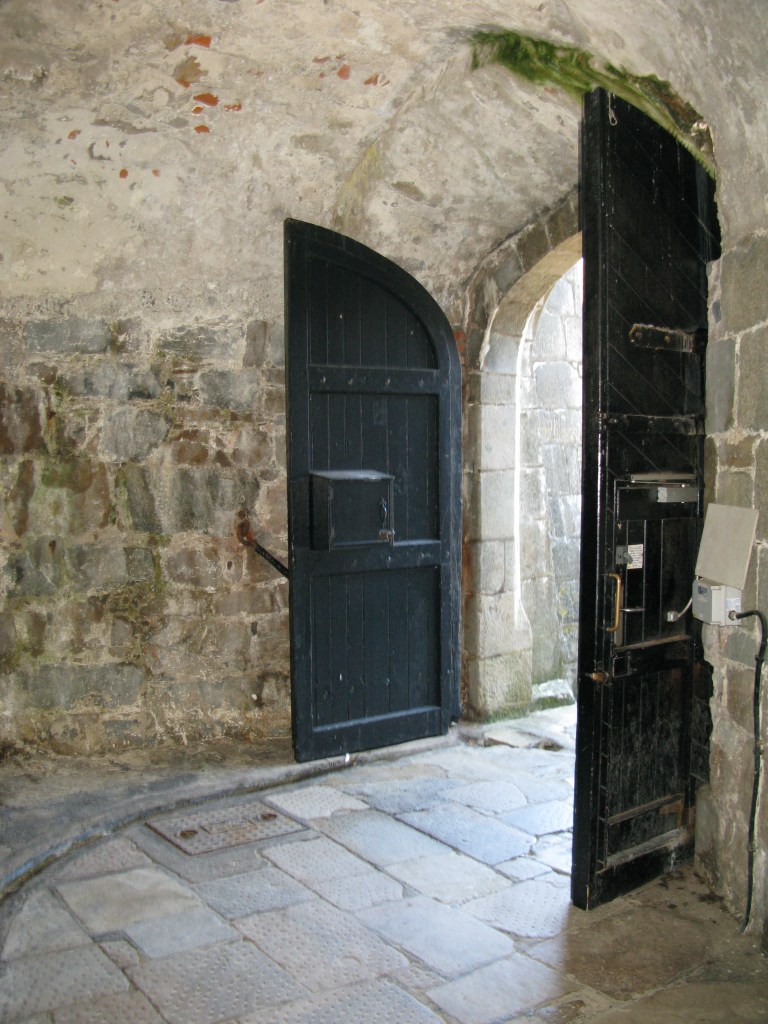
Castle Cornet – St Peter Port 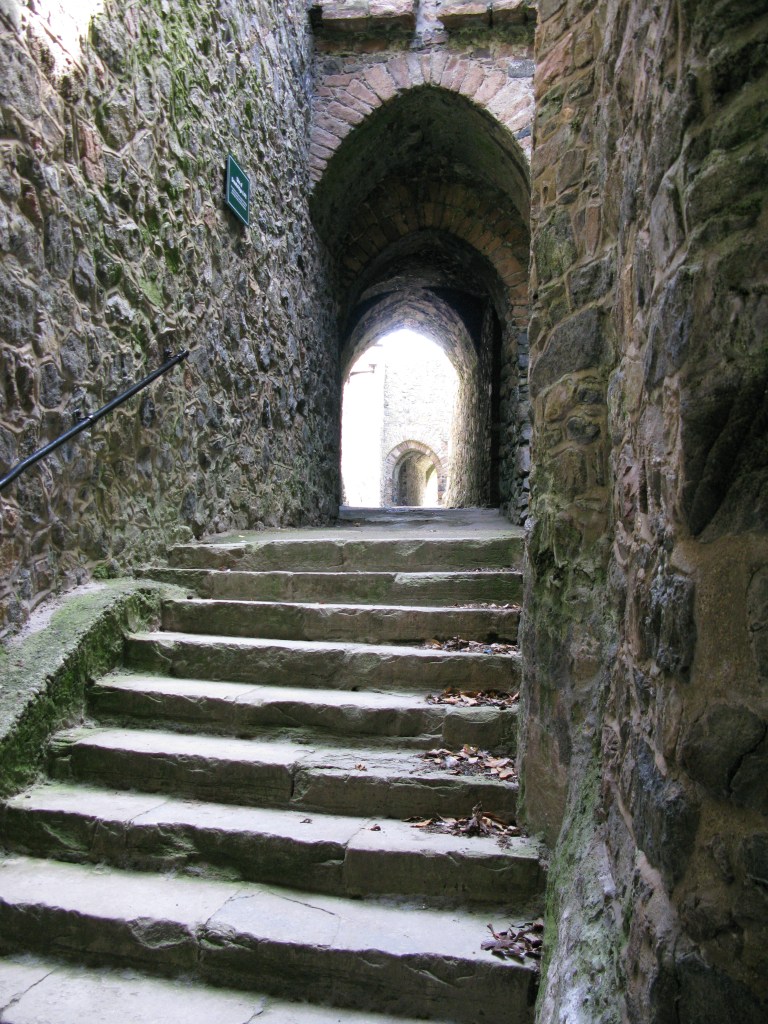
Prisoners’ Walk Castle Cornet – St Peter Por 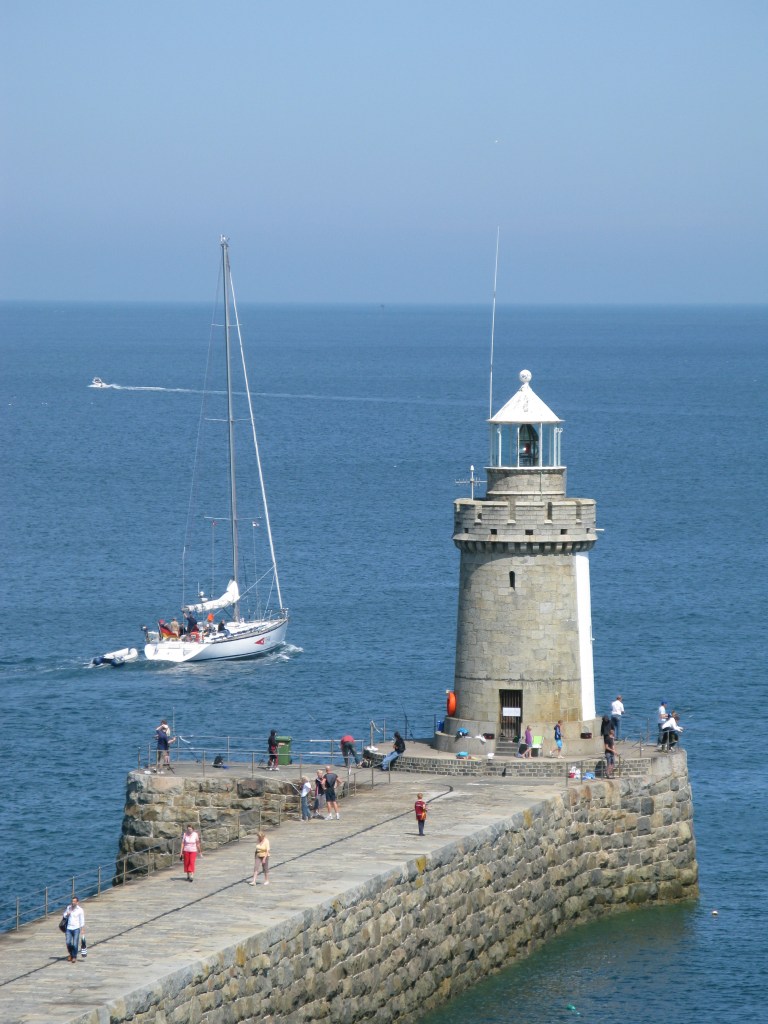
View from Castle Cornet – St Peter Port 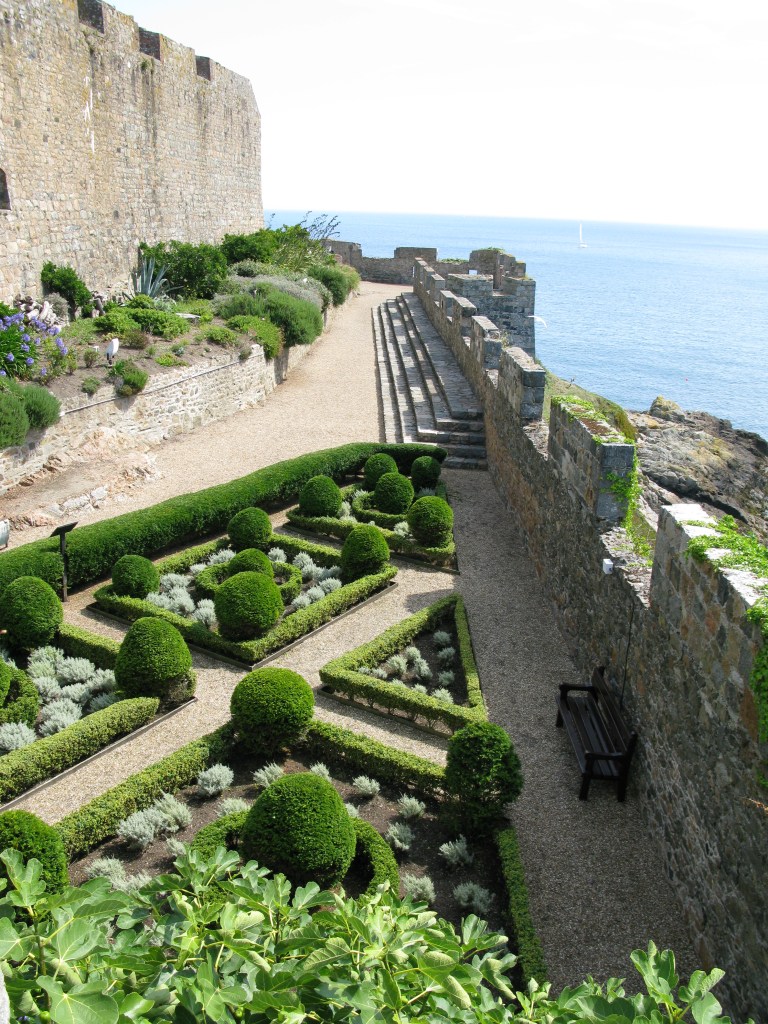
Castle Cornet – St Peter Port
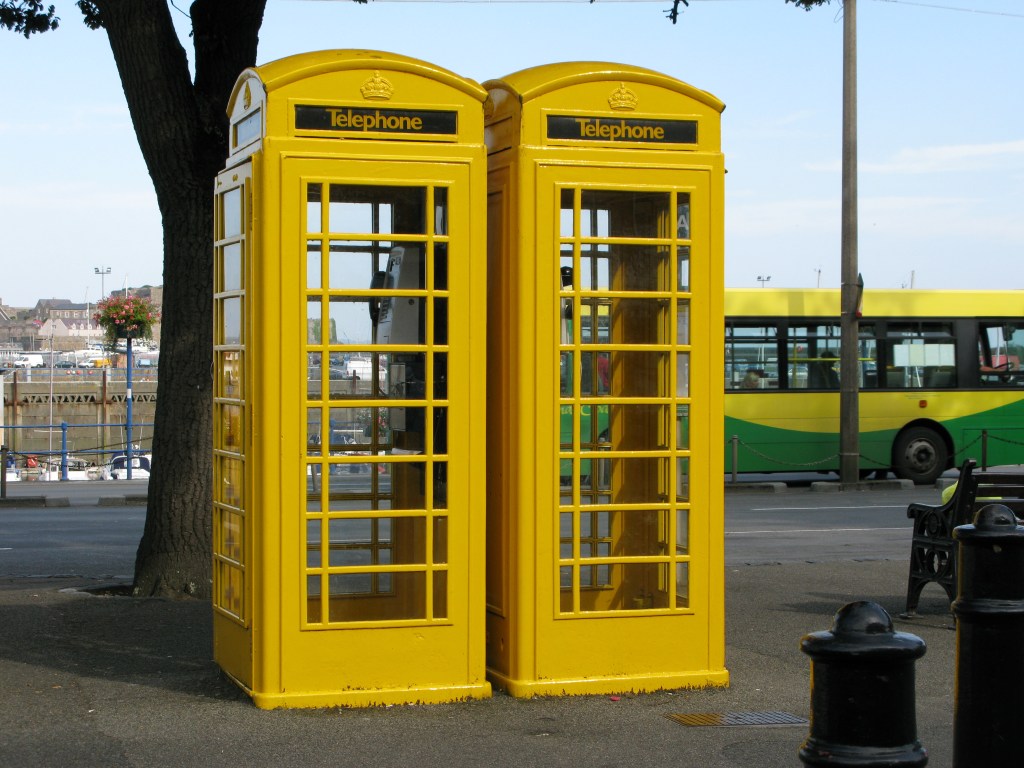
After leaving the castle we follow Castle Cornet Pier back towards the bus station where we take a couple of photos of the island’s yellow telephone boxes.
The colours of communication
The post and telephone boxes across the island are painted blue, but last year (2009) the telephone boxes at the bus station were painted yellow just like they used to be when Guernsey Telecoms was state-owned.
Around the island
Tuesday, 17 August, 2010 – St Peter Port, Channel Islands, UK
Island Tours
Unfortunately the weather forecast for the day does not look promising so its a good job that our island tour bus isn’t open top. It isn’t even a bus – it’s a coach.
Our driver and tour guide – “Jones the coach” – originally hails from the Valleys. He really does come from Wales, but we made the name up. Anyway, he provides a constant commentary, directing our attention to points of interest (some more interesting than others) as we drive along. The only problem is the rain, which makes it difficult to see out of the windows, especially as they have started to steam up.
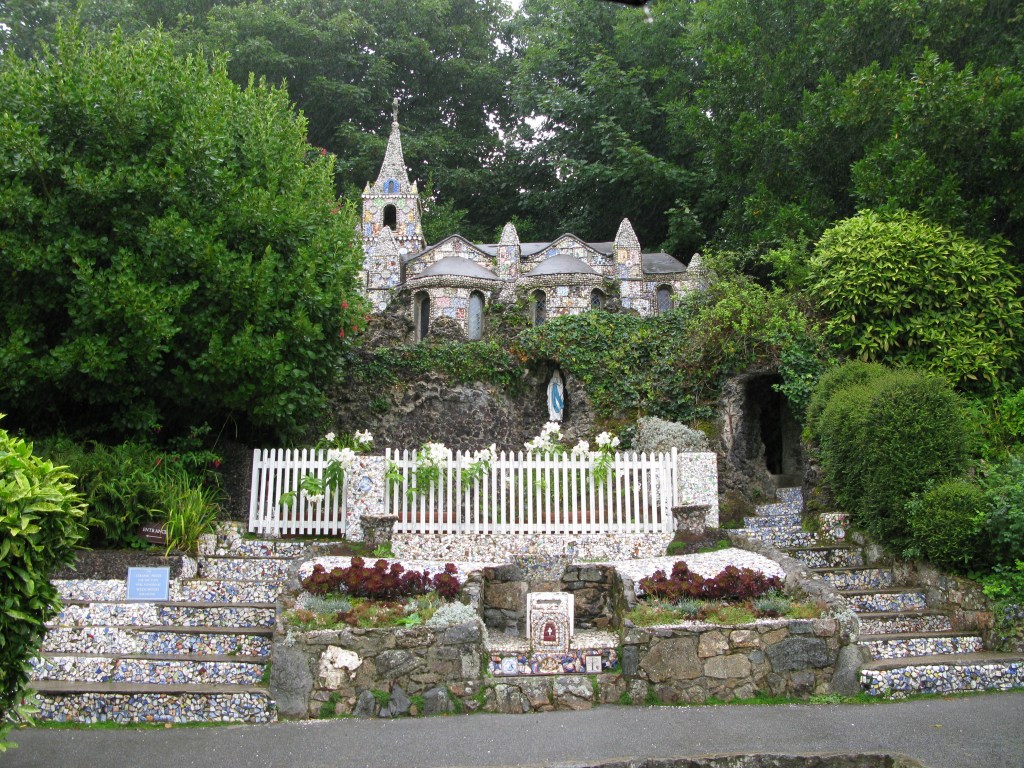
Anyway we stop of at a number of places of (greater or lesser) interest on our island tour including: the Little Chapel or Shell Church, Fort Grey and the Freesia Centre.
Little Chapel – Shell Church
Little Chapel – Les Vauxbelets, Guernsey 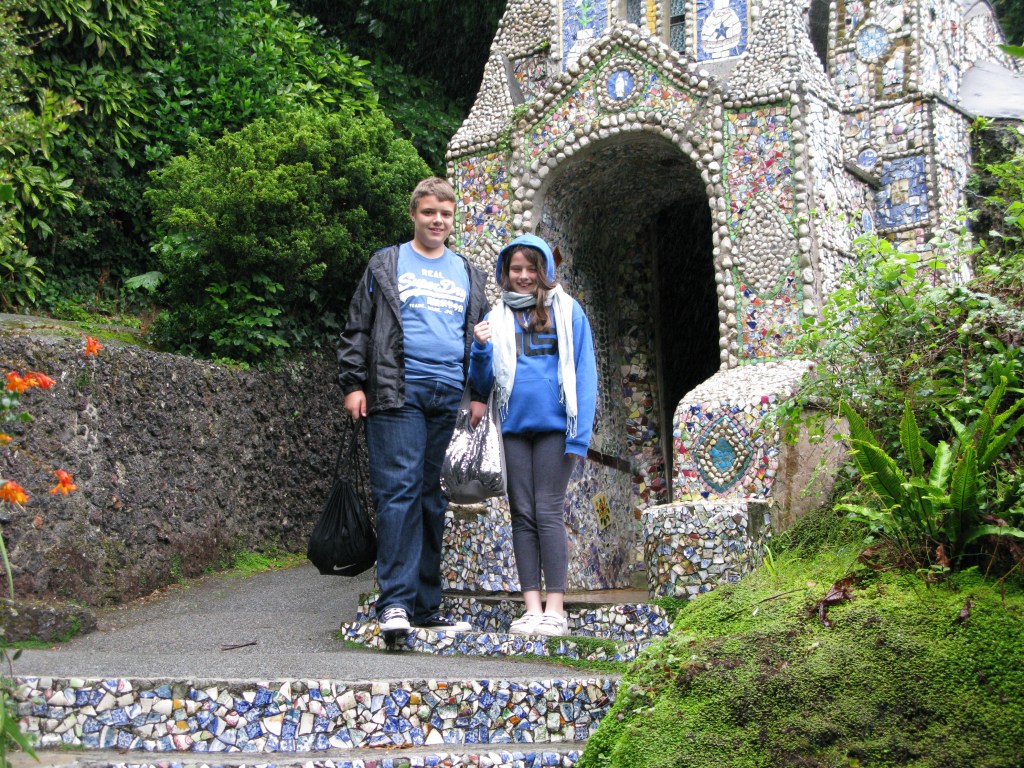
Josh & Grace – Little Chapel, Les Vauxbelets
It’s raining quite heavily now and so most of the coach party think it would be a good idea to take refuge inside the Little Chapel. The good news is that we are probably the youngest in the group and make it into the chapel first, the bad news is that the chapel only has room for about eight people and so it becomes somewhat congested.
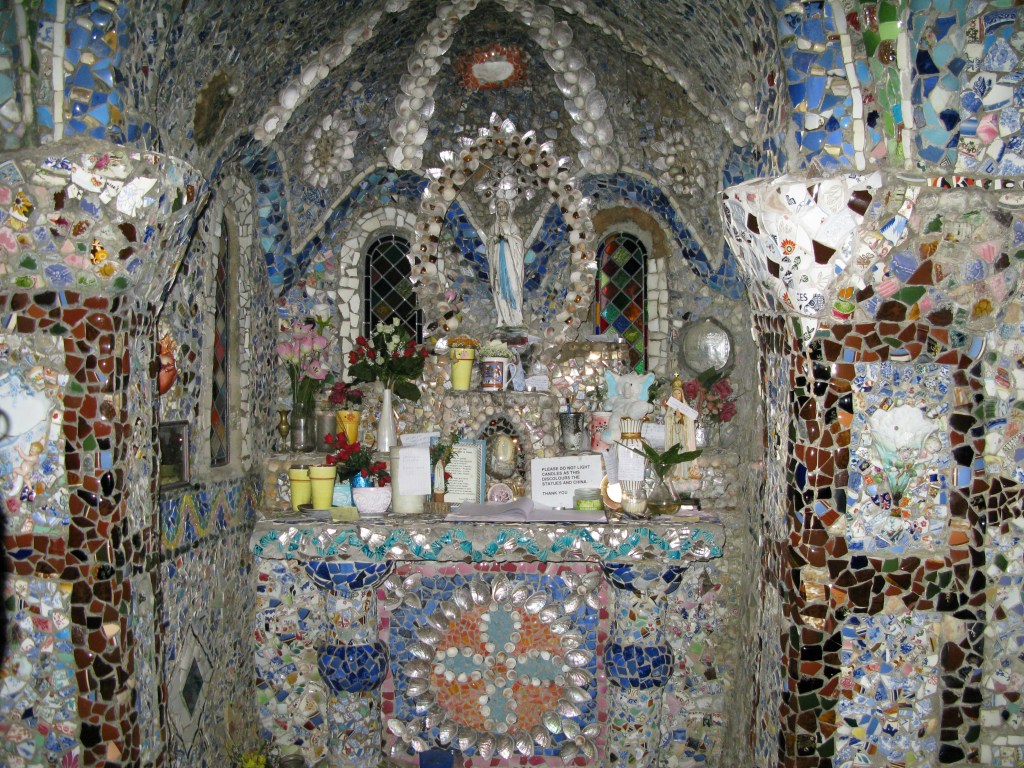
Interior Little Chapel – Les Vauxbelets, Guernsey 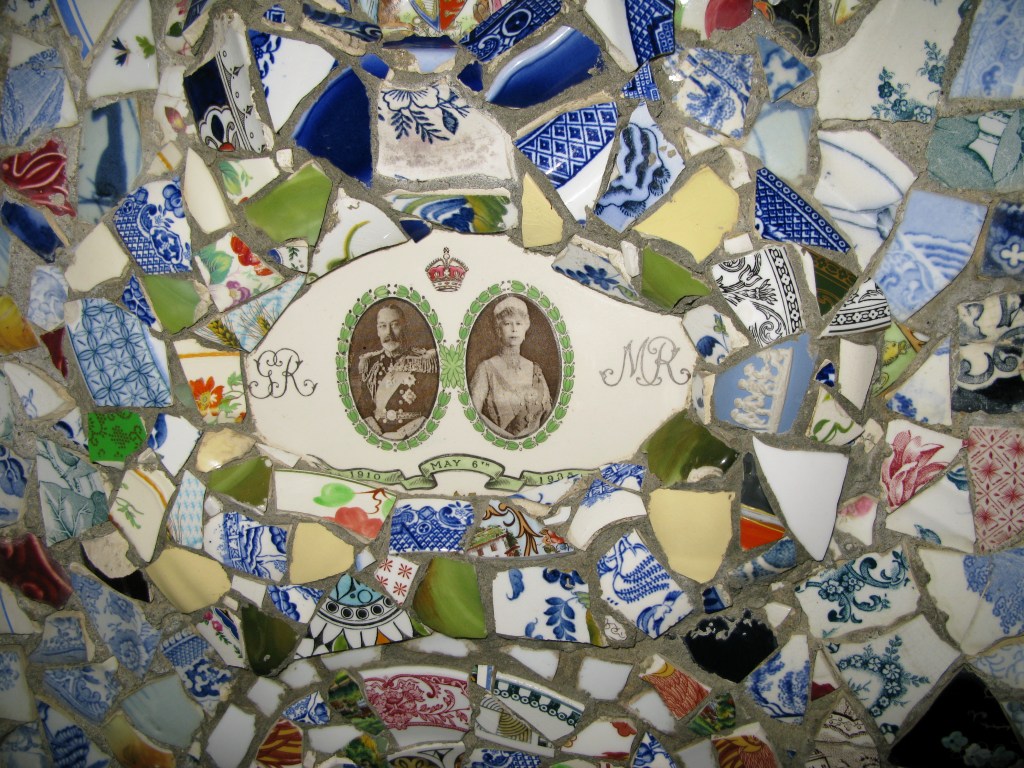
Interior Little Chapel – Les Vauxbelets, Guernsey
Grey day at Fort Grey
It certainly is grey looking over Rocquaine Bay from Fort Grey.
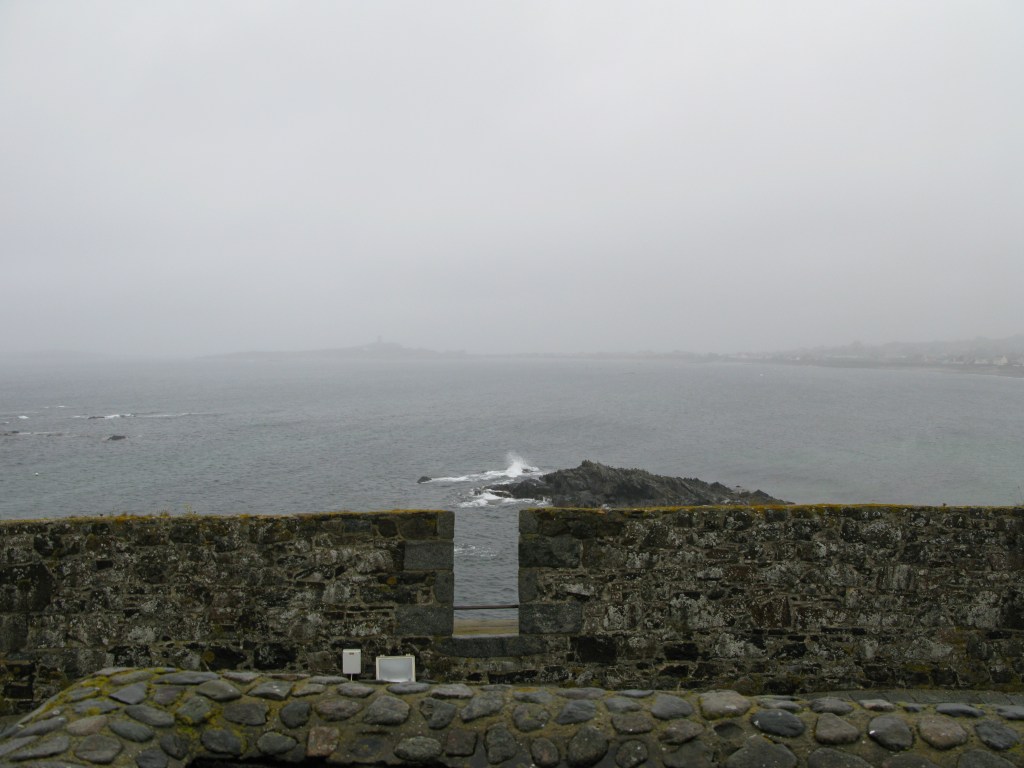
View of Rocquaine Bay from Fort Grey, Guernsey 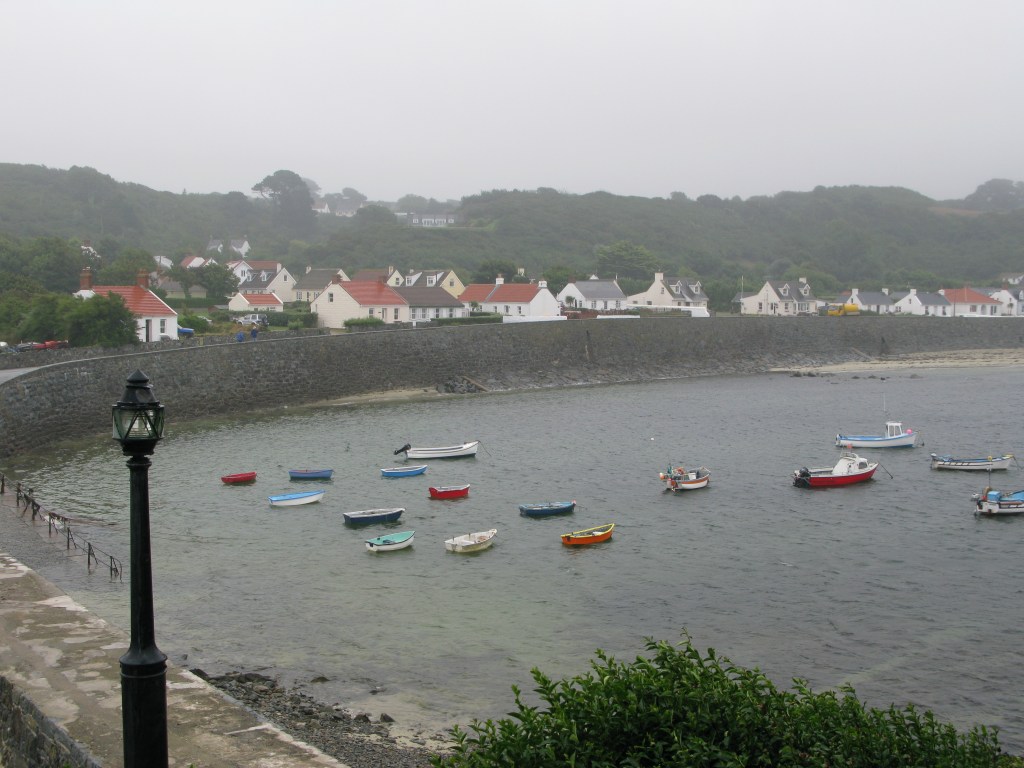
View of Rocquaine Bay from Fort Grey, Guernsey
Disembarking from the coach we run along the causeway which connects the tidal islet on which Fort Grey is set to the mainland. Built as a martello tower during the Napoleonic wars and known locally as the “Cup and Saucer” the fort now houses a shipwreck museum. As a scuba diver and keen marine archaeologist the museum provides an interesting insight into the discovery and recovery of artefacts from a number of vessels which sank off the coast of Guernsey – including: HMS Sprightly (1777), HMS Boreas (1807) SS Yorouba (1888) – by dive teams in the late 1960s and 1970s.
Our last stop of the trip is the famous Freesia Centre – I’m not convinced that this was a case of saving the best until last. It’s just the last.
Freesia Centre
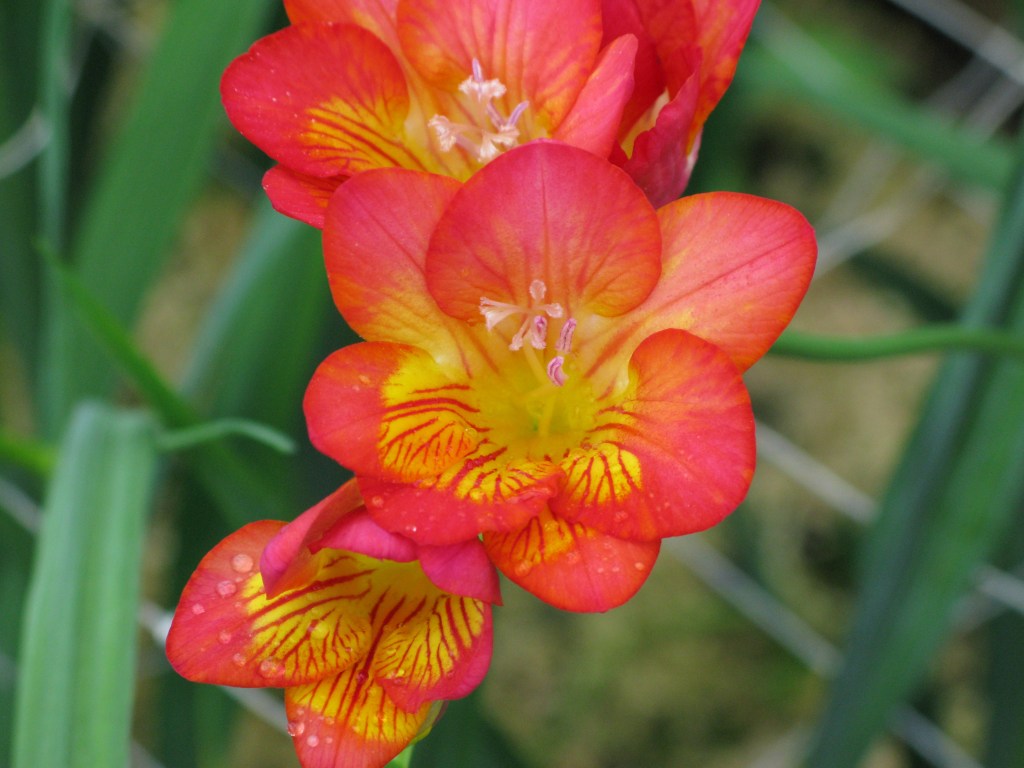
Freesia – Freesia Centre, Guernsey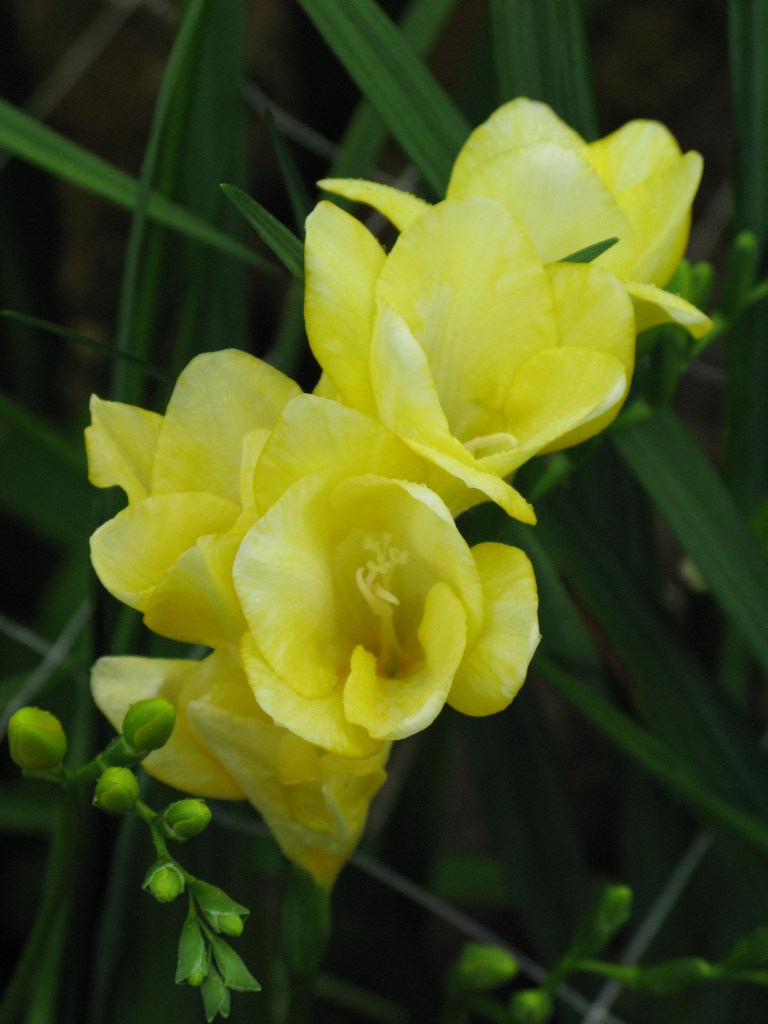
Freesia – Freesia Centre, Guernsey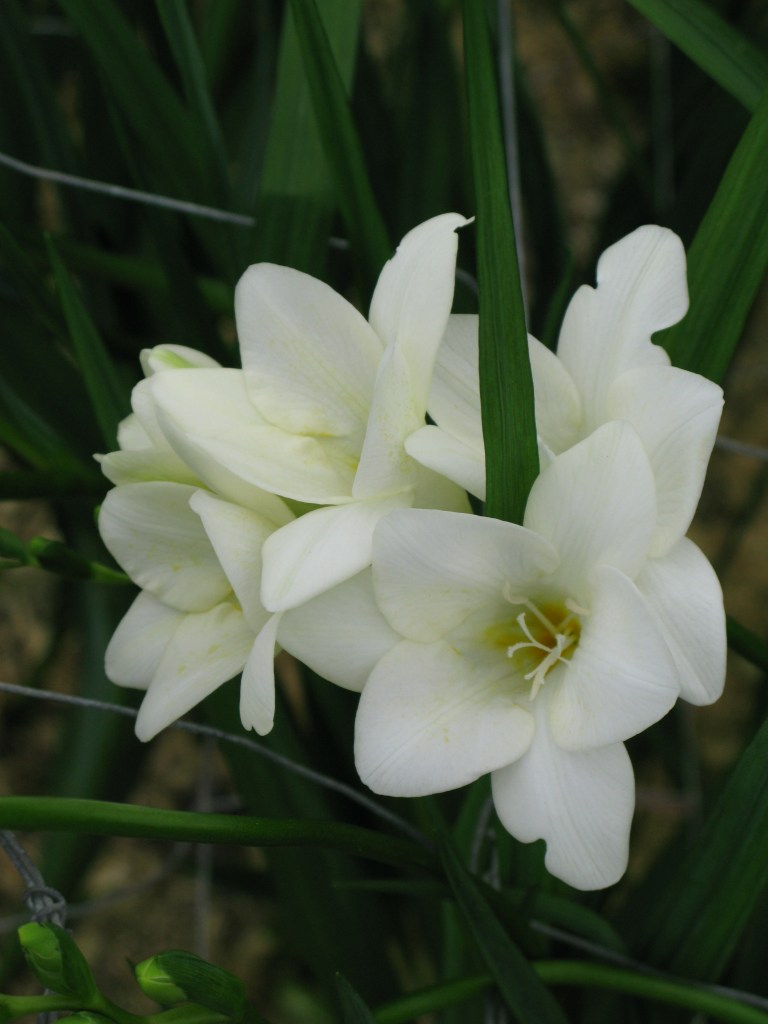
Freesia – Freesia Centre, Guernsey
More of a shopping opportunity, except that the shopping is rather limited, than a horticultural experience. The sign tells us that we can buy gifts suitable for everyone including: quality freesias, freesia corns, freesia perfume, flower jewellery and soft toys!
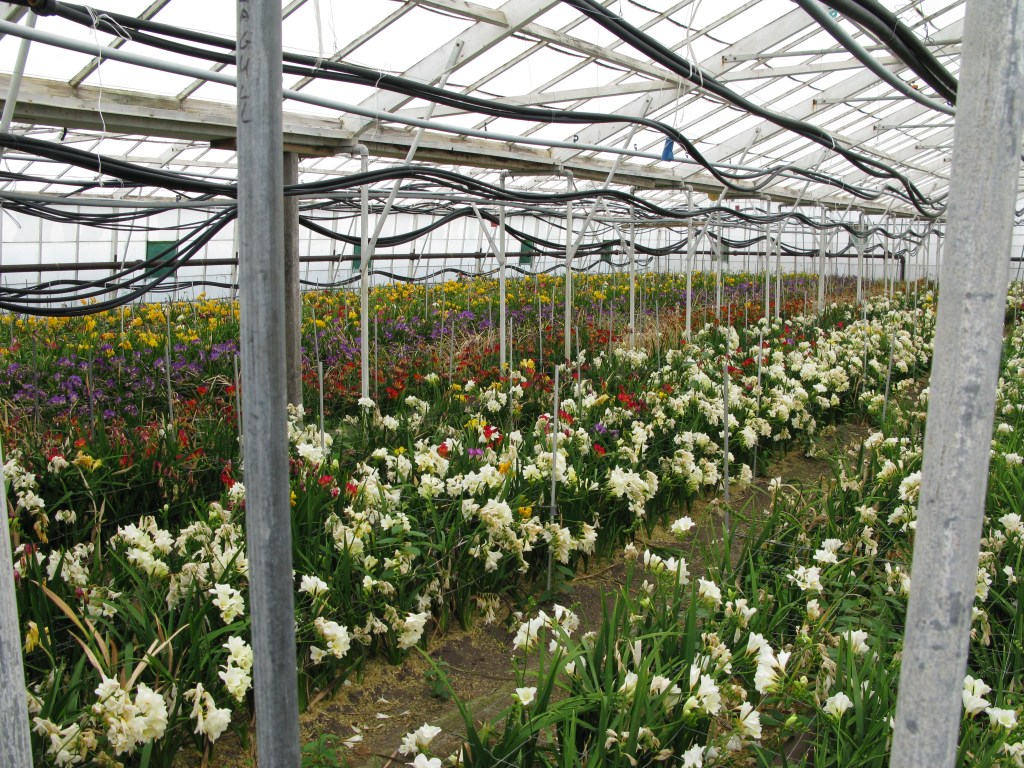
Freesia – Polytunnel, Freesia Centre, Guernsey 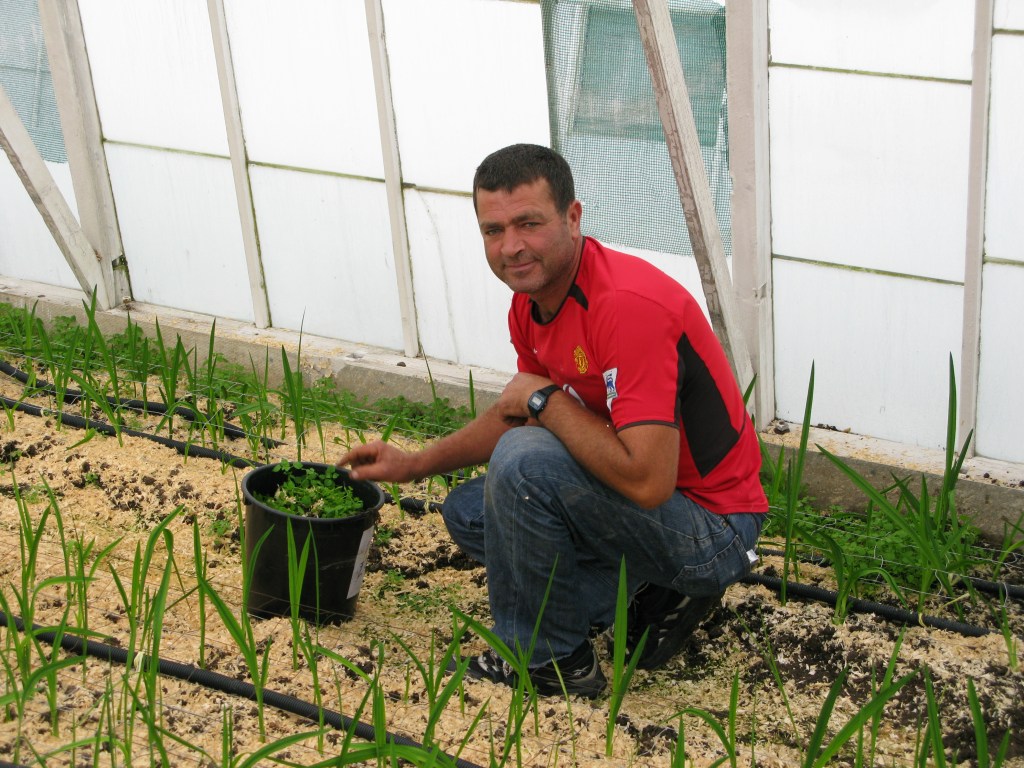
Migrant worker – Freesia Centre, Guernsey
Exploring the poly tunnels I decide to have a chat with one of the Eastern European migrant worker tending the flowers. Our conversation, like the choice in the gift shop, is rather limited.
On such an overcast and at times misty day it was difficult to fully appreciate all the sights we stopped at or passed. However, Jones the Coach was determined that a little rain would not spoil the tour and we had a fun time on his tour bus (coach). After our coach tour we walk from the bus station toward La Valette and the Underground Military Museum.
La Vallette Underground Military Museum
The museum is housed in a former tunnel, one of 41 on the island, constructed during the German occupation from 1940 – 1945. This particular tunnel complex was intended to serve as a fuel store or fuel farm for German U-boats which would have refueled in the nearby bay. Like many such tunnels in the Channel Islands this one was also built by the Organization Todt using forced or slave labour.
Converting the abandoned fuel store into a museum was obviously not an easy or simple endeavour. However, unlike the castle I’m not sure how much the setting – a former fuel store – added to the exhibits on display. In fact the construction of the tunnel in many ways limits the way in which artefacts can be displayed and organised. So overall the museum has the feel of being put together by enthusiastic and knowledgeable amateurs working on a limited budget rather than professional curators with appropriate funding and support. Despite this the museum does have a certain charm and brings together a lot of interesting artefacts and objects from the period of the German occupation.
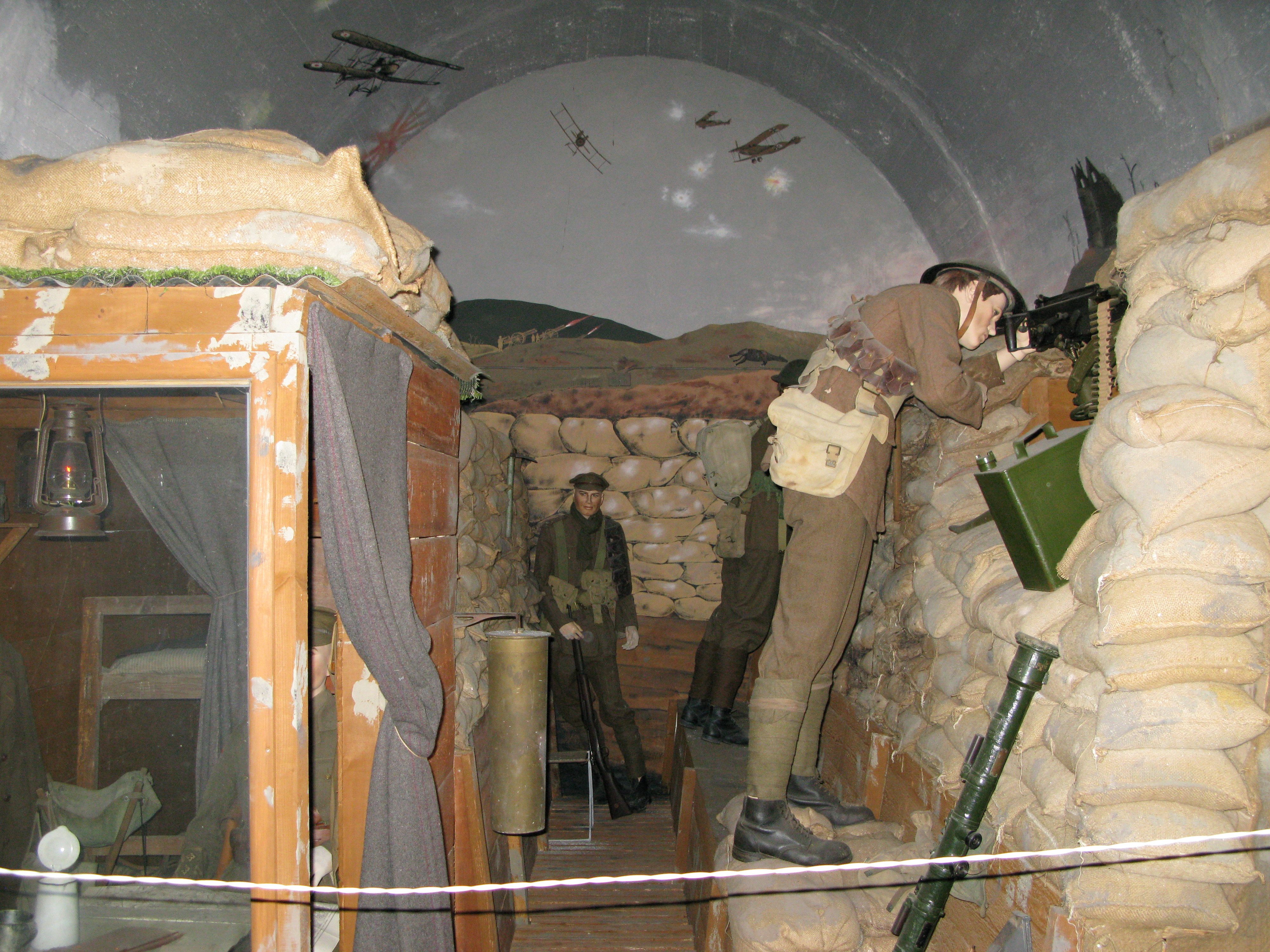
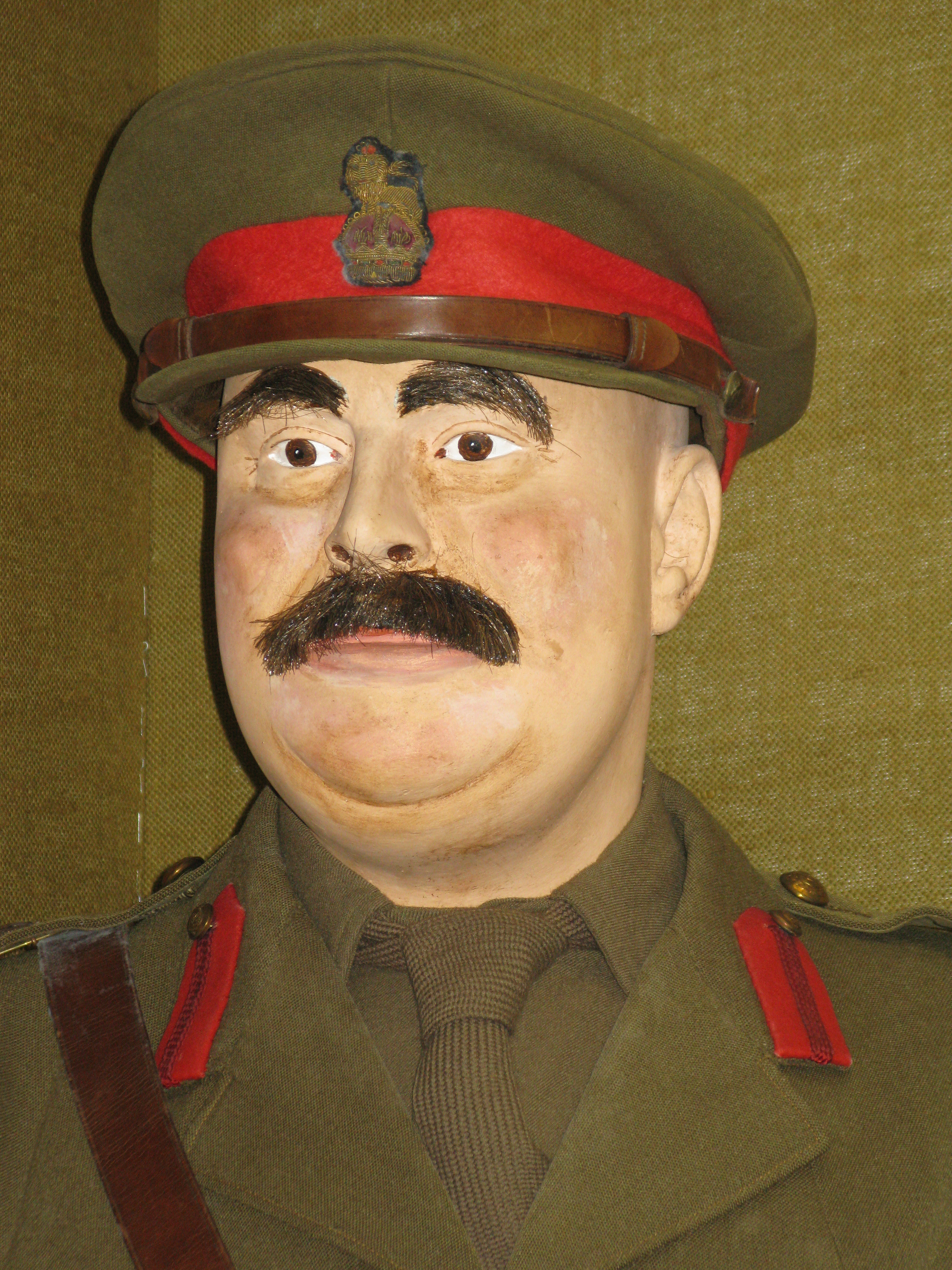
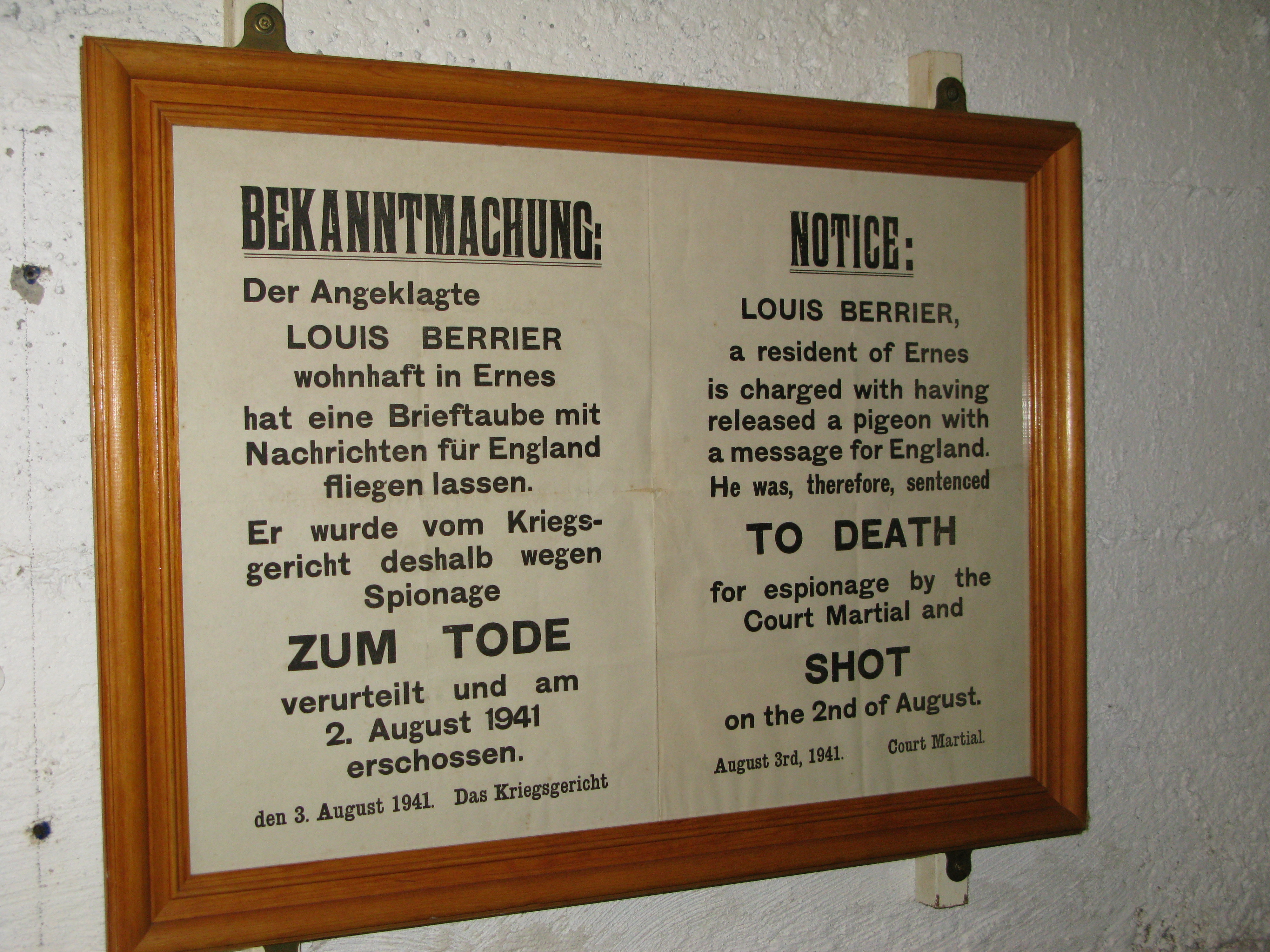
Left to right: Diorama; Brigadier Snow; Notice. La Vallette Underground Military Museum.
Victorian Bathing Pools
Neglected over the past 20 or so years the four Victorian bathing pools built in the 19th century are receiving a little more care and attention with much needed minor repairs and renovation. The four pools comprise: the ladies’ pool, the adjacent shallow childrens’ pool, the gentlemens’ pool and “the Horseshoe.”
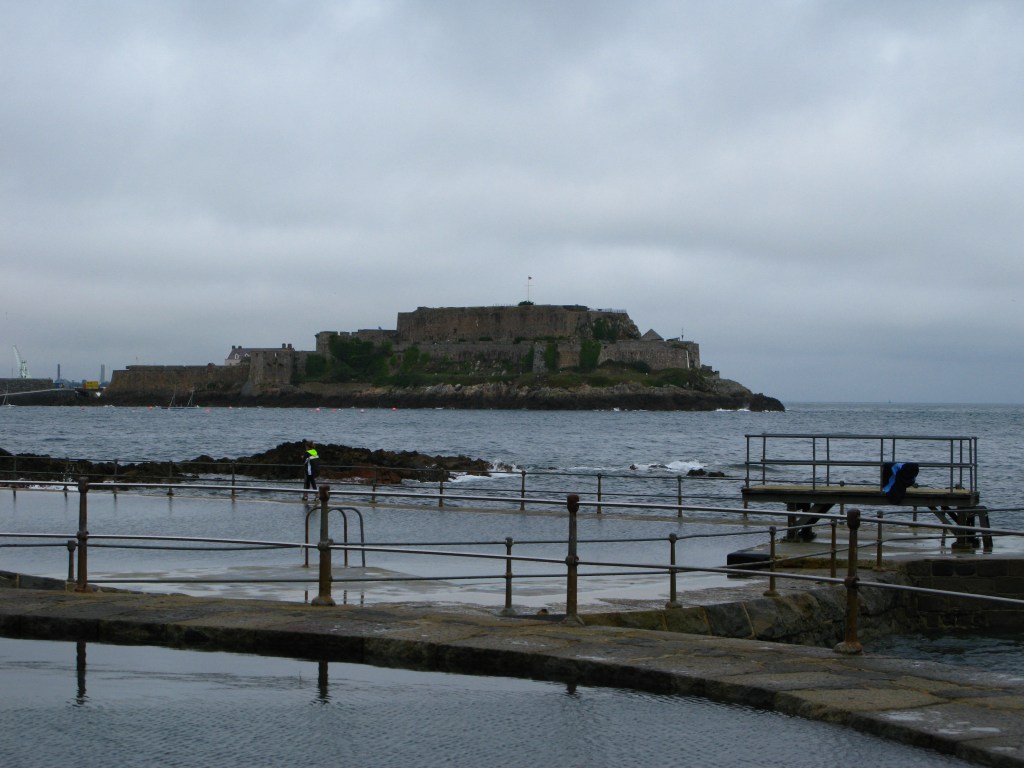
Bathing Pools – La Vallette, Guernsey 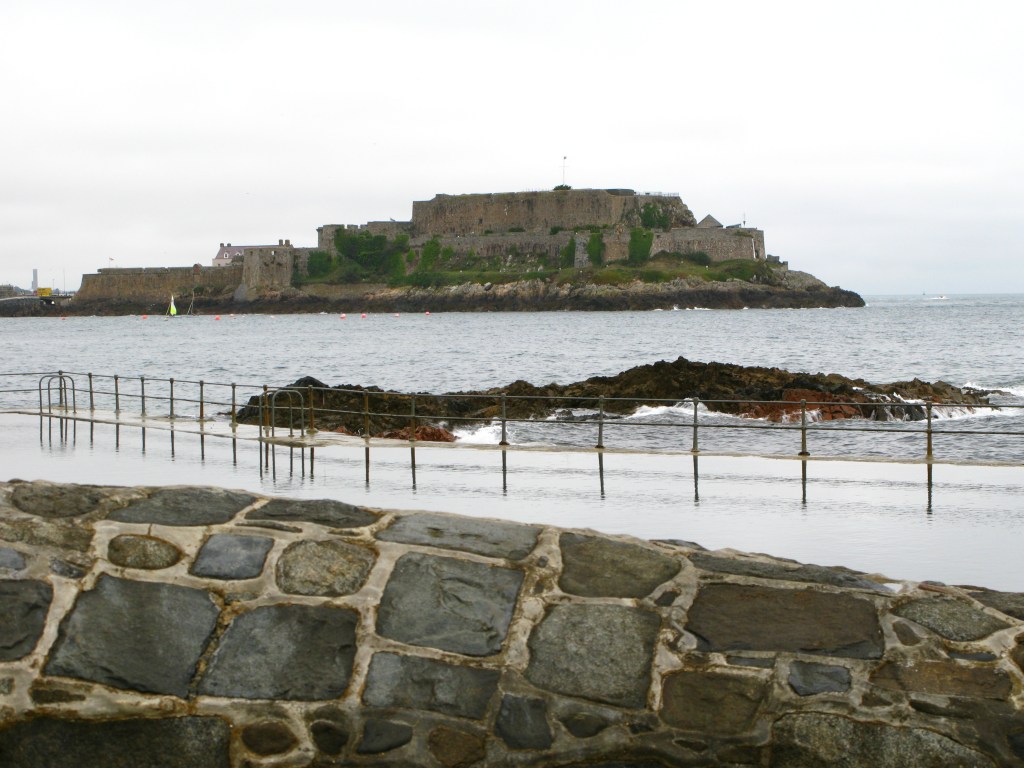
View of Castle Cornet from La Vallette, Guernsey
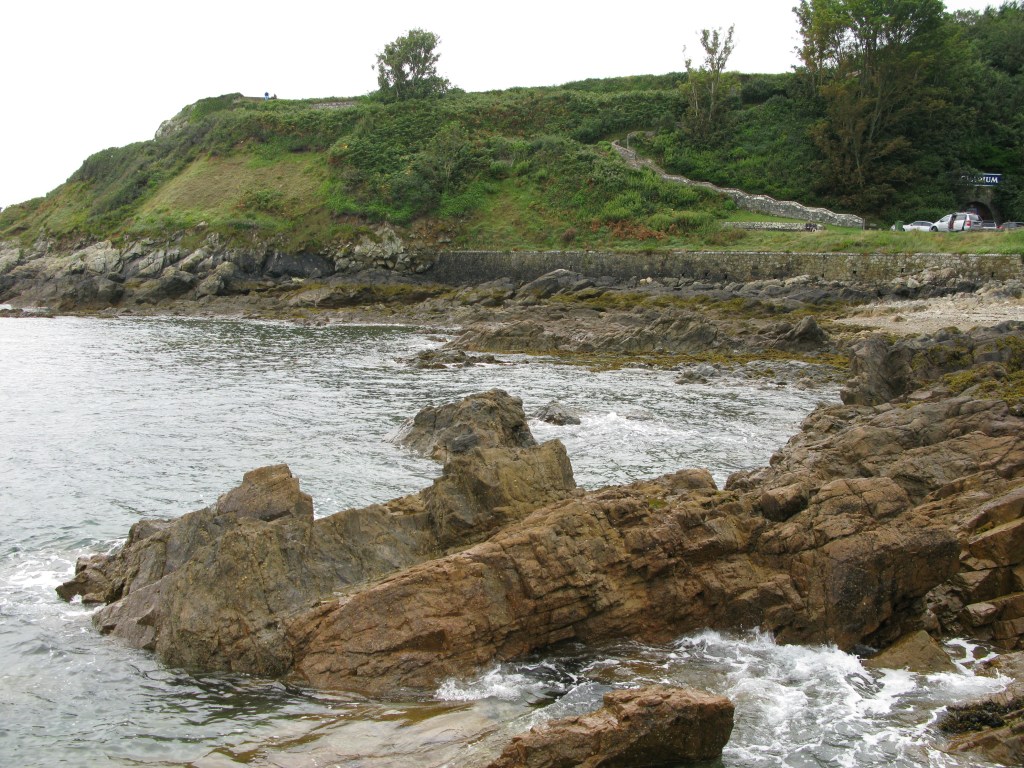
There were a few people swimming in these wonderful public infinity pools. With a low tide and the current sea state we were able to walk around the outside of the pools. We are told that at high tide and certain sea states that the railings and walkway around the pool can be completely submerged.
Ferry quick walk
Wednesday, 18 August, 2010 – St Peter Port, Channel Islands, UK
Leaving St Peter Port
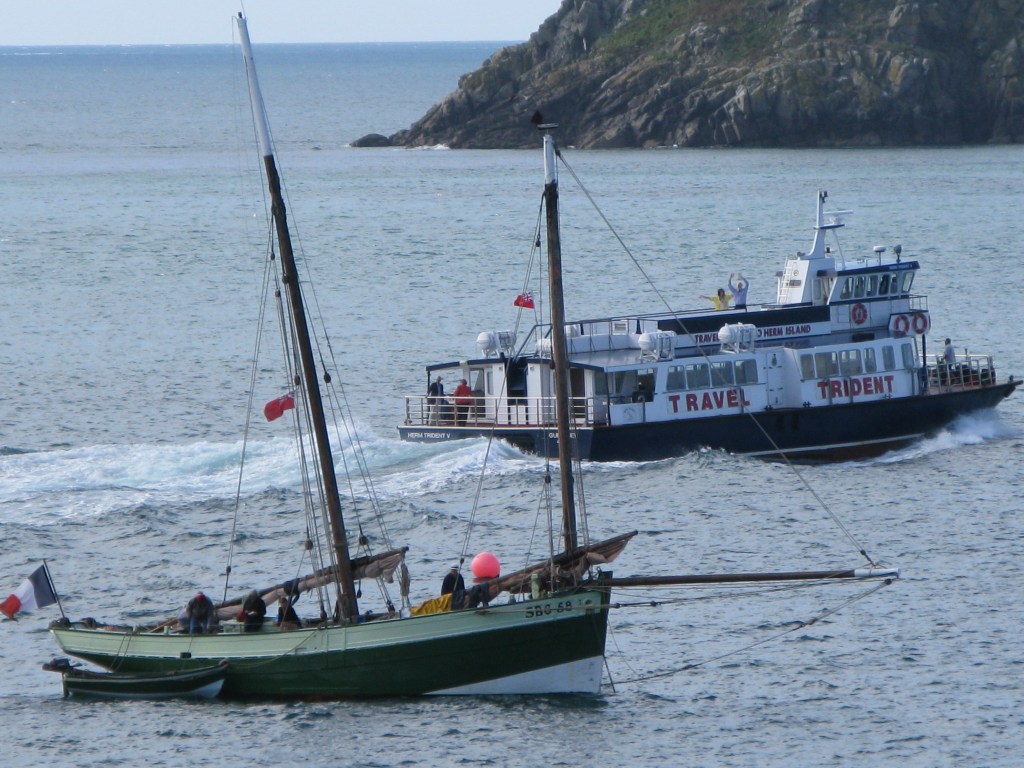
After another hearty breakfast at our hotel we head to the harbour to catch the ferry to Herm. We don’t want to miss the boat so we step up the pace as we walk down the hill into St Peter Port. It’s a glorious day and the channel looks calm for our crossing this morning.
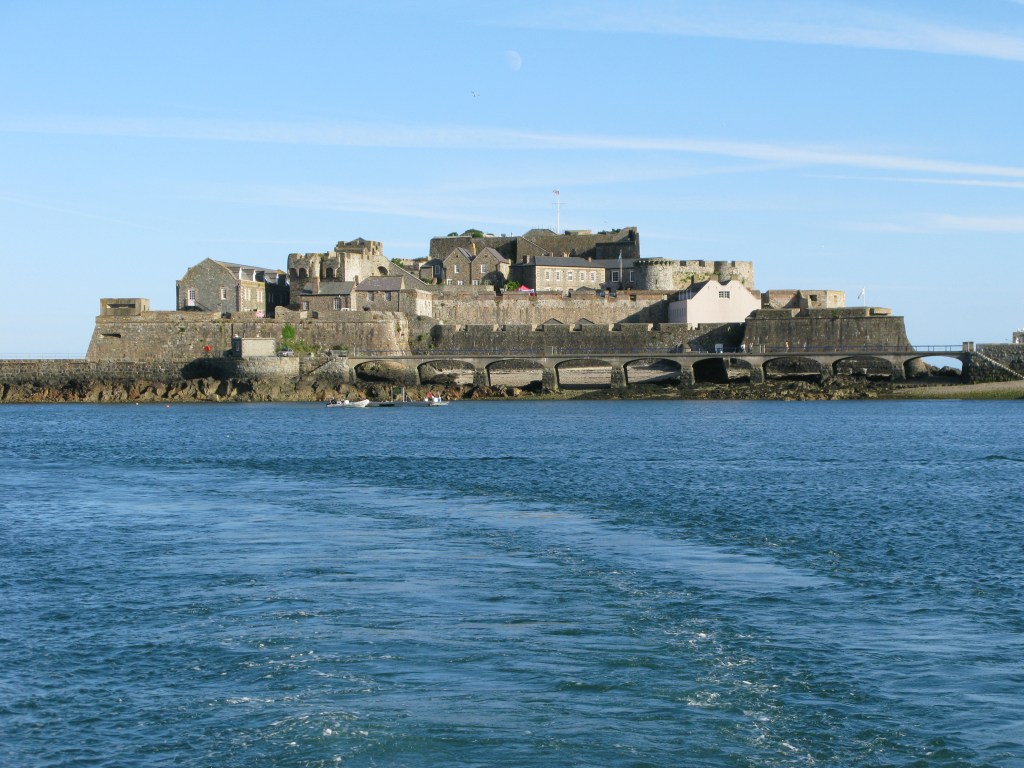
We’re taking the 10:15 Trident Ferry from the Cambridge Steps for the 20 minute crossing to Herm. Standing at the stern of the ferry we look across to the lighthouse at the end of Castle Pier and Castle Cornet which overlooks Havelet Bay on one side and the harbour on the other.
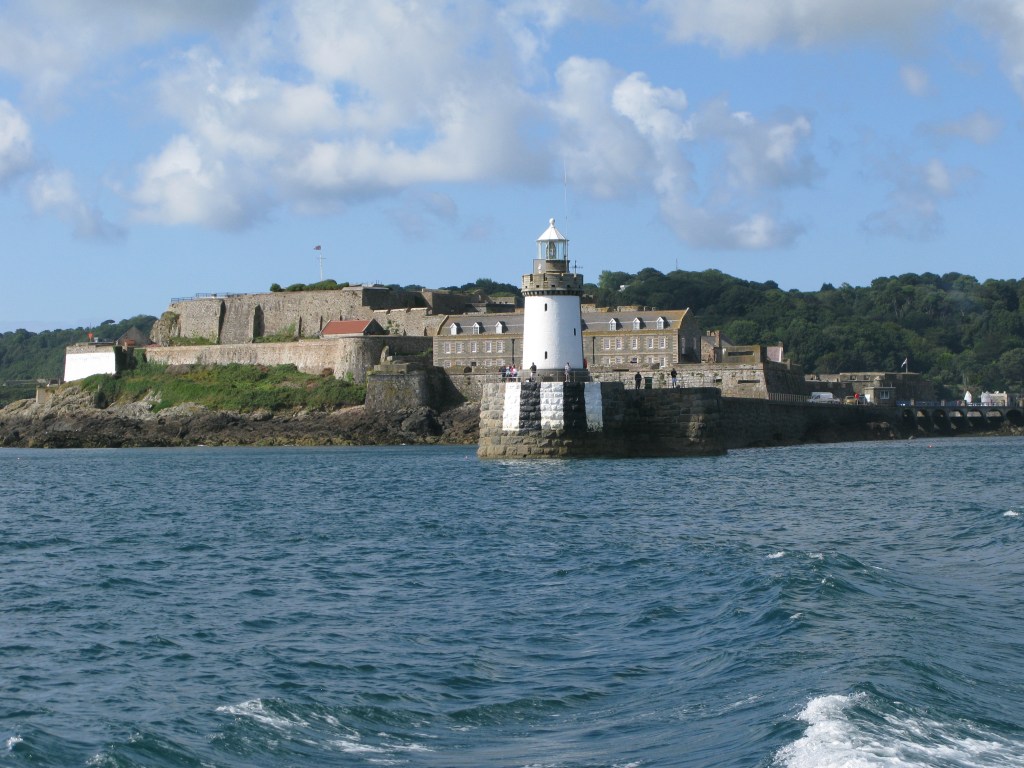
Lighthouse – St Peter Port, Guernsey 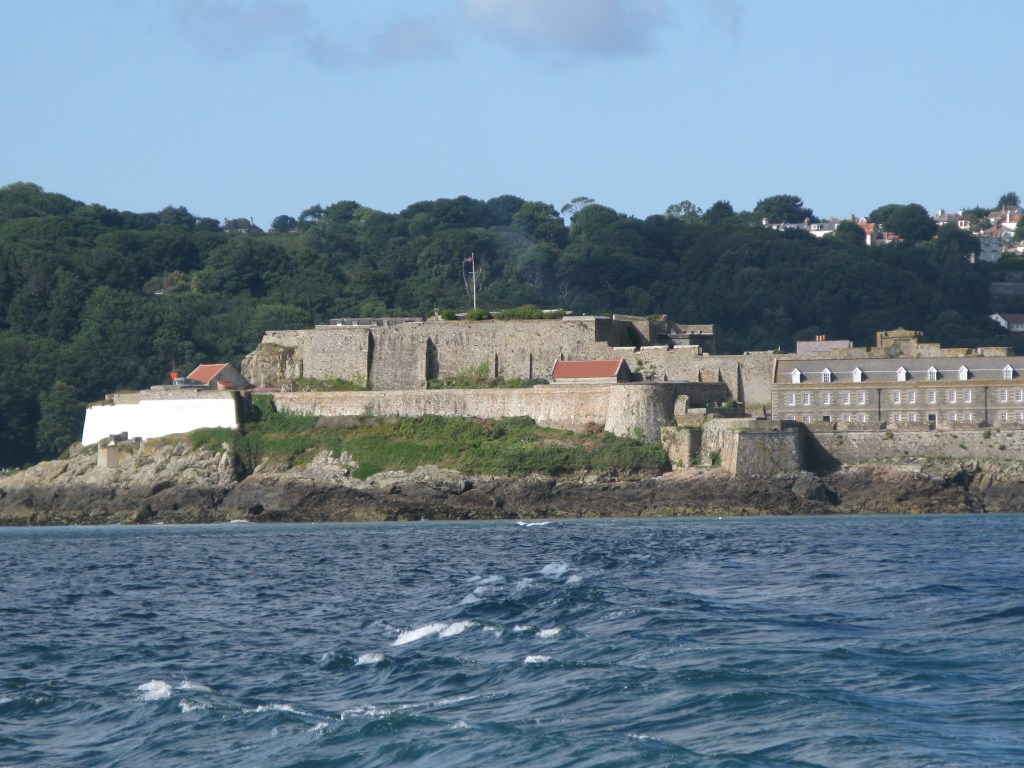
Castle Cornet – St Peter Port, Guernsey 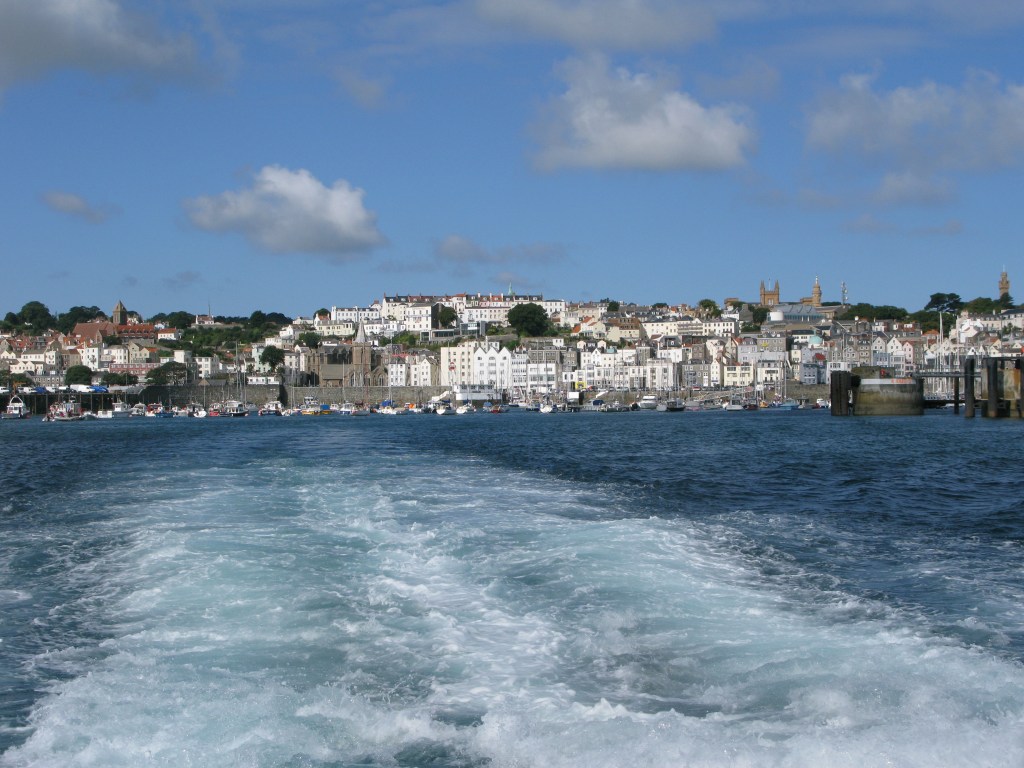
Leaving St Peter Port, Guernsey
Looking back we can see St Peter Port getting smaller as we head towards Herm.
Small island life
Wednesday, August 18, 2010 – Herm, Channel Islands, UK
Herm Landing
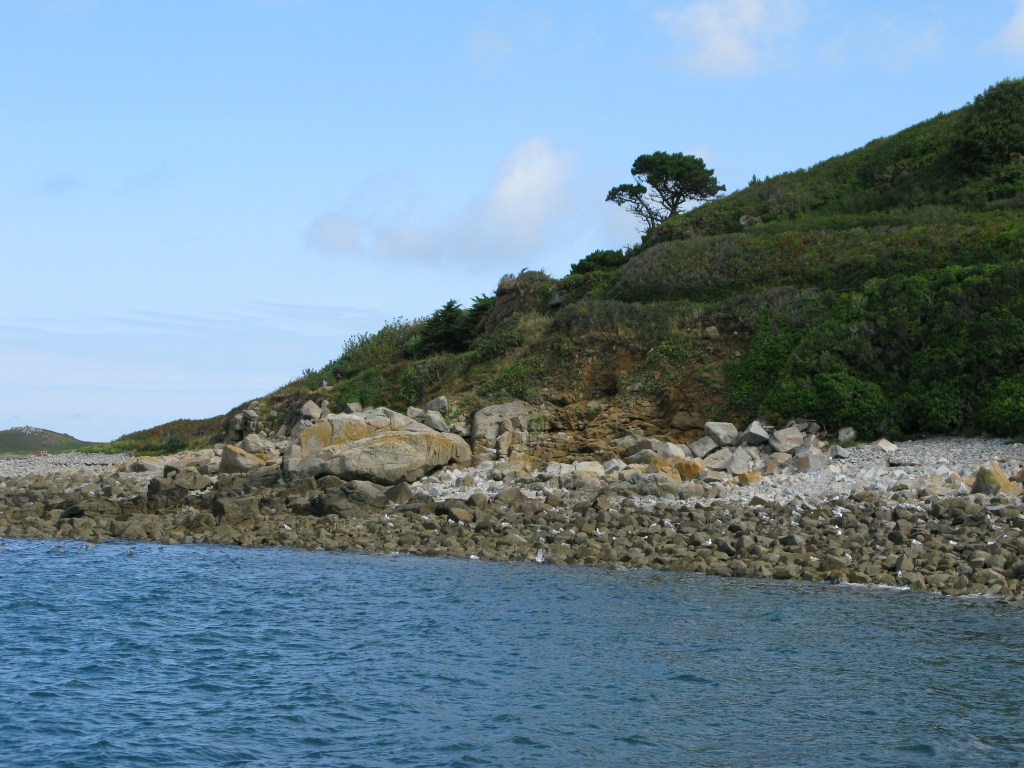
Herm is only 1.5 miles long and less than half a mile wide. Cars and bicycles are banned from the island in order to keep peace and tranquillity. Tractors are used to transport luggage and island staff are allowed quad bikes for personal transport. As the ferry comes alongside the small quay at Herm Harbour we look along the north west shore line and enjoy a wonderful view of the island.
Most of the passengers on the ferry are like us, visiting Herm for the day, a few others are staying over. We disperse and go our various ways, to be fair there aren’t many ways to go, but before long there’s nobody else in view and it’s as if the island is our own as we walk along the dirt track and then onto the Common.
The obelisk on The Common
There are at least 19 tombs on the island, most of them on Grand Monceau leading down to Robert’s Cross and on the east side of Petit Monceau. Three have been identified on the Common and one reported under what is now the Obelisk. The remains of these chamber tombs provide evidence of settlers in the Neolithic and Bronzes ages.
Research by a number of archaeological teams seems to support the theory that the northern end of the island, because of the number and density of tombs, was set apart for burials. Whereas sites in England and France have been adversely affected by agriculture, literally being ploughed to pieces, Herm remains relatively untouched.
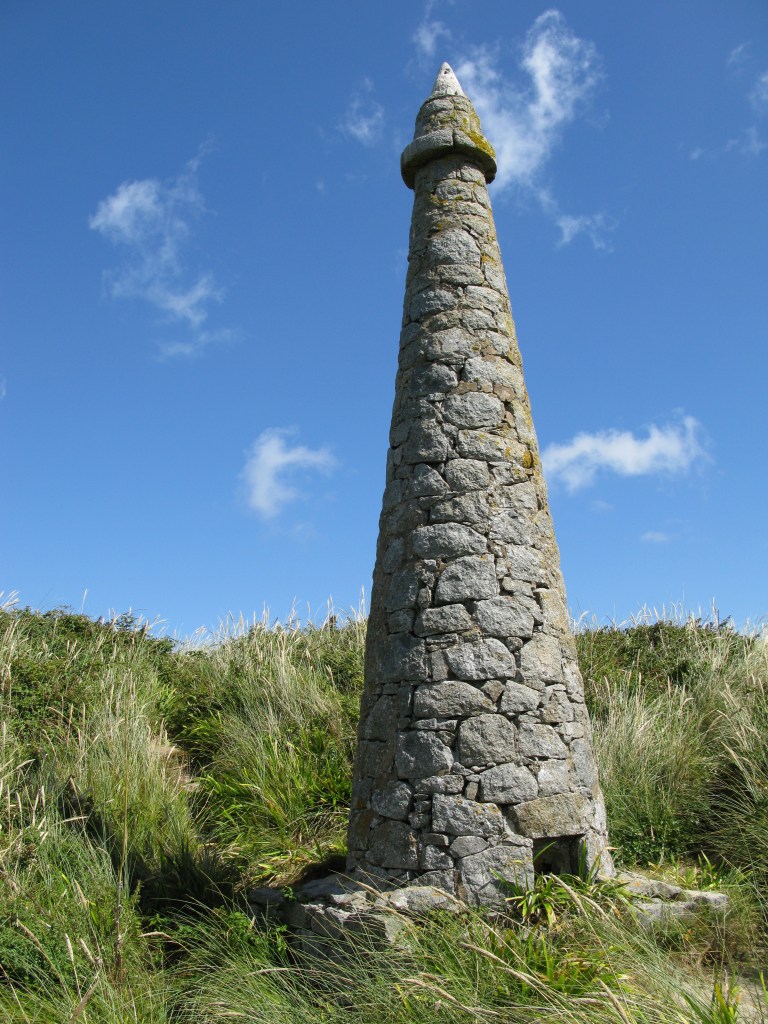
The obelisk on the common looks almost Neolithic but is relatively recent and was built by quarrymen in 19th century as a navigational aid for fisherman after the quarrymen removed a large menhir from the site which was used for this purpose previously.
Shell Beach
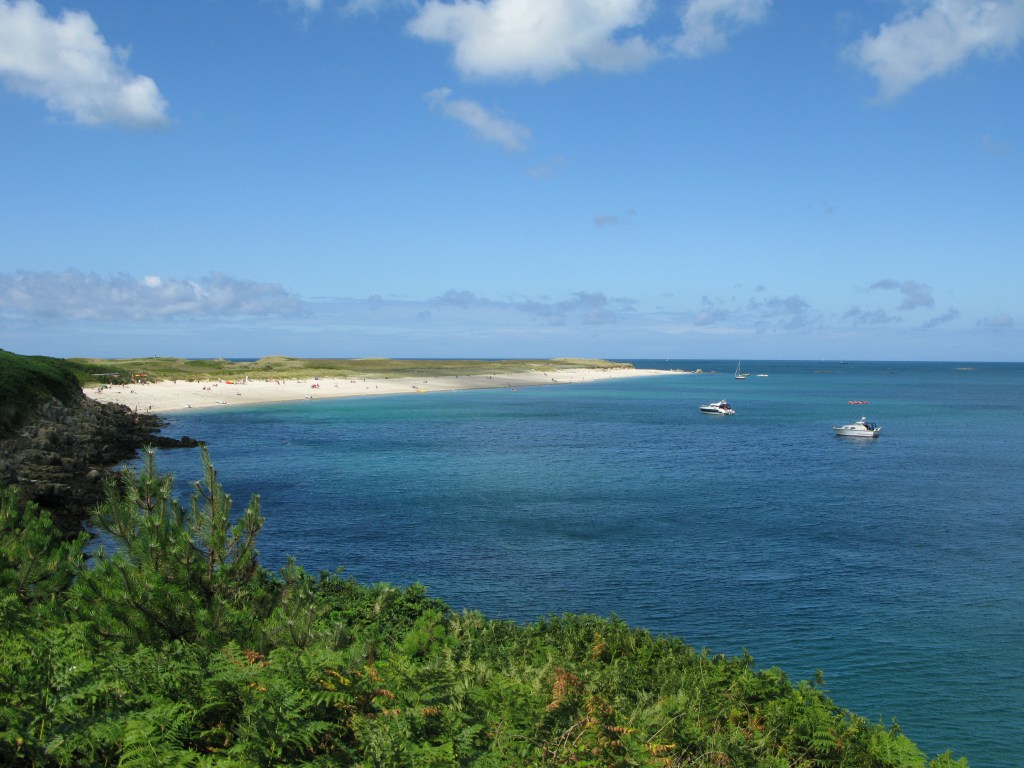
Shell beach is the stuff that picture postcards are made of with an azure blue sea lapping at the beach. It looks so inviting but we don’t have our swim trunks with us so the sea will have to wait.
An extract from the Saturday Magazine (25 June 1842) – taken from an earlier publication by Henry Inglis (see below) – described it thus:
“But Herm possesses one peculiar distinction,- an attraction which, during the summer, is the frequent cause of picnic parties from Guernsey, – its shell beach. I have been told by competent judges that the little island of Herm is richer in shells than all the shores of all the rest of the British Islands; and that the shells found there may be considered miniatures of the shells found in most other parts of the world. The divisions of the order testacea in this little island extend to upwards of forty genera, embracing upwards of two hundred varieties; and in sponges, corals, and corallines, Herm is as rich as in shell.
The shell beach of Herm, which extends from half a mile to three quarters of a mile, is one mass of shells, intermixed with either pebbles or sand. Dig with your arm deep as you may, there is still nothing but shells,- minute perfect shells, and fragments of larger shells. The minute shells are extremely pretty, and may be gathered in millions; and although I am myself no conchologist, and might probably commit so great a heresy as to estimate the value of shells by their beauty, I spent a long summer’s noon much to my mind in Herm, wandering on the shell beach; lying upon it; digging my hands an arm’s length down, and sifting, and examining, and pocketing.”
Island Art
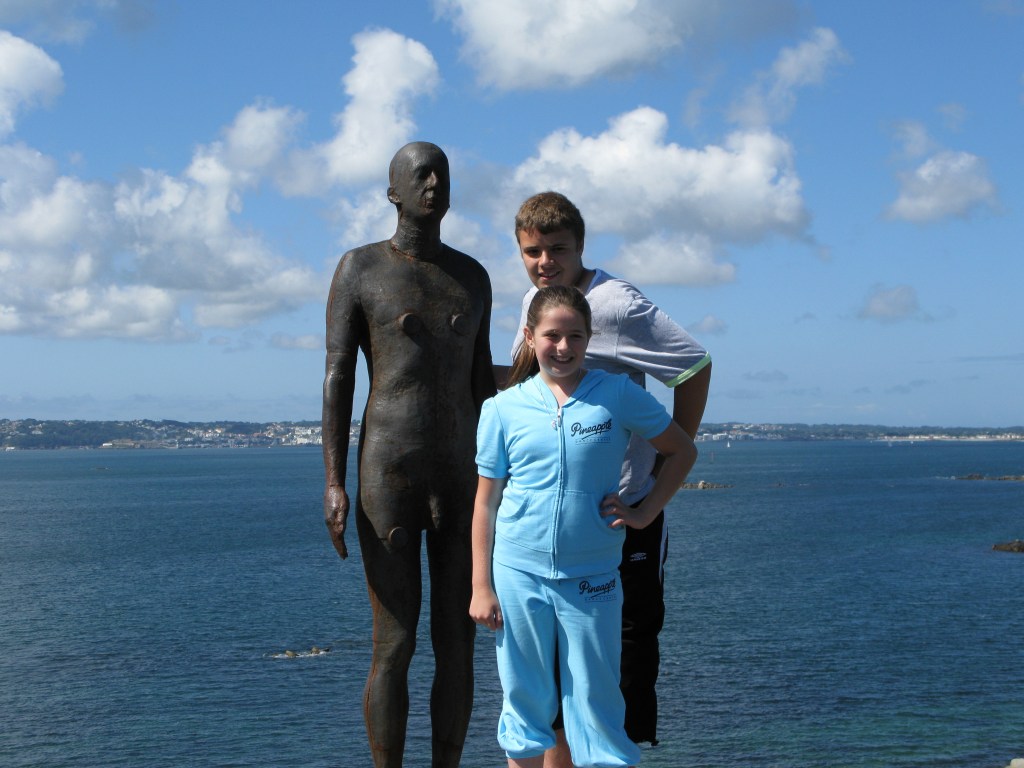
Another visitor to the island is Antony Gormley’s statue, XI from the Another Time series which was recently installed at the peak of Le Petit Monceau in the north west of Herm.
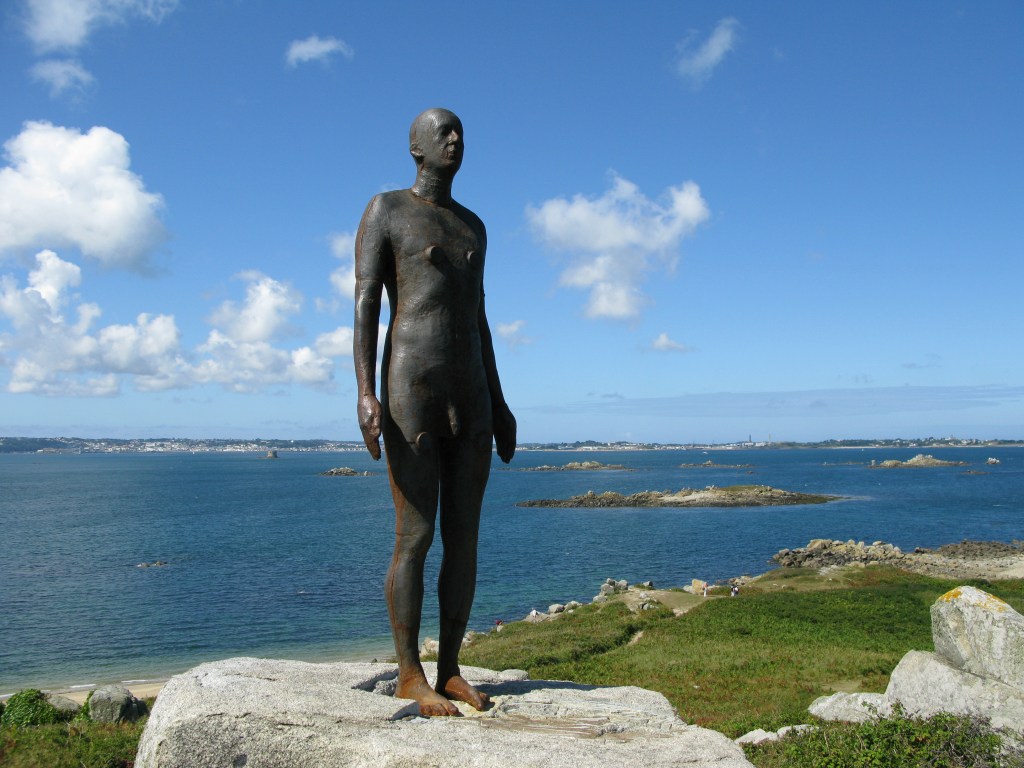
Another Time XI is a cast of the artist in a neutral standing position and 100 other similar objects are located all around the globe.
Explaining the choice of Herm for this sculpture as being inspired by the similarity between the words Herm and hermit, Eric Snell (Director of the International Artist In Residence Programme (IAIRP) at the College of Further Education) commented: “It’s not anything to do with an ego-centric idea [for the artist] but to do with the image of man and the contact with man and the earth… it’s looking into the void space questioning about why we’re here, what we’re doing.”
As the solitary figure looks out across the sea, I wonder how many people in the past have stood here alone looking out at the same view.
St Tugual’s Chapel
The first records of Herm’s inhabitants in historic times are from the 6th century, when the island became a centre of monastic activity; the followers of Saint Tugual arrived, establishing a Chapel. St Tugual (Tudwal) lived in Brittany for part of his life so may well have visited the island. He is considered one of the seven founder saints of Brittany where he established a large monastery.
The current chapel was built by an order of Norman monks who lived on the island is set amongst the buildings which make up the manor village at the top of the island. Internally it was designed so they could sit in the north nave out of sight of the congregation.
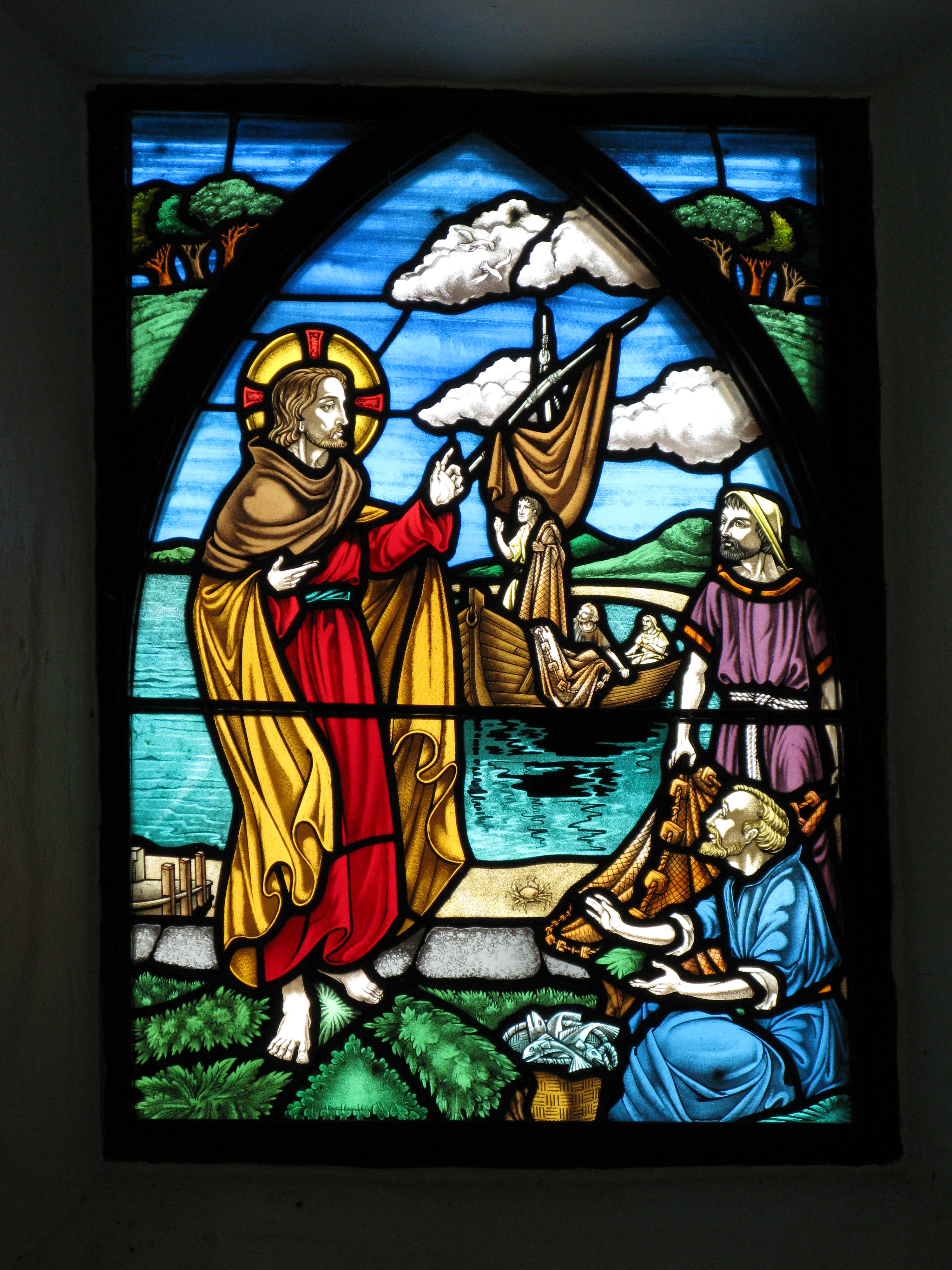
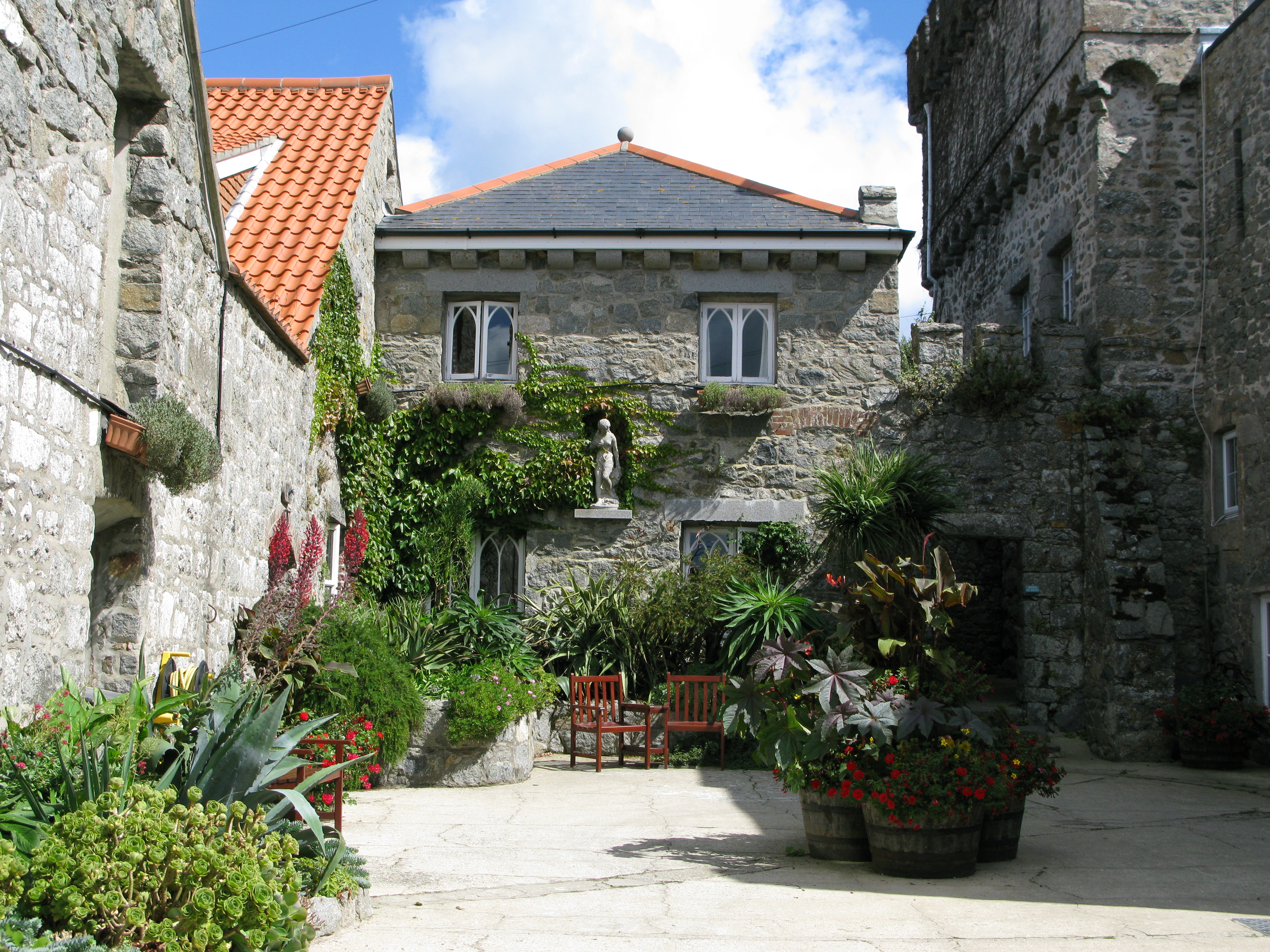
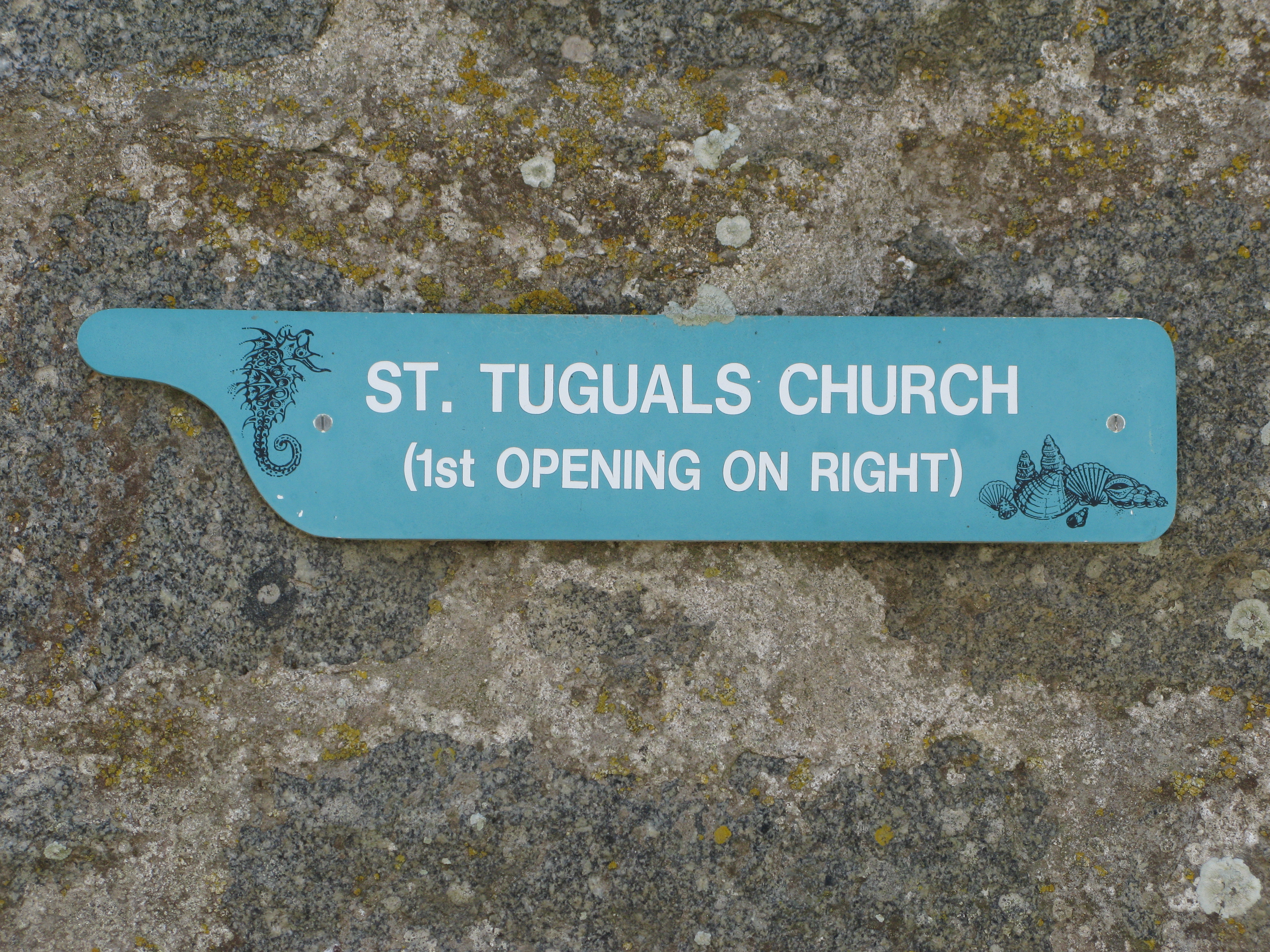
Clockwise: Stained glass window; St Tugual’s Church; Sign. St Tugual’s Church, Herm
Today seems to be all about a more simple and relaxed pace of life, finding inner peace and tranquility. We find peace, tranquility and simple beauty in the non-denominational St Tugual’s Chapel which dates back to the 11th century. The Norman building was a monastery in medieval times. The stained glass windows are all the more dramatic set against the simplicity of the chapel interior.
It’s all about the views… and the cows
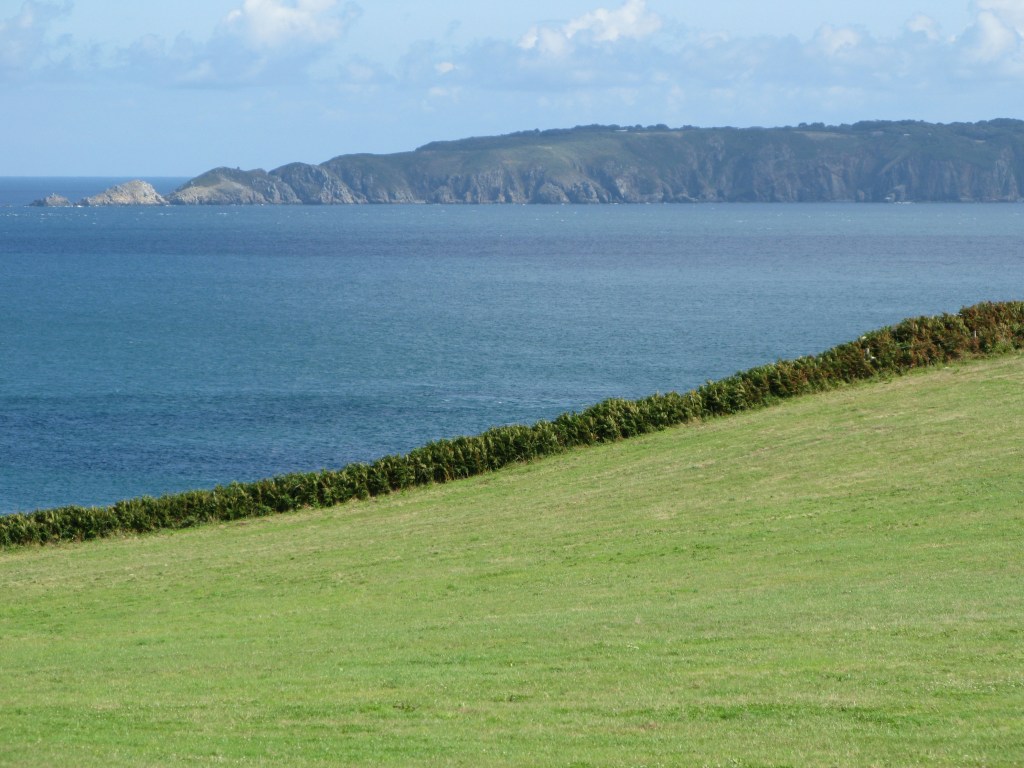
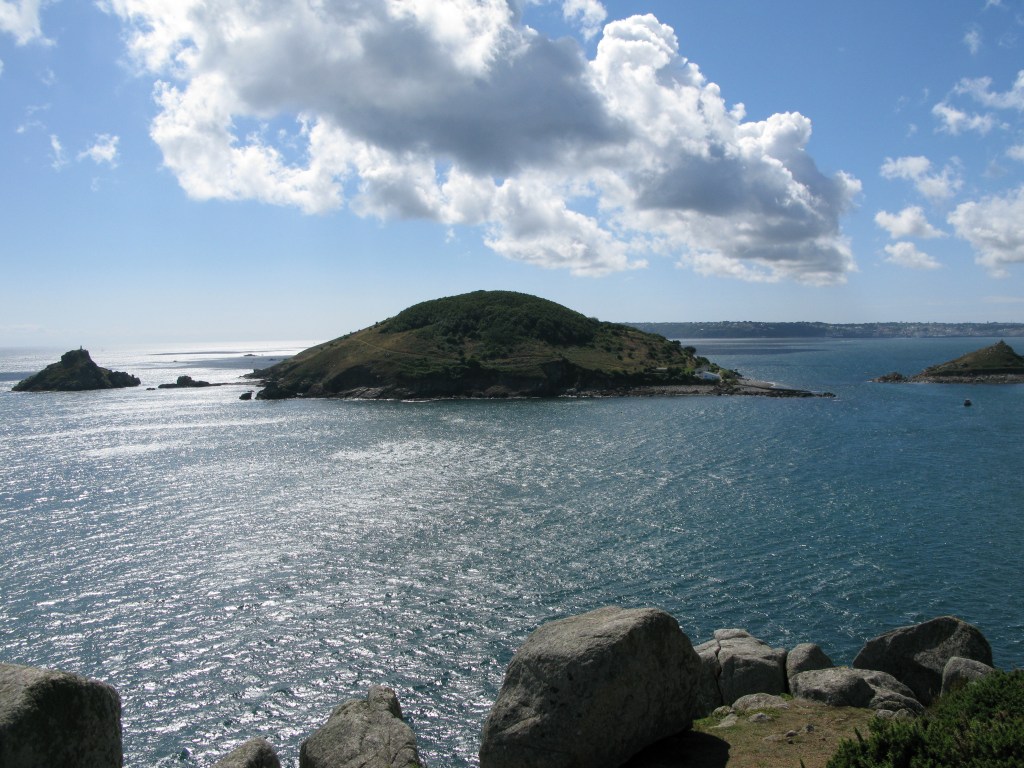
It’s not just Shell Beach or Belvoir Bay where the views are simply stunning. Everywhere you turn there are picture postcard vistas. Unfortunately we don’t do justice to them with our photos.
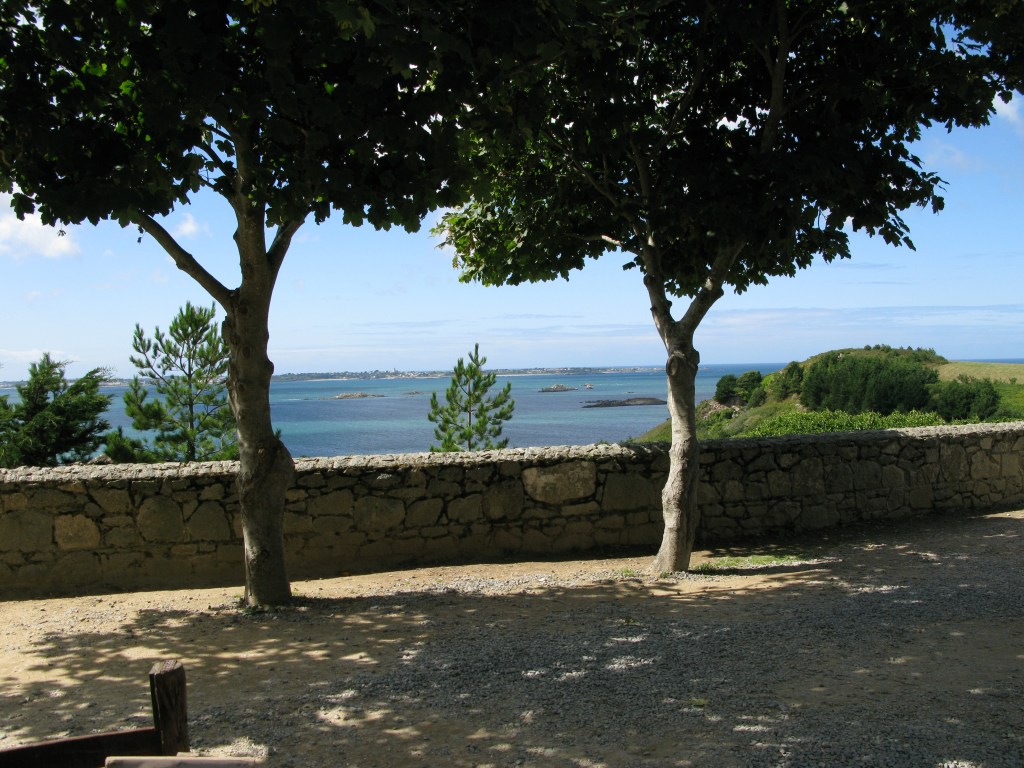
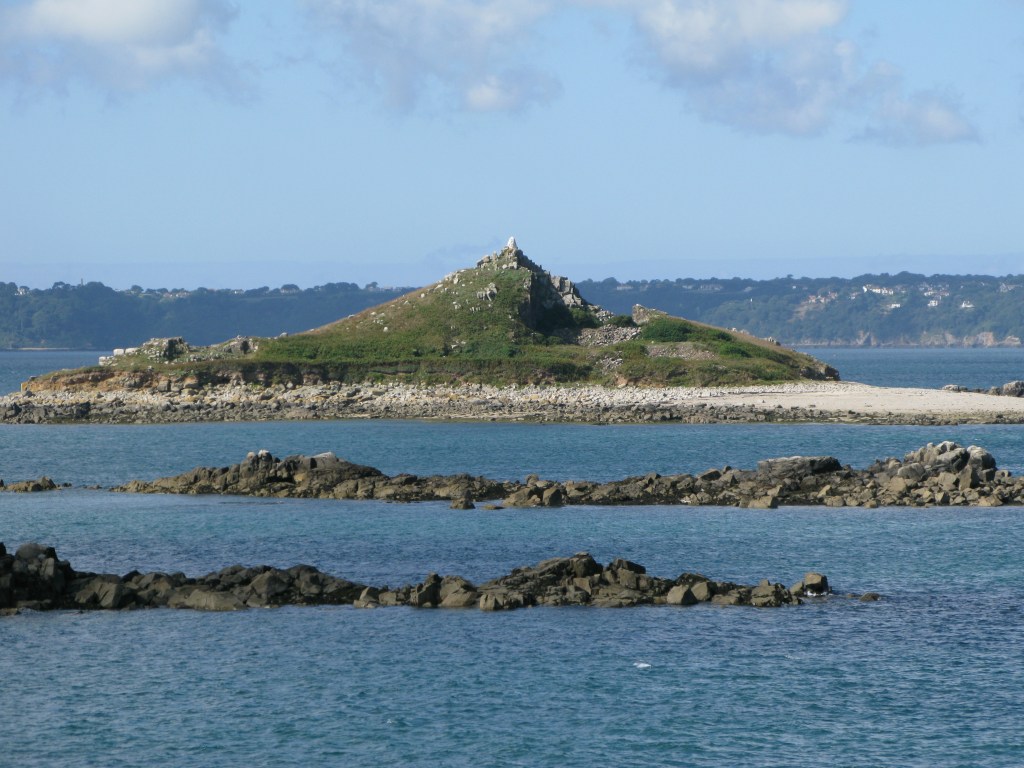
View from Herm 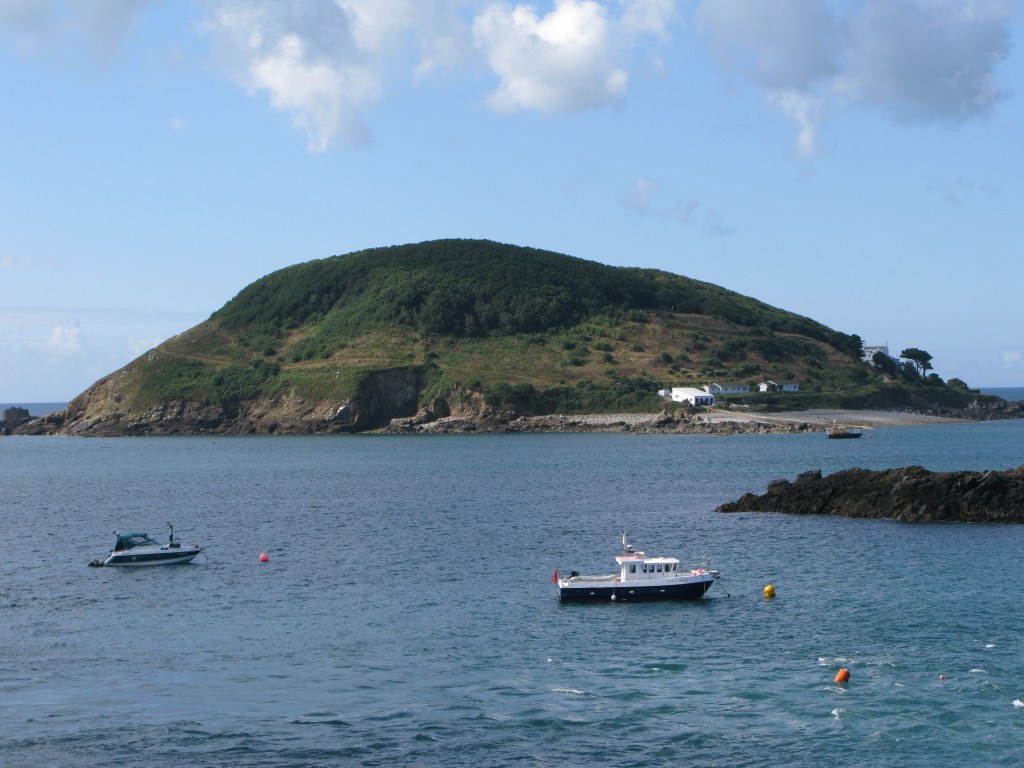
View of Jethou from Herm
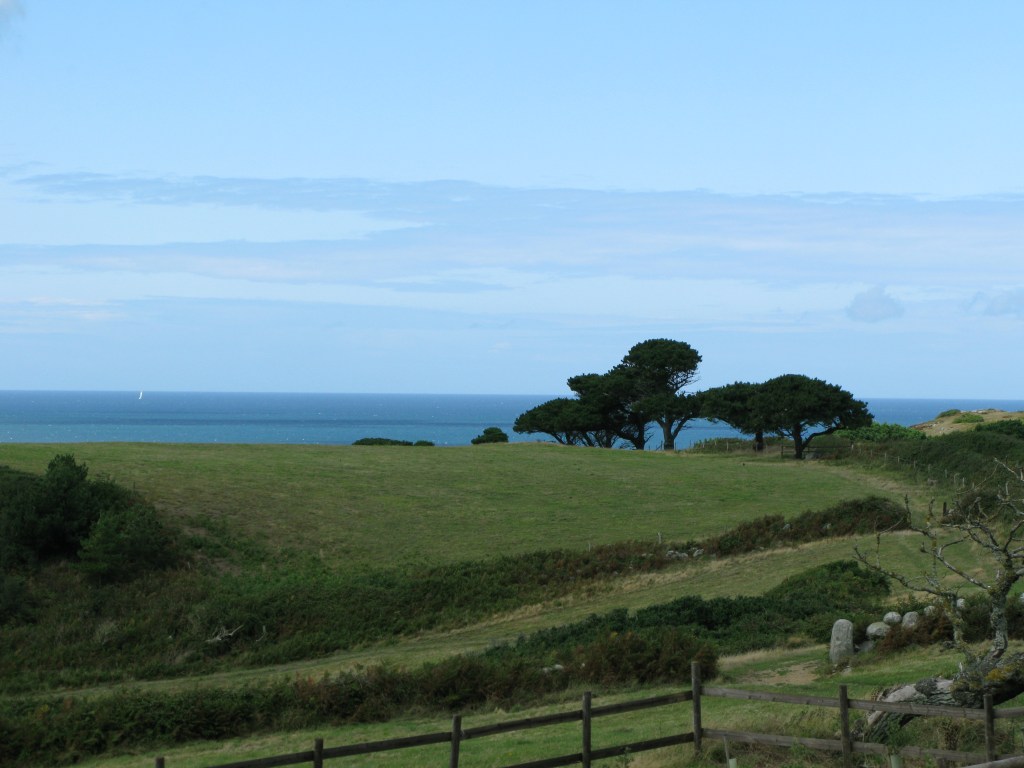
Herm 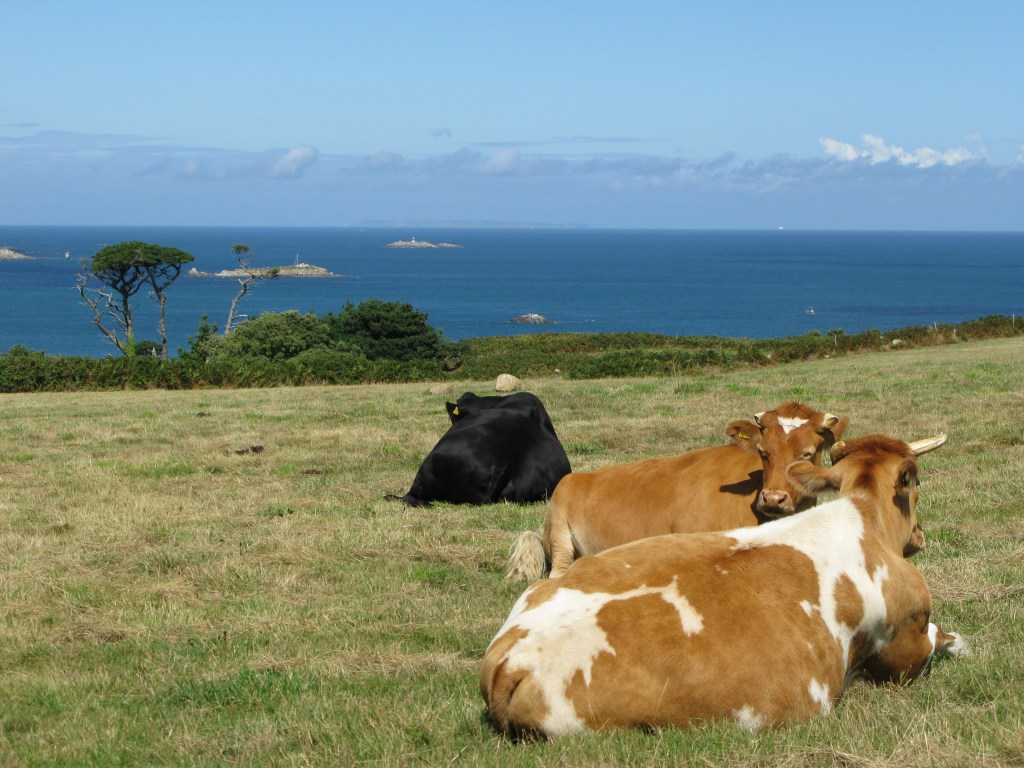
Cows – Herm
Herm 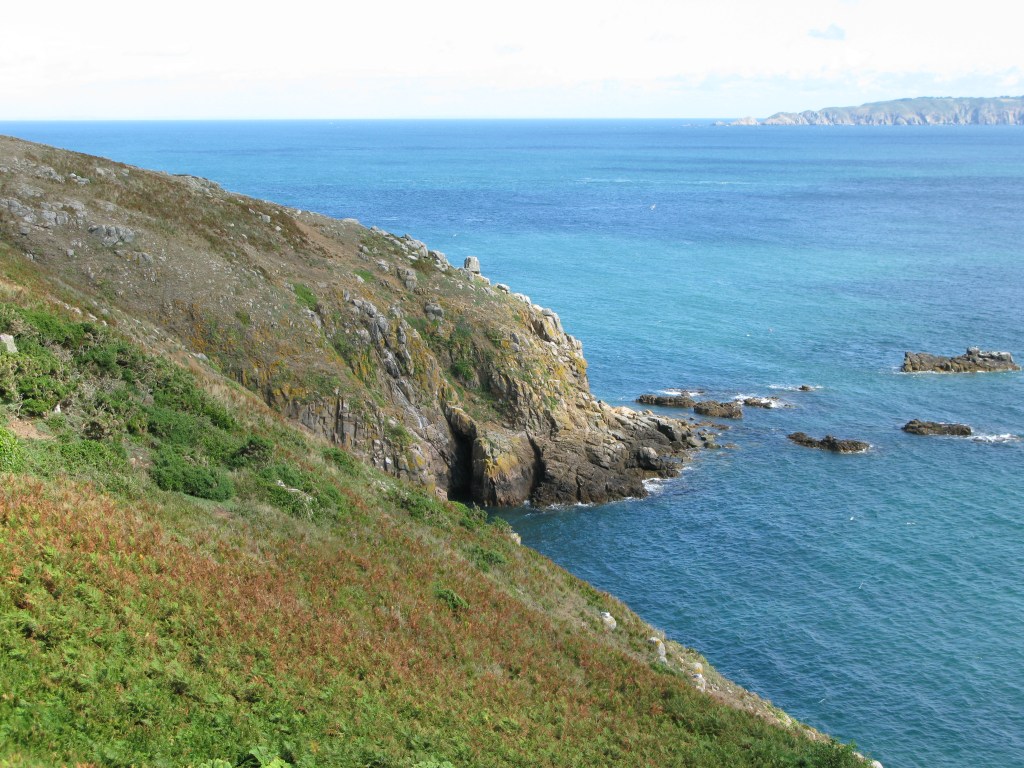
Herm
View from Herm 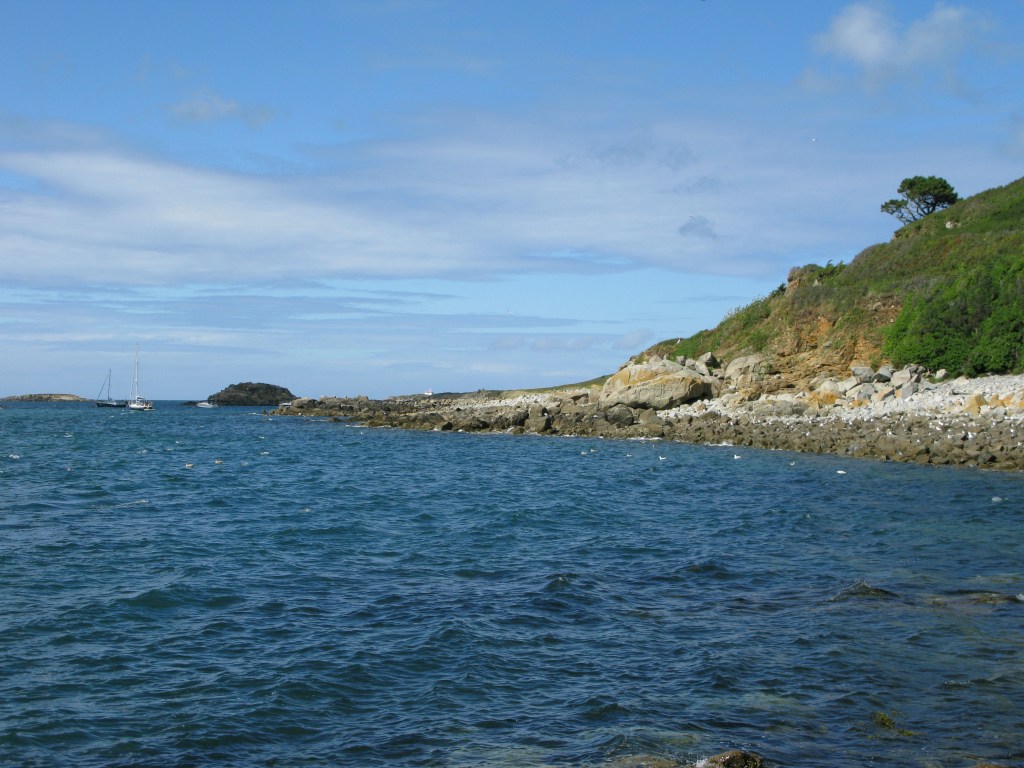
Herm
Times change and I have to disagree with the author, Henry Inglis, who in 1835 wrote:
“The scenery of Herm is no way remarkable. The island is too small to admit of valleys there is scarcely any wood and the cliffs are not in general to be compared with those of the adjacent islands.
Unless to those who can pleasantly dream away an hour on a shell beach, the attractions of Herm will scarcely repay a visit.”
Inglis, H. D. (1835) The Channel Islands: Jersey, Guernsey, Alderney etc. (The result of a two years’ residence): Whittaker: London p.325
Mermaid Tavern
It’s been a glorious day – walking in sunshine – and what we need now is to sit down with a drink. We quench our thirst sitting in the shade in the courtyard of the Mermaid Tavern.
After a trip back in time, it’s time to return to our island home for the week. We take a short walk from the Mermaid Tavern down to the Rosaire Steps and wait a while for the ferry back to St Peter Port.
A (bad) taste of India
Wednesday, 18 August, 2010 – St Peter Port, Channel Islands, UK
Meanwhile back in St Peter Port
With the sun still shining we have a wonderful crossing from Herm to Guernsey. Back in St Peter Port we are pleased to see that the Castle is still standing, the Lifeboat hasn’t been deployed and the Pilot boat waits patiently for its next call on Channel 12.
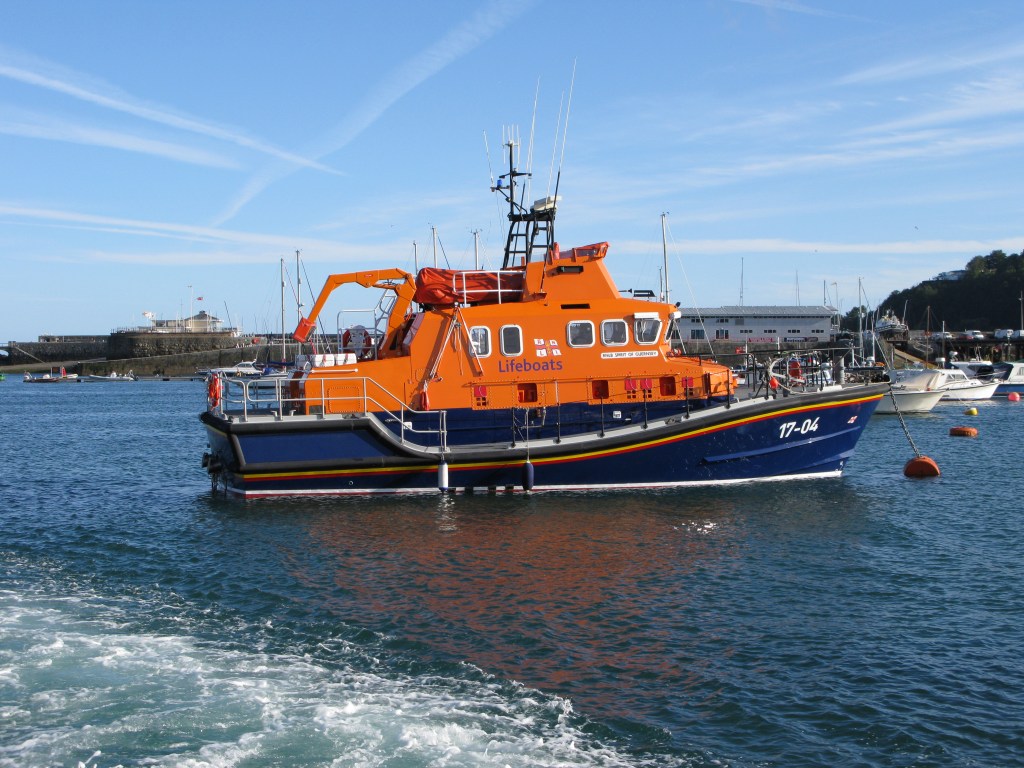
Lifeboat – St Peter Port Guernsey 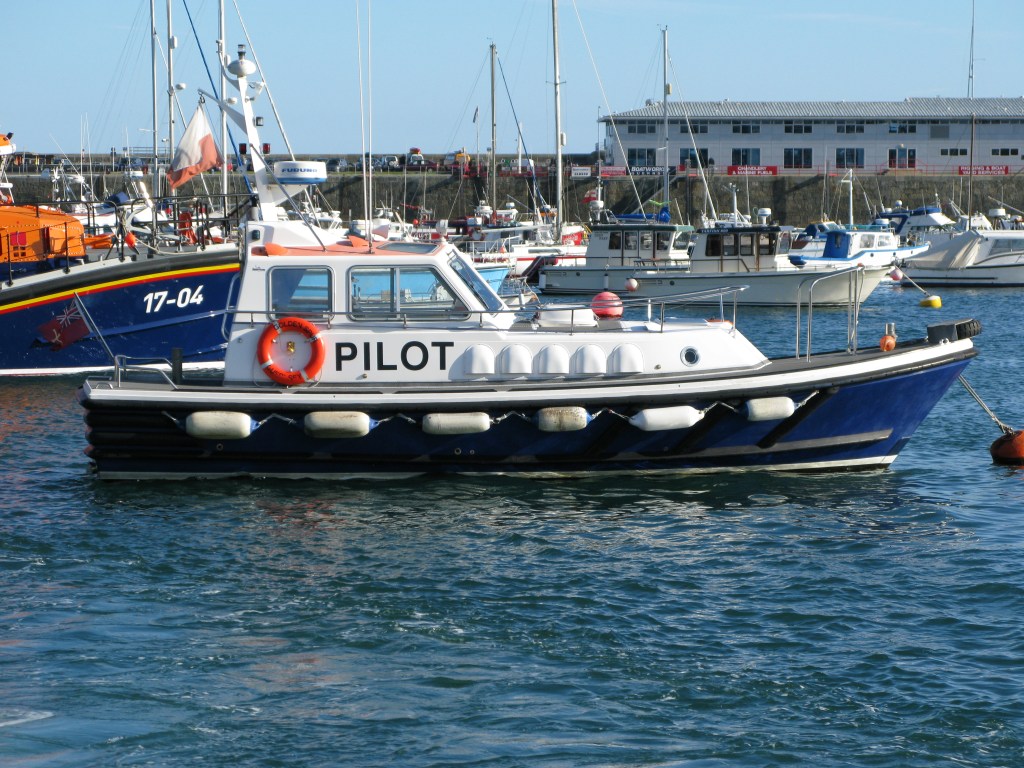
Pilot boat – St Peter Port Guernsey
After a day walking around Herm our appetite and expectation only grows walk up the steep streets from the harbour towards Mill Street and our destination for dinner – The Taste of India.
Time for a curry
When we arrive at the restaurant we discover that we are the sole dinners. When the food arrives we understand why.
The service and the food could be summed up in one word, “awful” no two words “truly awful.” Unfortunately neither, having read reviews, lived up to our expectation and the anticipation of exquisitely flavoured Goan inspired dishes. Not even our hunger could overcome the blandness of the food. Bill please!
Little chapel, little museum
Thursday, 19 August, 2010 – St Peter Port, Channel Islands, UK
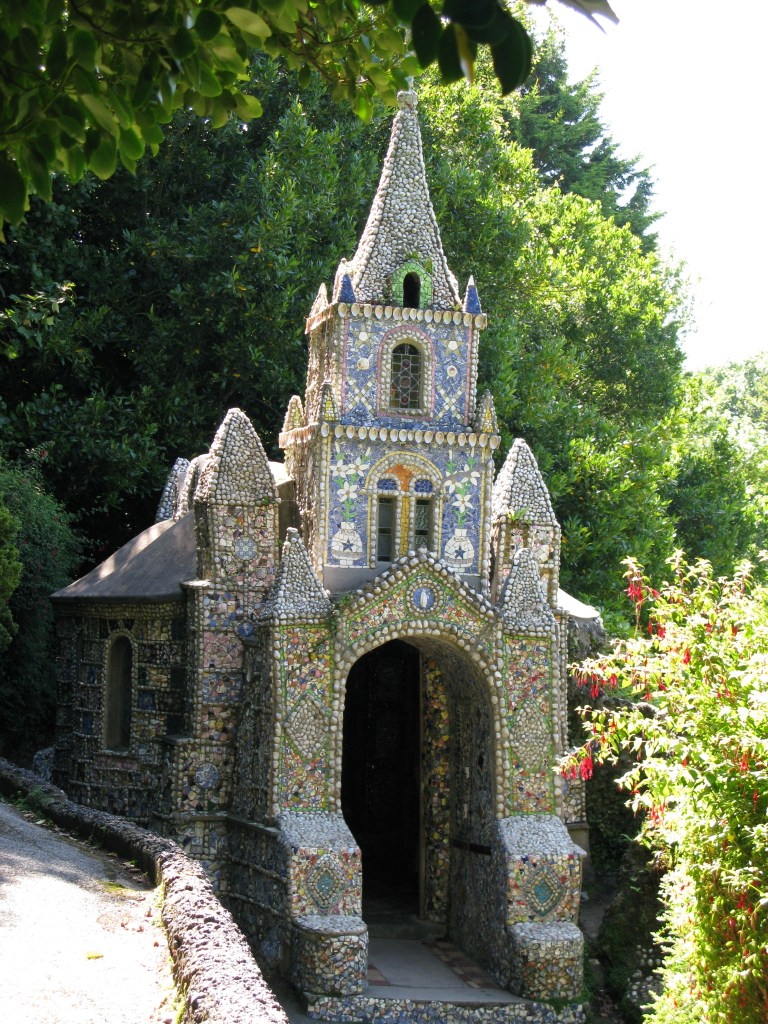
Little chapel
Our return to the Little Chapel or “Shell Church” at Les Vauxbelets is marked not only by the absence of rain, but also tourist groups. We make the most of both to explore the outside of the chapel as well as linger longer inside.
The current chapel is fact the third chapel built on this site by Brother Déodat, a monk of the French de la Salle Order who came to Les Vauxbelets in 1913, joining a group of exiled monks who had acquired Les Vauxbelets in 1904. Brother Déodat wanted to create a Lourdes-like grotto and constructed a tiny chapel which he subsequently demolished. A second chapel was constructed the following year which survived until it was demolished by Brother Déodat when the Bishop of Portsmouth could not pass through the doorway. A pattern of construction and destruction seemed to be developing!
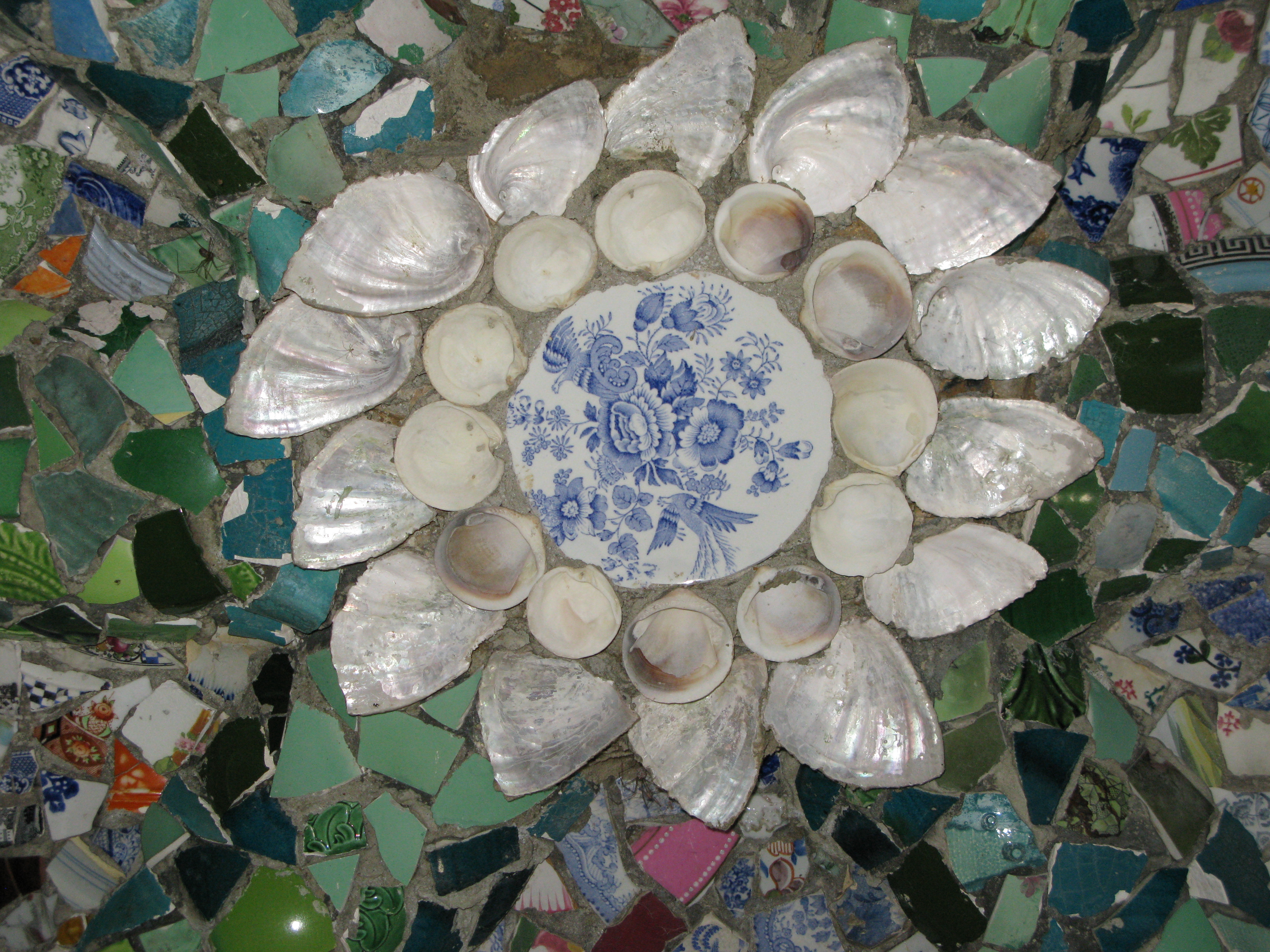
Interior Little Chapel, Les Vauxbelets, Guernsey 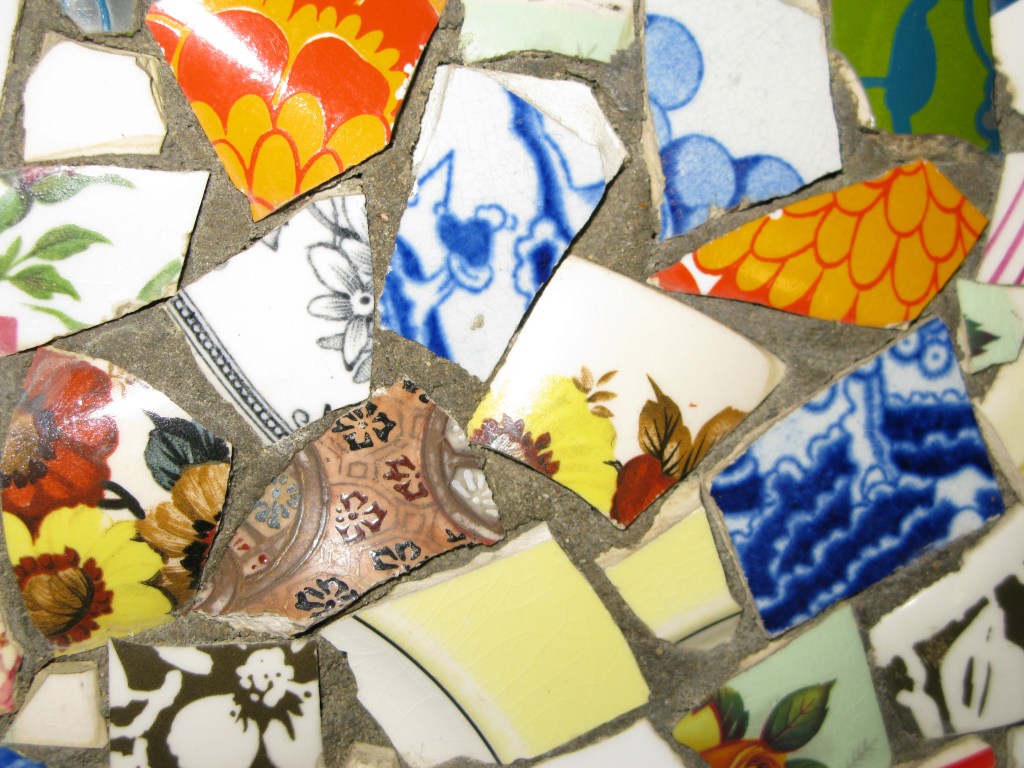
Interior Little Chapel, Les Vauxbelets, Guernsey

Little Chapel – Les Vauxbelets, Guernsey 
Detail – Little Chapel, Les Vauxbelets, Guernsey
He began construction of a third chapel – which we are visiting today – and decorated it with pebbles and broken china. An illustrated article in the Daily Mirror (1925) brought not only fame and visitors but also presents from around the world, as well as from islanders who brought coloured china and mother of pearl from the Lieutenant-Govenor. When ill health forced Brother Déodat to return to France in1939 care of the chapel passed to Brother Cephas who continued to decorate the chapel until his retirement in1965.
Little museum – German occupation museum
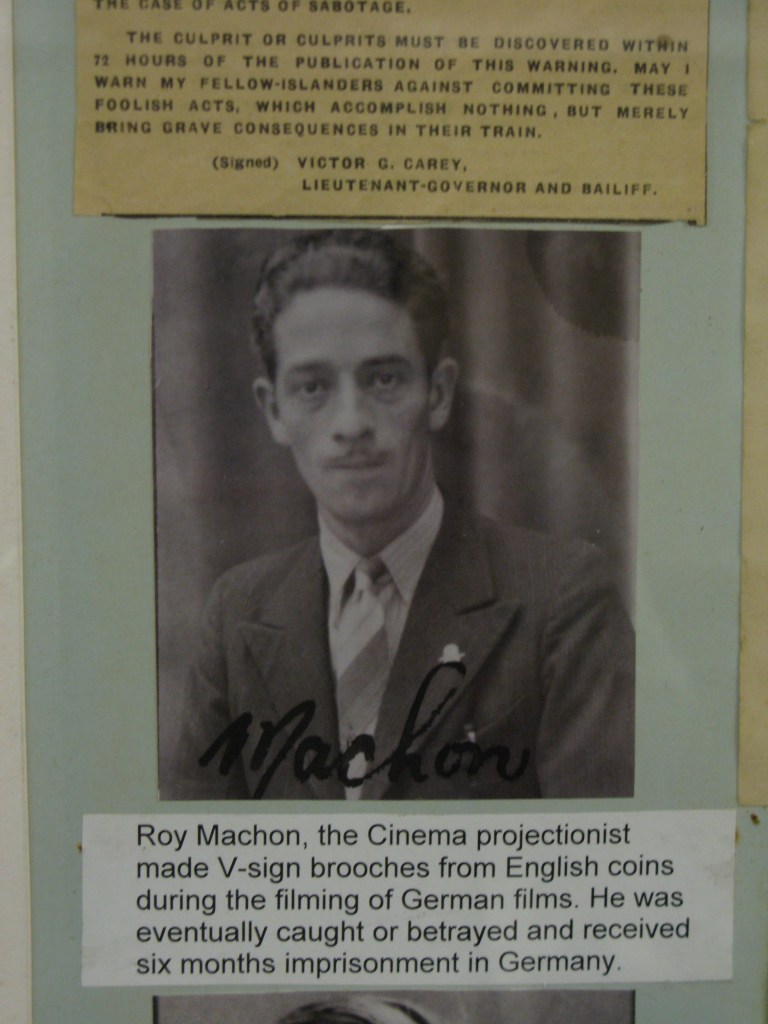
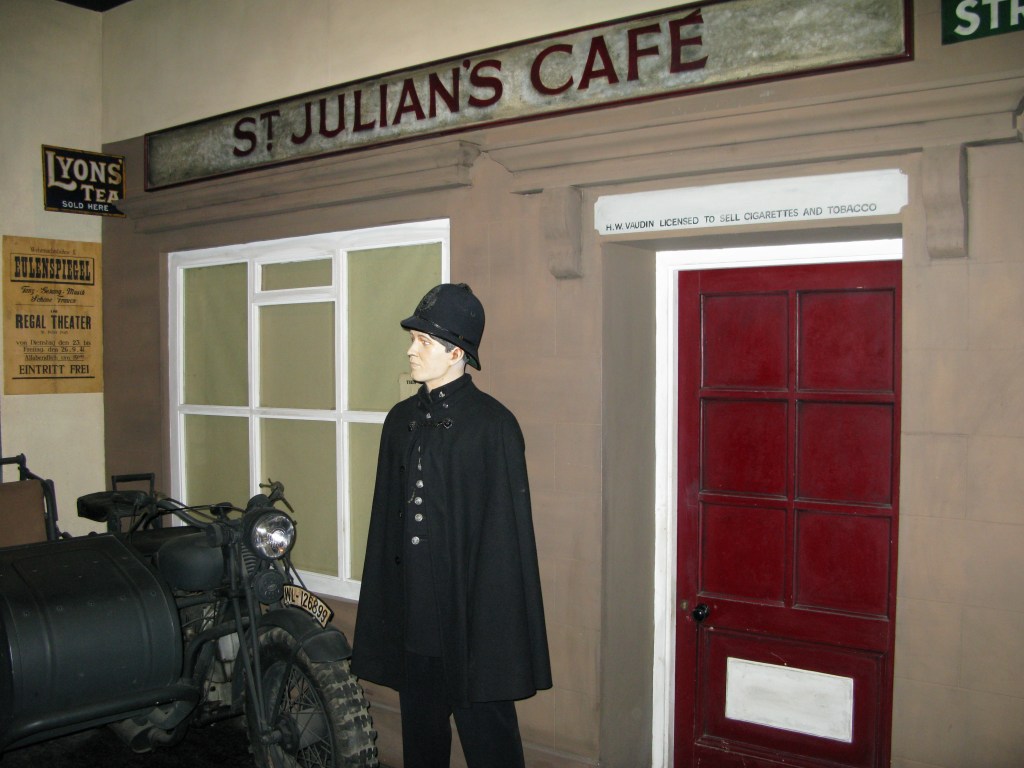
Our second stop of the day is the German occupation museum. Housed in an extended cottage it’s a quaint museum with an eclectic collection of exhibits which give a flavour of wartime life on Guernsey.
Street scene – German Occupation Museum 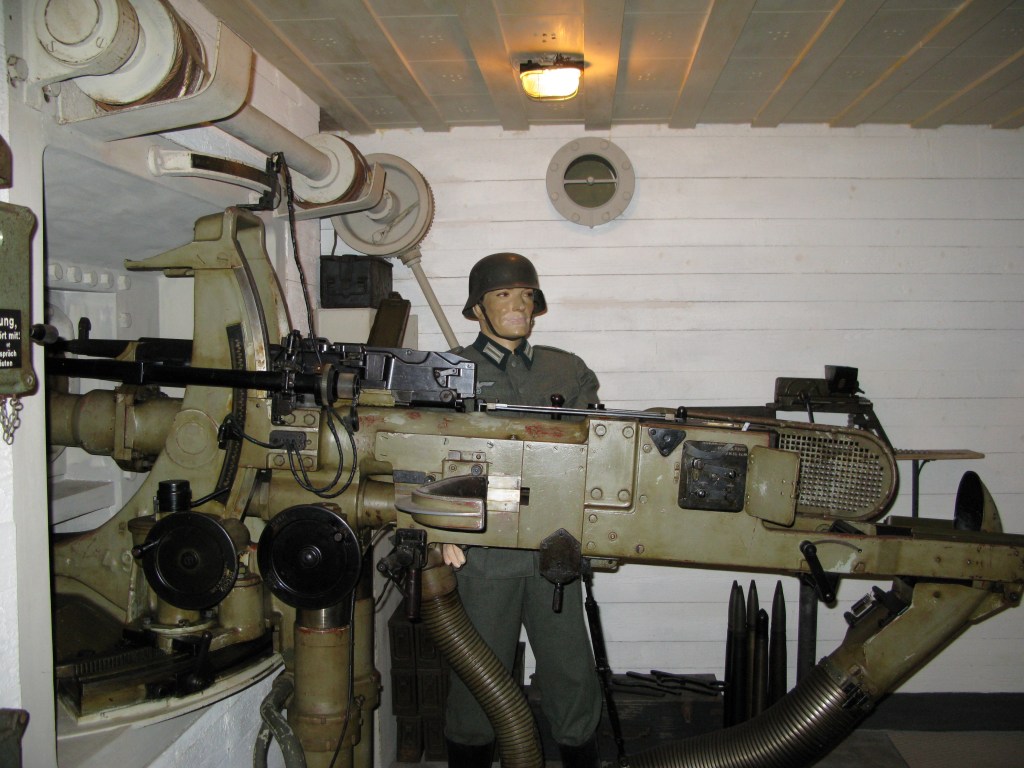
German Anti Tank Gun – German Occupation Museum
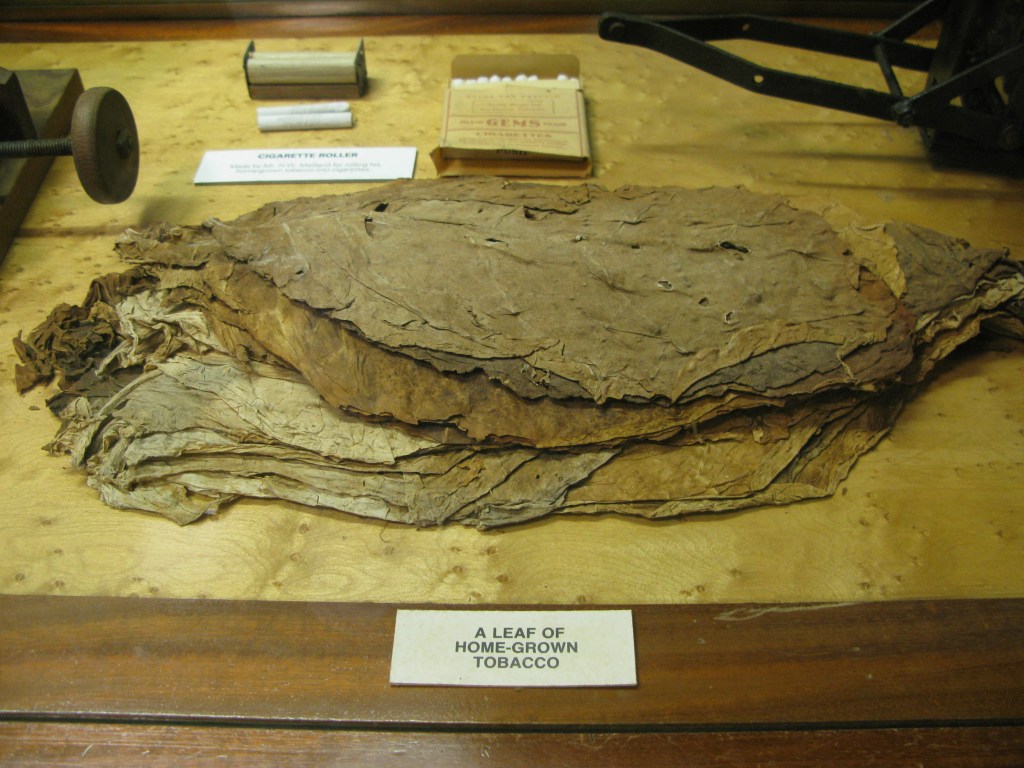
Home grown tobacco – German Occupation Museum 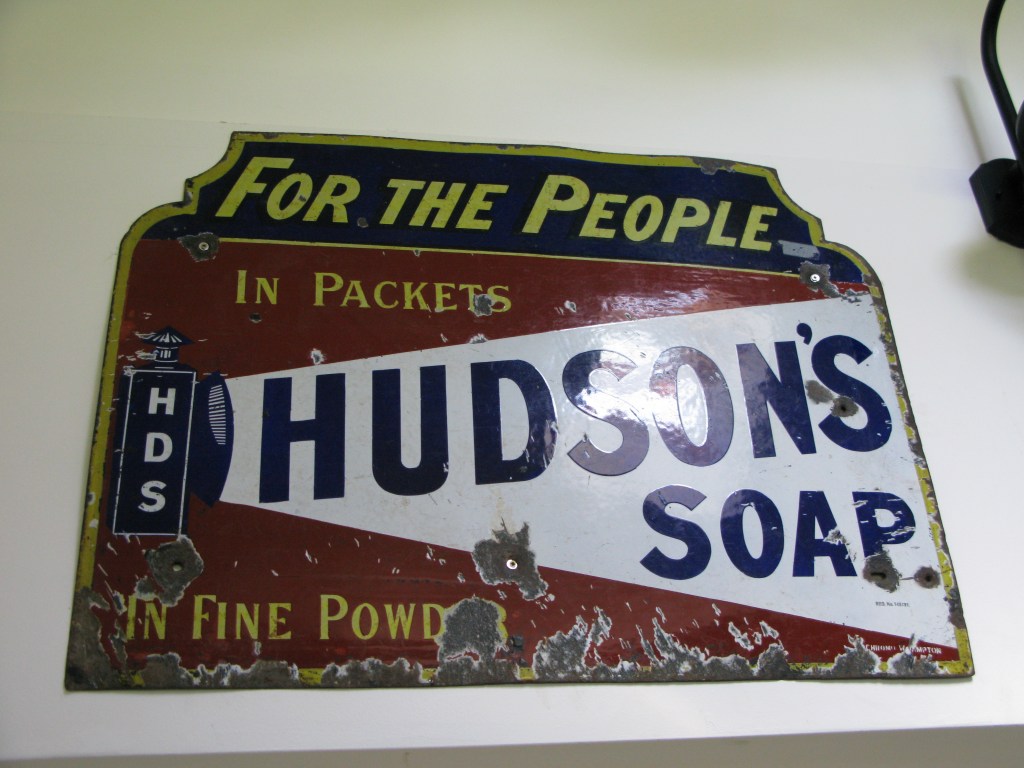
Hudson’s Soap Sign – German Occupation Museum
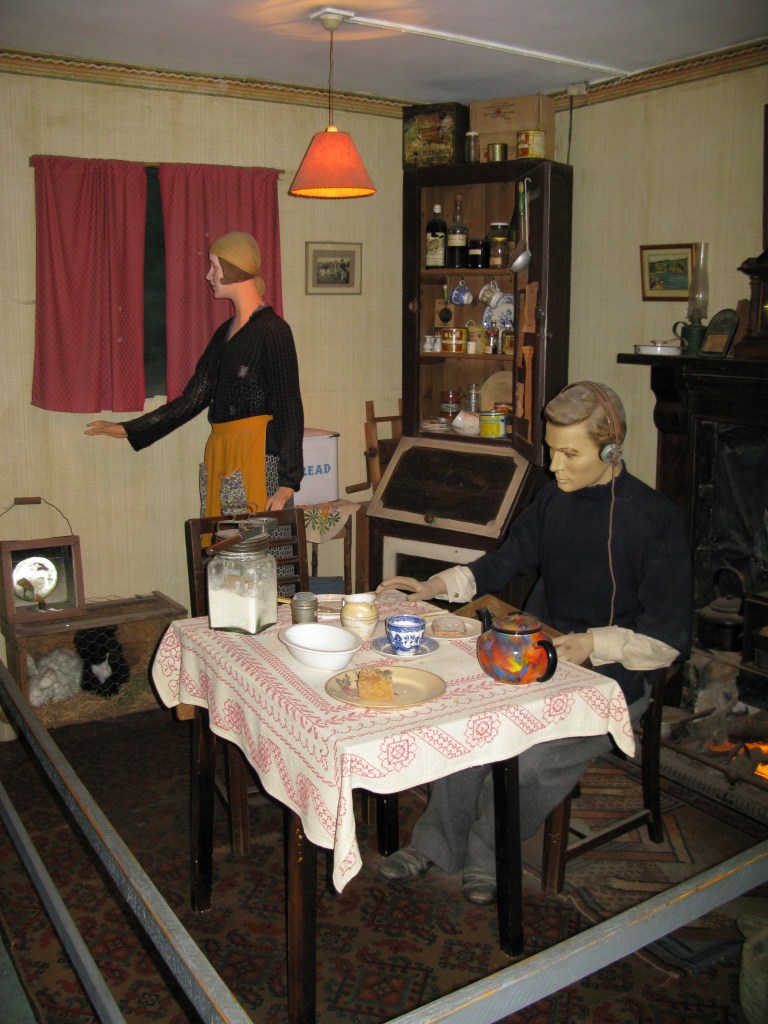
There are a few dioramas ranging from the family kitchen, which provides an insight into family life on the islands during the occupation to the recreation of a gun emplacement at the White Heart Hotel in St Peter Port. We get an insight into island life through some of the smaller items and exhibits, for example the home grown tobacco leaves and home made mechanical tobacco cutter made by a Mr Tidd. And of course signs like the ever popular Hudson’s Soap.
The Occupation Kitchen is an authentic reconstruction of a typical household kitchen from late 1944. The occupying German army imposed a curfew on the islanders who, if they were not indoors by 9.00pm, were liable to be arrested or even shot. The diorama depicts a small family, mother, father and daughter, who have just eaten their dinner of fried onions. Father sits at the kitchen table listening to the news on an illegal crystal radio set whilst his wife stands near the window to listen and watch for German patrols. In the fireplace there is a pan keeping warm and below that a loaf is being baked. The scene is well observed and the diorama is well dressed with fixtures, fittings and household items from the period.
The White Heart Hotel in St Peter Port was commandeered by the occupying German forces. It housed the control panel which was wired to explosives set around the harbour which would be detonated in the event of assault by allied forces.
The diorama of the bunker gun room which was constructed on the ground floor of the main bar of the hotel to house the Czechoslovakian 4.7cm anti-tank gun with a coaxial mounted machine-gun which would have covered the crossroad outside.
By 1944 the Guernsey coastline was defended by 16 of these weapons housed in concrete casemates with a further 17 installed in reinforced field order positions.
Streets of St Peter Port
Saturday, 21 August, 2010 – St Peter Port, Channel Islands, UK
Guernsey Museum and Candie Gardens
After discovering story of Guernsey in the Guernsey Museum at Candie we stop for refreshments – coffee for Sue and I and milkshakes for Josh and Grace – in Café Victoria. Housed in a cast iron Victorian bandstand, which has now been glazed, we enjoy a view of the gardens and the harbour beyond.
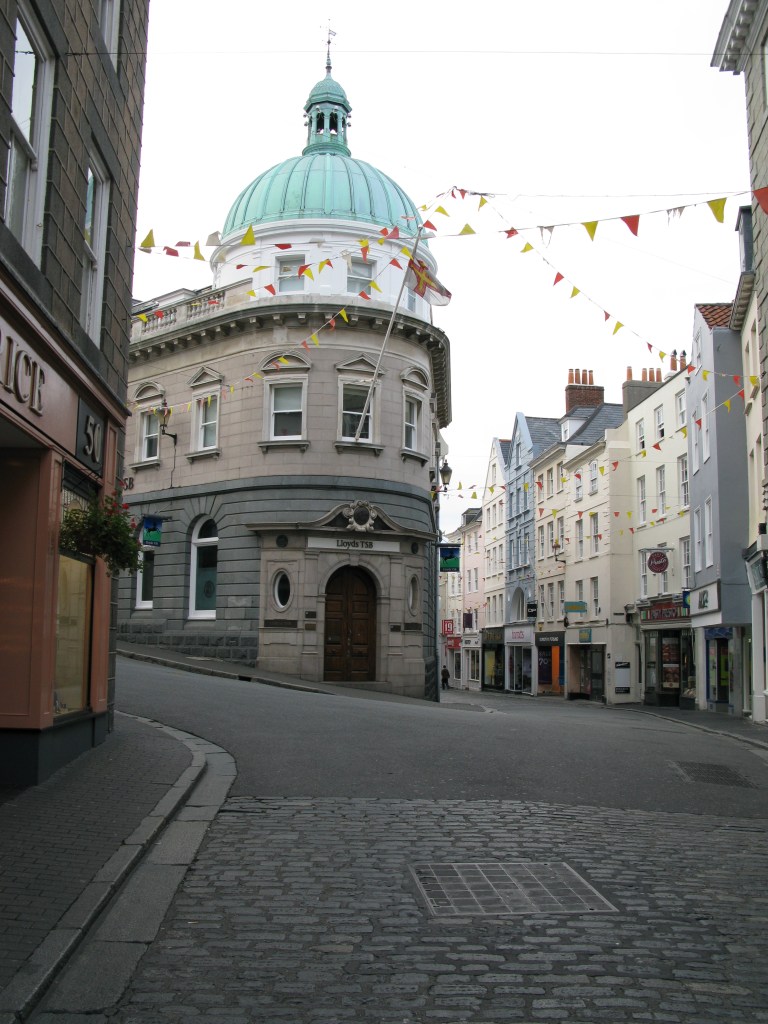
Walking the streets of St Peter Port we have to take a picture of the Lloyds Bank which was captured in a photograph with German troops marching past during the occupation!
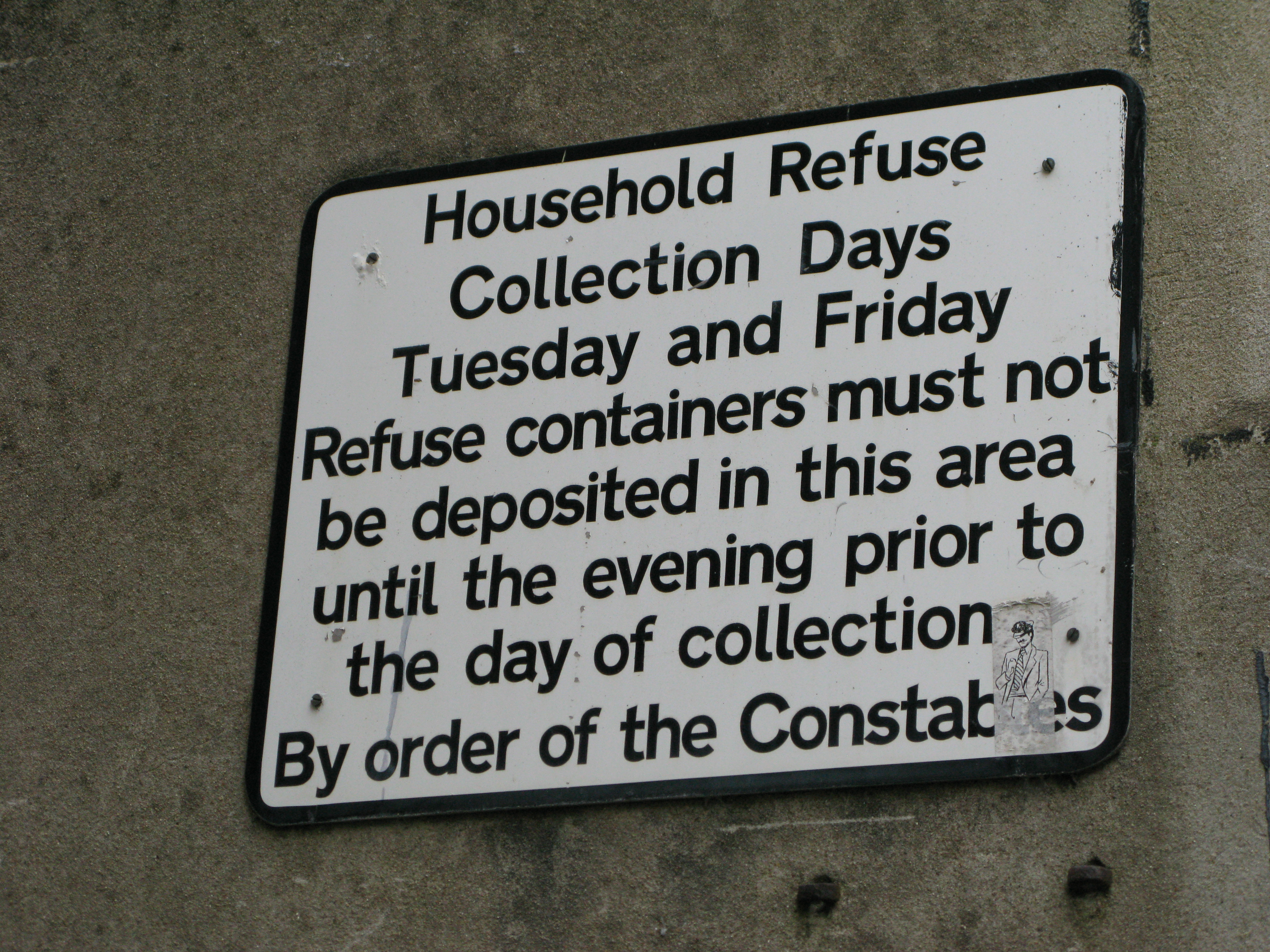
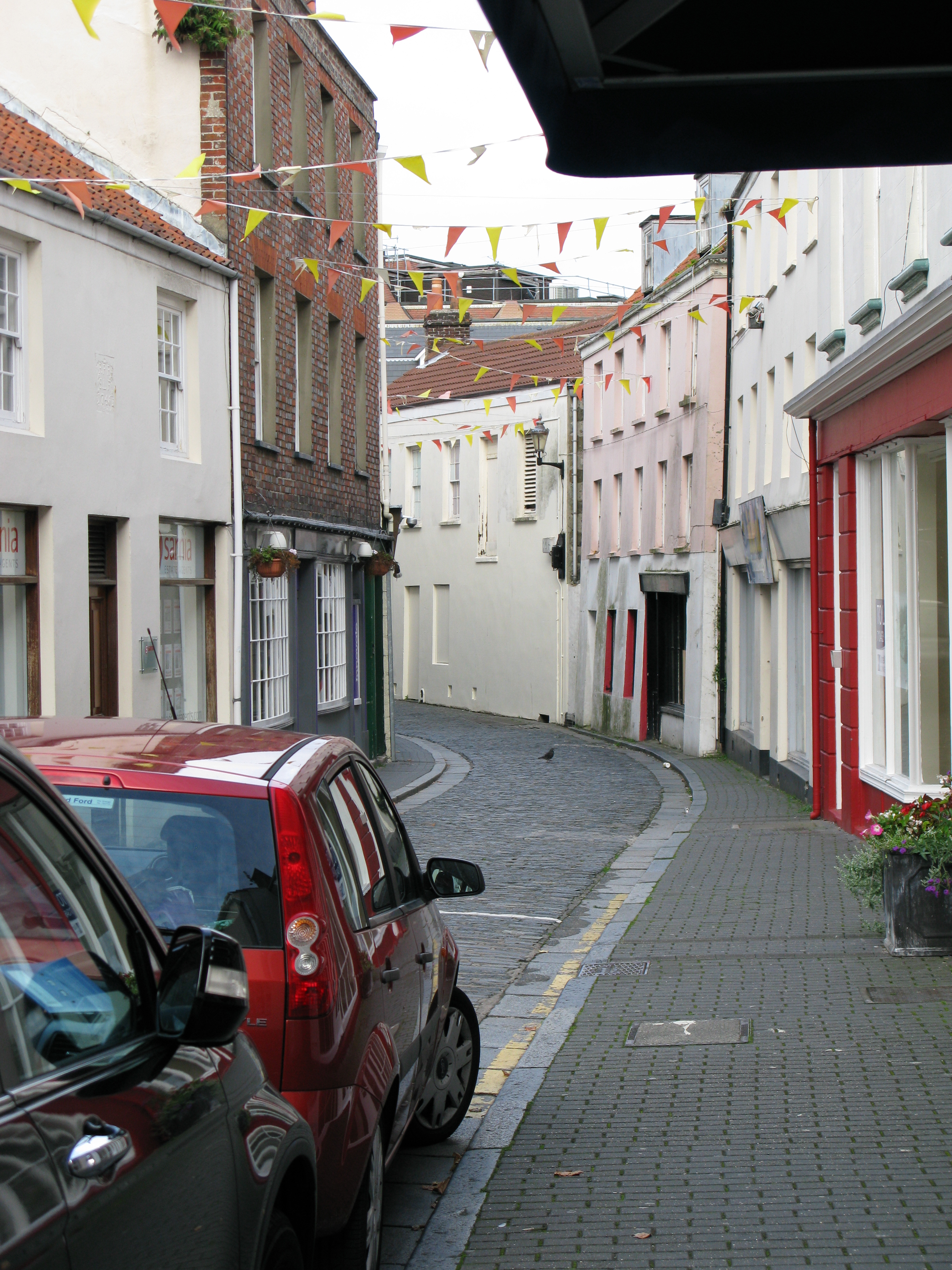
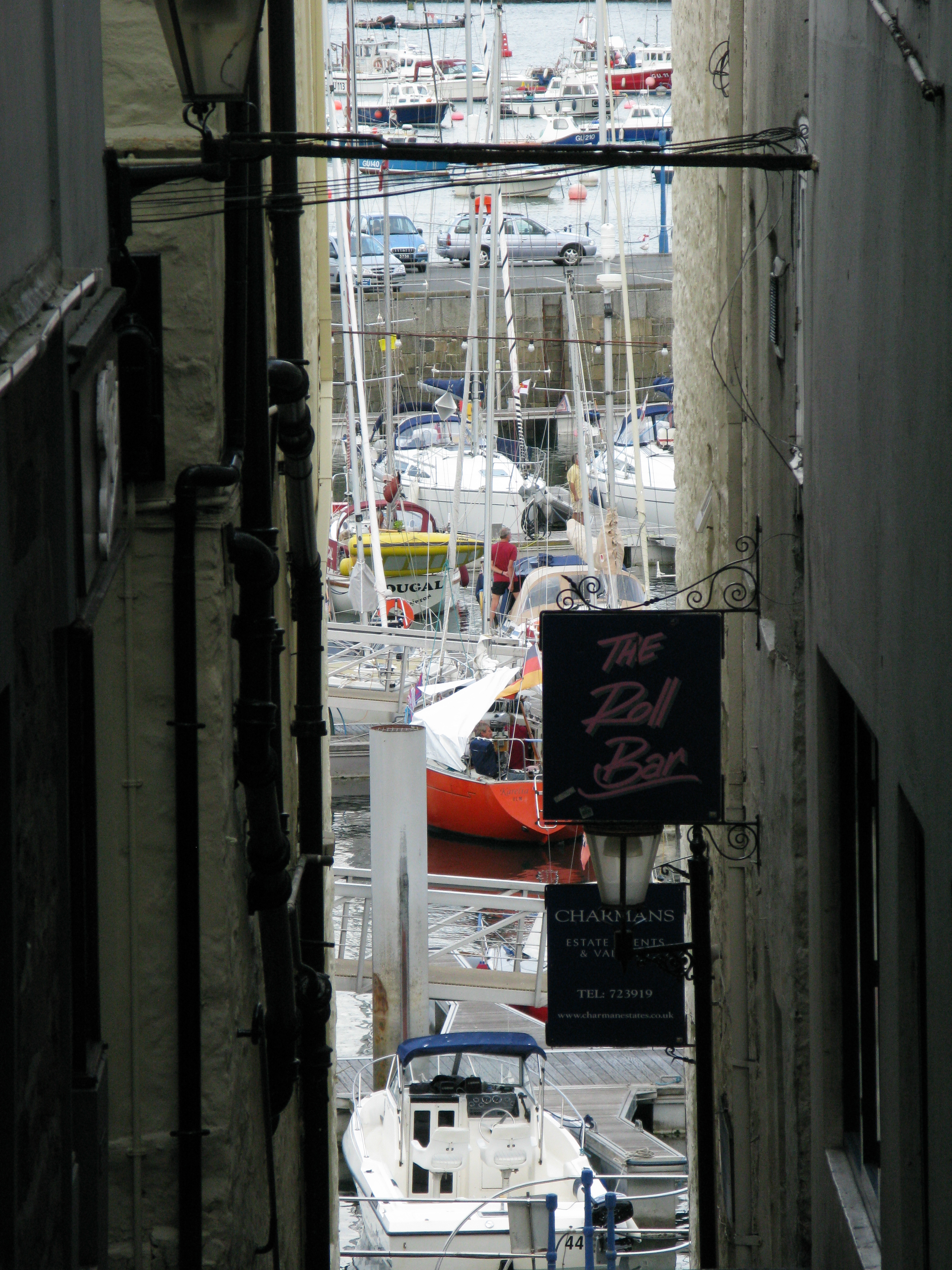
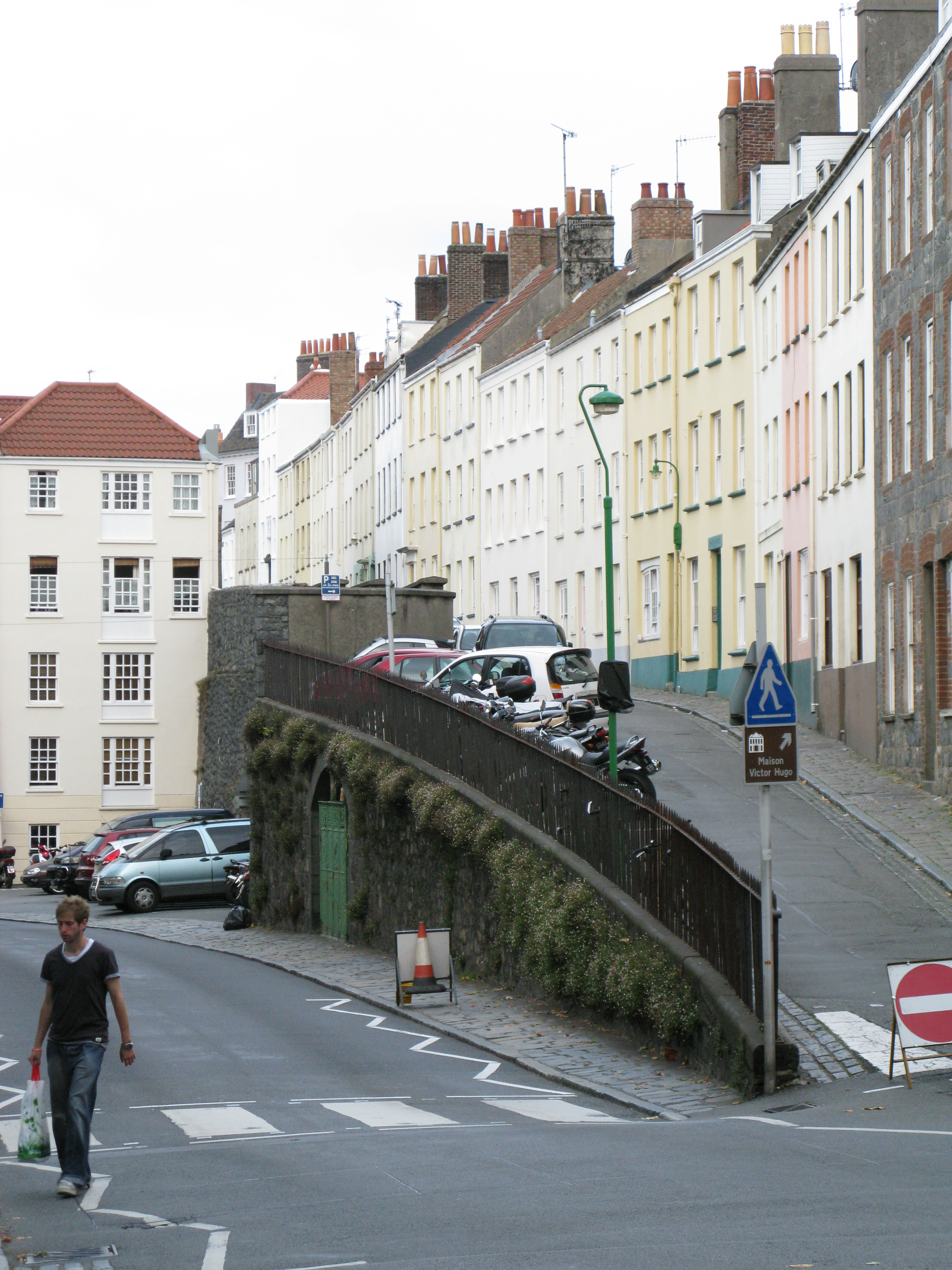
From left to right: Refuse sign; Street scene; Alley to the harbour; Street scene. All St Peter Port Guernsey.
Boys day out
Monday, 23 August, 2010 – St Peter Port, Channel Islands, UK
Ferry nice
We’re sailing with The Isle of Sark Shipping Company which operates small ferries from Sark to St Peter Port, Guernsey and arrive early at the harbour to board the 10:00 service. The nine mile crossing takes about 45 minutes.
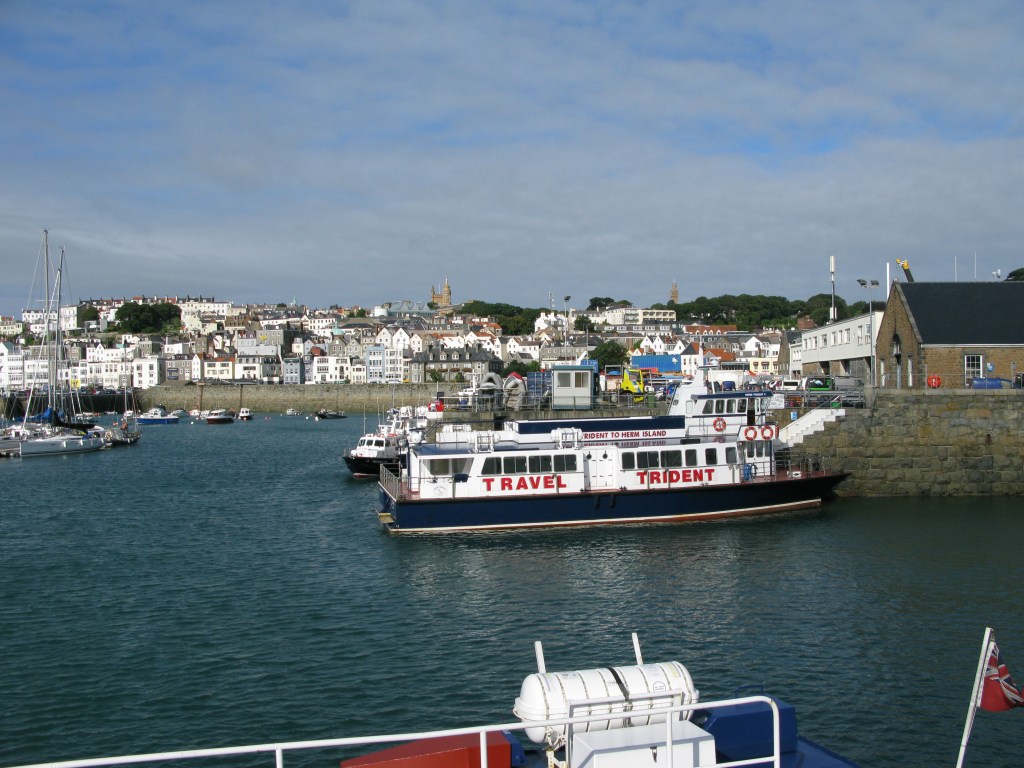
Slow boat to Sark
Monday, 23 August, 2010 – Sark, Channel Islands, UK
From feudalism to democracy…
Sark was considered the last feudal state in Europe until the new constitution was approved by Queen Elizabeth II through the Privy Council and a general election for a new style democratic government was held in December 2008. But the Barclay brothers on nearby Brecqhou could pose more of a threat to the island’s way of life than the German occupation and become more of a benign or malign dictatorship post constitutional reforms.
But we’re not thinking politics now we are sailing into Sark.
Safely into Sark
We dock at Maseline, Sark’s deep water harbour, which was finally opened in 1949. Construction commenced in 1938 but was interrupted by the German occupation.
The island is a car-free zone, the only vehicles allowed are horse-drawn vehicles, bicycles, tractors, and battery-powered buggies or motorised bicycles for elderly or disabled people. Passengers and goods arriving by ferry from Guernsey are transported from the wharf by tractor-pulled vehicles.
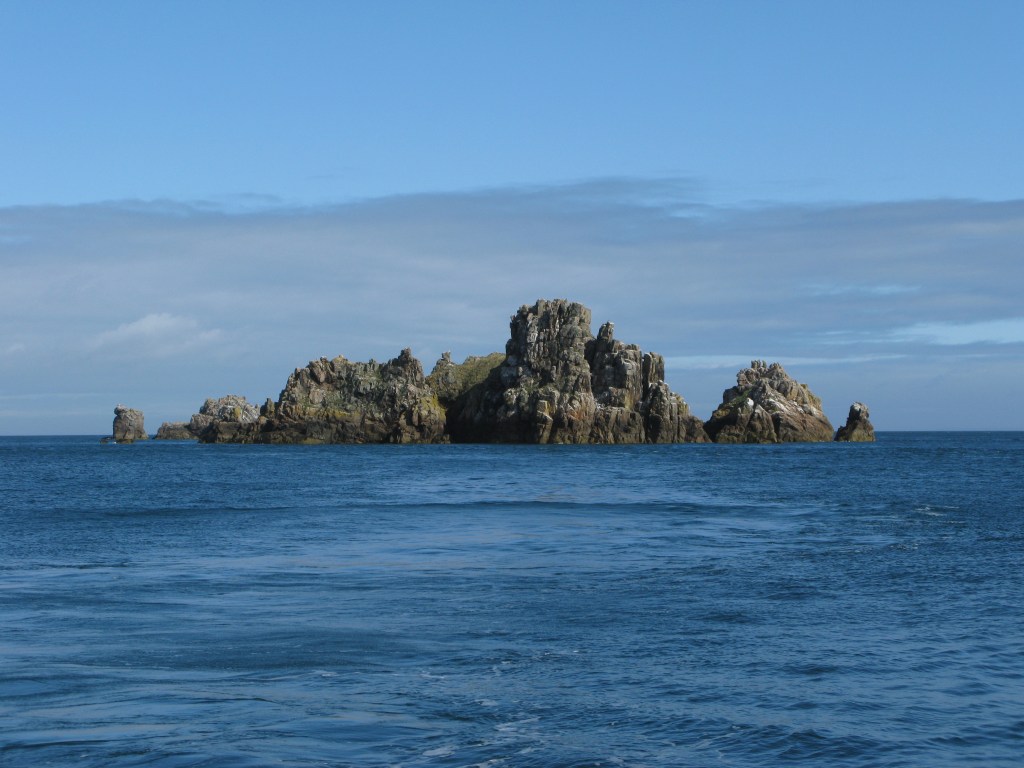
Sark 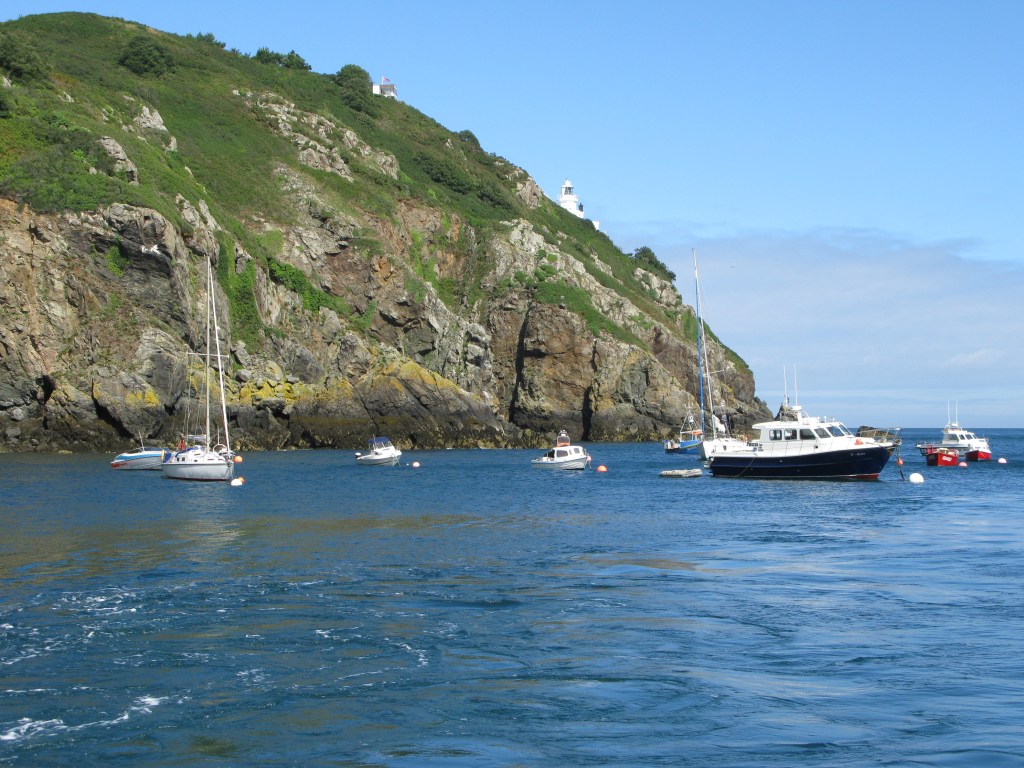
Sark
We pass through the tunnel with the “Welcome to Sark” sign above and head towards the Harbour Hill Bus, well a makeshift tractor pulled land train called the “toast rack”, which takes us on the 1k trip to the top of the hill.
Clameur de Haro
Before leaving for Sark we’d read about the Clameur de Haro, one of the old laws of the Channel Islands. Using this legal device a person can obtain immediate cessation of any action they considers to be an infringement of their rights.
At the scene, in front of at least two witnesses, they must kneel with their hands in the air and cry out: Haro! Haro! Haro! A l’aide, mon Prince, on me fait tort. Then recite the Lord’s Prayer in French. The action must then be registered with the Greffier within 24 hours.
On hearing the Clamour de Haro, the alleged wrong-doer must cease their challenged activities until the matter is adjudicated in court. Failure to stop will lead to the imposition of a fine, whether they were in the right or not. If the Criant is found to have called Haro without a valid reason, they in turn must pay a penalty.
The last Clameur recorded on Sark was raised in June 1970 to prevent the construction of a garden wall! Fortunately we did not have to resort to the Haro whilst we were on Sark. Good news because I’m a bit rusty on the Lord’s Prayer in French!
La Coupee
Sark is connected to Little Sark by a narrow isthmus. Eroded by the sea the narrow causeway is just 9ft wide and 300ft long with a drop of over 300ft on either side.
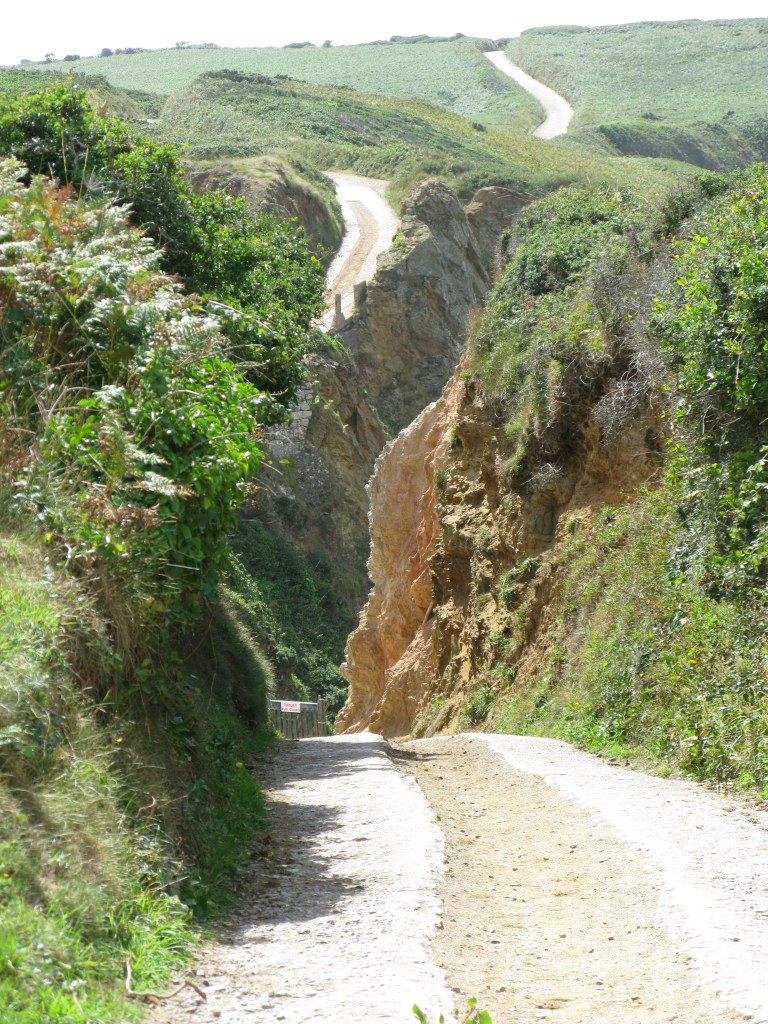
In 1802, Elie Guille of the Clos-à-Jaon was carrying sheaves of corn across La Coupée as a payment of tithes and was blown over the east side and fell to his death.Before the railings were erected in 1900 young children would crawl across on their hand and knees to avoid being blown over. A narrow concrete road covering the entirety of the isthmus was built in 1945 by German prisoners of war under the direction of the Royal Engineers. From the western side of the isthmus there is a stunning view of La Grand Greve below and to the eastern side a view of Convanche Bay.
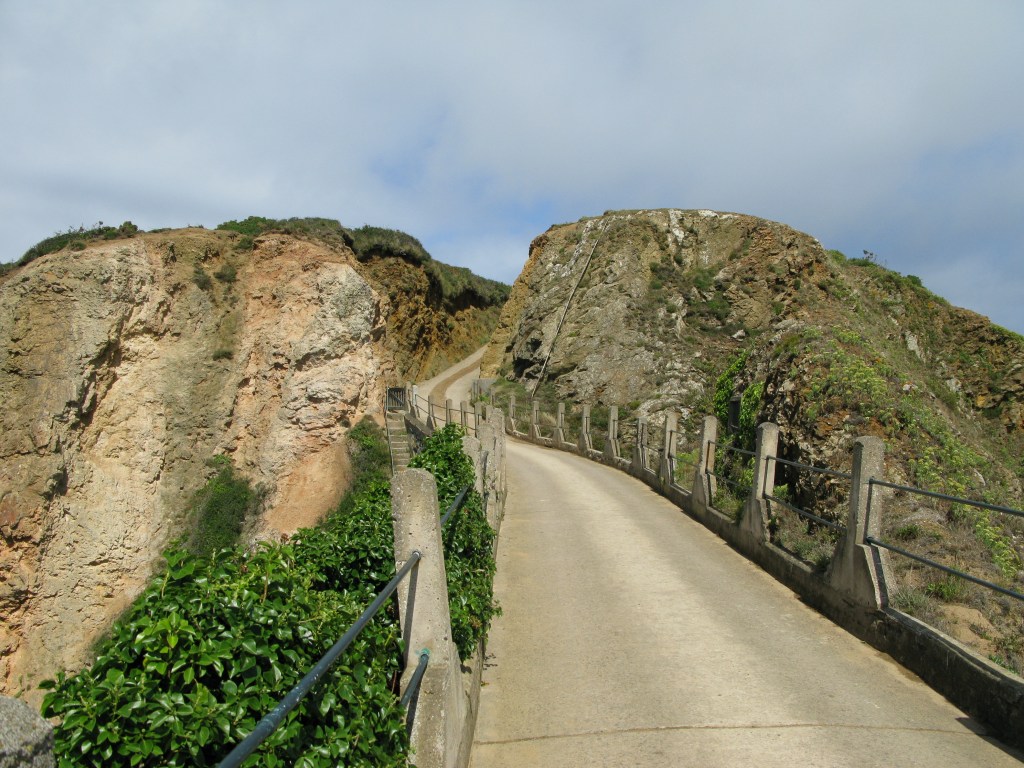
La Coupée – Sark 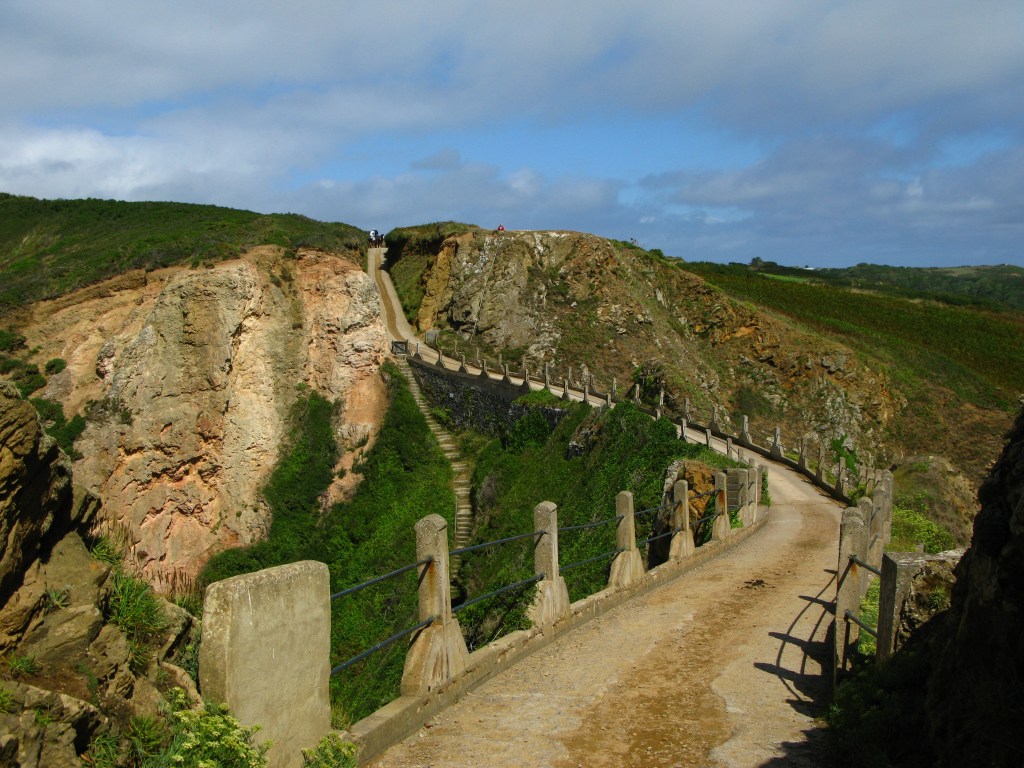
La Coupée – Sark 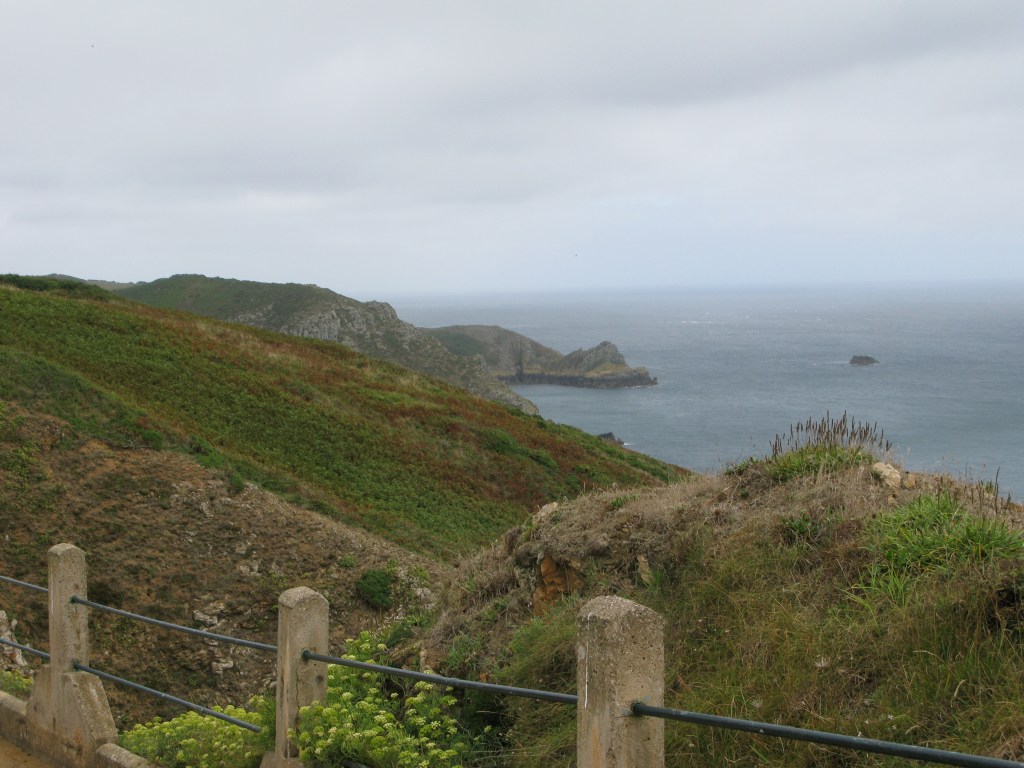
Sark 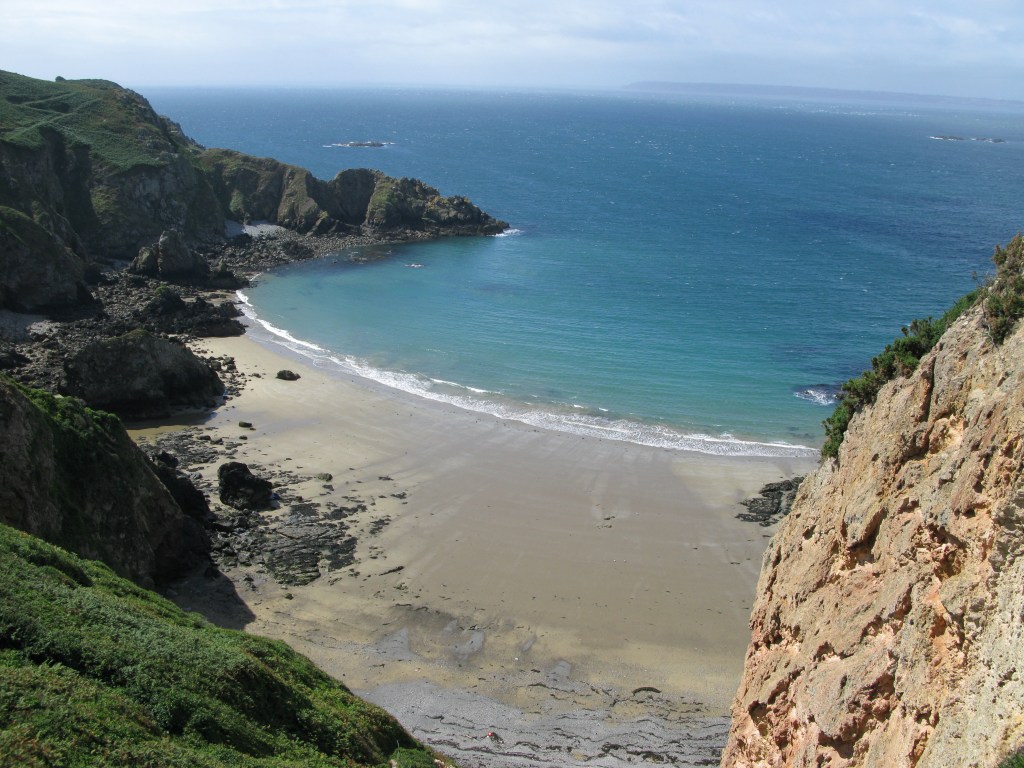
La Grande Greve – Sark 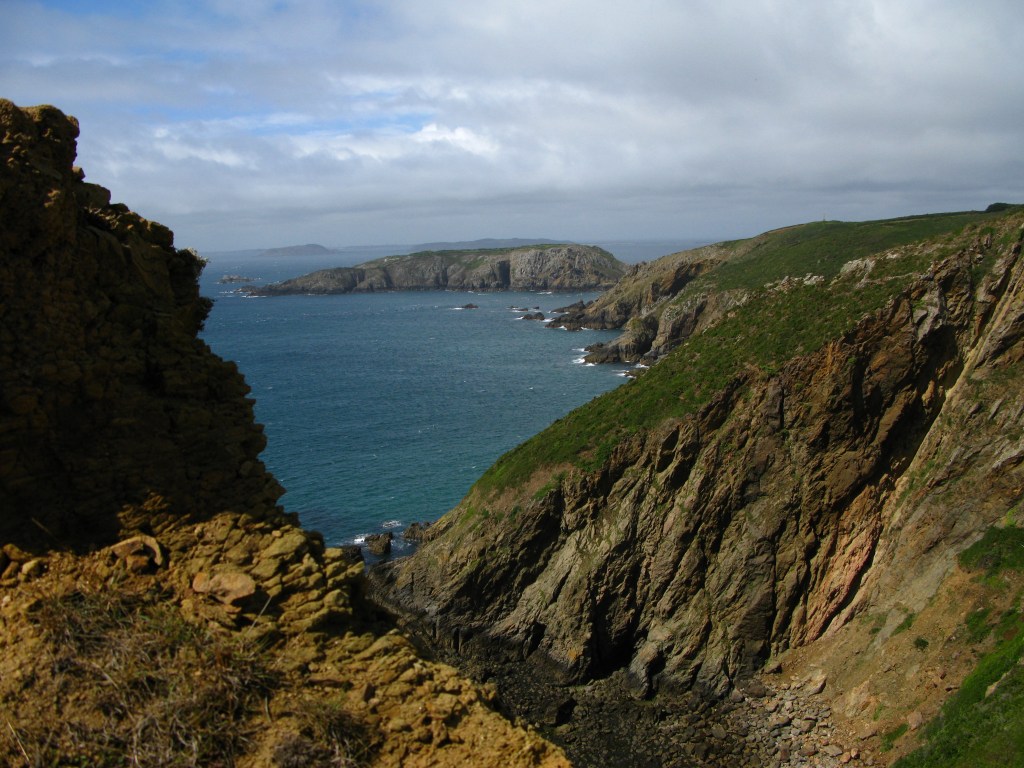
Sark 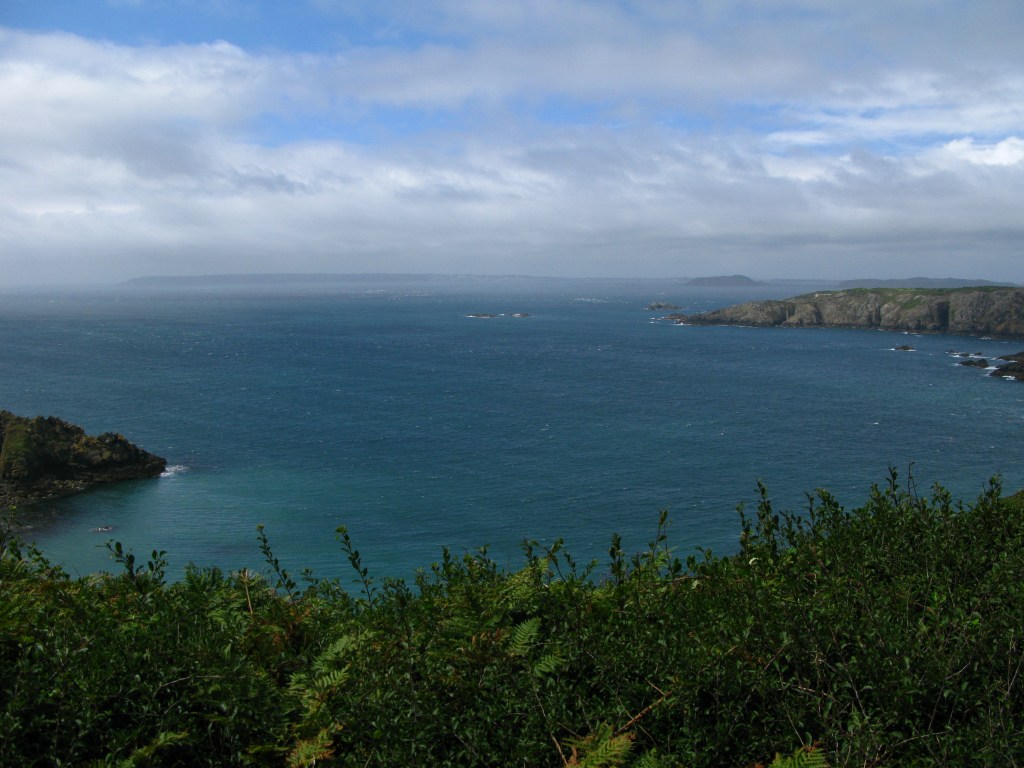
Sark
Unfortunately we don’t have time to cross La Coupee and explore Little Sark which is a shame. Next time we come here we’ll have to head here first to see the ruins of the silver mines at Port Gorey, and the natural swimming pools – the Venus Pool and the Adonis Pool – whose waters are refreshed at high tide.
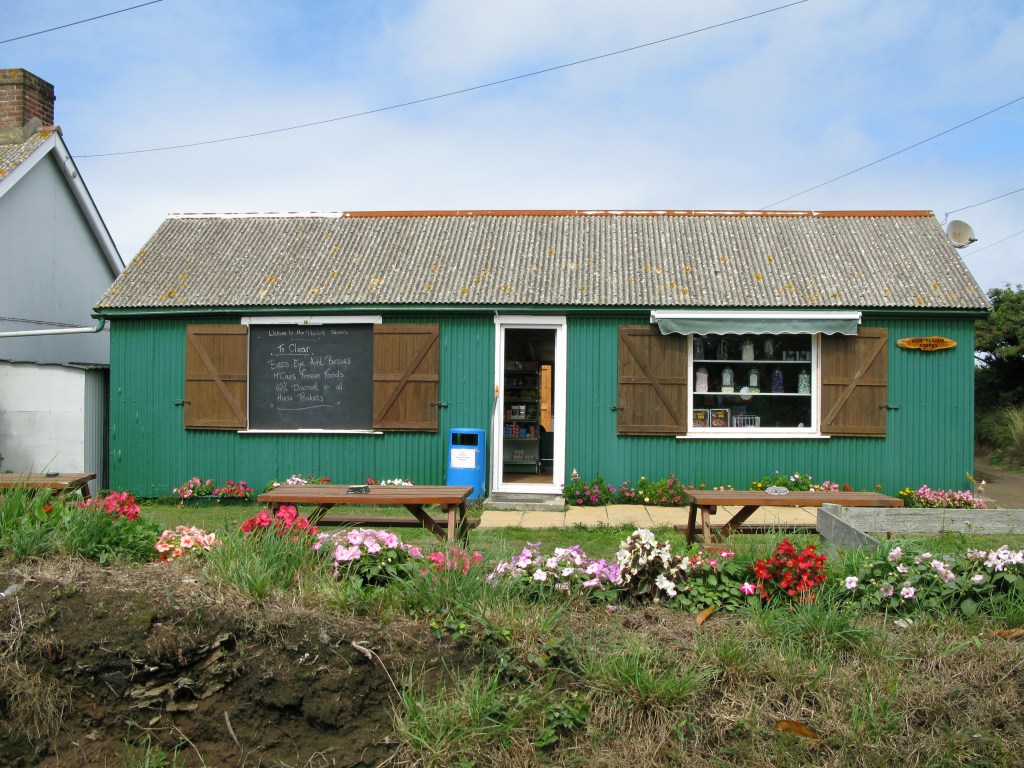
Shop – Sark 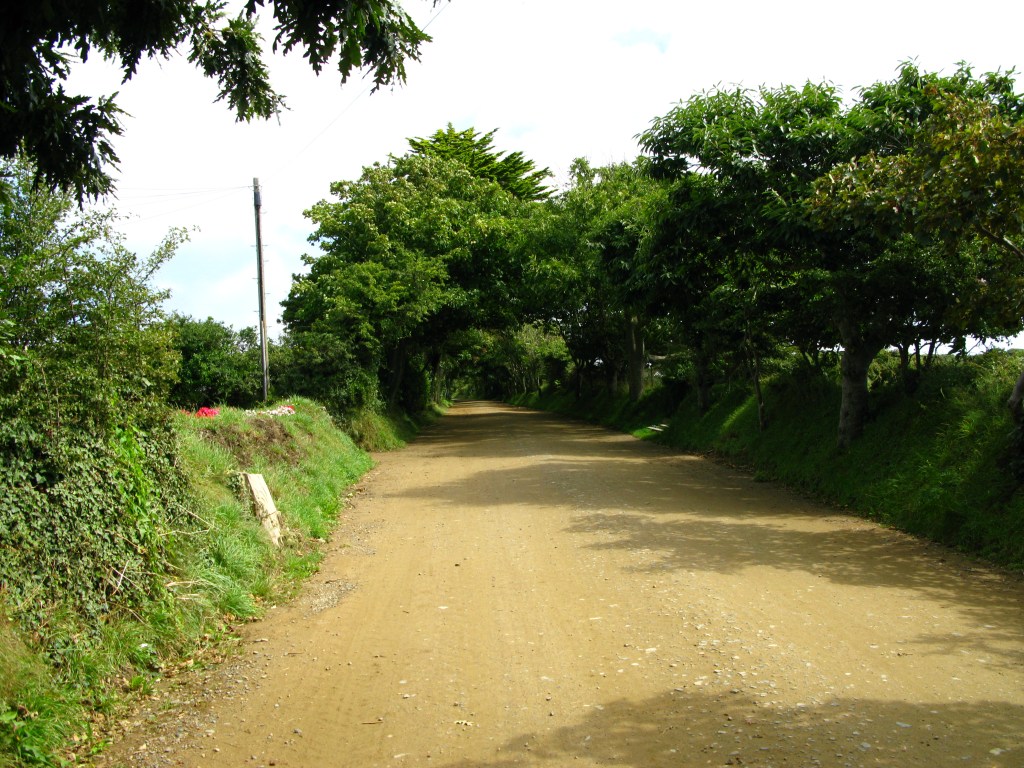
Motor free roads – Sark 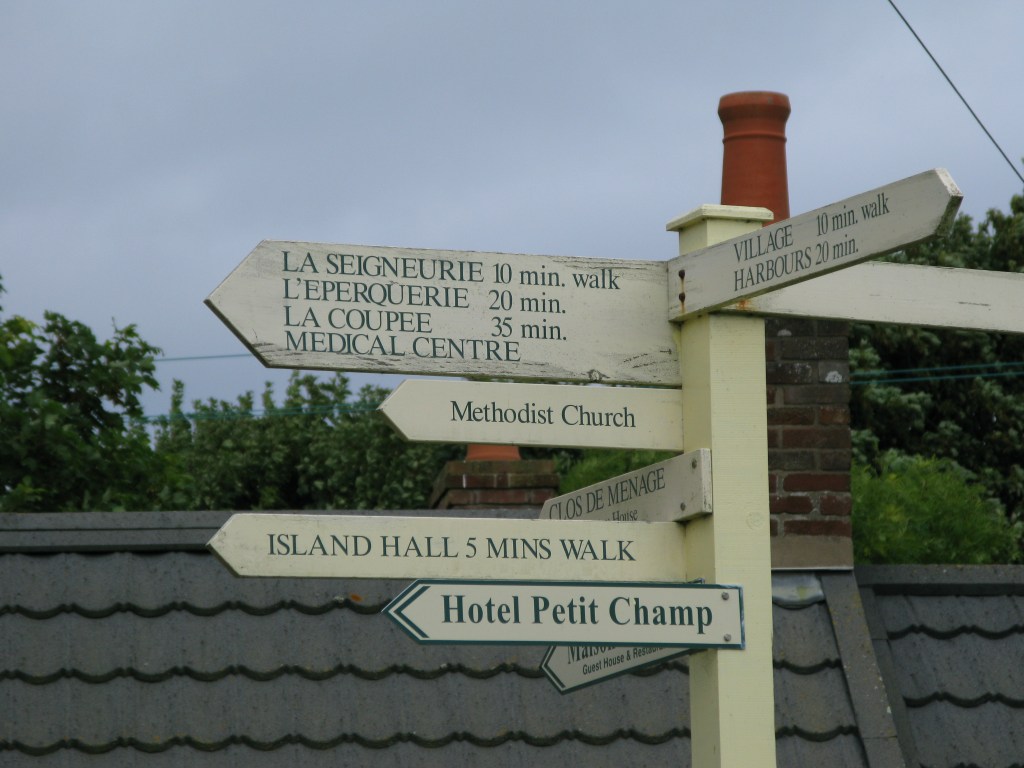
Sign – Sark
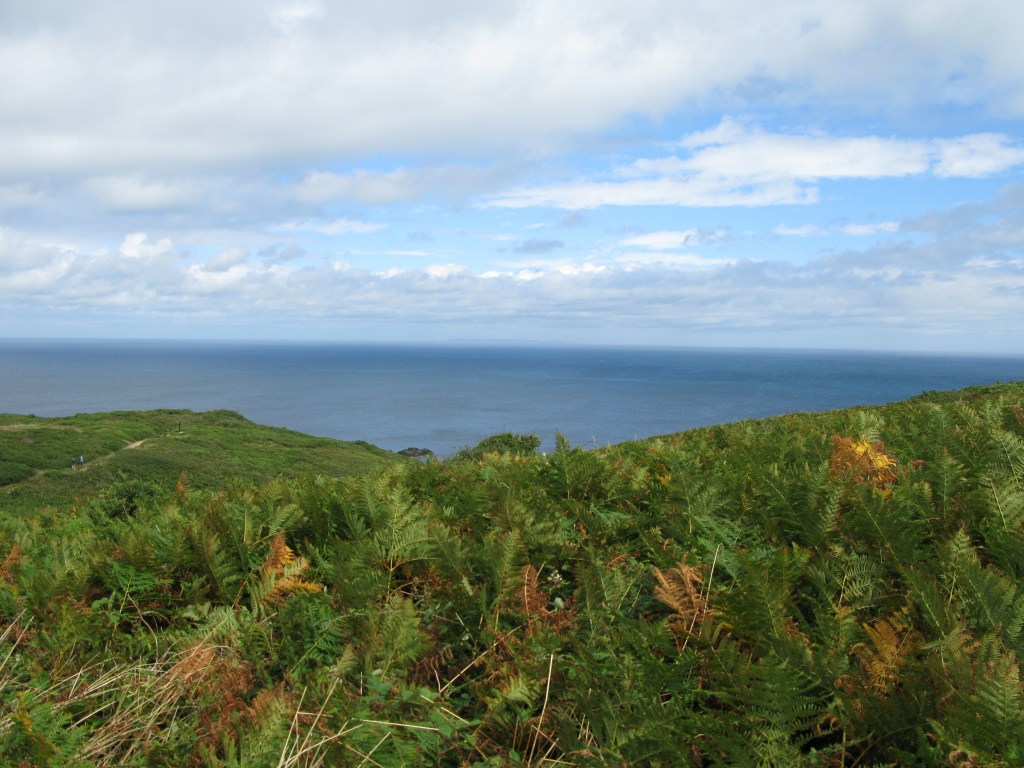
Sark 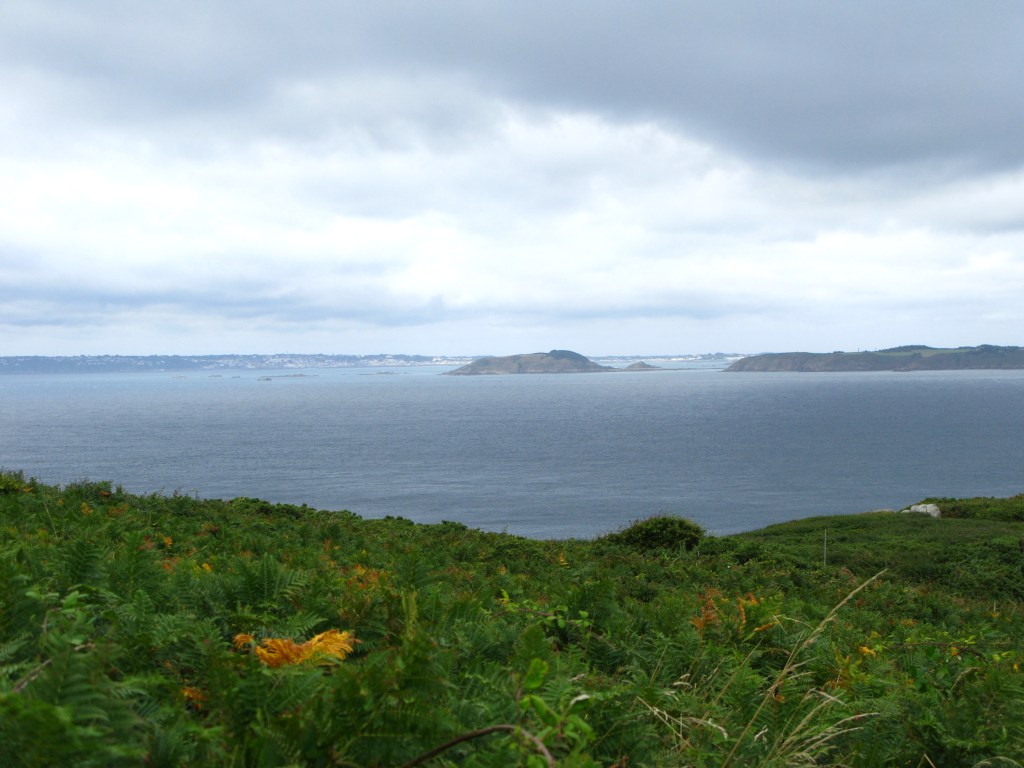
Sark 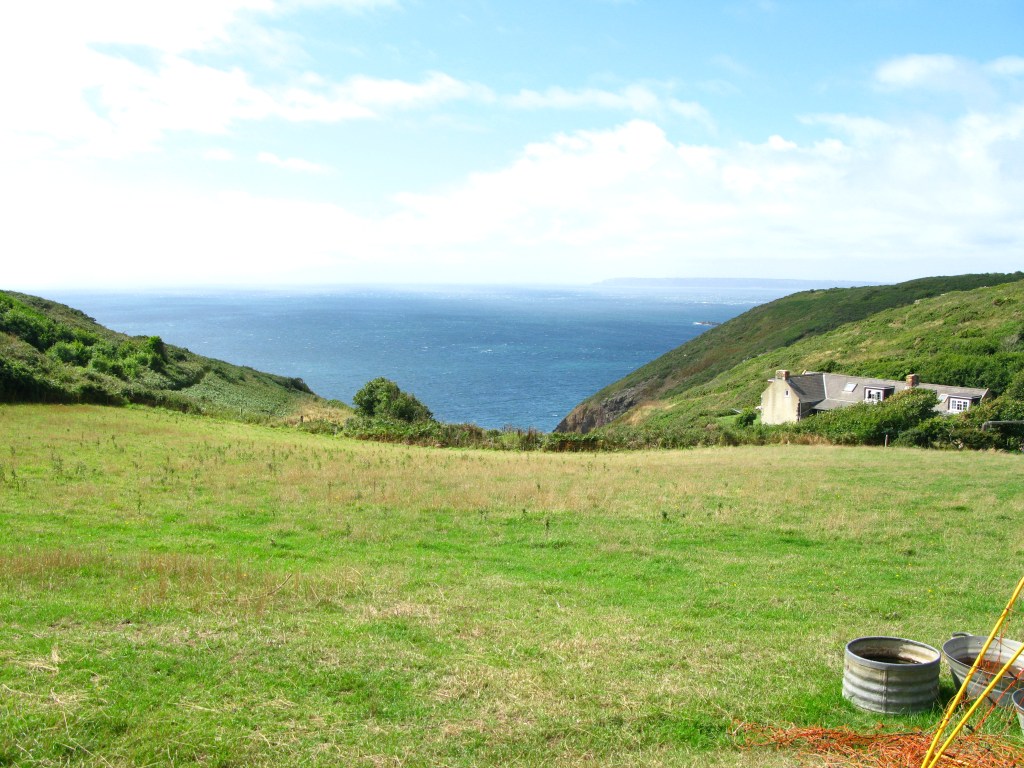
Sark 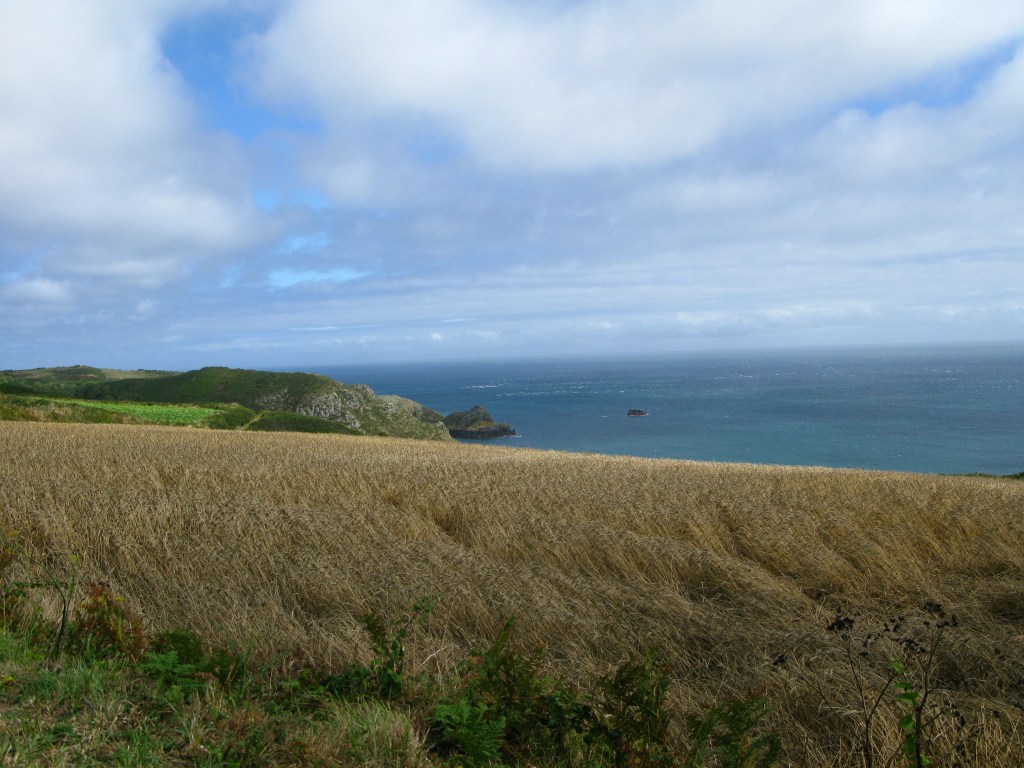
Sark 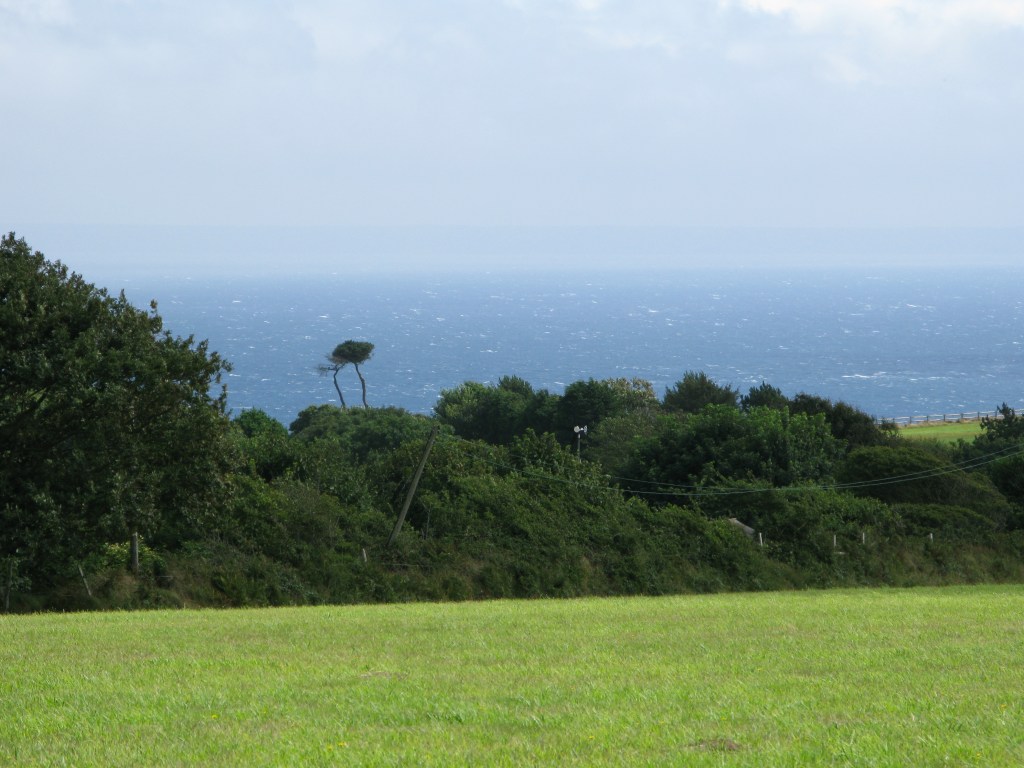
Sark
We don’t need no education
There is only one school of Sark for residents’ children aged 4 to 15. The school is divided into 4 classes based on age. Class 1 takes for children aged 4 to 7 (Reception to Year 2): Class 2 children aged 7 to 10 (Year 3 to Year 5); Class 3 children aged 10 to 14 (Year 6 to Year 9) and Class 4 for children aged 14 to 15 (Years 10 and 11). A limited number of GCSEs are offered but most children undertake GCSE and A level study in Guernsey or England.
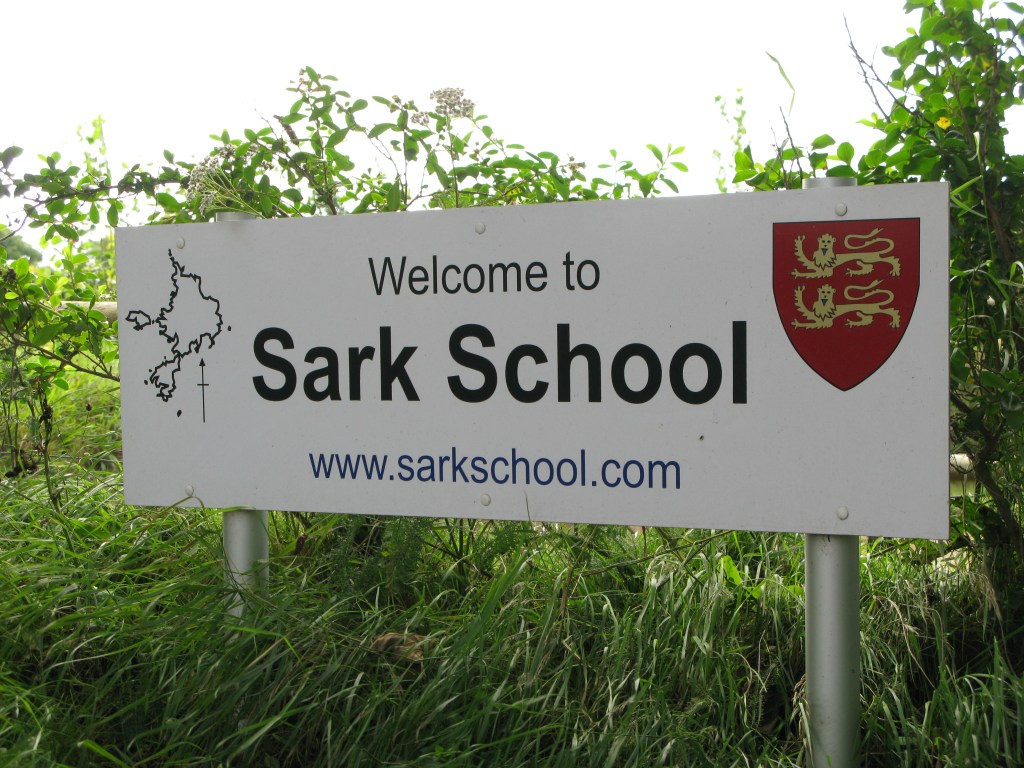
Sark School 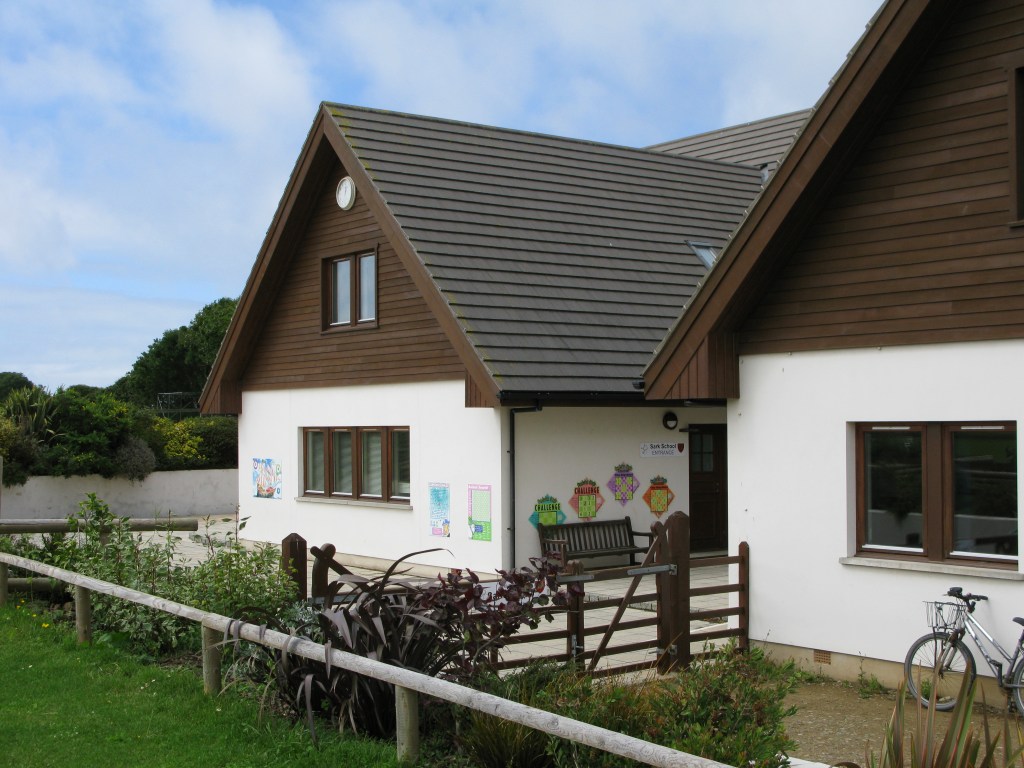
Sark School
Churches
Sark has an Anglican church (St. Peter’s, built 1820) and a Methodist church. John Wesley first proposed a mission to Sark in 1787 and Jean de Quetteville of Jersey subsequently began preaching there, initially in a cottage at Le Clos à Geon and then at various houses around Sark. Preachers from Guernsey visited regularly, and in 1796, land was donated by Jean Vaudin, leader of the Methodist community in Sark, for the construction of a chapel, which Jean de Quetteville dedicated in 1797. The present day chapel at Rue du Sermon (below) was built in 1924.
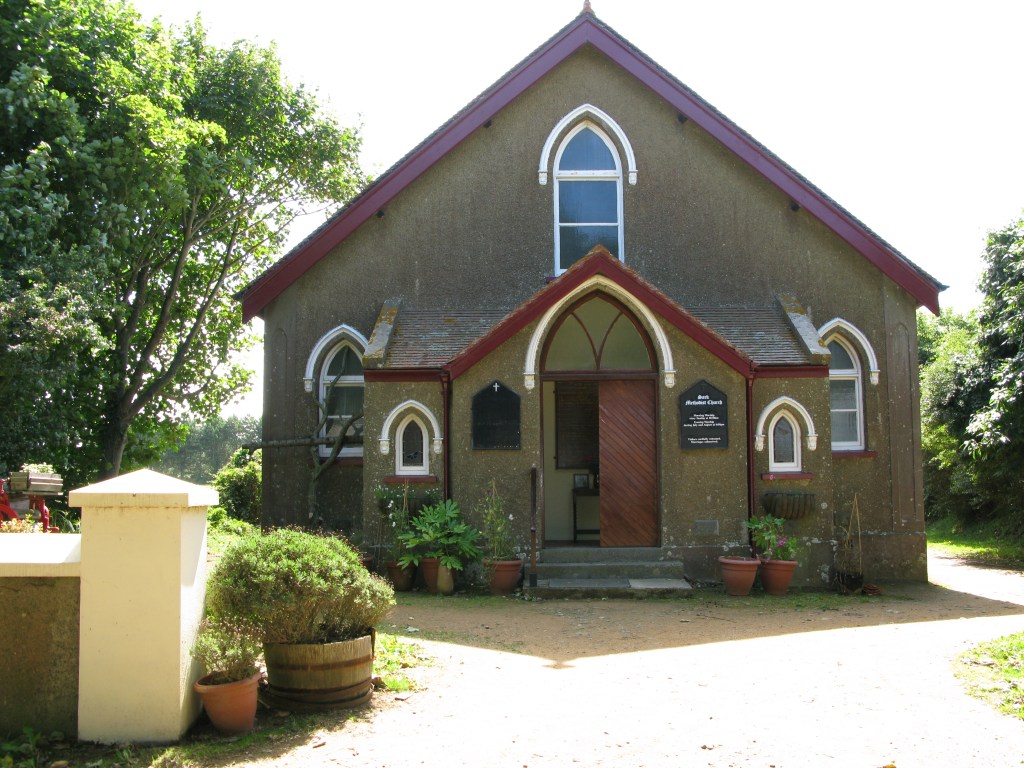
Methodist Church – Sark 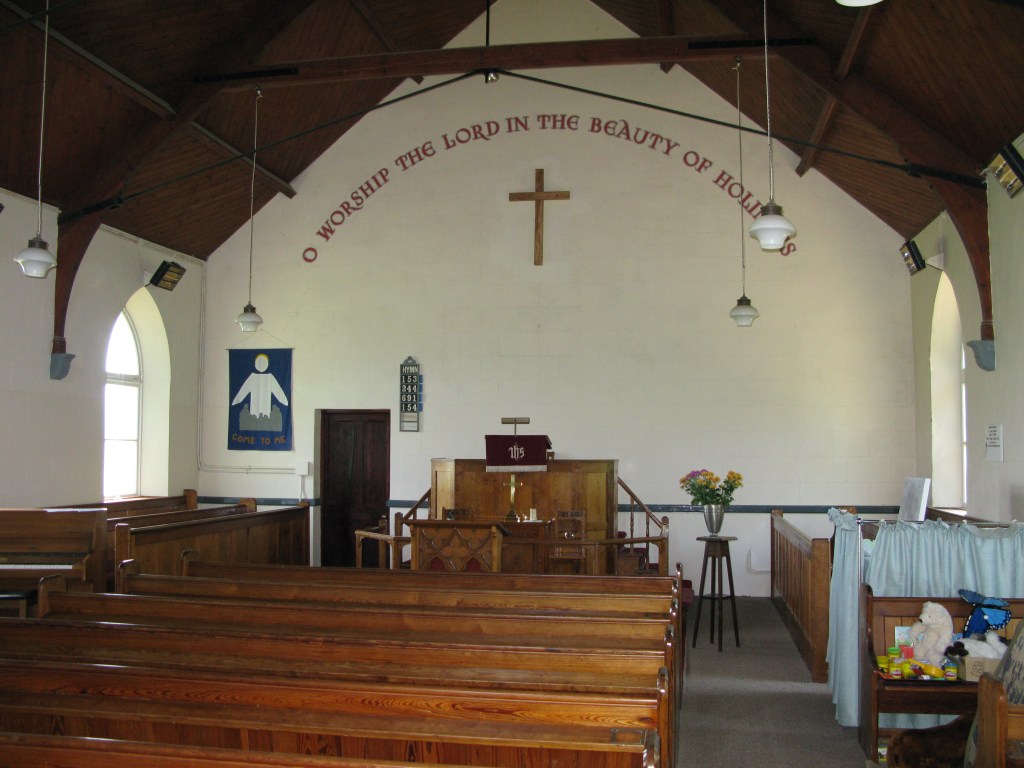
Methodist Church – Sark
Windmill
Dating back to 1571 the windmill was built for the first Seigneur of Sark and is the second oldest surviving windmill in the British Isles. The mill is no longer operational after its sails were damaged during a gale in 1917.
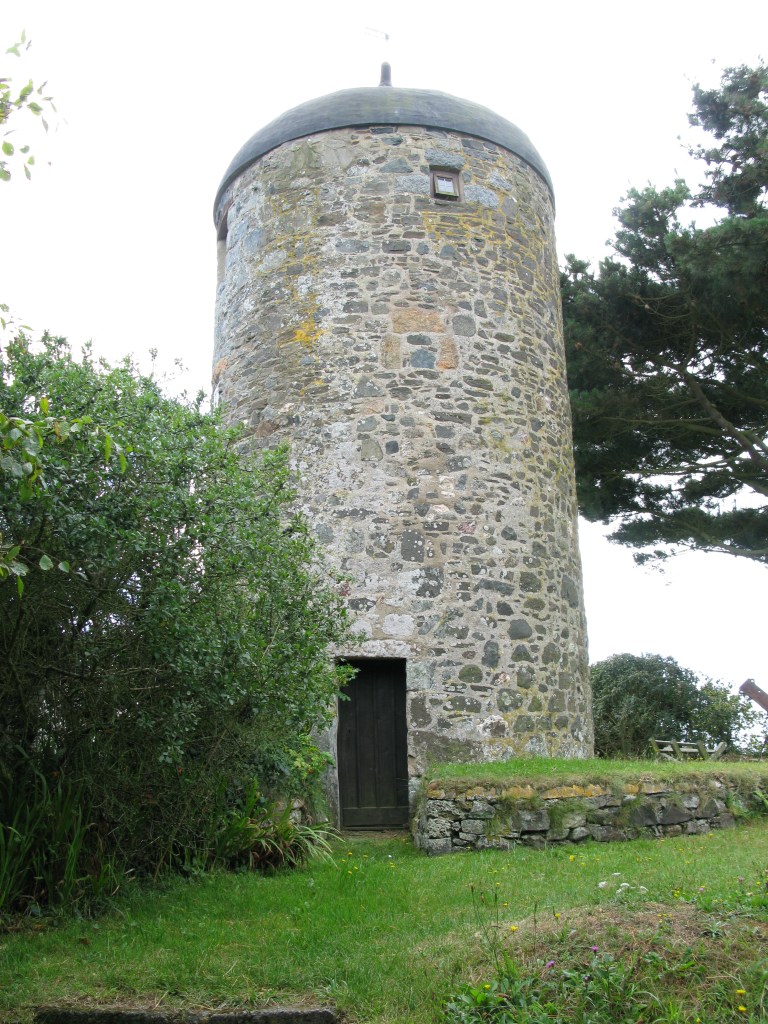
It is located at the highest point on Sark, which at 374ft above sea level is also the highest point in the Bailiwick of Guernsey. The high point is named Le Moulin after the windmill.
Walking from the windmill
From the windmill we walk along Mill Lane and into the The Avenue, with its eclectic range of shops selling general provisions and souvenirs. We peer into the shops and the dated window displays, some of which use peg boards to display merchandise. Walking around the supermarket is an interesting experience, it has a rather 1980’s Soviet feel about it – not very much on the shelves.
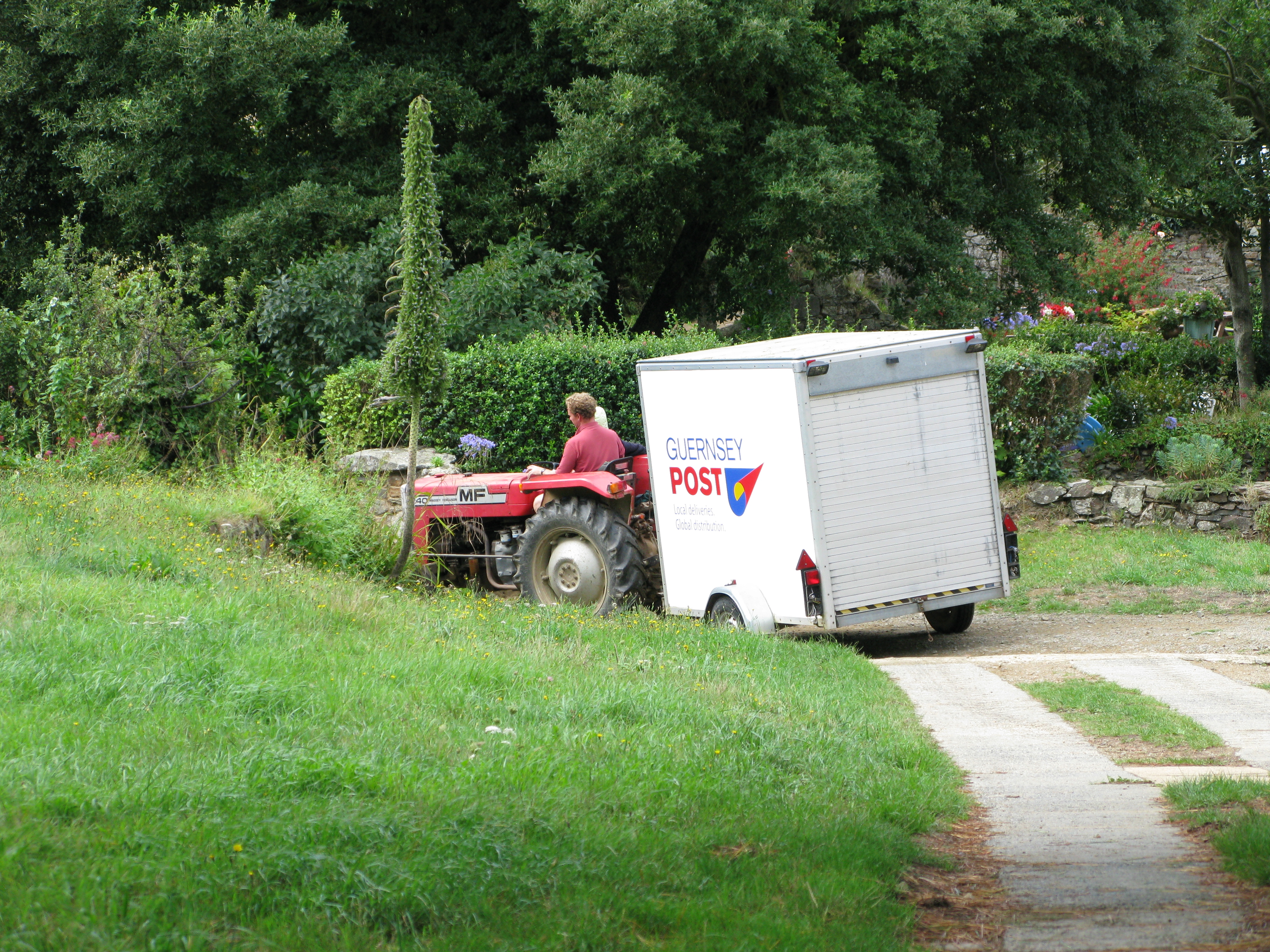
Guernsey Post – Sark 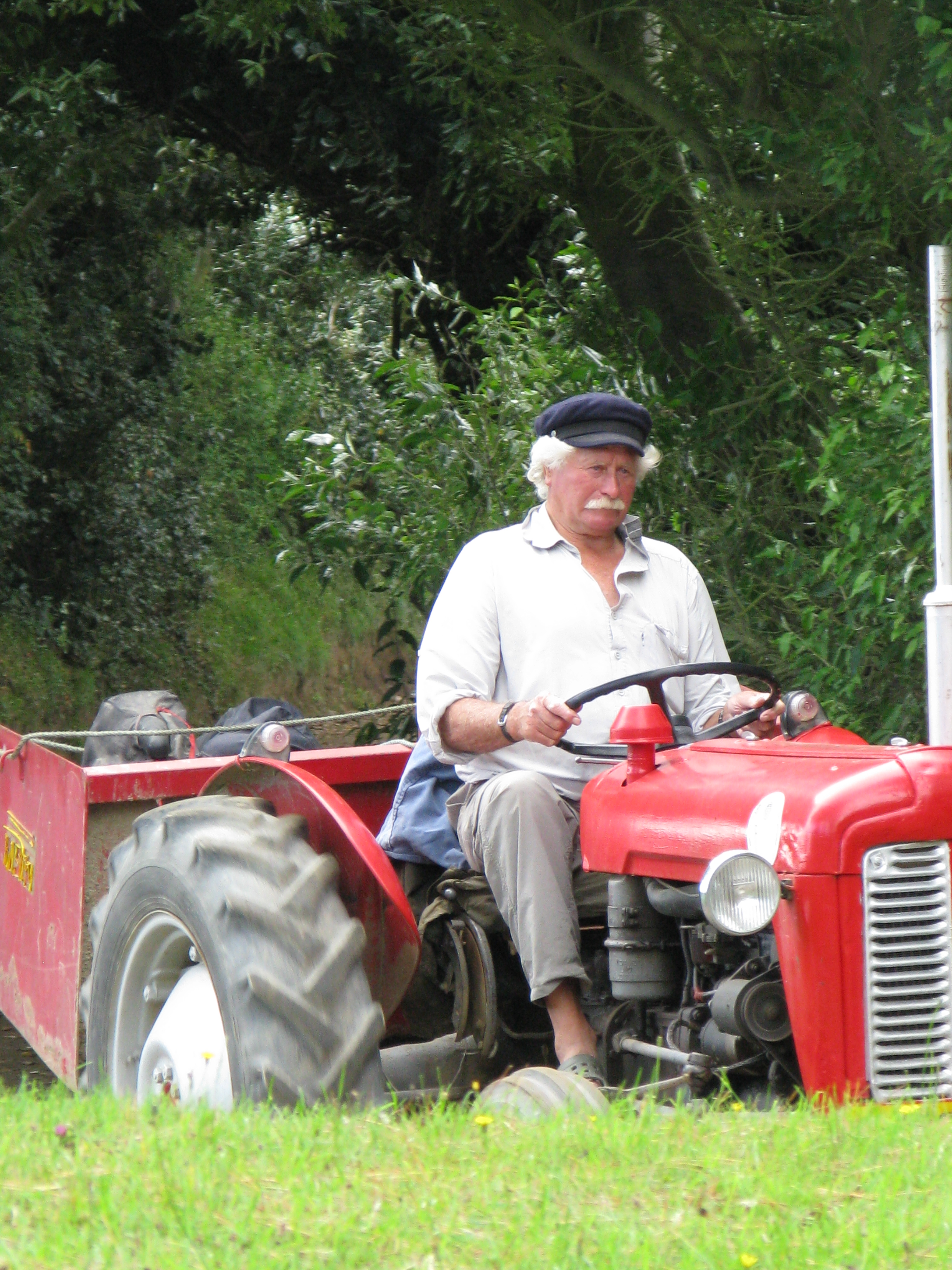
George – Sark 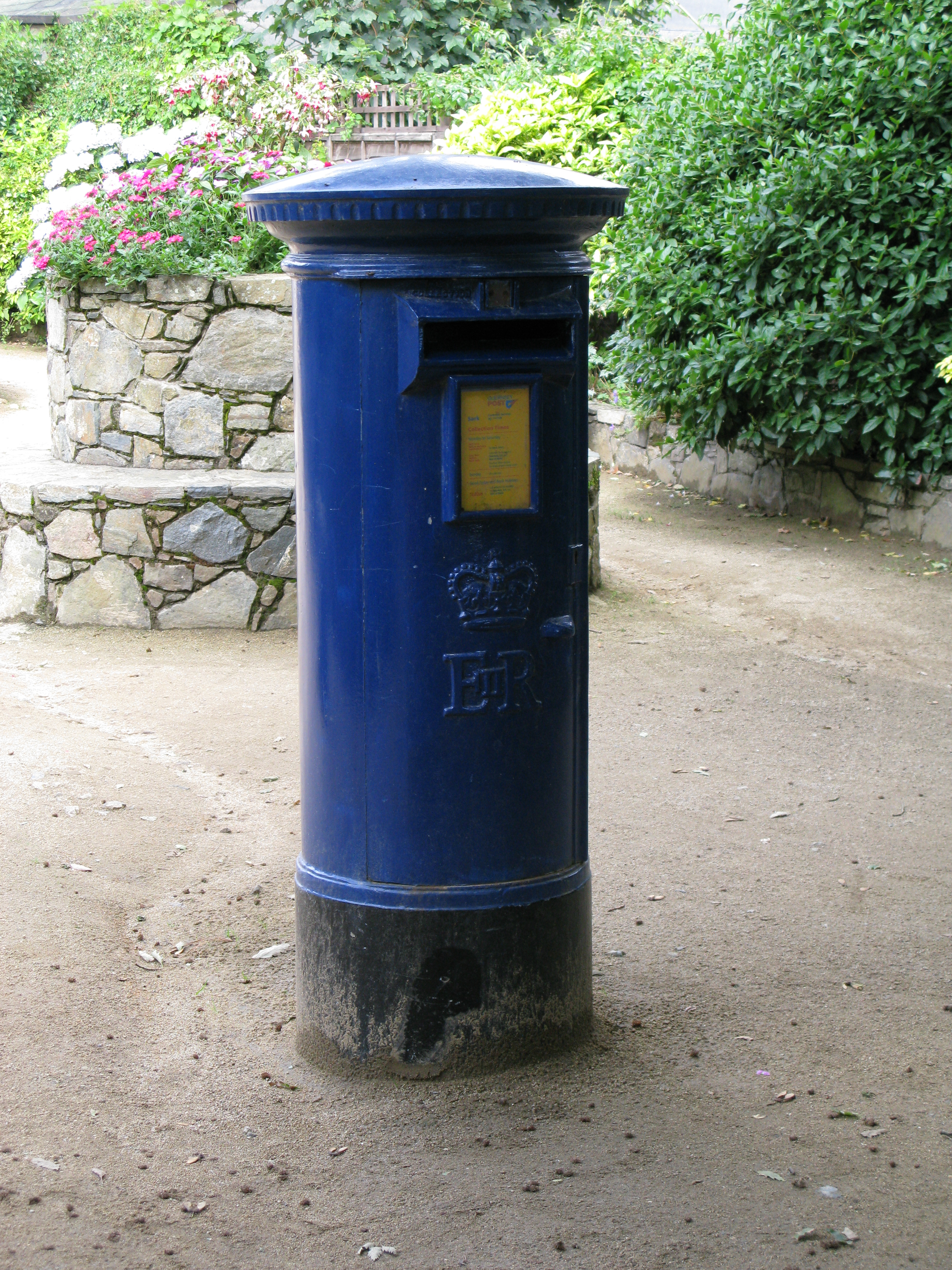
Post Box – Sark
So long Sark
From The Avenue rather than wait for the bus we decide to take the woodland path downhill to the harbour. Whilst waiting at Maseline harbour we take a few final shots before the ferry arrives to take us back to Guernsey.
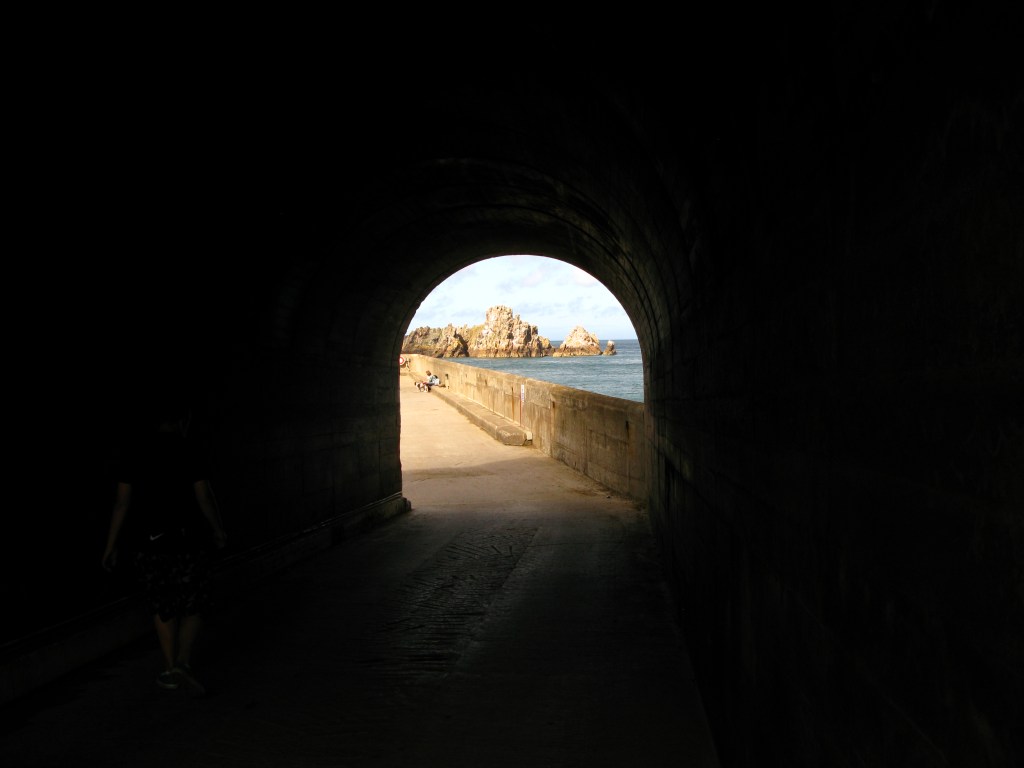
Harbour – Sark 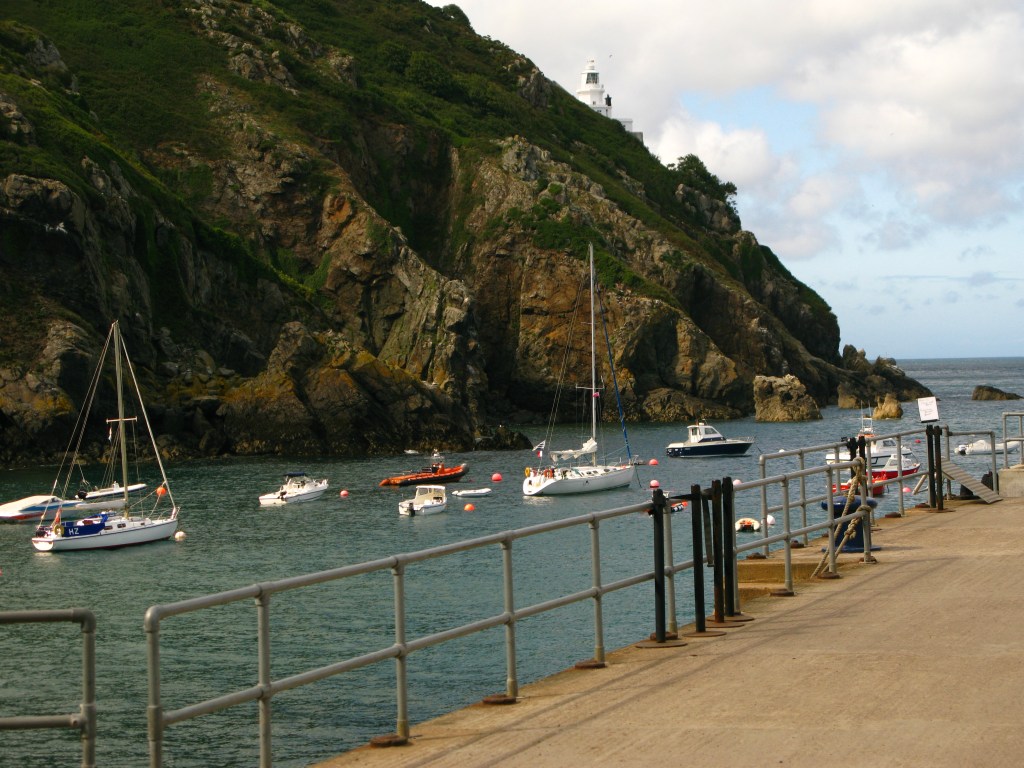
Harbour – Sark

View from harbour – Sark 
View from harbour – Sark
Dinner for two
Monday, 23 August, 2010 – St Peter Port, Channel Islands, UK
Ahoy
Back ashore Josh and I decide that there’s more choice in St Peter Port for dinner so we walk along the High Street continuing down The Pollet to see what takes our fancy. Eventually we settle for Christies on The Pollet and get at table for two in the Brasserie.
German hospital
Tuesday, 24 August, 2010 – St Peter Port, Channel Islands, UK
Underground hospital
Today we are visiting the German underground military hospital in the La Vassalerie, St Andrews. With a surface area (underground) of some 7,000 square metres this is the largest wartime construction in the Channel Islands, hewn out of the rock face by forced or slave labour. All that is visible above ground are the entrances to the tunnels, which we can see and the square holes which lead to the escape shafts which we can’t!
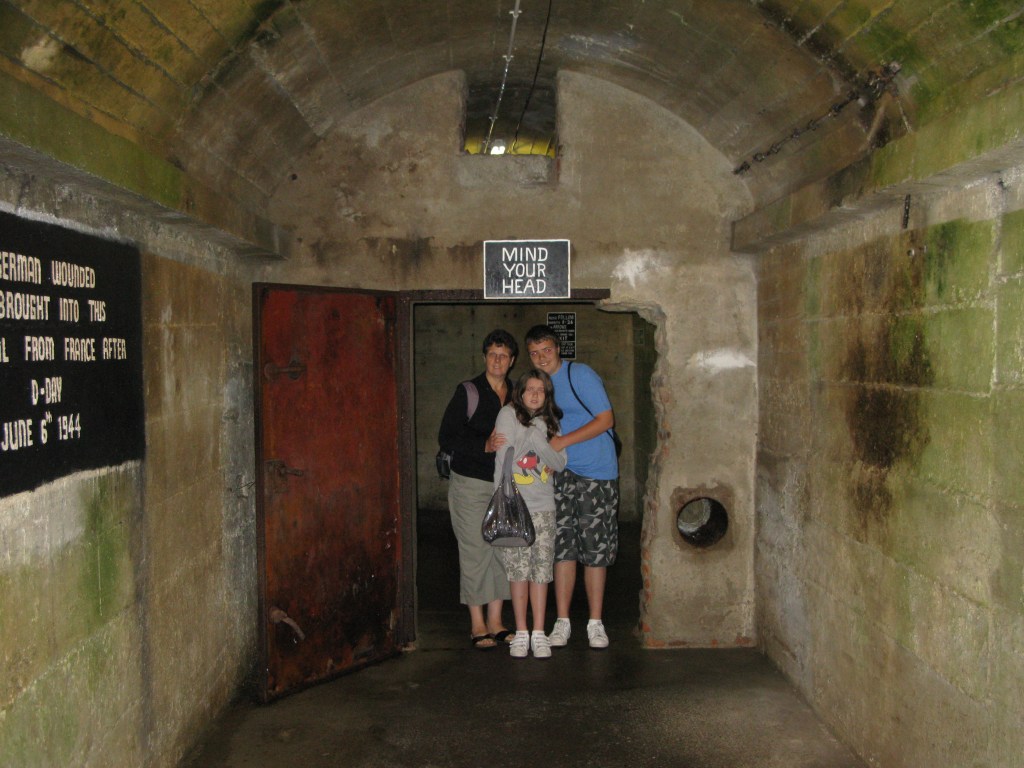
Sue, Grace and Josh – German Military Underground Hospital, Guernsey 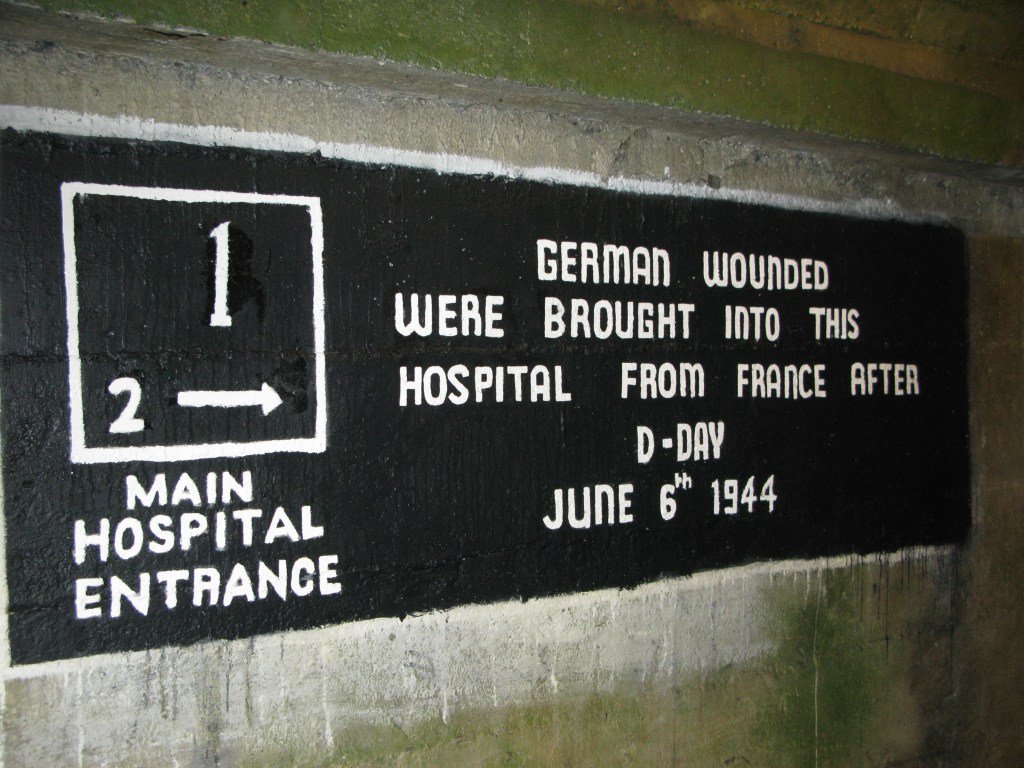
German Military Underground Hospital, Guernsey
In the museum we learn that construction of the tunnels commenced in 1940 and took over three and half years to complete with most of the work undertaken by forced or slave labour. Local workers refused to continue working here after a rock fall killed six French workers and were transferred elsewhere. Forced labourers has no choice – either work or starve.
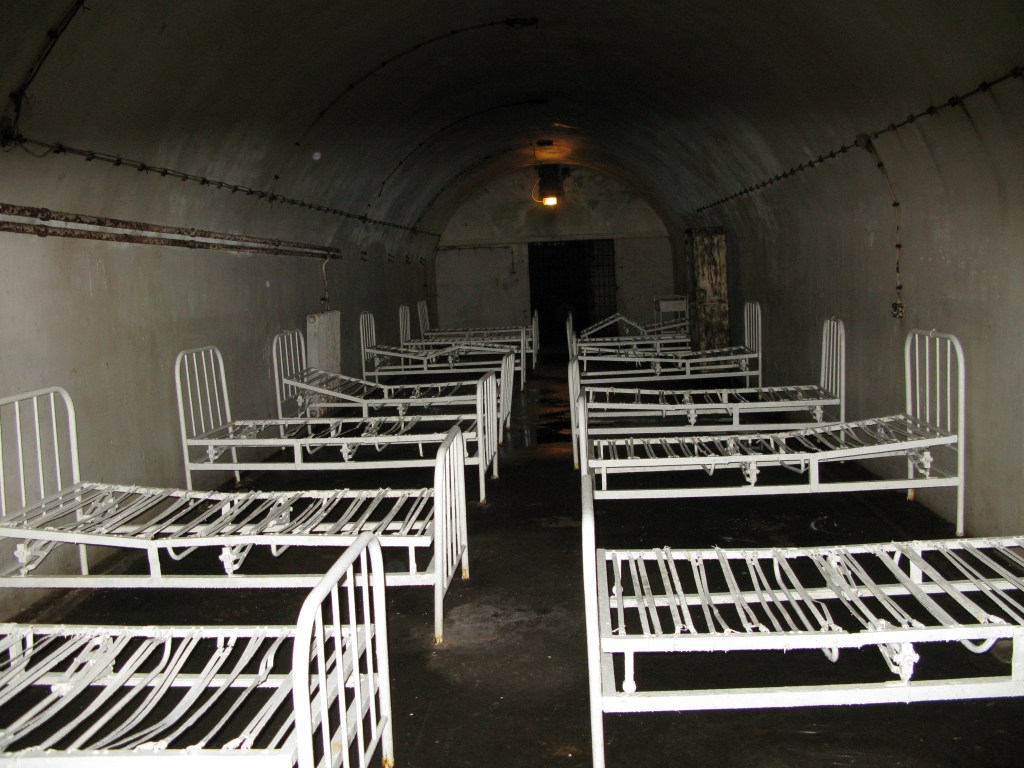
Beds – Underground Hospital 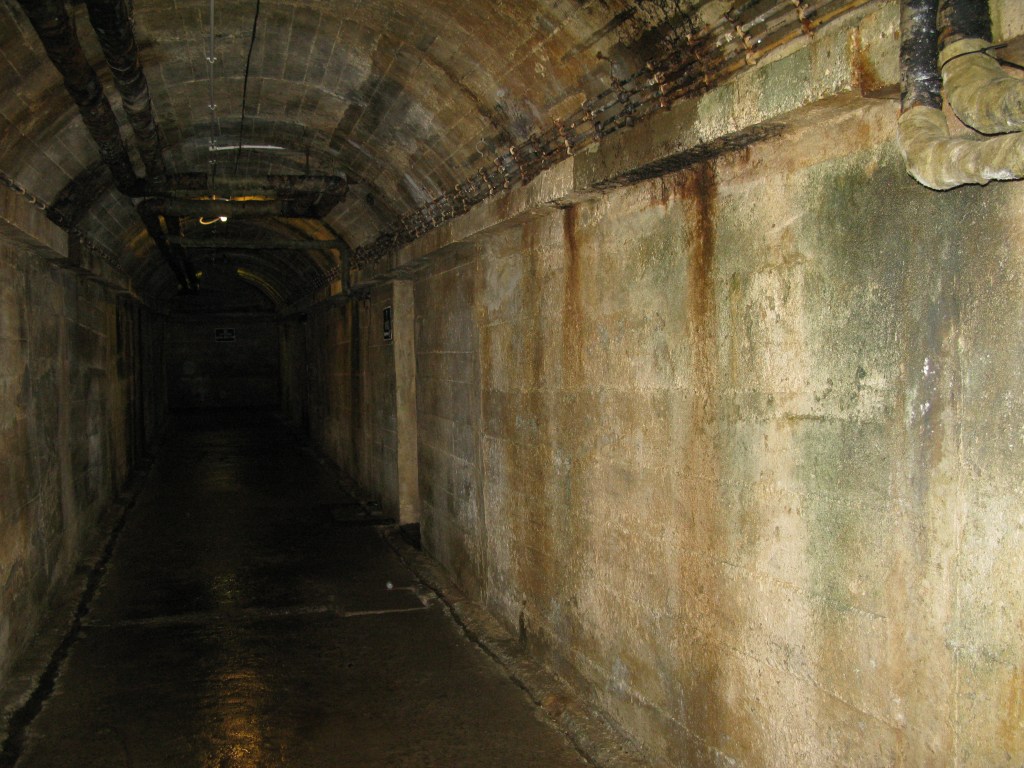
Corridor – Underground Hospital
The complex was built in two sections with three entrances and five ventilation shafts which could be used as emergency exits and range in depth from 45 – 75 feet. The first section was used as a hospital and the second section as an ammunition store. The complex also had a water reservoir to provide an independent source of water.
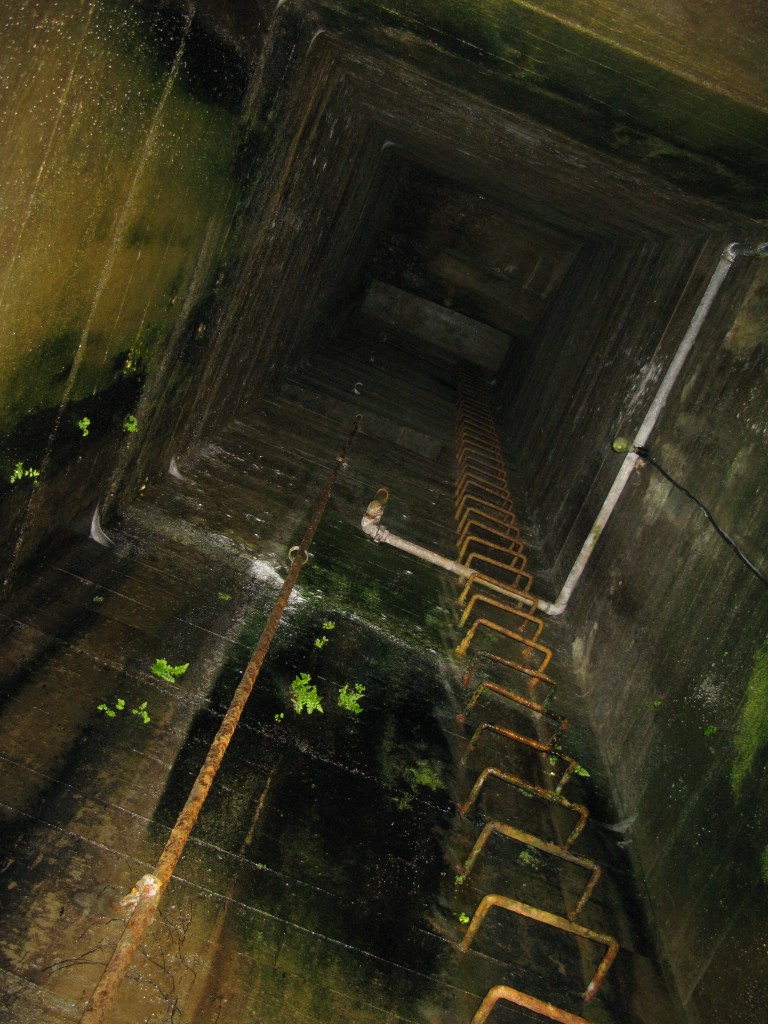
Escape tunnel – Underground Hospital 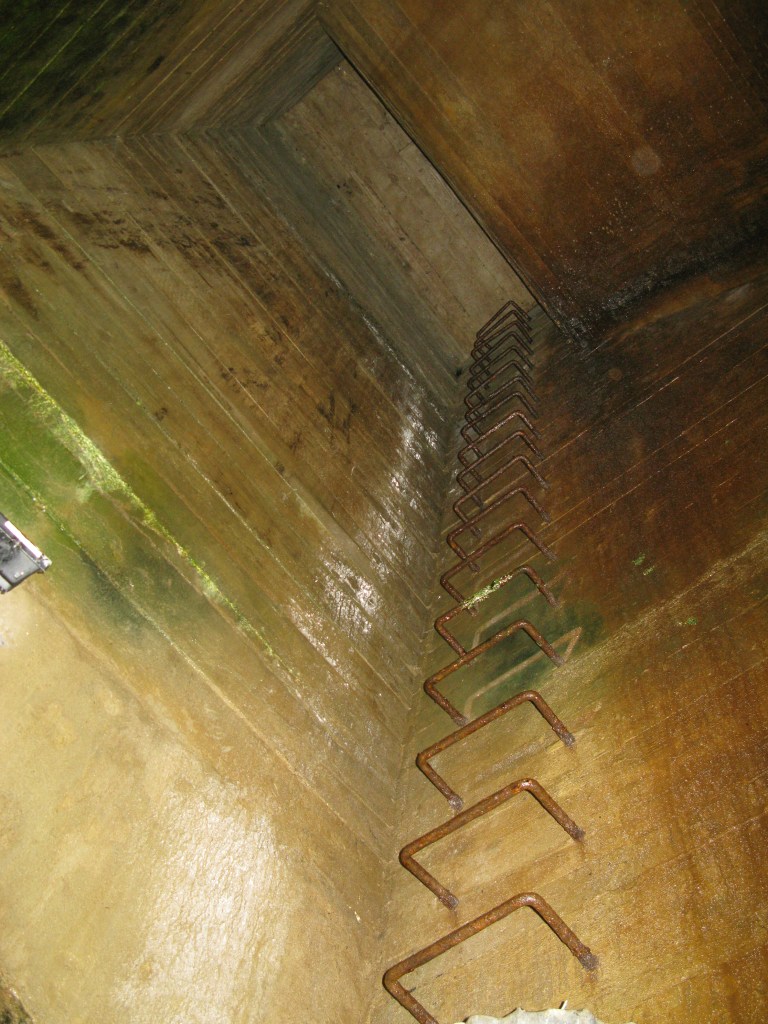
Escape tunnel – Underground Hospital
The hospital had two parallel main corridors off of which there were wards, an operating theatre, x-ray room, laboratory, dispensary and staff quarters. There was also a cinema and mortuary as well as storerooms. At the end of one corridor there is the central heating plant and the kitchens.
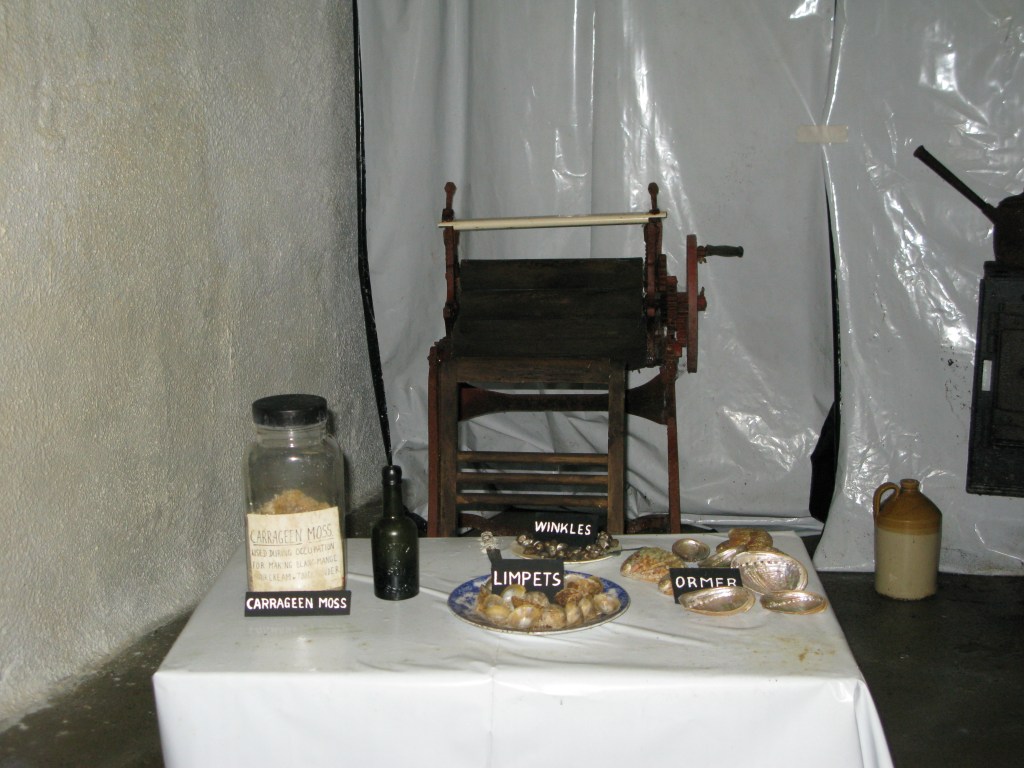
War time food – Underground Hospital 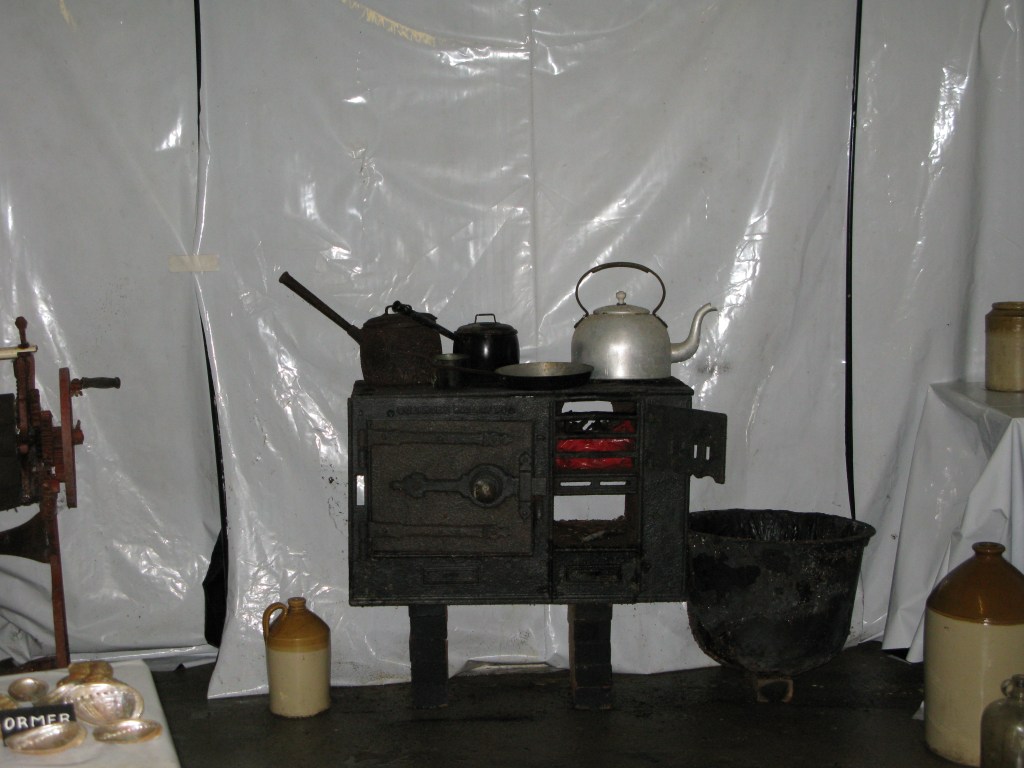
War time cooker – Underground Hospital
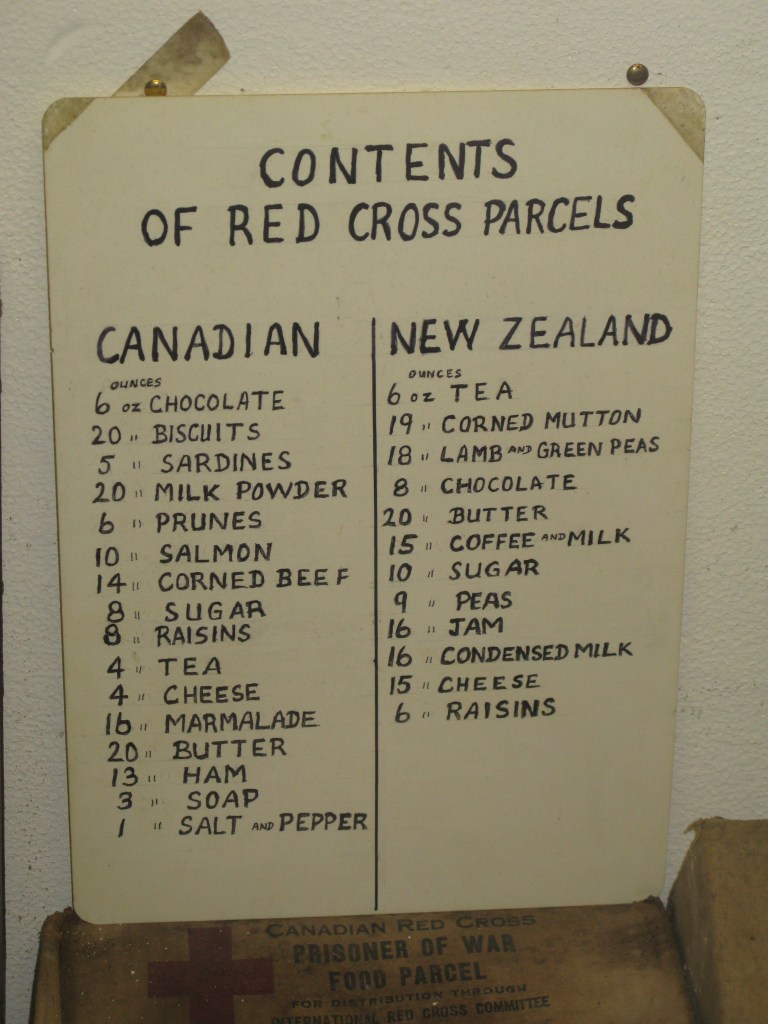
Red Cross Parcel – Underground Hospital 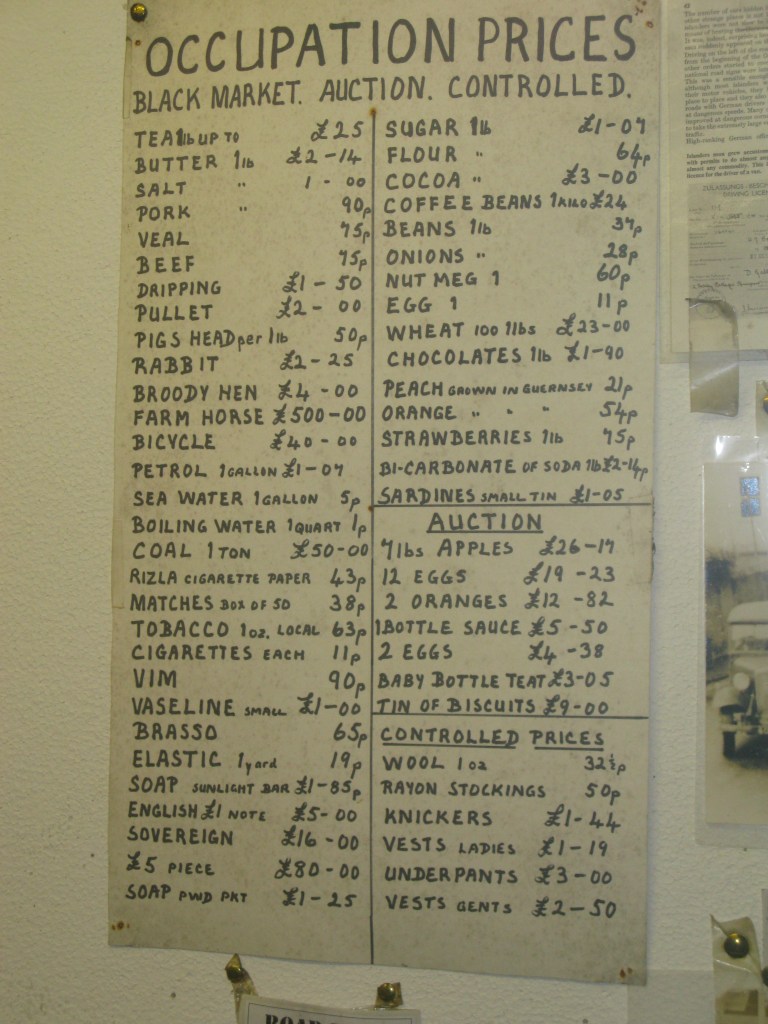
Occupation Prices – Underground Hospital 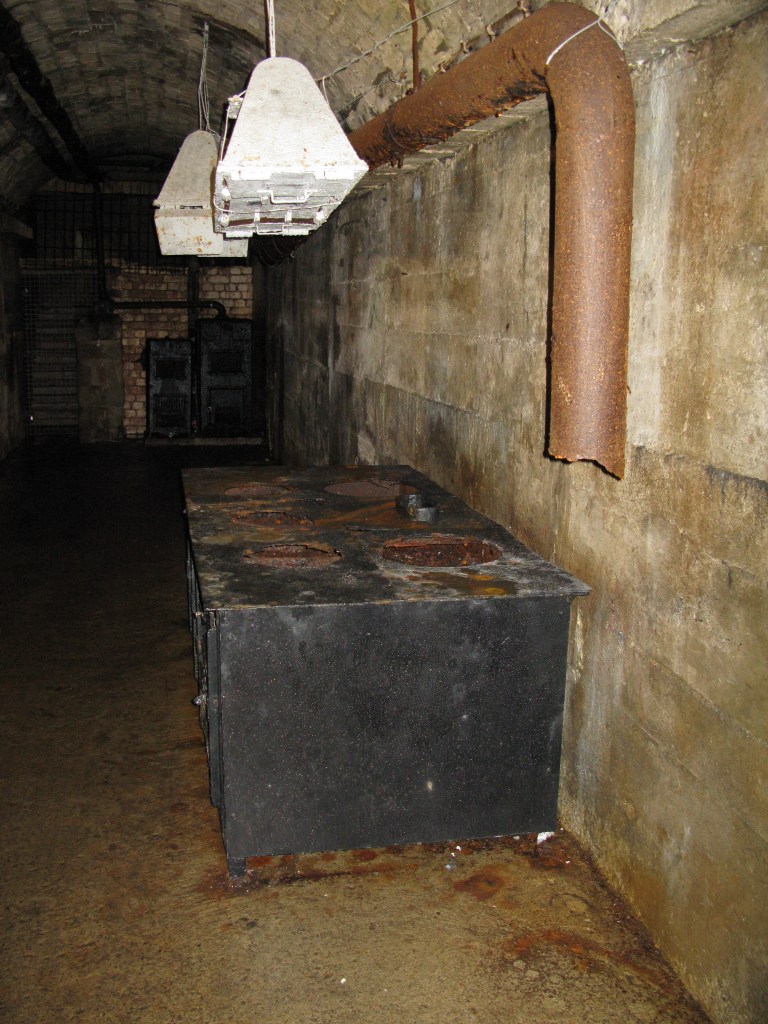
Kitchen – Underground Hospital
As we walk through the tunnels, which are dark and rather dank, we can see that some of the heating, ventilation and air-conditioning (HVAC) plant remains, as well as the hospital beds and most of the kitchen. The air-conditioning pipes are still in place as are some of the air filters. Along the walls there are redundant electricity supply boxes. The walls are damp and there are fungi growing in some places, rusting ironwork creates wonderful patterns on the concrete walls.
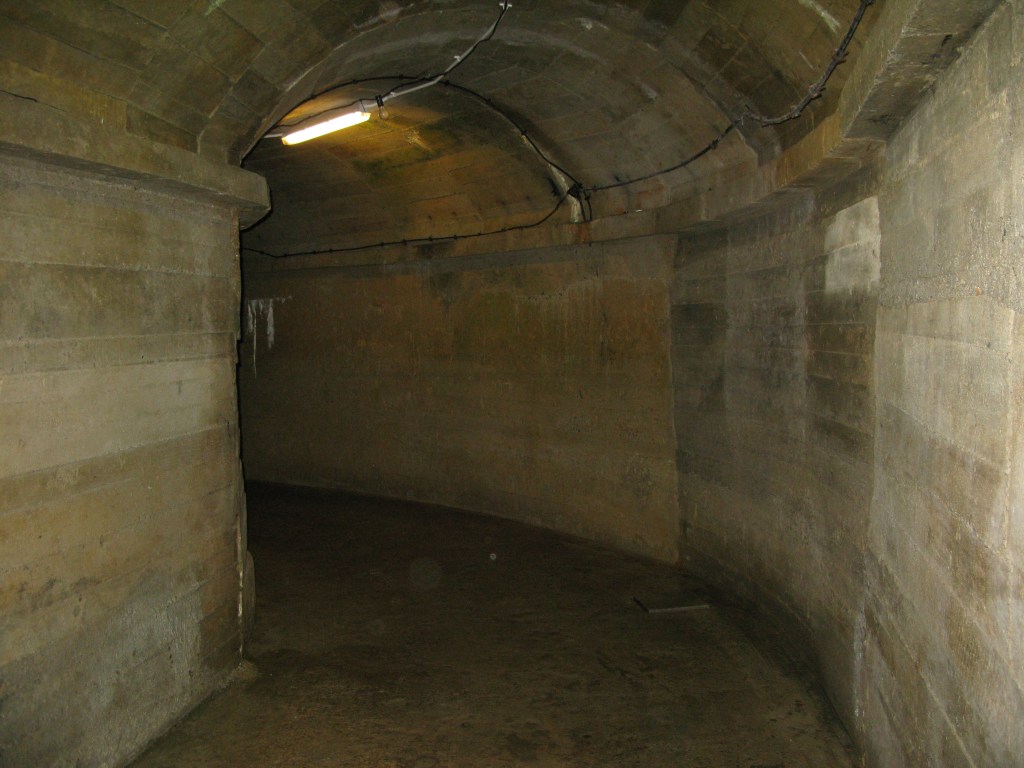
Corridor – Underground Hospital 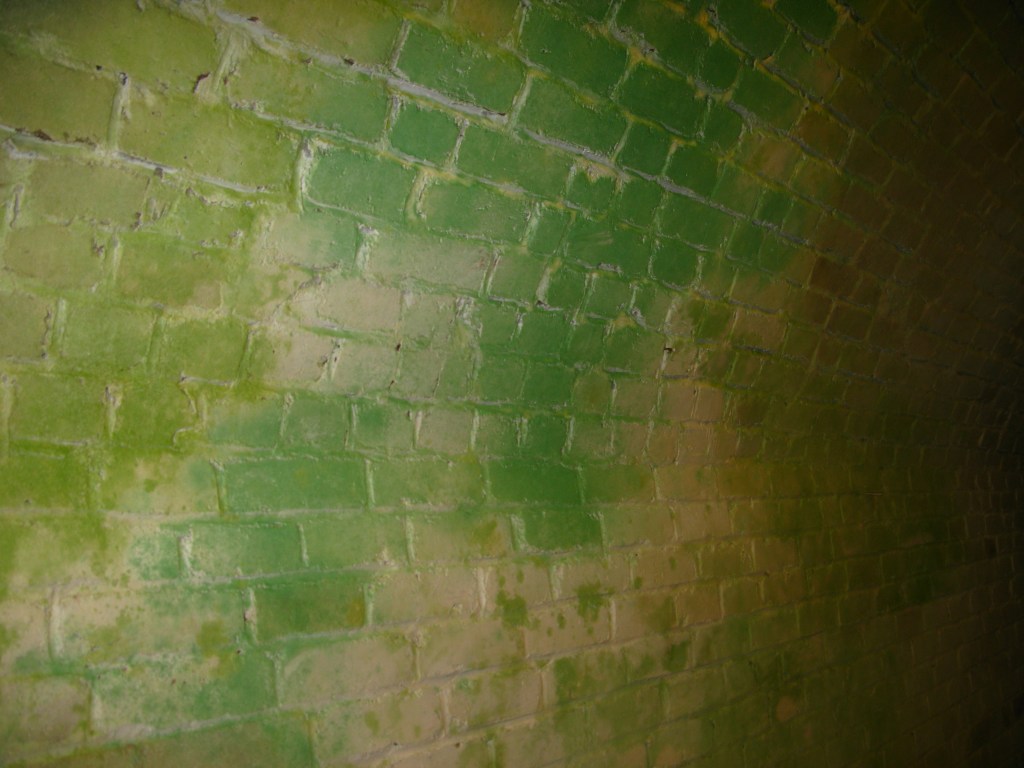
Corridor wall – Underground Hospital
Although the complex took over three and a half years to build it was only used for a short period of time, with the ammunition store being used for nine months and the hospital for three months when wounded German soldiers were evacuated from Normandy following the D-Day landings in June 1944.
St Clair’s Fountain
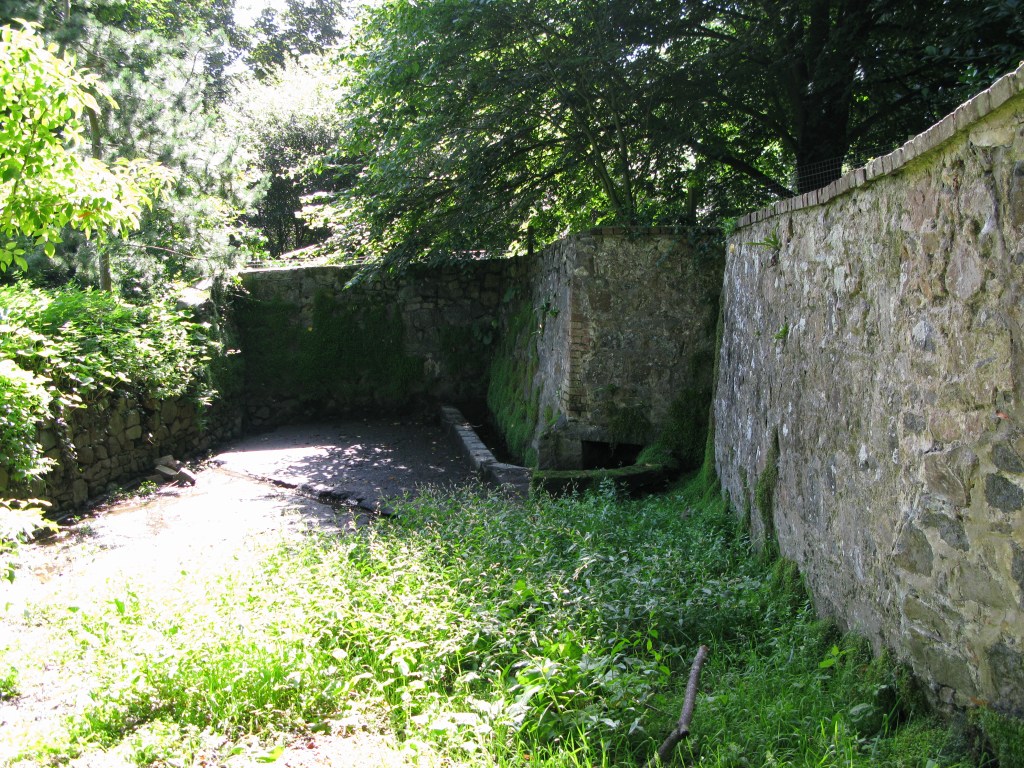
St Clair’s Fountain, Guernsey 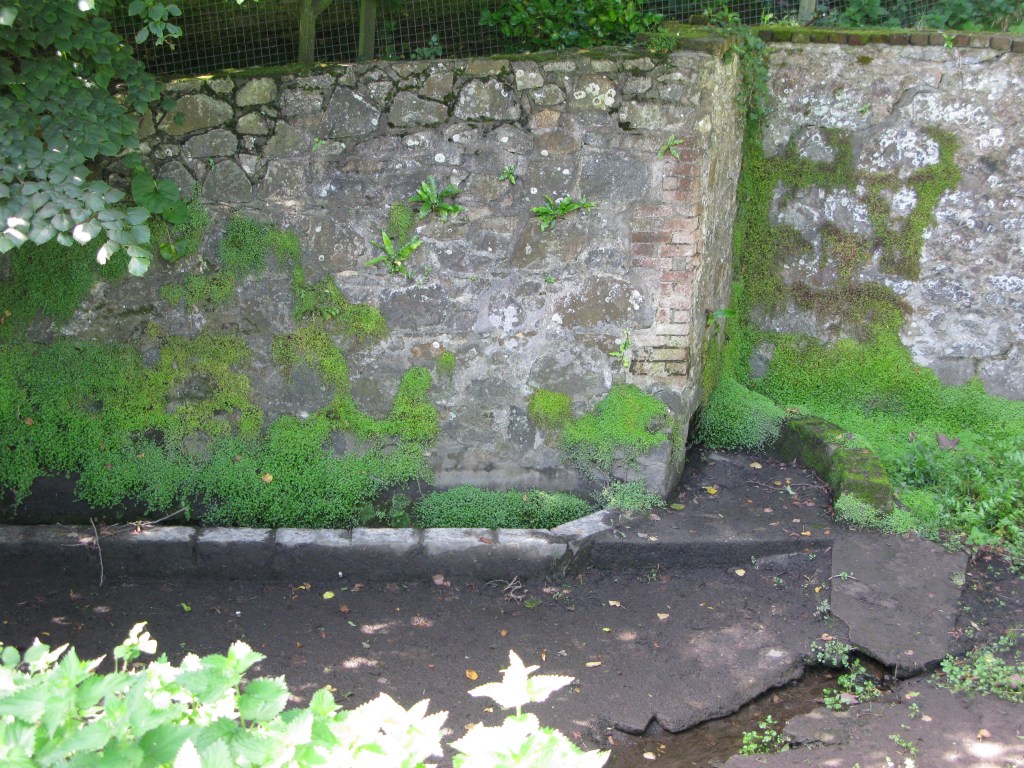
St Clair’s Fountain, Guernsey
There isn’t much information about this fountain other than that reproduced below from the information sign at the site.
St Clair’s Fountain – La Faontaine de St Clair
One of several healing wells in Guernsey held sacred from pre-Christian times, St Clair’s Fountain was known to cure abscesses, eye ailments and scrofula.
Before 1702 when Queen Anne came to the throne, those affected with scrofula, or the King’s Evil, locally called, were sponsored to travel to England to be touched by the monarch in order to be cured. Charles II is reputed to have touched 92,000 certified sufferers between 1660 and 1682.
Queen Anne refused to continue the Royal Touch. So, the recommended cure became a visit to a white witch and the bathing of the affected parts in the waters of St Clair’s Fountain.
It was rather muddy around the fountain but I did venture down for a dip, my hand rather than anything else! Hopefully I am cured.
Victoria Tower
Fortunately the Tower is open when we decide to visit. When it is closed keys to the can be collected from the museum at Candie which is nearby!
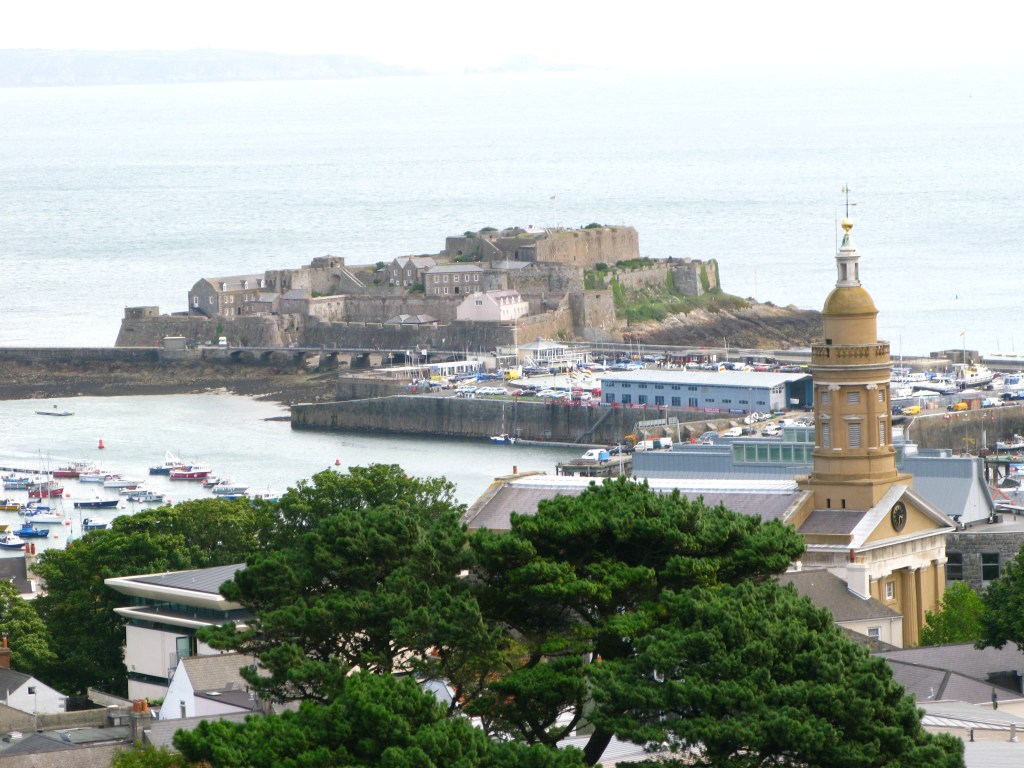
View from Victoria Tower, Guernsey 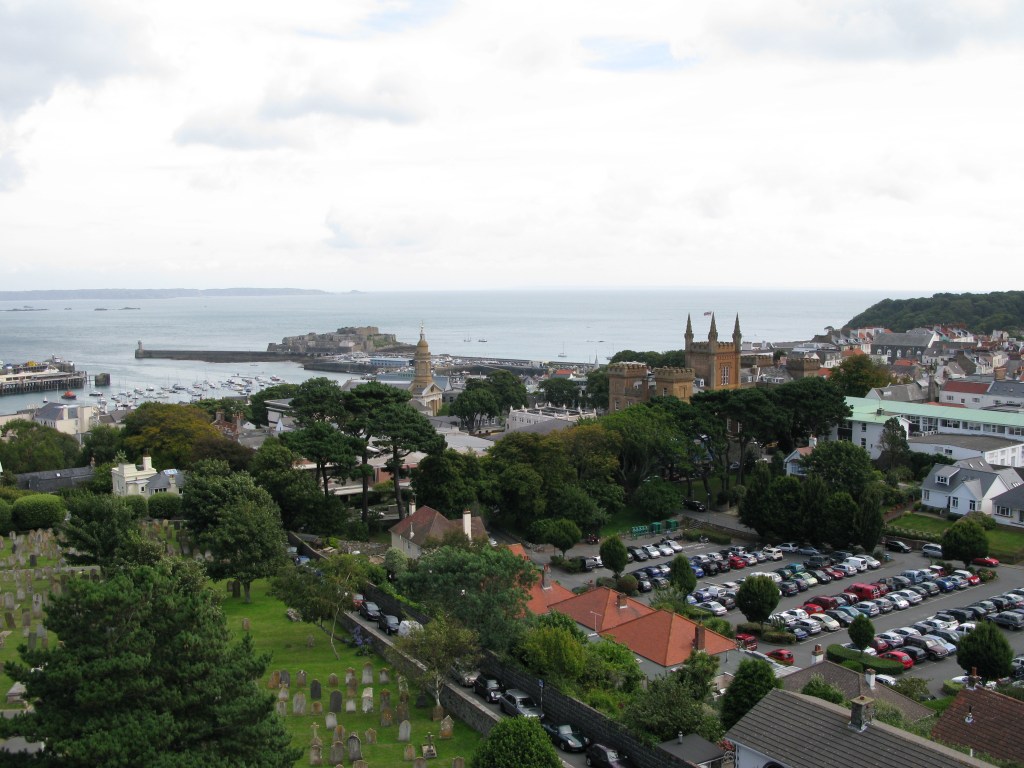
View from Victoria Tower, Guernsey
The Tower was built in 1848 to commemorate the visit of Queen Victoria and Prince Albert to the island in 1846, the first by a reigning monarch. Designed by William Colling, who drew inspiration from medieval Italian buildings such as the Palazzo Pubblico in Siena. The tower is square in design with a fortified parapet and angled turrets. It is surmounted with an octagonal lantern topped with a coronet.
The Tower is set on an elevated position, where a windmill had once stood and before that a menhir (standing stone), and at 100ft in height it has commanding views. From the viewing platform, which is accessed via a steep and narrow spiral staircase, we have a panoramic view of St Peter Port and the north of the island. Climbing the Tower isn’t too arduous since there are places to rest and pass other visitors on the way up and down.
Ten minute transfer…
Wednesday, 25 August, 2010 – St Peter Port, Channel Islands, UK
Our bags are packed and so are we with happy memories of a relaxing time in Guernsey.
Reluctantly we climb into the waiting taxi which whisks us away from Les Rocquettes to the airport in less than 15 minutes.
The airport terminal is still quiet and we wait patiently for our flight home, the BE912 which departs at 15:05 and arrives at London Gatwick just under an hour later at 16:00.
Home run
Wednesday, 25 August, 2010 – London, England, UK
Our Flybe flight was short and sweet. By the time we reach cruising altitude it’s almost time to begin our descent to London Gatwick.
 Hudsons Travel