
A short break in Valencia, Spain, from 28 – 31 December, 2016. Rather aptly, as our story unfolds, we are leaving London on Dia de los Santos Inocentes (Holy Innocents) day which is the Spanish equivalent of April Fools’ Day. Unfortunately we return before New Year’s Eve – Nochevieja – and don’t get to eat our 12 grapes on each stroke of the clock!
Leaving London
Wednesday, 28 December, 2016 – London, UK
Canon ball run
I wondered whether Canon cars should change their name to sleepy cabs. Our driver arrived 10 minutes early and then promptly fell into such a deep sleep that I was able put my bag in the boot without him even waking. He woke when we both got in but his erratic braking and weaving on the motorway made us think he was having trouble keeping awake. Let’s hope he made it back safely.
Speedy boarding
We didn’t pay for speedy boarding, but we certainly managed to enjoy a speedy bag drop. The automatic bag drop machines make it a breeze – just pop your bag on the conveyor belt, scan your boarding card, take the tag and affix to your bag. Security was a little slower though, with an x-ray check for me.
The plane was nearly full and consequently the cabin was rather cosy, which combined with the Easy Jet Pack ’em in policy, meant that leg room was rather limited. I may have to check my legs in separately next time! Our flight, despite being delayed by 20 minutes, made good time to Valencia.
Hola València!
Wednesday, 28 December, 2016 – Valencia, Valencia, Spain
With rather limited Spanish, one of the challenges of Valencia, like Barcelona, is trying to learn a few words and phrases in Catalan. Where possible we have used Catalan in the blog with the Castilian translation in brackets.
Happy landings and a speedy transfer
Valencia airport is rather quaint. After disembarking we had a short walk from the stand to the terminal building. With a passport control booth at the end of the corridor and the baggage reclaim the other side of a glass partition we were swiftly reunited with our bags and walking towards the Metro station in the airport.
We have a short 30 minute journey on the Metro from the airport to Xàtiva and then a two minute walk to the hotel Zenit on Carrer de Bailén next to the Estació del Nord. Fortunately we were able to check in early and after unpacking and freshening up we were soon back out and walking towards the old city along Av. del Marqués de Sotelo,on the lookout for a cervecieria where we could get a drink and some tapas. We didn’t have to walk too far before we came to the pedestrianised Carrer del Convent de Santa Clara where there were a number of bars with tables outside.
Cervezas y bocadillos
La Sureña
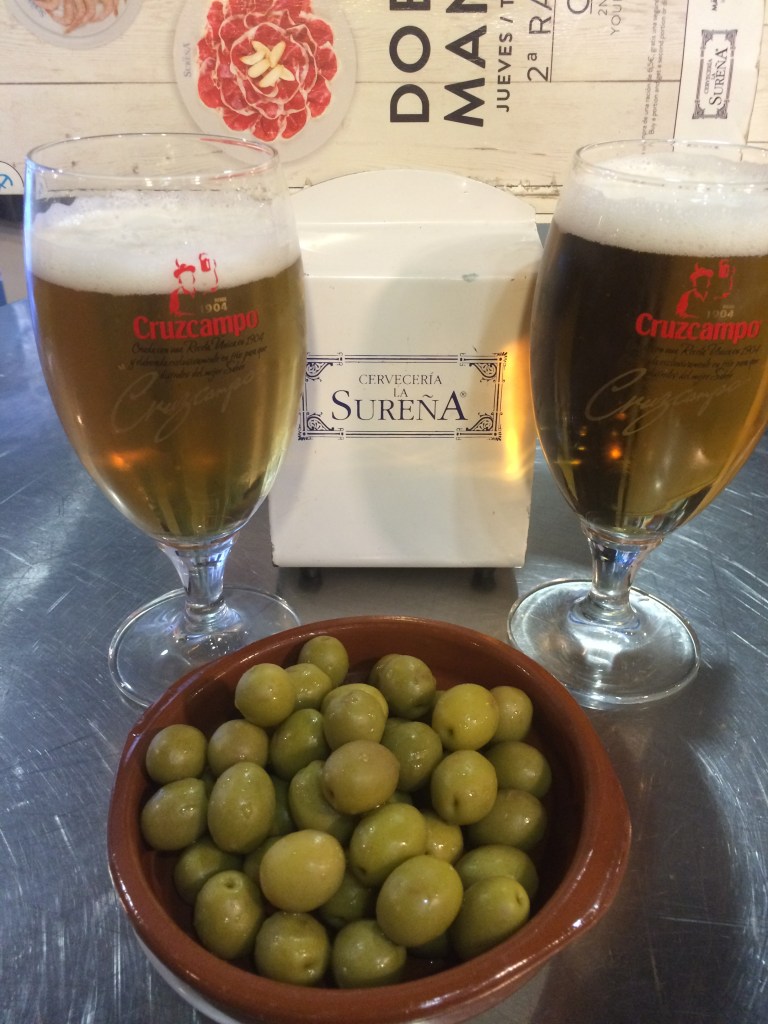
Whilst it is cheap 100 Montaditos is a little uninspiring and so instead we managed to get a table at the bustling Cervecería La Sureña opposite. Apart from bowls of olives on the bar there’s an extensive menu which includes: tortilla, calamares, patatas bravas/alioli, queso curado, salmorejo, croquetas de jamon, pulpo a la gallega, huevos rotos and that’s before exploring the tostas, ensaladas and bocadillos! Beer is available on tap as well as by the bucket, so this is definitely a place for socialising! There should have been some clues here, only later did we discover that this is also a chain and part of the same group as 100 Montaditos!
Anyway back to La Sureña where we enjoyed a refreshing beer, a bowl of olives and a couple of tasty bocadillos. Refuelled we made our way towards the cathedral, passing City Hall and the Post Office on the way.
Skating in the square
The main square is busy. A tall conical Christmas tree adorned with lights was set in the centre with an ice rink to the side which was filled with skaters of all ages swirling round. There were numerous stalls around the sides of the square selling fresh flowers and floral decorations for the New Year.
La Catedral
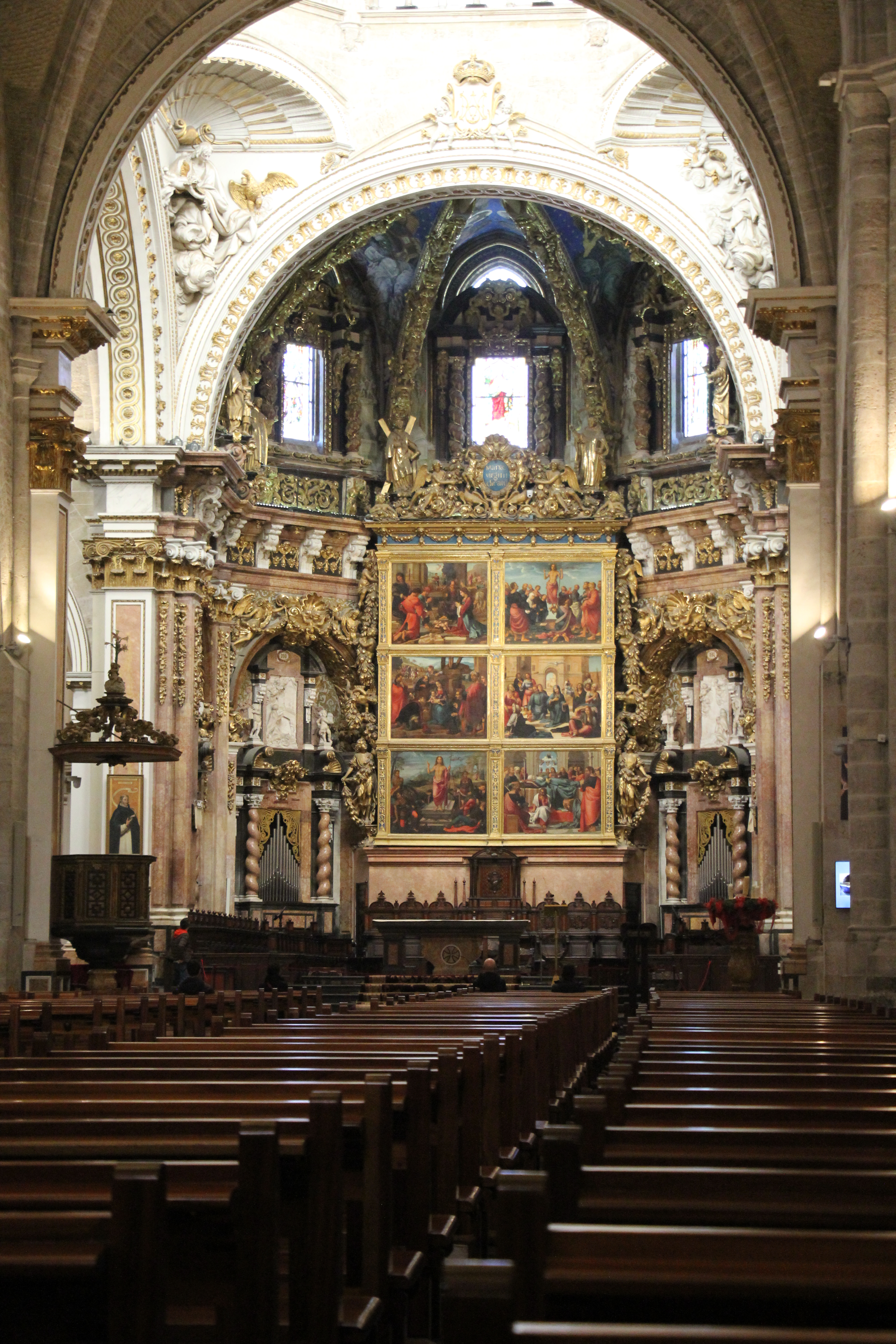
The site on which the cathedral stands was originally a Roman temple, which later became a mosque. Built in the 13th century the building reflects a variety of architectural styles including: baroque, Romanesque and Gothic. This is exemplified by three of the cathedral’s doors: the Puerta de los Apostoles is Gothic, the Puerta de los Hierros is baroque and the Puerta del Palau is Romanesque.
The audio guide which we used to explore the cathedral and museum is probably one of the best we’ve experienced to date. The commentary is clear, concise and informative – just enough detail – which makes the tour captivating. In addition to exploring all of the side chapels we take a tour of the museum and finish our visit by spending some time enjoying the tranquility in La Capella del Sant Calze (La Capilla del Santo Cáliz) or the Holy Chalice Chapel.
The Holy Chalice can be seen in the chapel in the alabaster altarpiece. Having sat and contemplated in this magnificent chapel our thoughts turn towards the heavens and the prospect of climbing the bell tower – El Miguelete.
Torre del Micalet (El Miguelete)
Valencia Cathedral
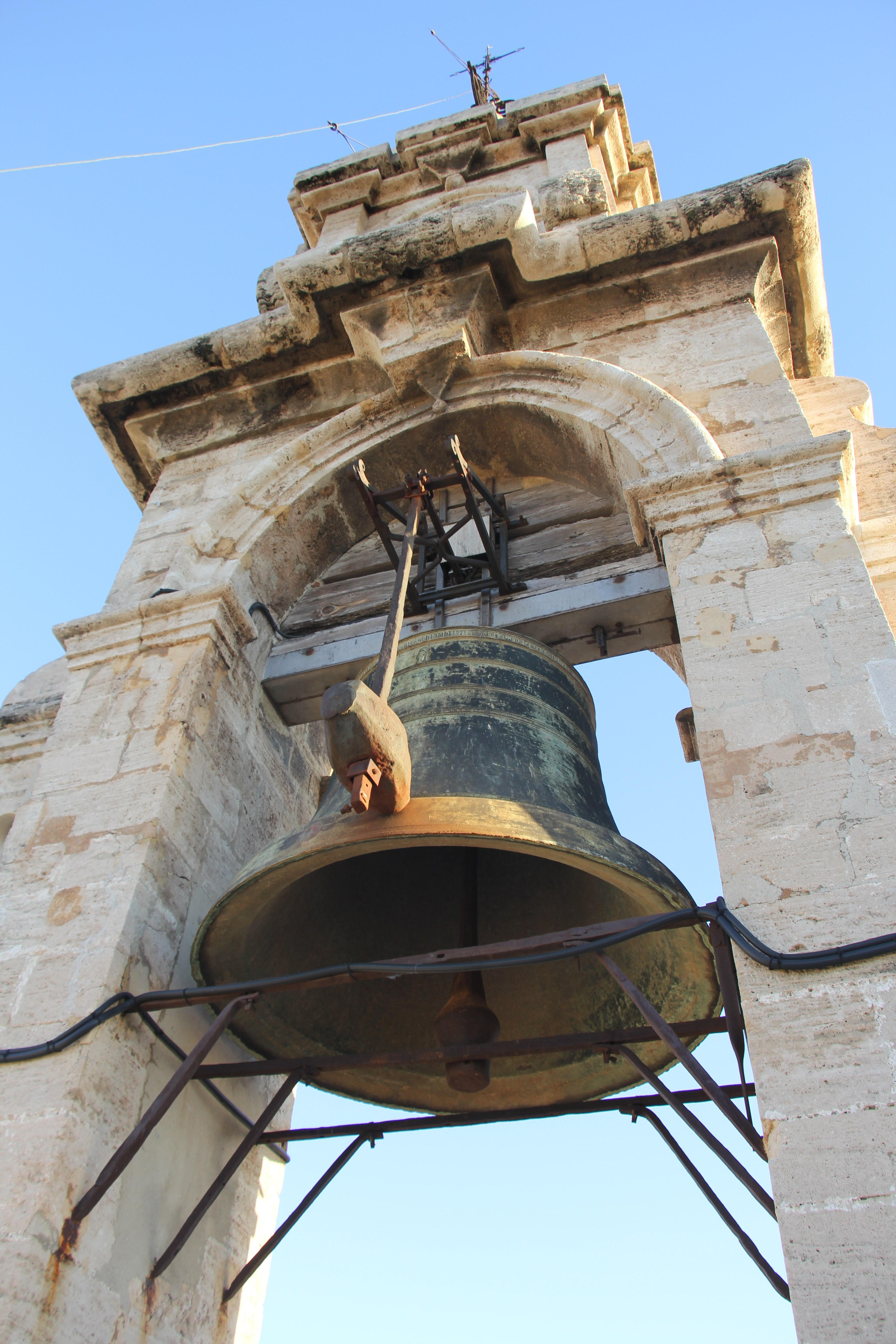
The fourteenth century Gothic style bell tower takes its name, little Miguel, from the largest bell named Migel. The tower, which was originally a separate structure was later incorporated into the cathedral. It has an octagonal base, the circumference of which is 50 metres, the same as the height of the tower. The tower is a blend of archietctural styles, mainly Gothic, but with Romanesque and Baroque elements.
Although its not too busy we still have to wait about 15 minutes queing to access the tower. To get to the top of the tower visitors have to climb the 207 stone steps. The narrow staircase makes it difficult to pass so a traffic light (red/green) system makes it slightly easier and safer to climb up and down.
From the top of the tower there is a 360 degree panoramic view of the city. We can see the the City of Arts and Sciences in the distance and the port beyond – our destination for tomorrow – but the iron safety fence makes it difficult to take panoramic photos.
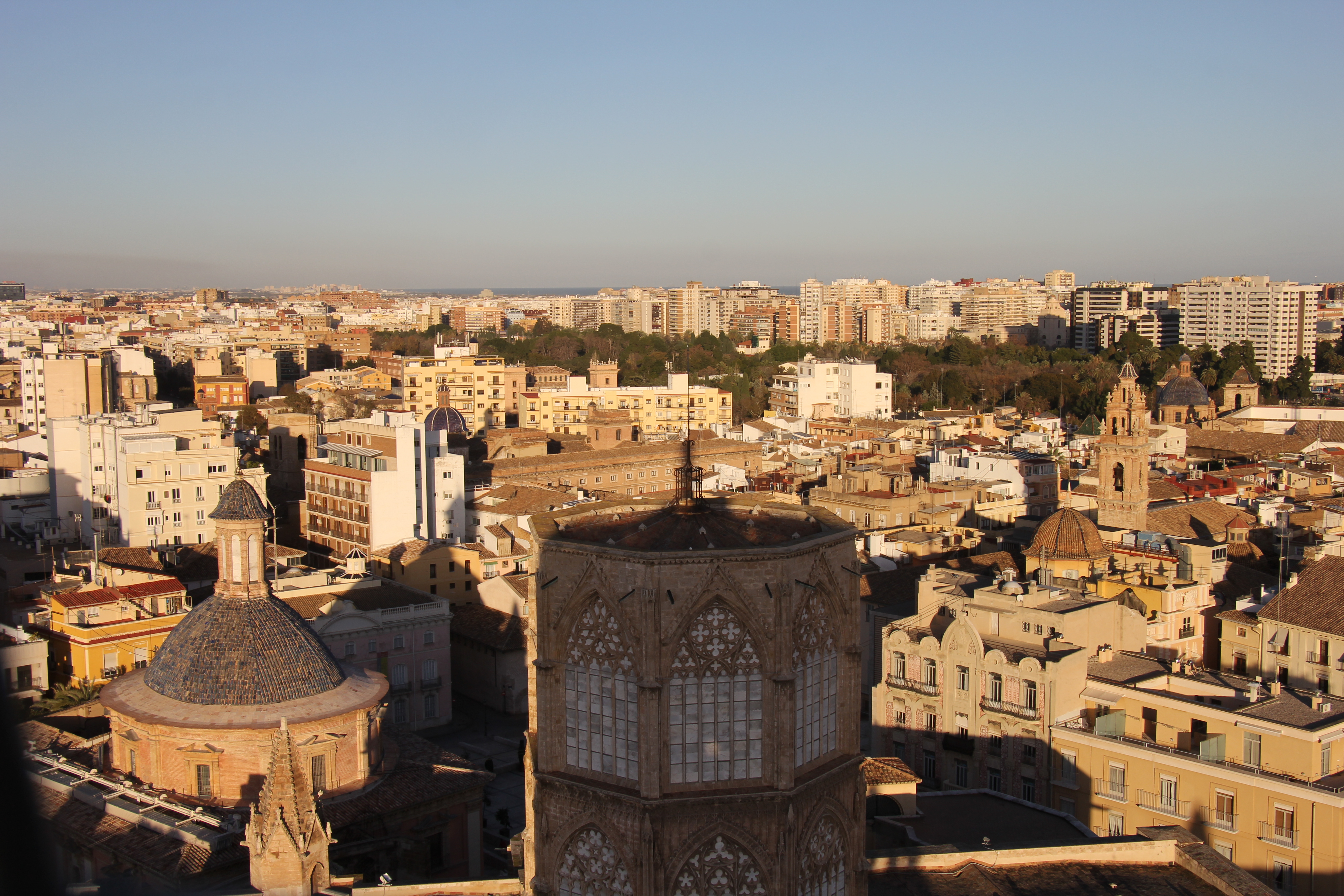
View from Miguelete Bell Tower, Valencia Cathedral 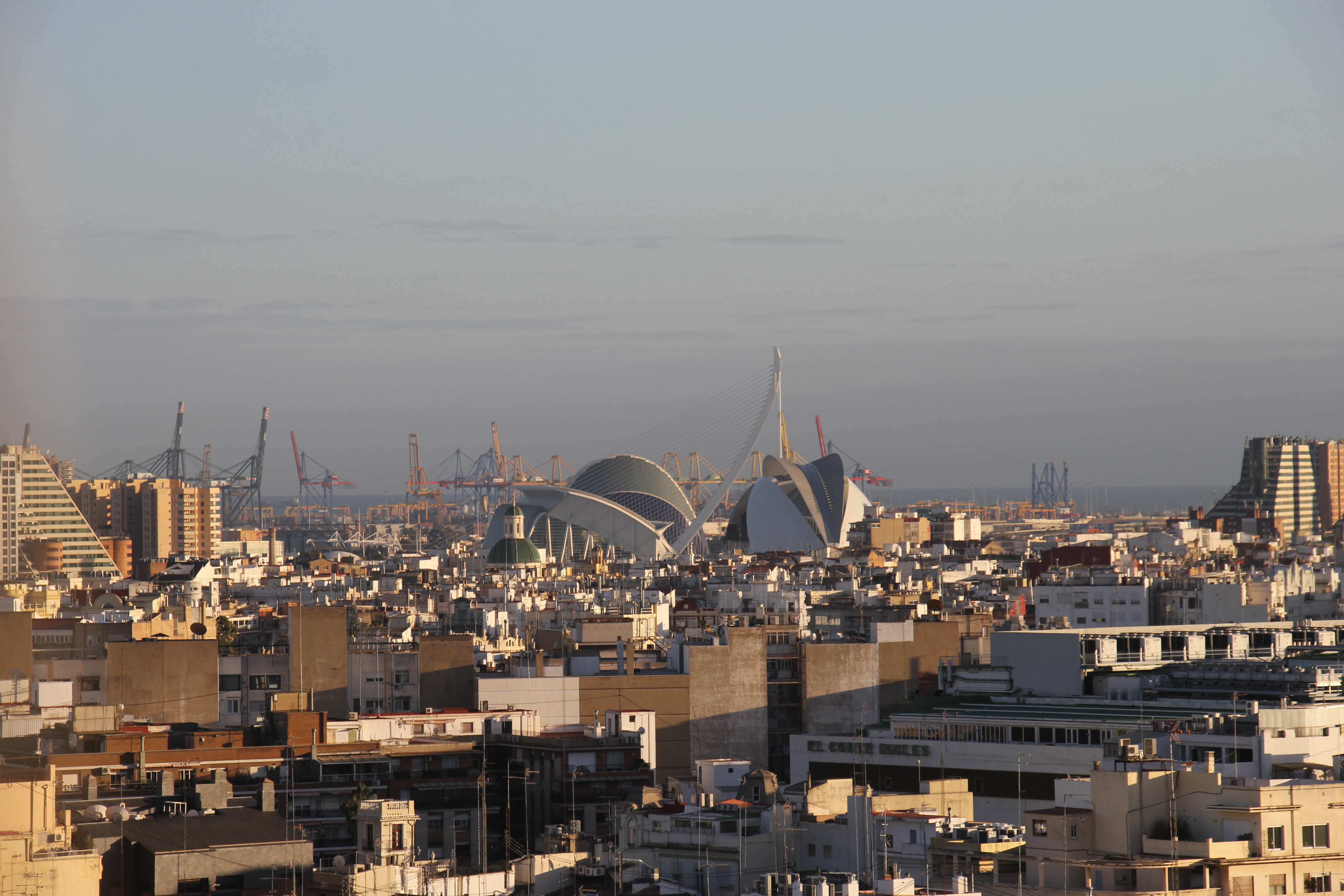
View from Miguelete Bell Tower, Valencia Cathedral
Torres de Serrans (Torres de Serranos)
We finish our walking tour for the day at one of the twelve gates which formed part of the old city wall. Only two of the original gates survived – Torres del Serrans (Torres de Serranos) and Torres de Quart – when the city wall was demolished in 1865. Construction of the Torres de Serrans began in 1392 on the site of an older gateway. It was and still is considered the main entrance to the city and its original function was defensive. It subsequently served as a prison for the nobility from 1586 to 1887.
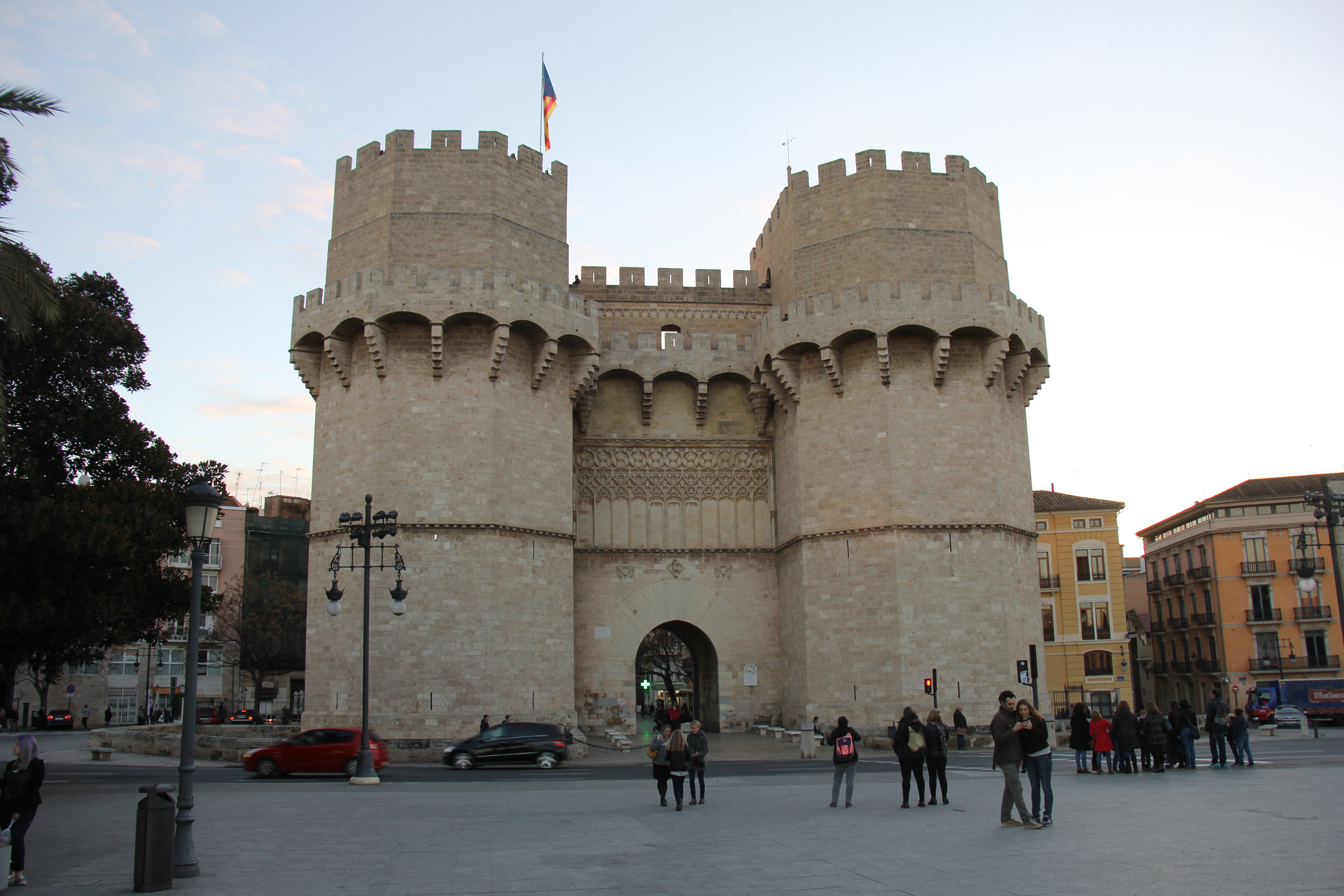
Torres de Serranos 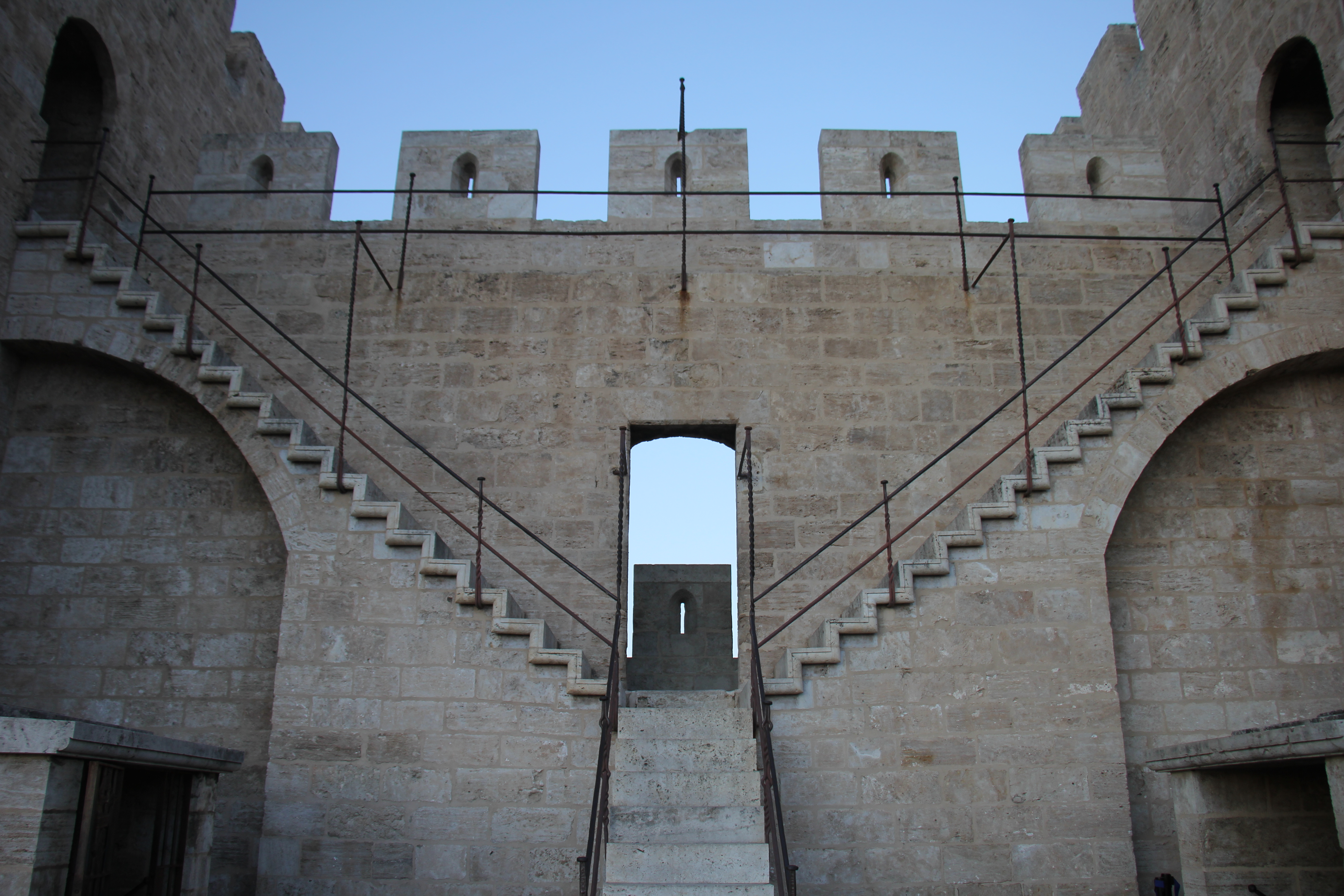
Torres de Serranos 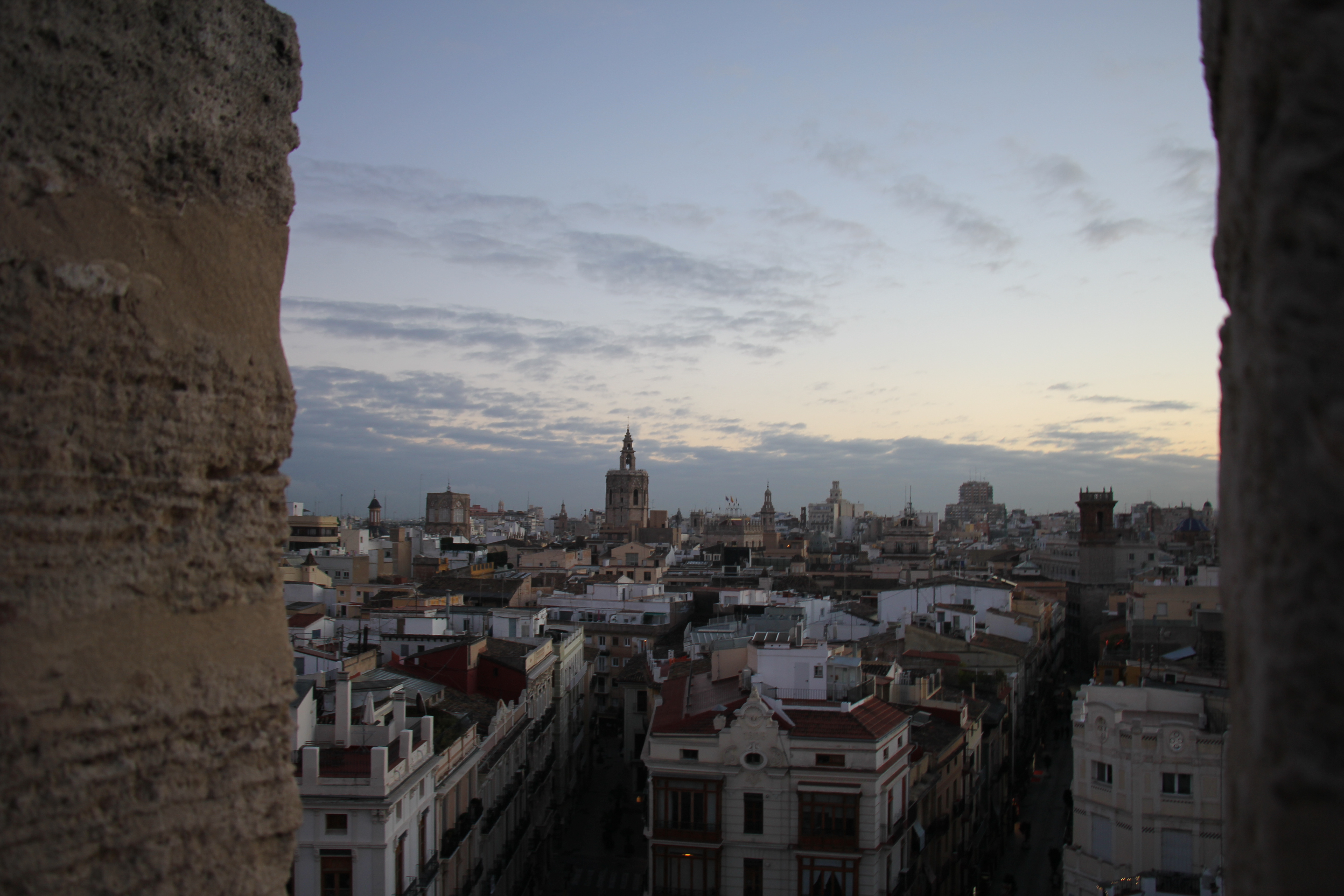
View from Torres de Serranos
We managed to fit in quick visit, climbing to the top of the octagonal towers, looking across the Turia riverbed and back towards the old city, before descending quickly before the custodians locked us in for the evening. We take a leisurely stroll back through the old city and then get ready for dinner at the Palace!
Paella at the Palace
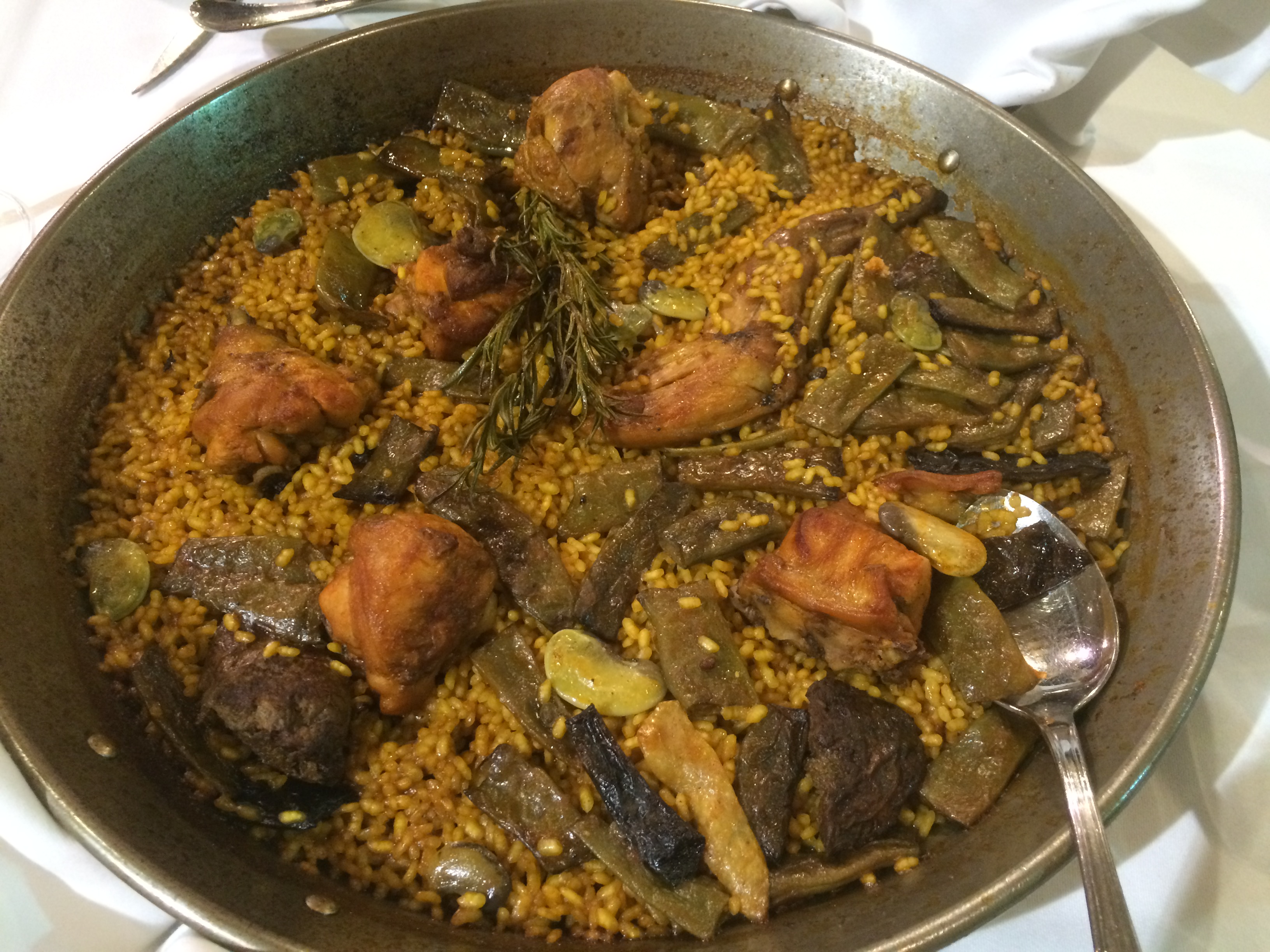
We managed to get a table at restaurante Palace Fesol for dinner. It wasn’t difficult, only two other tables were occupied until a large group of tourists filled most of the remaining tables. The lack of locals to add ambiance was more than made up for by the food and service. We shared first courses of: calamar Romana and titaina; followed by a main course of paella Valenciana. La titaina, was a new dish for me. A typical Valencian dish from the Cabañal-Cañamelar area, it is similar to a sofrito and is made with tomato, roasted red pepper, pine nits, garlic and salted tuna. One word: delicious. The paella was wonderfully fragrant, with a good serving of rabbit and chicken but not much soccarat and towards the end of the pan I felt that it was just a little too oily.
Ciutat de les arts i les ciències
Thursday, 29 December, 2016 – Valencia, Valencia, Spain
Our plan for today is a visit to the City of Arts and Sciences and time permitting a visit to the port and beach.
Trek along the Turia
This morning we began the long march to the City of Arts and Sciences, but not before a bargain breakfast at Granier (a Spanish chain of bakery-cafes that is now expanding in Europe and the USA). We enjoyed carajillo, croissant, bocadillo mixto (ham and cheese) plus two fresh orange juices for under €7. Surely some mistake on the till!
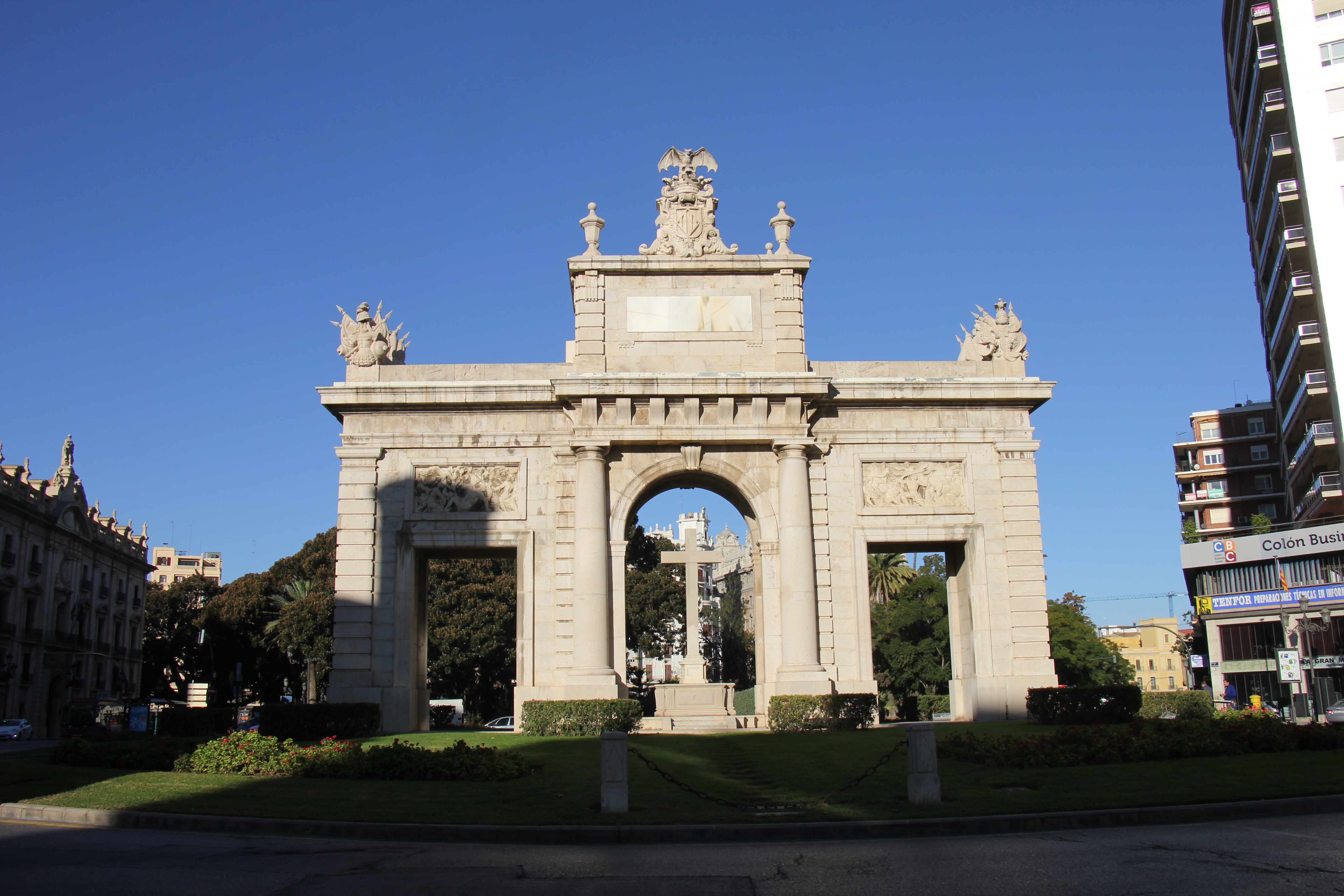
From the cafe we take a leisurely walk along Carrer Colón to the Puerta del Mar (Gate to the Sea) which sits on a roundabout where six roads meet. We cross over the Turia on the Pont de l’Exposició and walk eastwards along Passeig de l’Albereda towards the City of Arts and Sciences.
After a catastrophic flood in 1957 the authorities decided to divert the course of the Turia river around the city and subsequently created a series of wonderful gardens and ponds, as well as an athletics track, artworks, climbing walls, football pitches, in the dry river bed. The gardens stretch some 7km and are bisected by a number of bridges. Walking along the embankment enabled us to enjoy both the cityscape as well as watching people running and cycling through the lush gardens below. Walking down the steps to Gulliver’s garden we could hear children laughing and shrieking as they climbed and slid down the fibreglass model of Gulliver laying tied down.
Ciutat de les Arts i les Ciències (Ciudad de las Artes y las Ciencias)
We finally reached the City of Arts & Sciences which is located at the eastern end of the Turia riverbed. This entertainment and cultural complex is made up of a number of buildings:
- El Palau de les Arts Reina Sofía (2005) is an opera house and performing arts centre.
- L’Hemisfèric (1998) which resembles a giant eye and houses an IMAX Cinema, planetarium and laserium.
- El Museu de les Ciències Príncipe Felipe (2000) resembles the skeleton of a whale and houses an interactive museum of science.
- L’Umbracle (2001) set above the car park is an open structure which envelopes a landscaped walk with plant species indigenous to Valencia (such as rockrose, lentisca, rosemary, lavender, honeysuckle, bougainvillea, palm tree).
- El Pont de l’Assut de l’Or (2008) — a white cable-stayed bridge in between El Museu de les Ciències and L’Agora. connecting the south side with Minorca Street.
- L’Àgora (2009) — a covered plaza which is a multifunction space for concerts, conventions, exhibitions and sporting events.
- L’Oceanogràfic (2003) — an open-air oceanographic park.
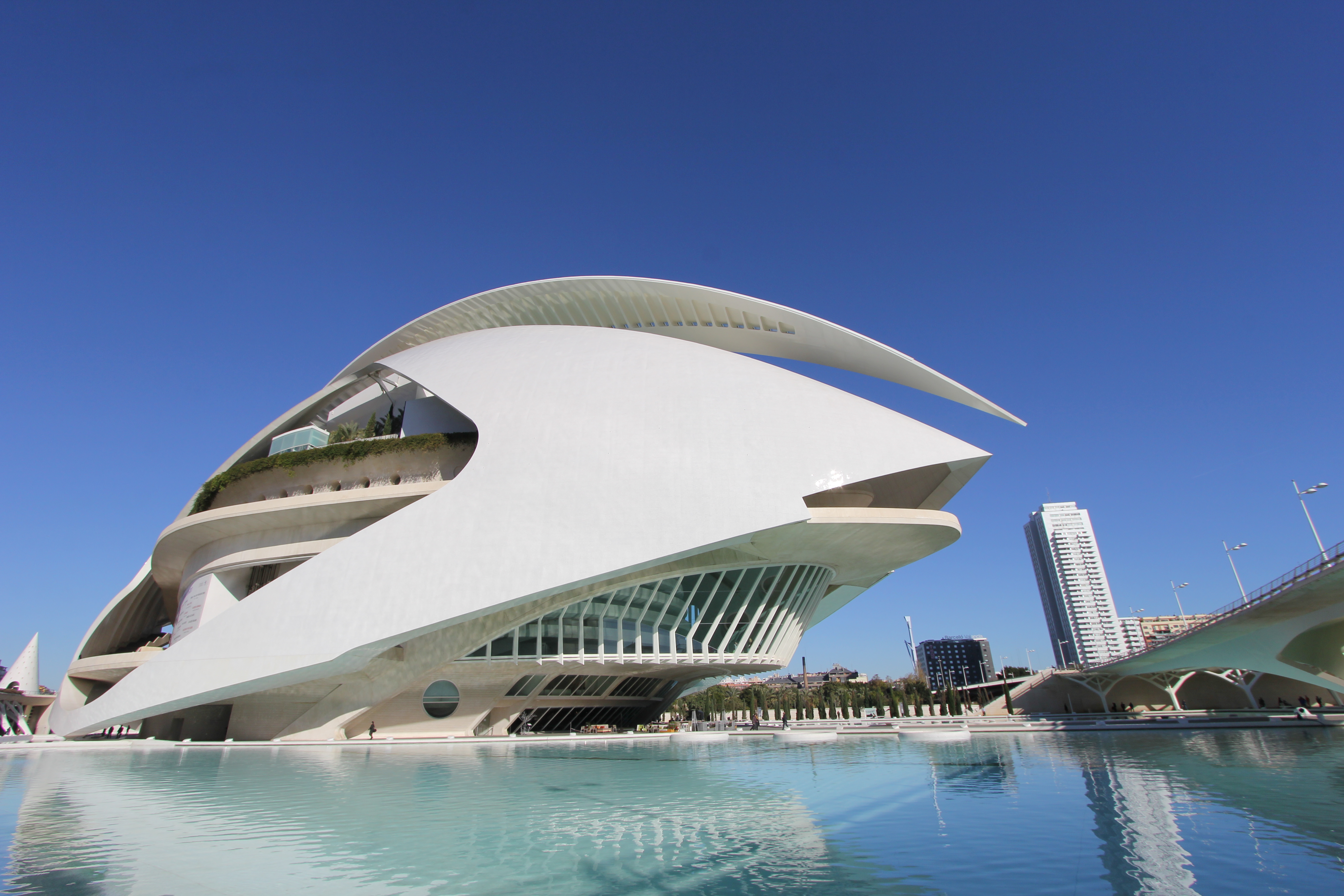
El Palau de les Arts Reina Sofía, Valencia 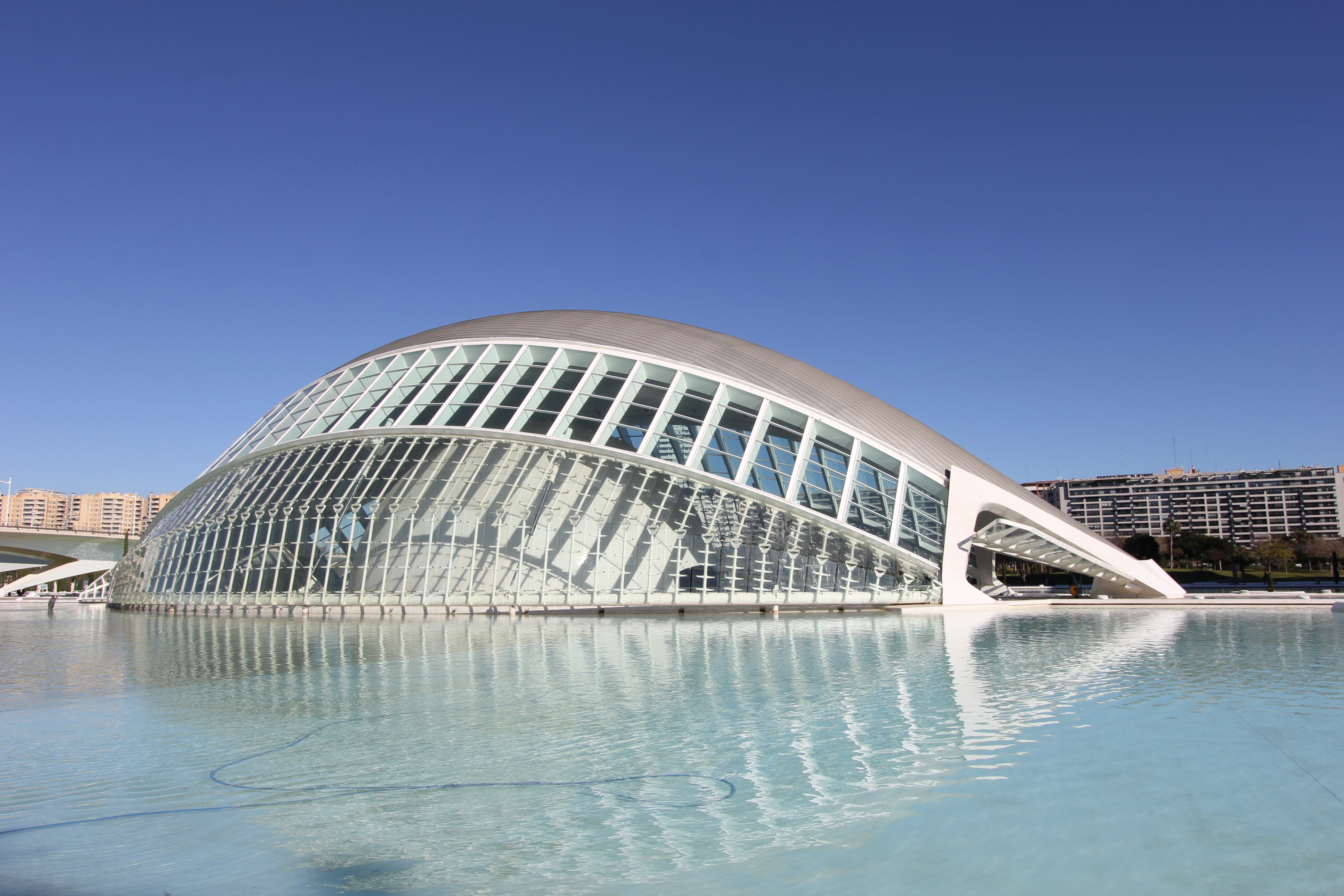
L’Hemisfèric, Valencia
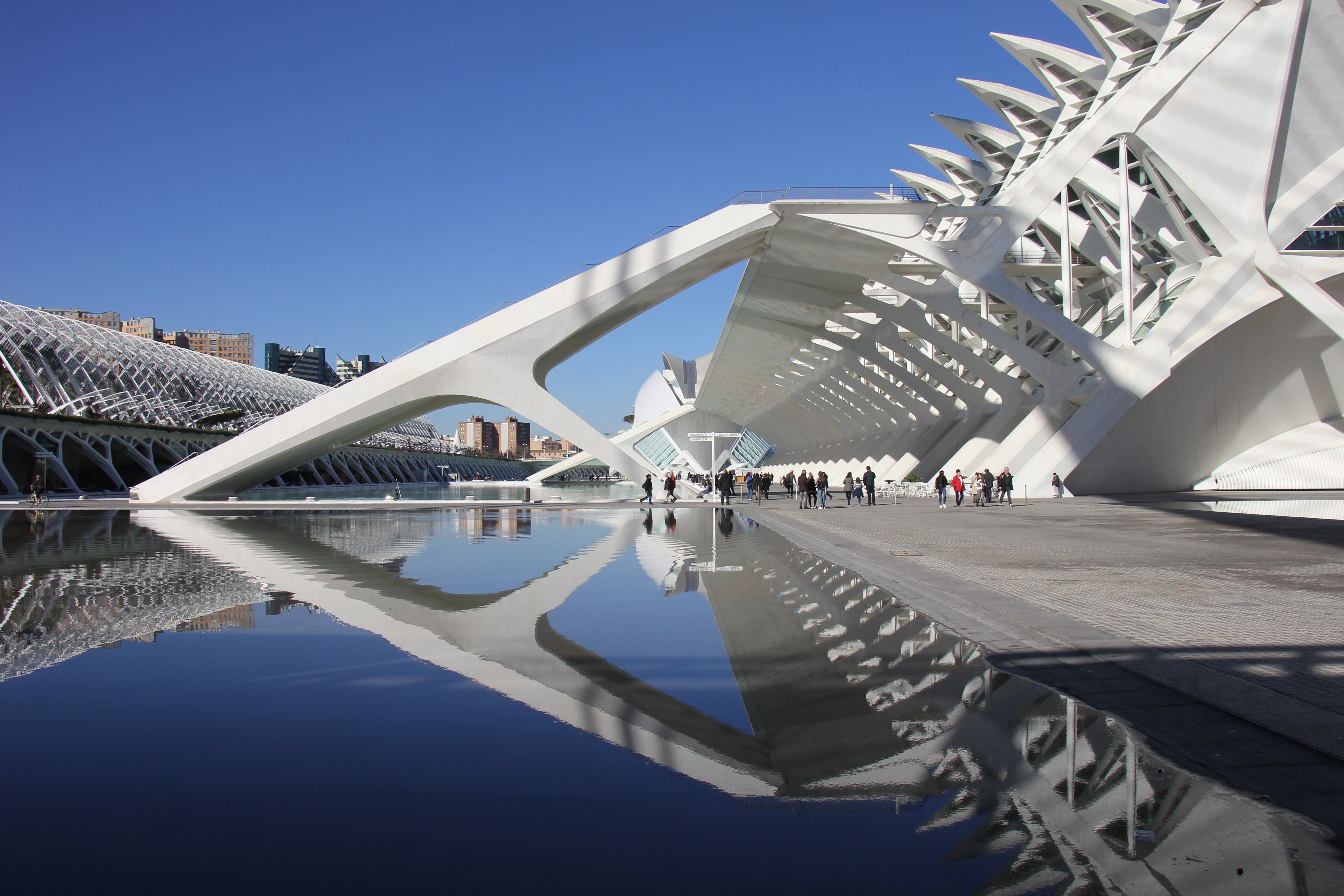
El Museu de les Ciències, Valencia 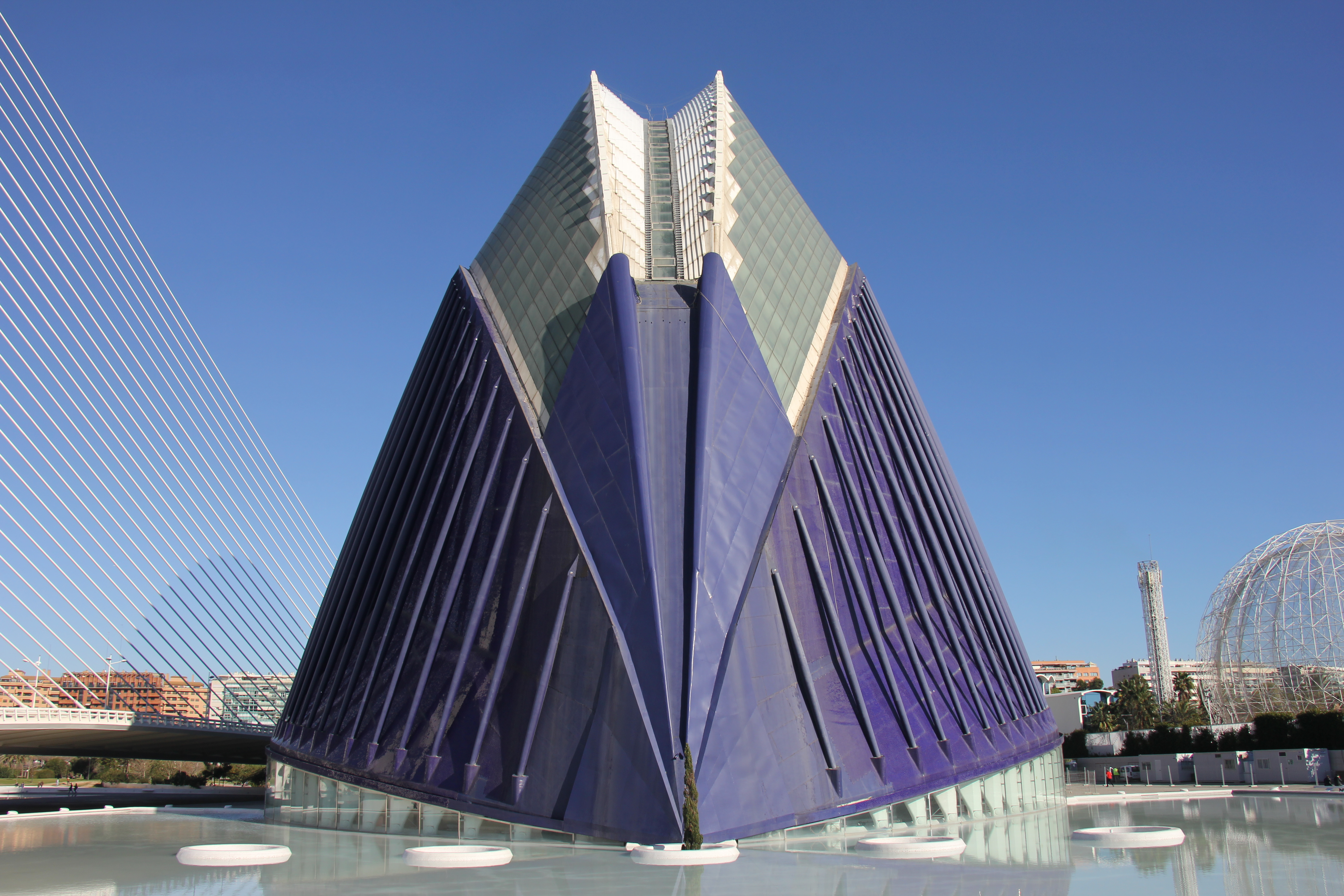
L’Agora, Valencia
The architecture is stunning with organic curves, pure white concrete, glass and Gaudiesque tile fragments. Many of the buildings rise out of and are reflected in the water which surrounds them.
Some may say that this complex is the folly of successive socialist governments – there was a massive overspend as well as concerns of financial mismanagement. This combined with other concerns about financial management and impropriety in the local administration has led to the creation of a Valencian tour, called Ruta del Despilfarro, or “route of wastefulness,” featuring the City of Arts and Sciences.
Into the blue
Realising that it would be impossible to fully explore all of the museums and exhibits we decided to wander around the complex – looking at all of the buildings and structures before spending time at the aquarium.
Designed by Félix Candela in the shape of a water lily, L’Oceanogràfic is the largest oceanographic aquarium in Europe set in 110,000 square meters and containing some 42 million litres of water. Our first stop is the delifinario (dolphinarium) where we watch the dolphins perform for food. It’s a bright sunny day, music blasts out of the PA and young trainers in black wet suits run around coaxing and cajoling the dolphins to perform their routines. Its wonderful to see these wonderful creatures, but I can’t help feeling that despite captivating the crowds that the should not be in in captivity but swimming free. After the show we head to explore the rest of the oceanographic park which is divided into different zones or habitats, some of which are housed in buildings others which are in the open.
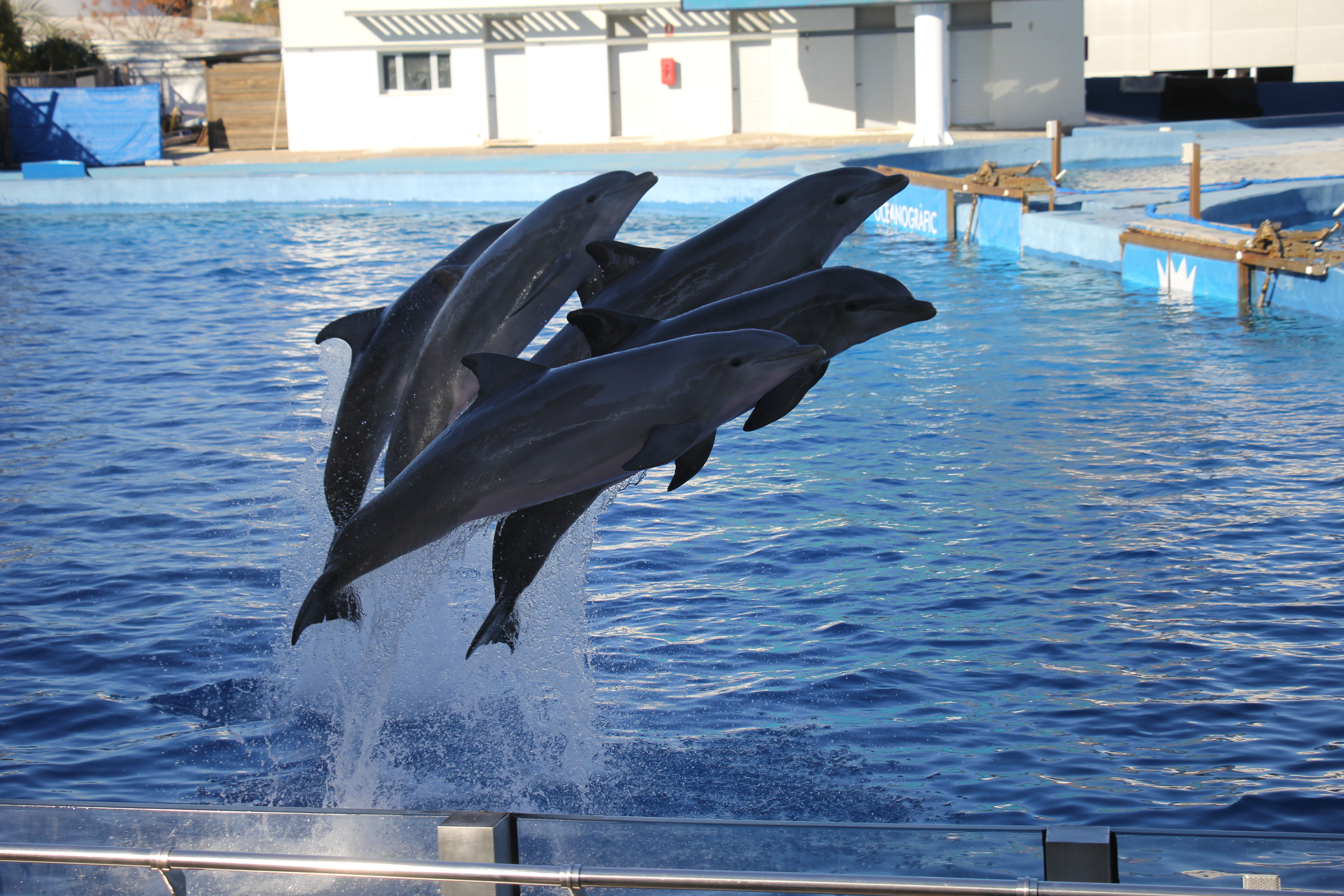
Dolphinarium, L’Oceanogràfic 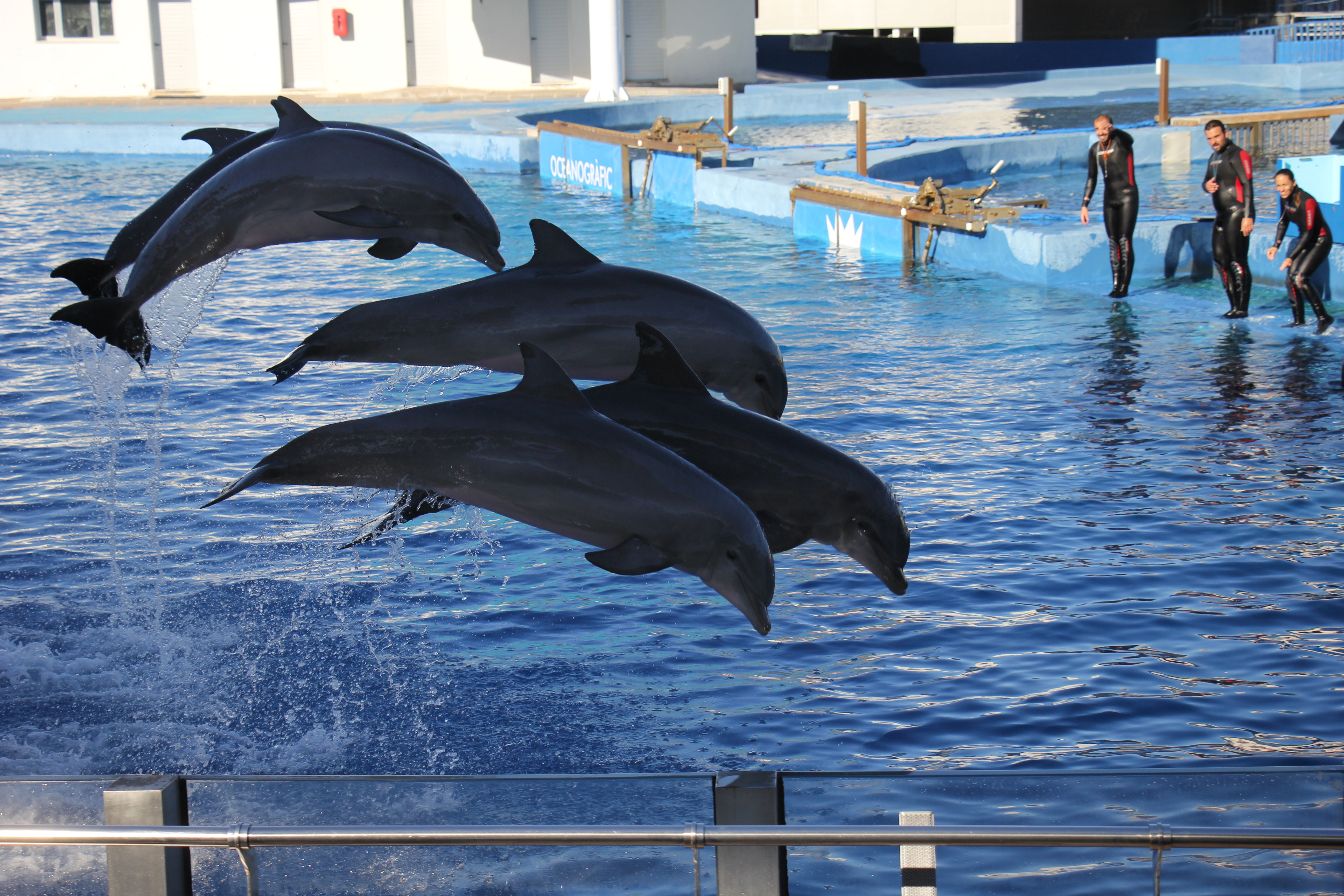
Dolphinarium, L’Oceanogràfic
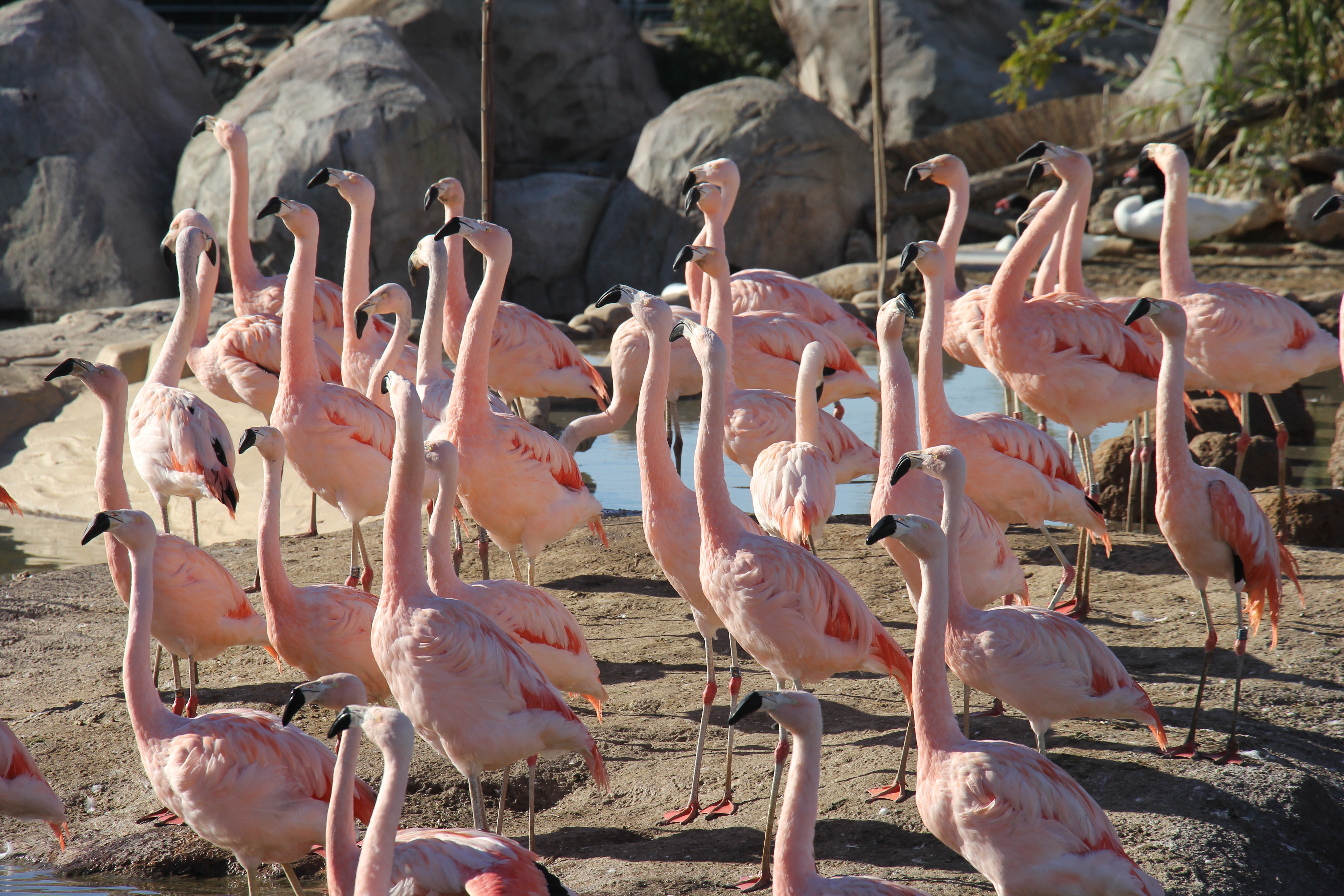
Flamingoes, L’Oceanogràfic 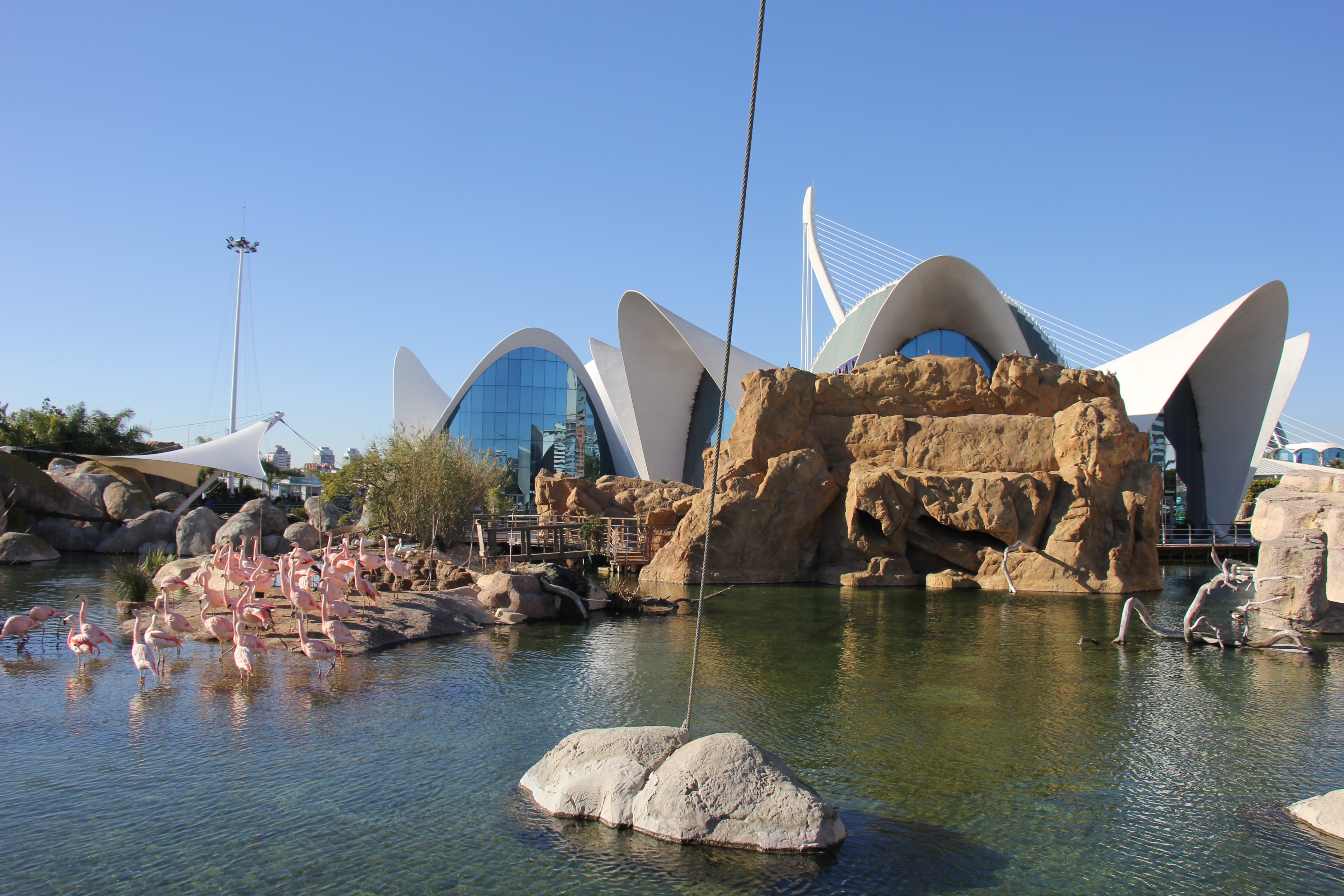
L’Oceanogràfic
Each of the buildings houses species from different aquatic environments including the Mediterranean, Wetlands, Temperate and Tropical Seas, Oceans, the Antarctic, the Arctic, Islands and the Red Sea. Some of the environments are more exciting and dramatic than others, the tunnels with fish swimming above are captivating and the children swarm around a small tank calling out ‘Nemo, Nemo’ as the clown fish swim around.And although the tanks are fairly big, that’s all the fish do, is swim around and some of the mammals, particularly the walruses and and one of the beluga whaleslooked decidedly distressed and uncomfortable is such small enclosures. Even the pingüinos Juanito (gentoo penguins) looked sad from our side of the glass enclosure. Whilst many aquariums may be well managed I wonder whether the claim that such sites raise awareness of the value and importance of marine conservation can be justified.
Port and beach: a confession
Our walk to the port and beach took slightly longer than expected. A couple of wrong turns meant that we had to retrace our steps – the only other options being to walk along a dual carriageway with no pavement or clamber along a gas pipe to cross a river. We retraced our steps!The port is quiet and has not succumbed to redevelopment, there are signs that this may happen, but not just yet.
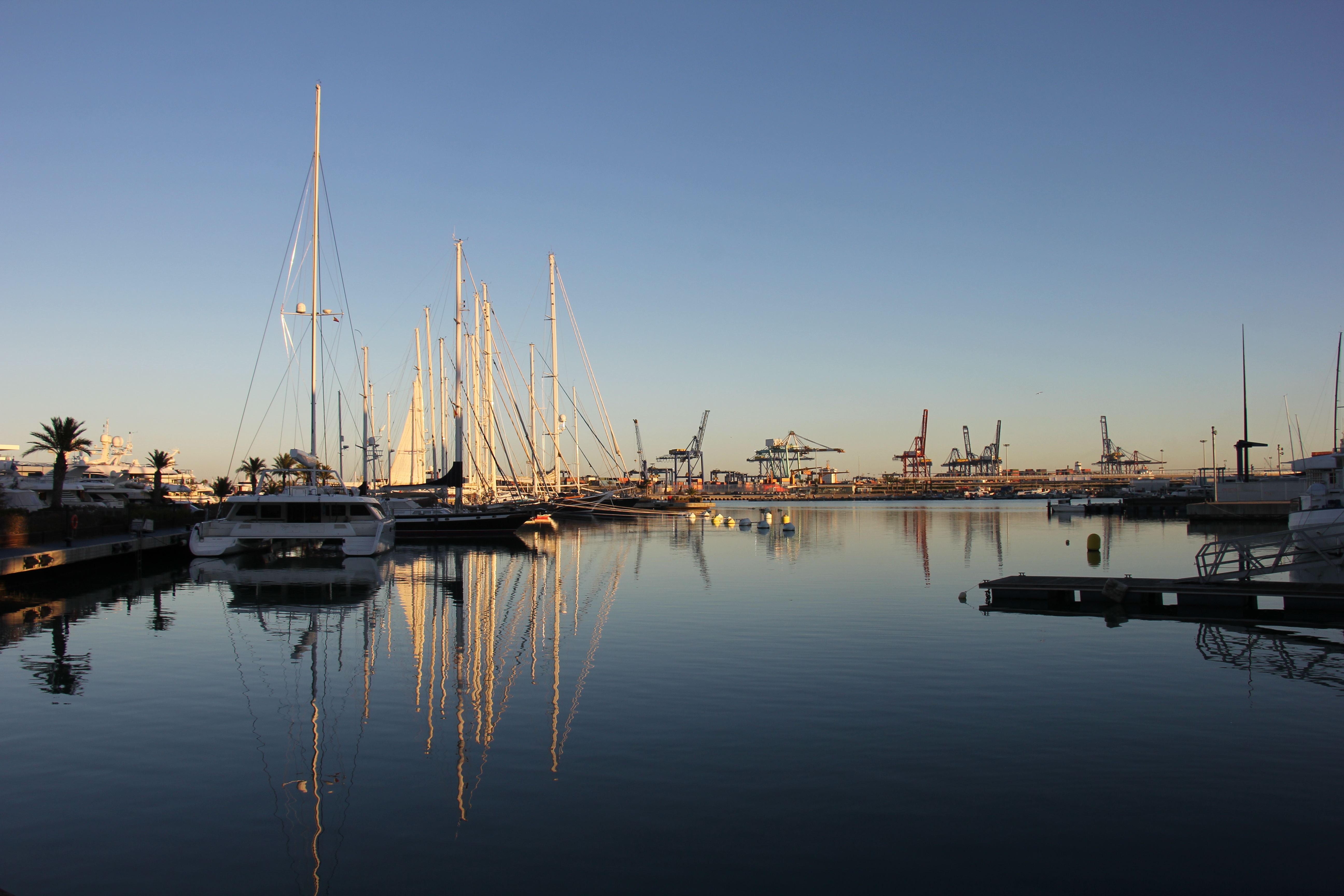
Port (South), Valencia 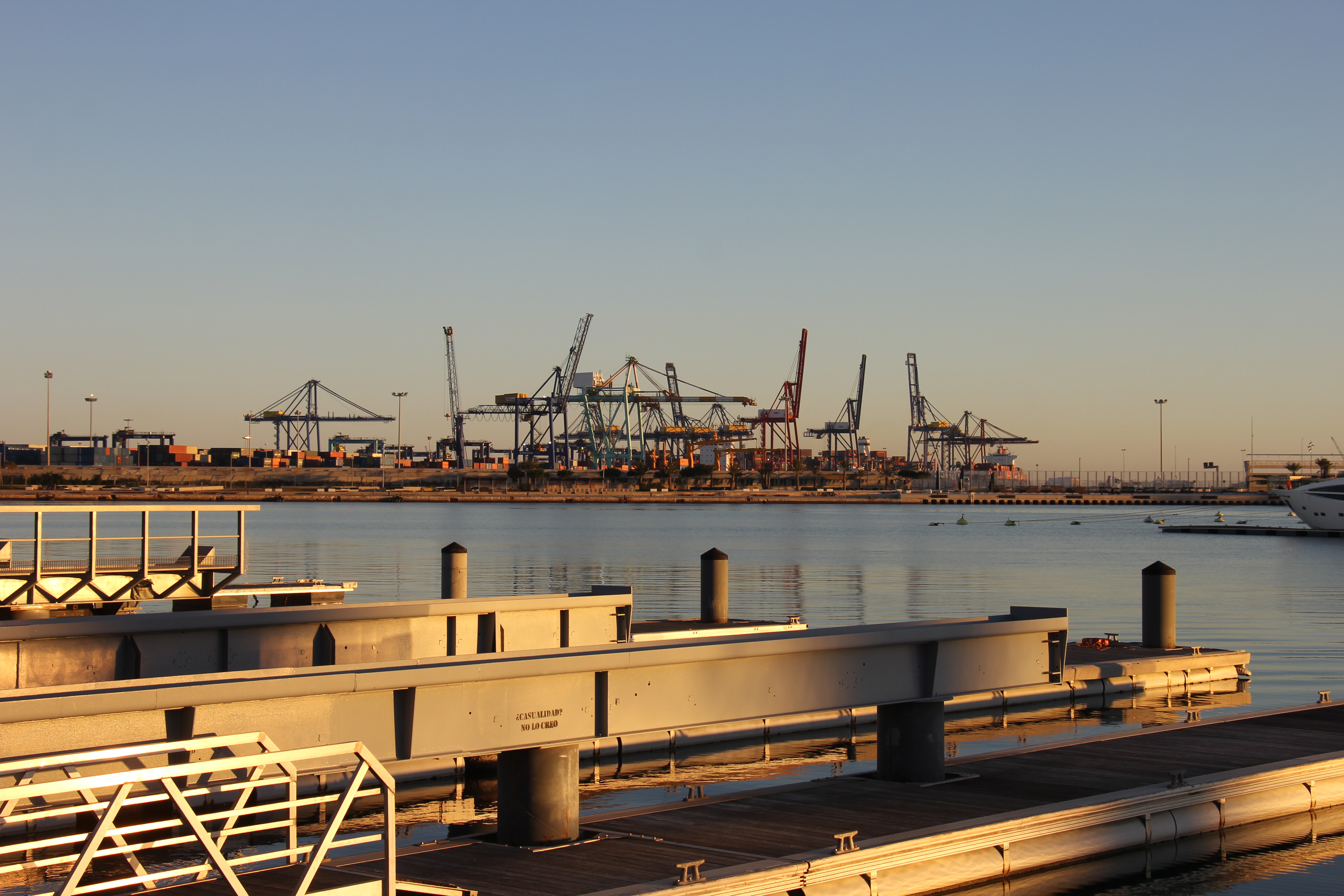
Port (South), Valencia
We find our way to the beach and walk along the promenade past a number of infamous restaurants such as La Pepica. Like the port, the beach front shops and restaurants are quiet. Having promenaded and browsed in a few shops, we stop for a brief and much needed drink at VSD (Viva sin domir) before heading towards the Metro.
More Metro
Mistakenly we thought that we might have to walk to Marítim-Serreria to catch the Metro, but there is a connecting service which runs above ground providing a link to the beach/port. With no trains in sight at the end of the line we followed the tracks to the next stop, Grau-Canyamelar and by the time we purchase our tickets we can hear the train in the distance. We have a short wait at Marítim – Serrería from where we take Linea 5 directly to Xàtiva.
Dinner with Marisa
After a day of walking, covering some 21km, we definitely deserved dinner and so walked to La Taberna de Marisa on Calle de Caballeros.
Valencia de fecundas primaveras, de floridas almunias y arrozales, feliz quiero cantarte, como eras, domando a un ancho río en tus canales, al dios marino con tus albuferas, al centauro de amor con tus rosales. [Extract from Amanecer en Valencia, Antonio Machado]
Any restaurant that quotes Antonio Machado on its website has to be worth a try. So we decided to try a selection of tapa, all of which were washed down with a good bottle of Rioja. Our tapas included: pimientos de Padron (padron peppers), albondigas caseras de carne de Palanca (home made meat balls with meat from Palanca – a butchers in the Central Market) croquetas de berenjena y parmesano (aubergene and parmesan croquettes), calamares a la romana, morcilla de Burgos (black pudding with rice and seasoned with cumin) and habitas baby con taquitos de jamón ibérico y ajos tiernos (baby beans with cubes of Iberian ham and young garlic).
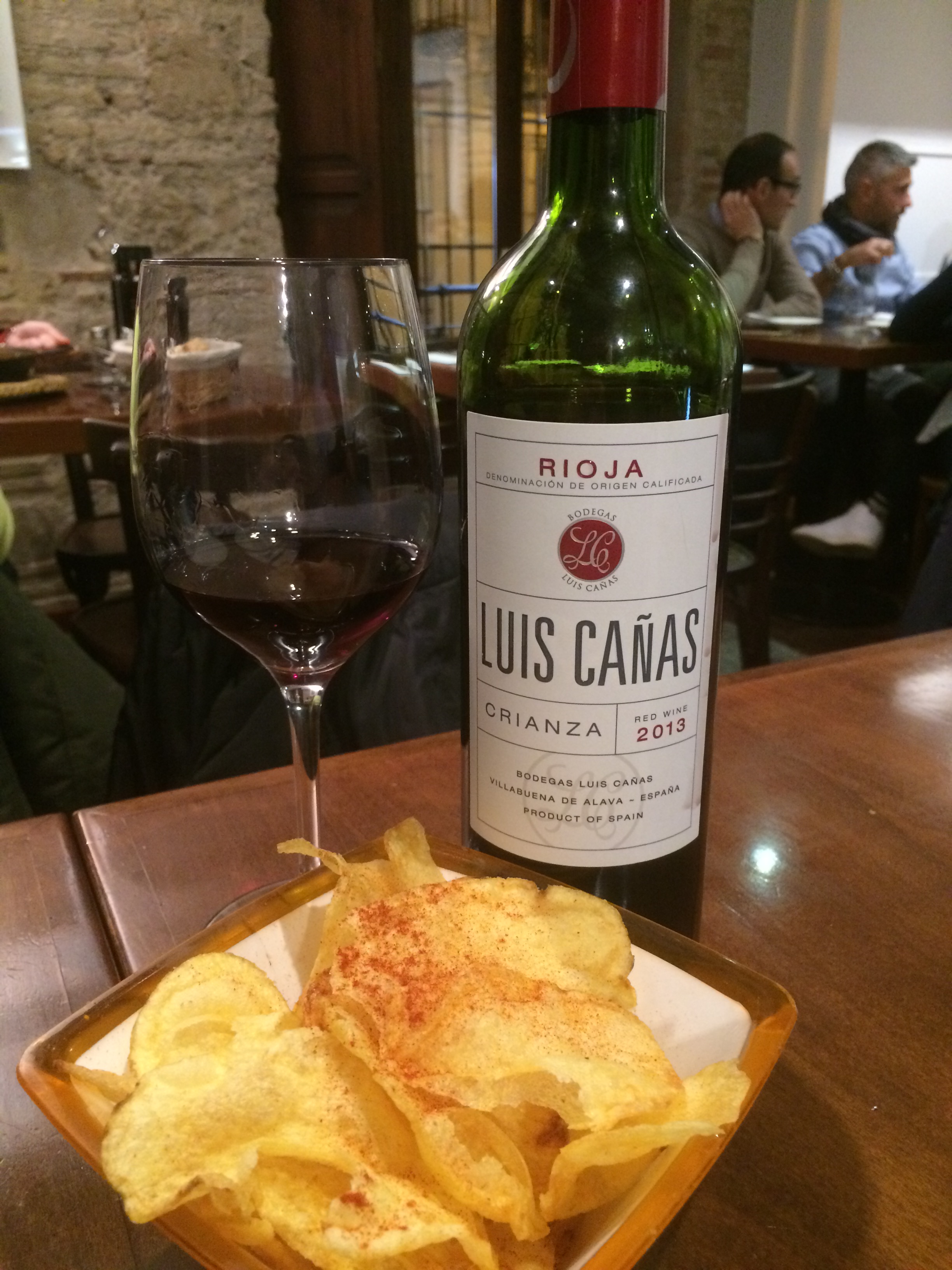
Rioja 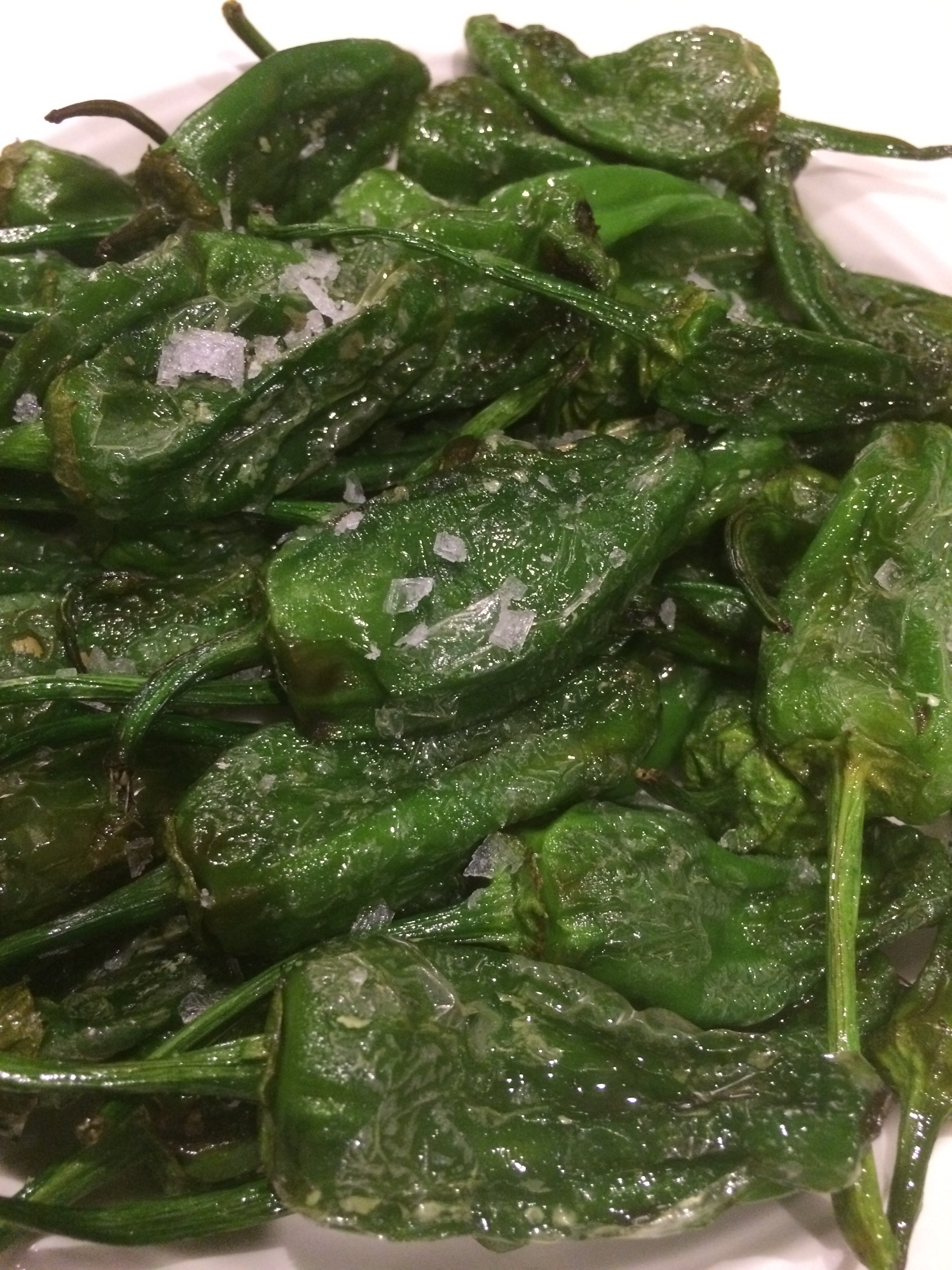
Pimientos de Padrón 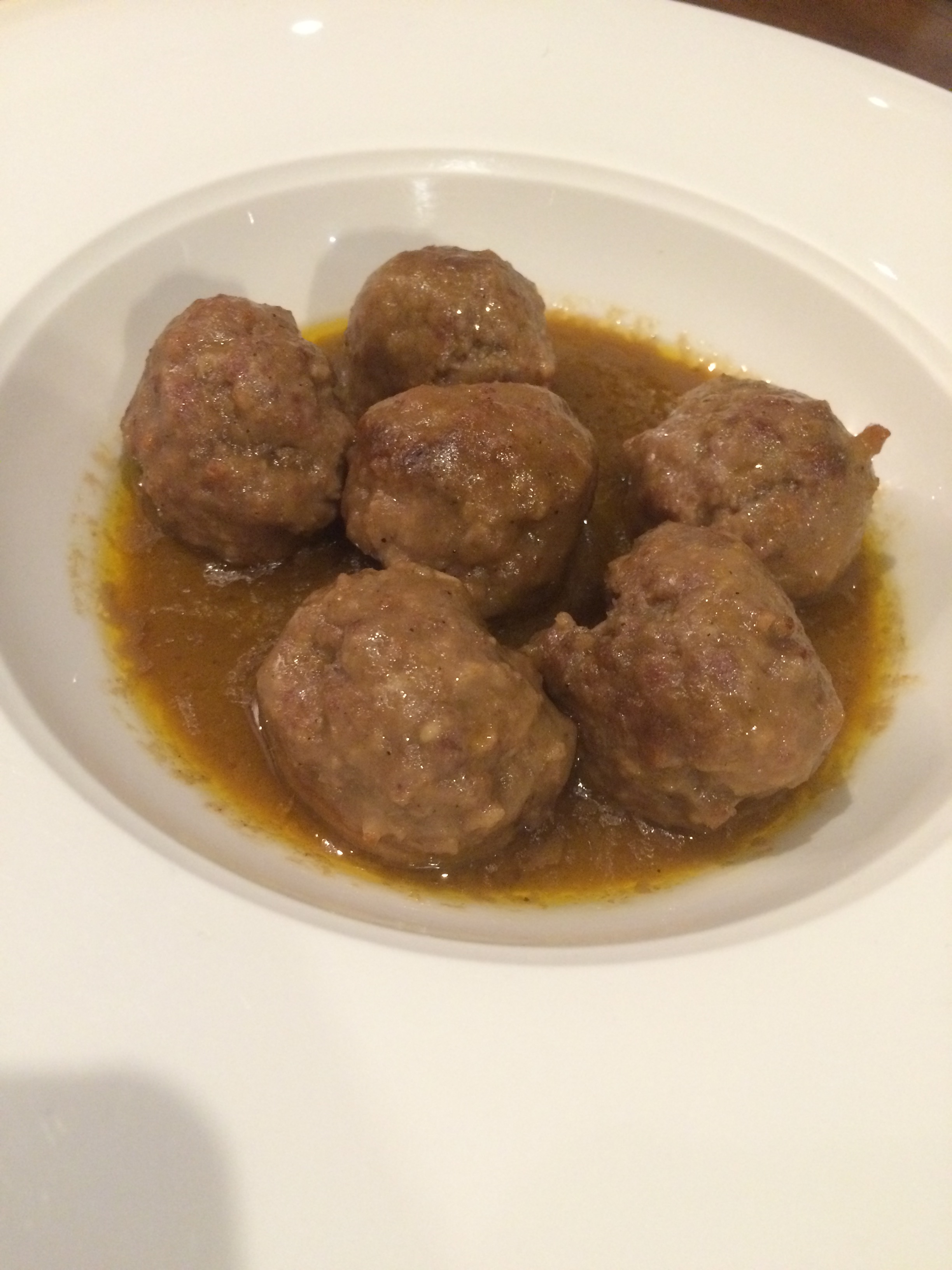
Albóndigas caseras 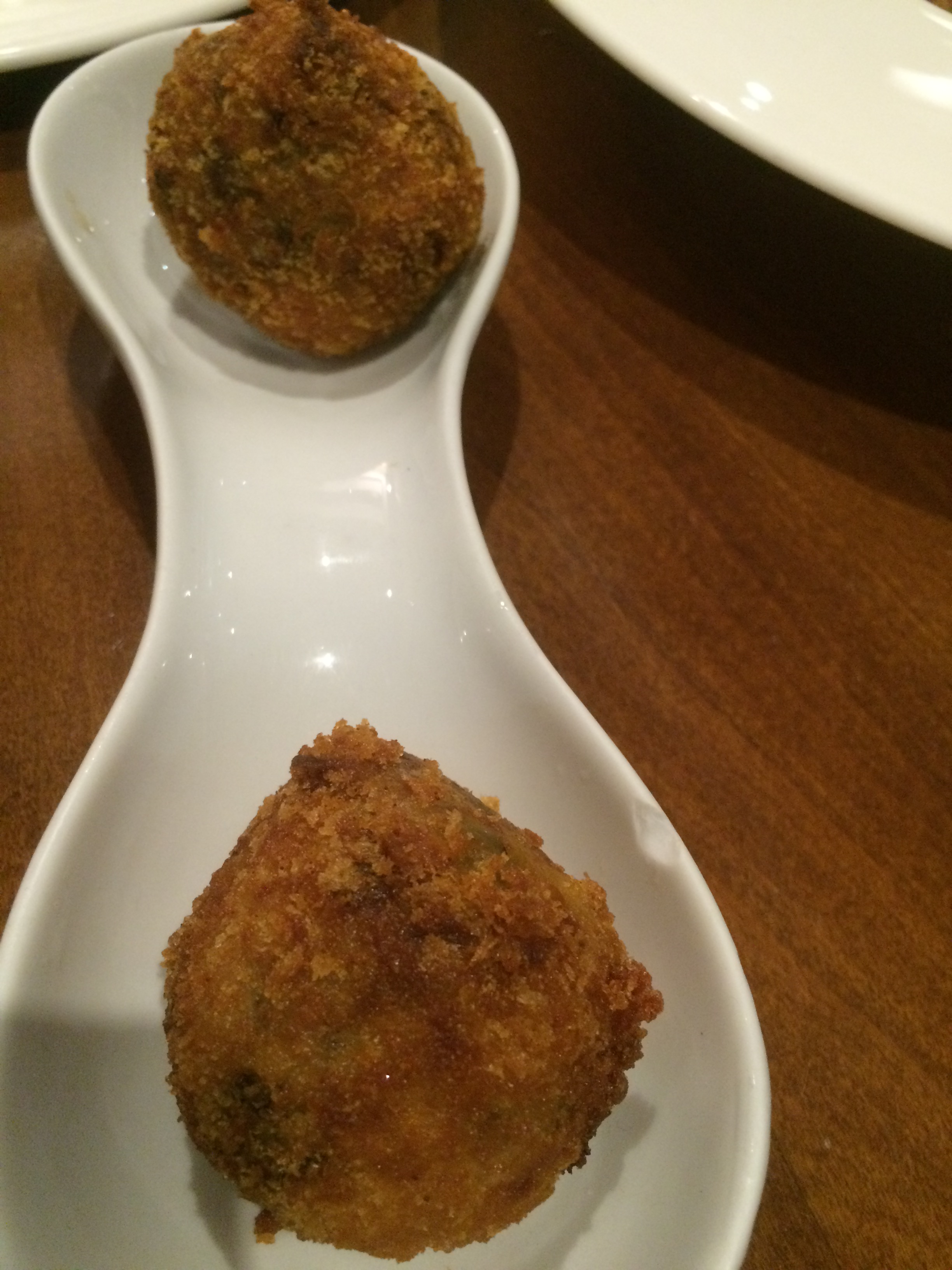
Croquetas de berenjena y parmesano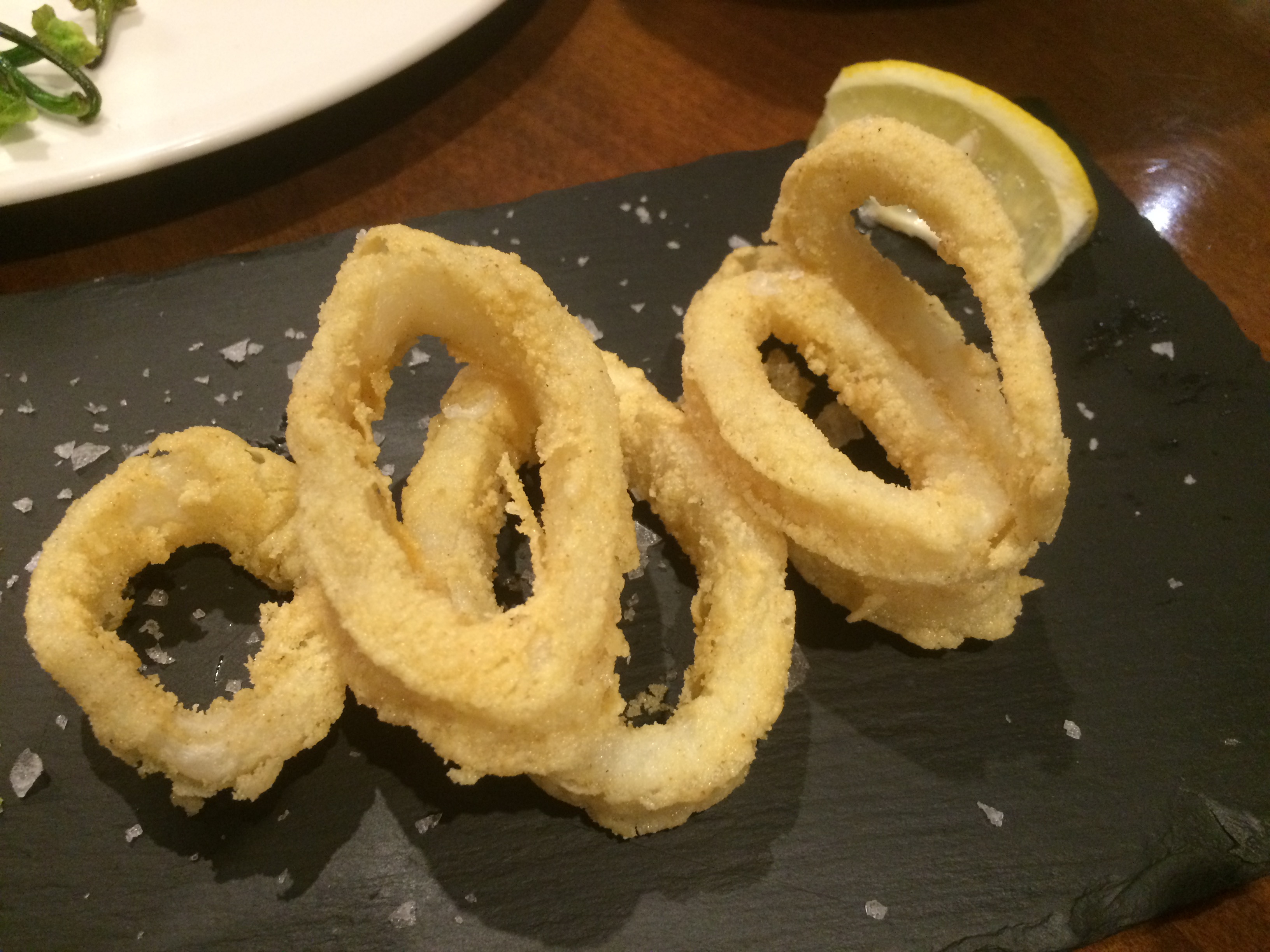
Calamares a la romana 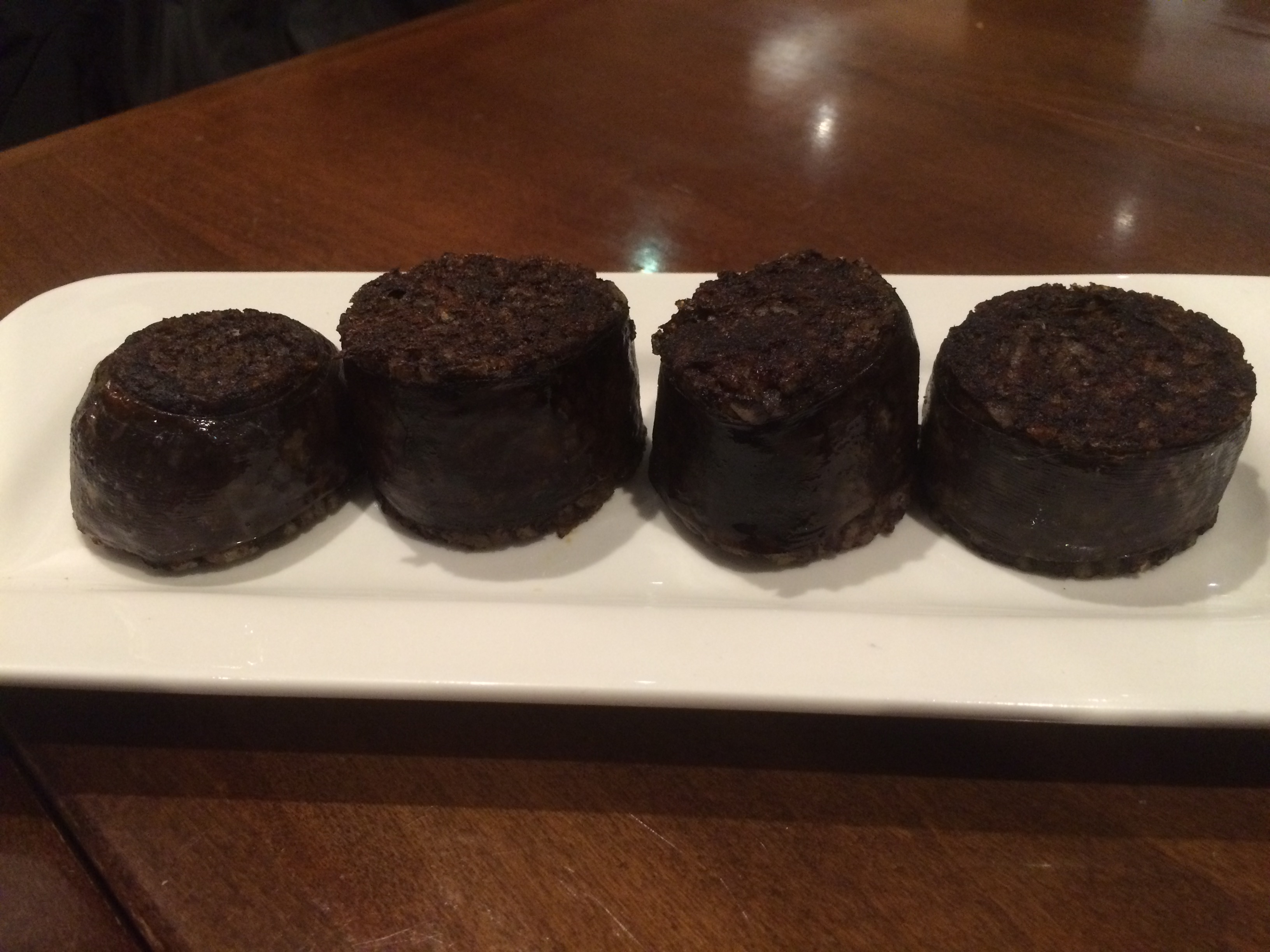
Morcilla de Burgos 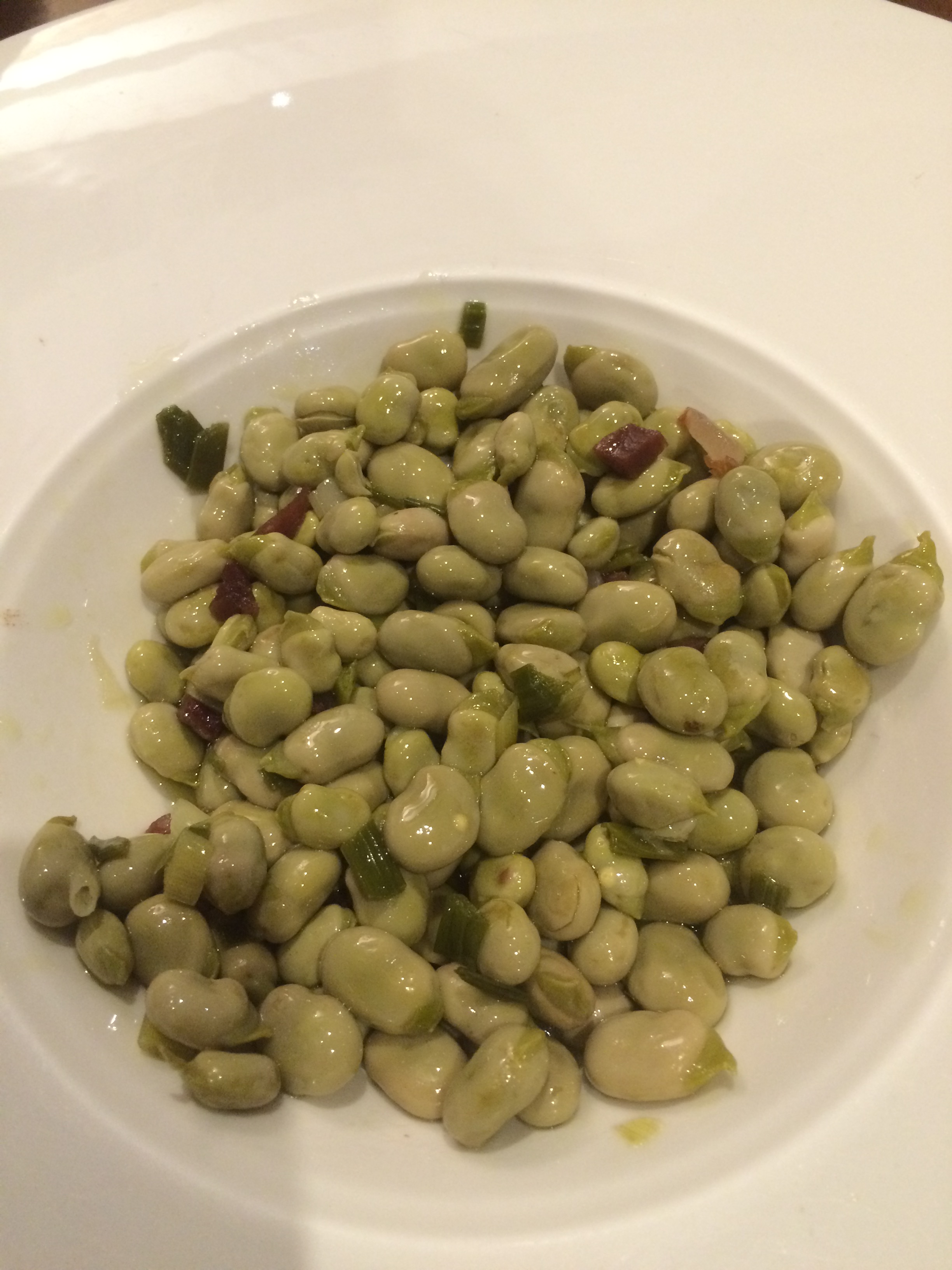
Habitas con jamon iberico y ajos tiernos
The service was somewhat erratic as was the tapa which ranged from mostly delightful to one or two disappointing. But that’s the beauty of tapas, it’s a small plate rather than a whole racione, and an opportunity to try something new or an old favourite. Unfortunately, there was nothing new on the menu so we went with the old favourites! The service was somewhat erratic as was the tapa which ranged from mostly delightful to one or two disappointing. But that’s the beauty of tapas, it’s a small plate rather than a whole racione, and an opportunity to try something new or an old favourite. Unfortunately, there was nothing new on the menu so we went with the old favourites!
Ciutat Vella
Friday, 30 December, 2016 – Valencia, Valencia, Spain
We set aside today to explore the old city, taking in the central market, the Almoina, the Almudin and the Quart Towers. We also managed to fit a few stops for refreshments and shopping before dinner. Following yesterday’s long march today turned out to be more of a toddle, walking just over 10k.
Mercat Central (Mercado Central)
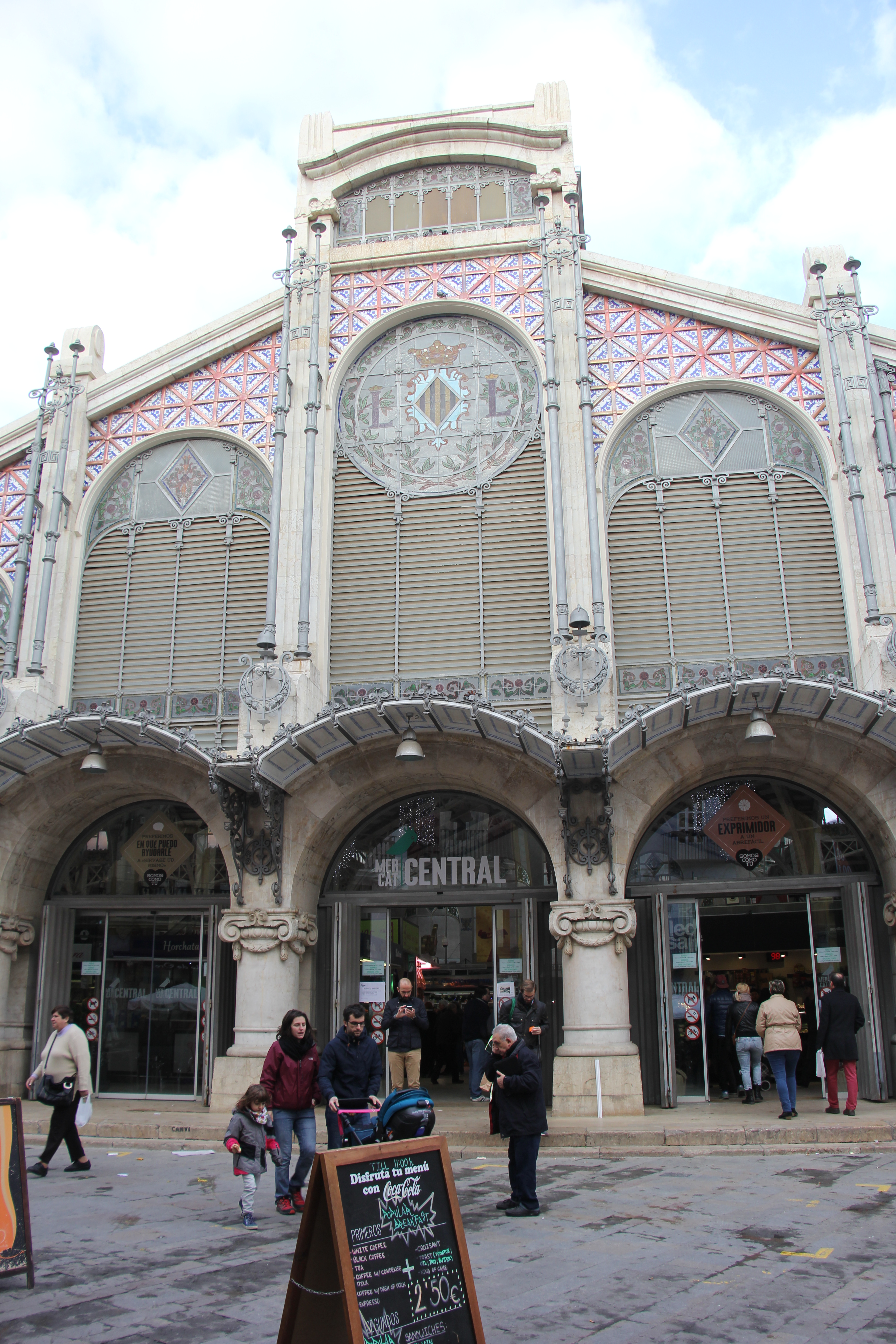
A later start to the day which began with a brief walk around the Central Market and surrounding streets. Designed on rationalist lines, construction of the iron and glass building with its ceramic domes was completed in 1928. Despite the hustle and bustle inside, the building has a light airy feel with the high ceiling and domes, which is complemented by the two wide main aisles and the stalls which are laid out in a grid.
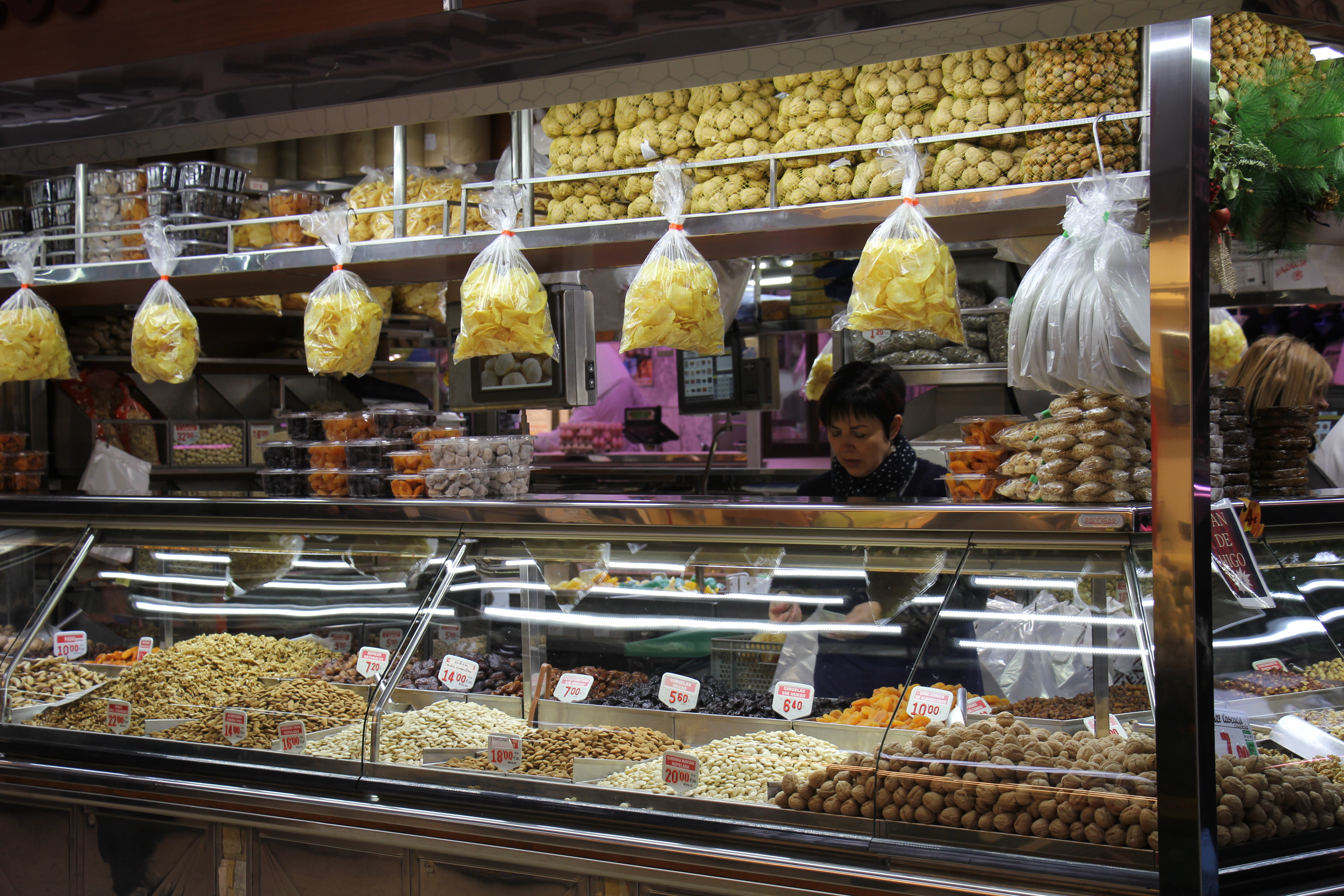
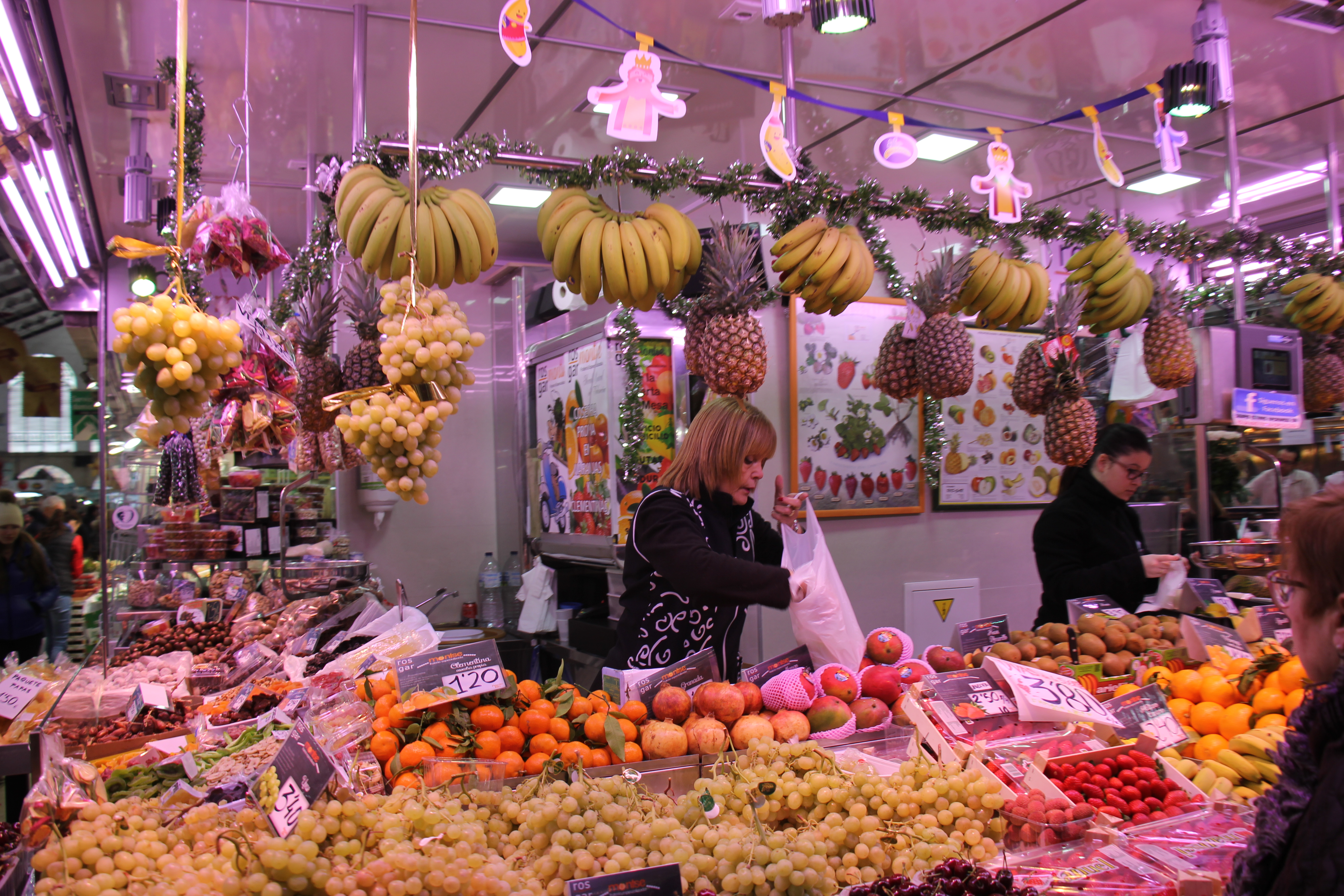
There is wide variety of produce on sale ranging from fruit and vegetables to poultry and meat. The fish stalls are well stocked with a variety of fish and shell fish. There are other smaller stalls selling dried fruits and nuts as well as herbs and spices. It’s just a shame that we are not in an apartment where we could cook with some of these wonderful ingredients. It would almost be worth bringing an Esbit or Trangia stove to cook up something fresh on the beach. But, instead we head towards the cafes for a drink.
Mercat Central 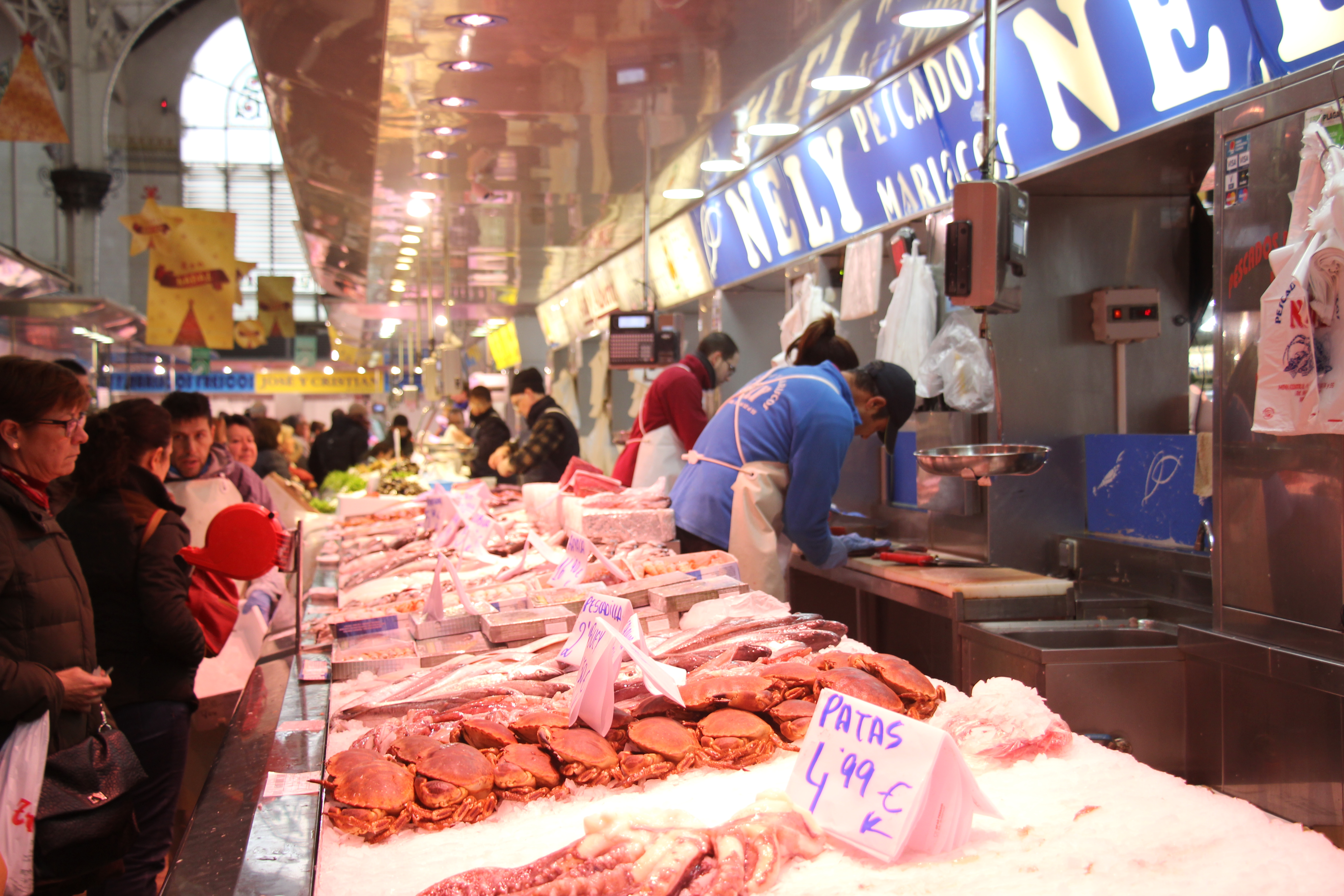
Mercat Central
Mercat Central 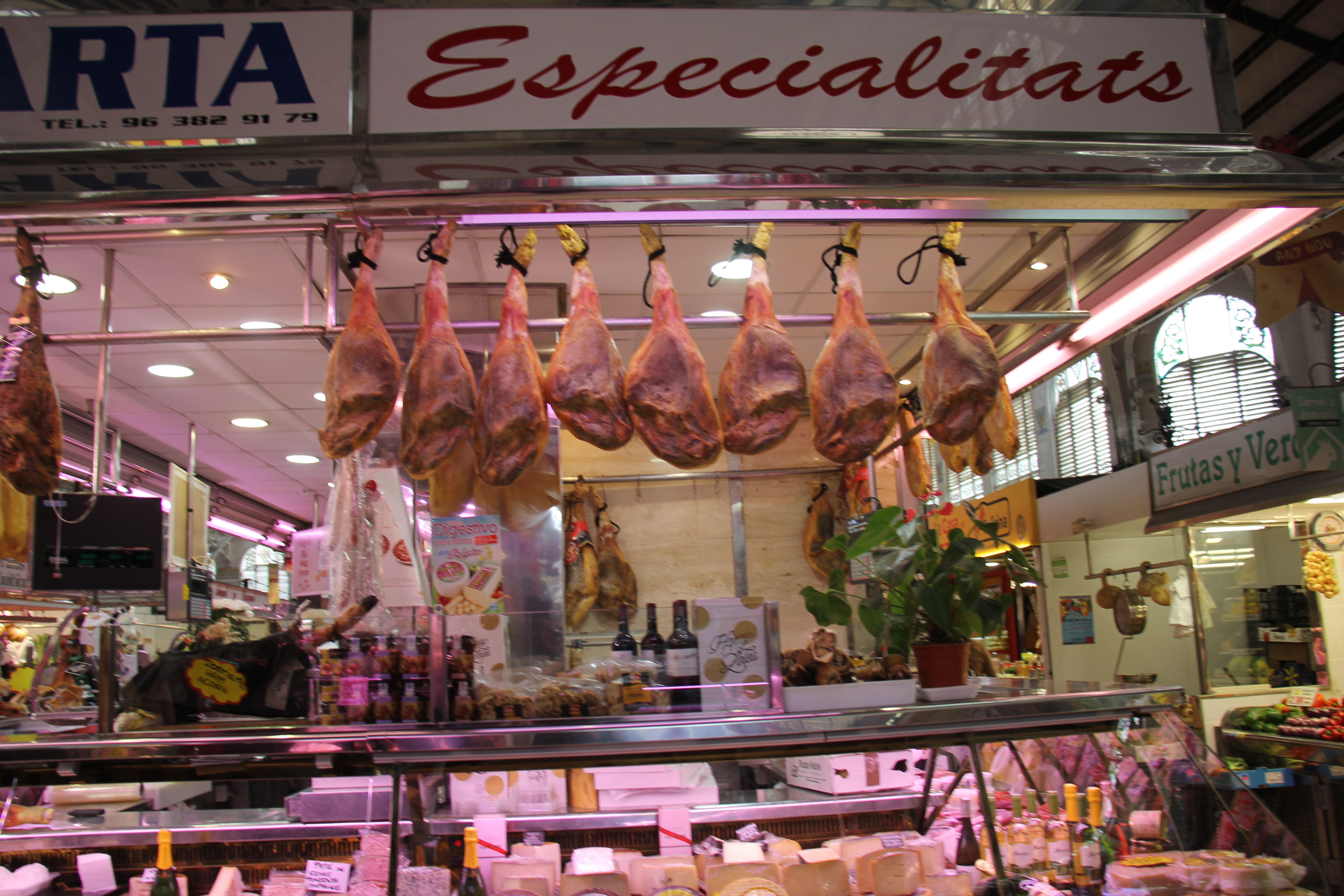
Mercat Central
Cafe culture – carajillos, chocolate and churros
From the outside the architecture and decoration of the Mercat Central is impressive, but sits comfortably amongst the surrounding buildings. The cafes surrounding the main entrance to the market were busy with groups of workers and shoppers alike. After walking around the market we managed to find a table inside Bar La Lonja, which was rammed. The tables inside, like those outside were occupied by locals and fortunately we were the only tourists. The staff worked like a well-oiled machine, gliding gracefully between the tables, serving and clearing, taking orders and chatting with the regulars. Sue had a cafe con leche and I had a carajillo. Feeling suitably refreshed we headed out and further into the old city until we reached the Horchateria Santa Clara. Again we managed to get a table just before the hordes seemingly descended upon us. Time for another carajillo for me, a hot chocolate for Sue and a portion of churros to share.
Roman culture
From modern cafe culture we walked to the Almoina for some ancient Roman culture. One of the jewels in Valencia’s crown has to be the innovative archaeological museum, which is set under the Plaza Almonia and offers an insight into Roman life, including the baths and curia. ¡Vale!
The museum houses or rather encloses the archaeological remains that were first discovered in 1985. It’s almost like a city – part anyway – under a city. Descending the stairs takes you back in time to 2BC when the city, Valentia, was founded by the Romans. There are fragments of the city’s first Roman buildings, which include the thermal baths, a temple and granary. There are also sections of the two main streets which formed the main crossroads of Valentia. In addition to the city’s Roman remains there are fragments from later periods when the city was under Muslim rule.
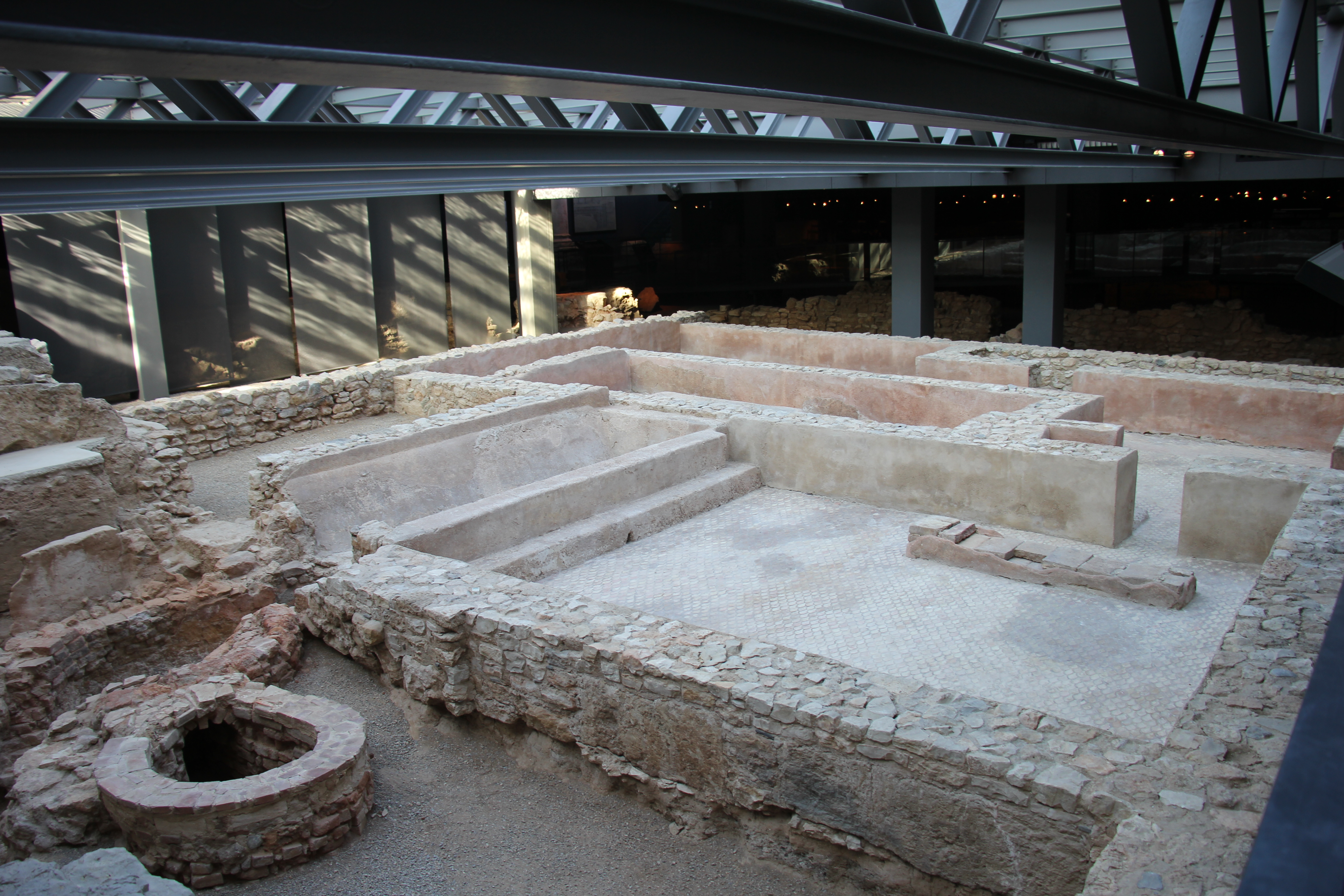
Roman baths, Almoina 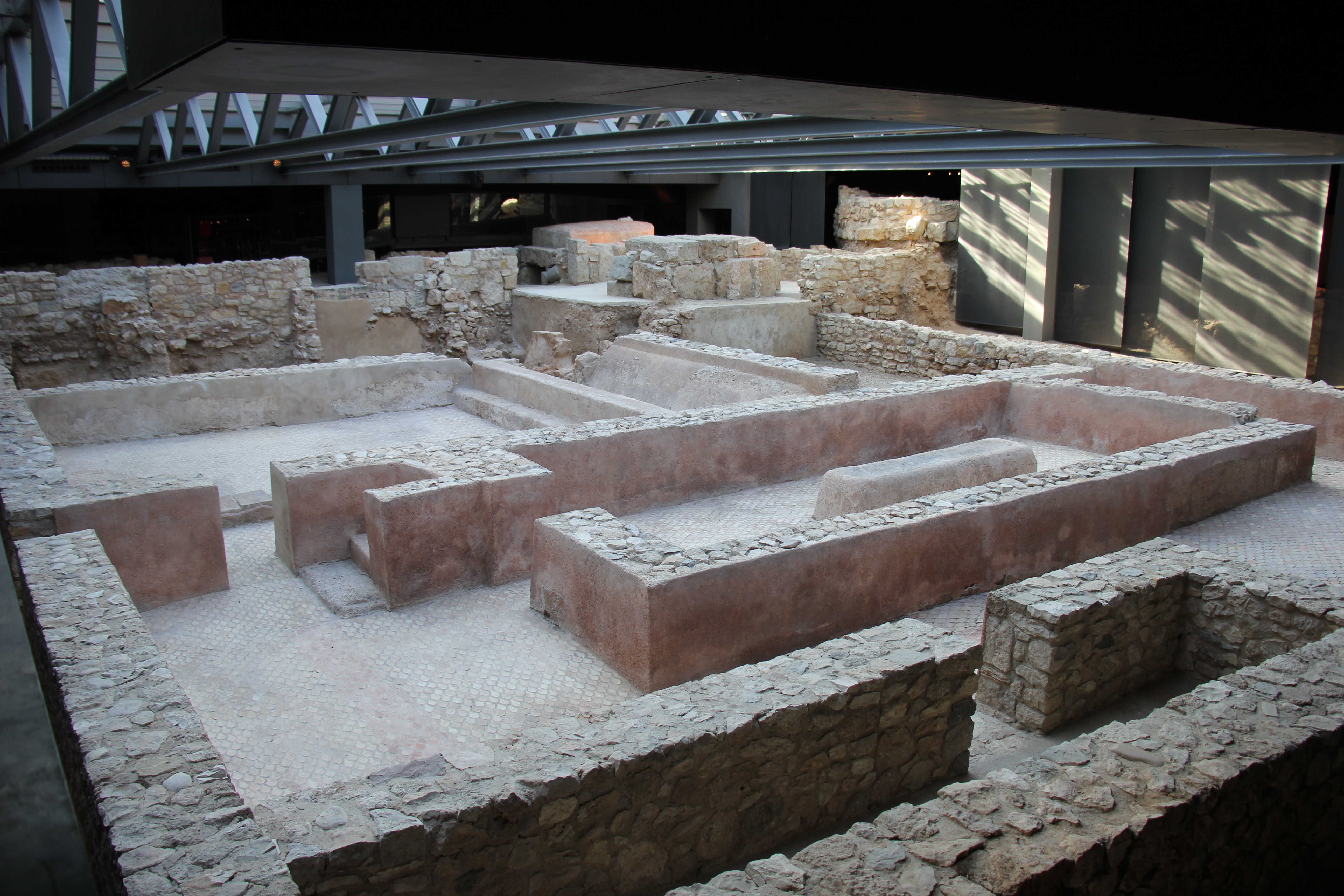
Roman baths, Almoina
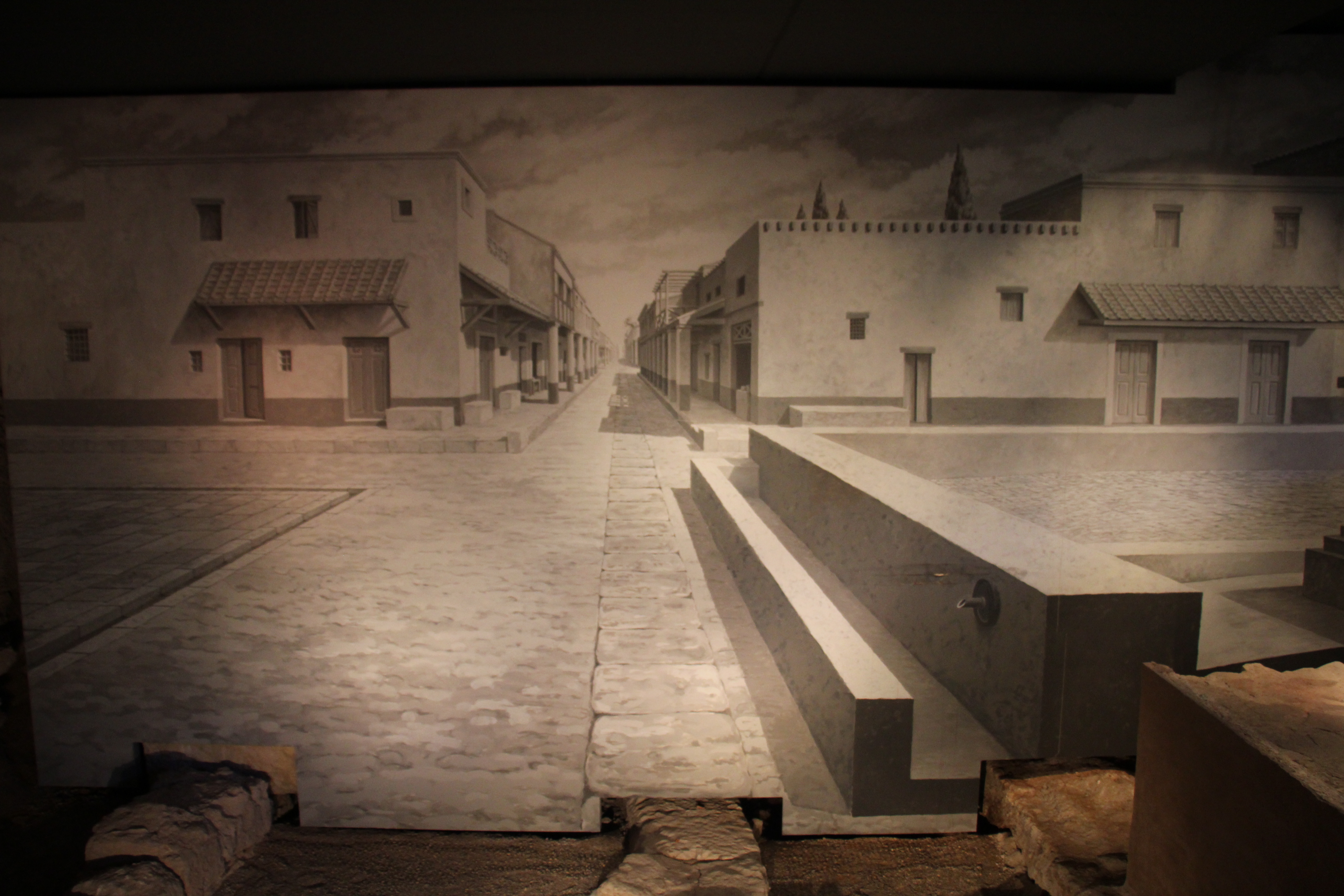
Roman road, Almoina 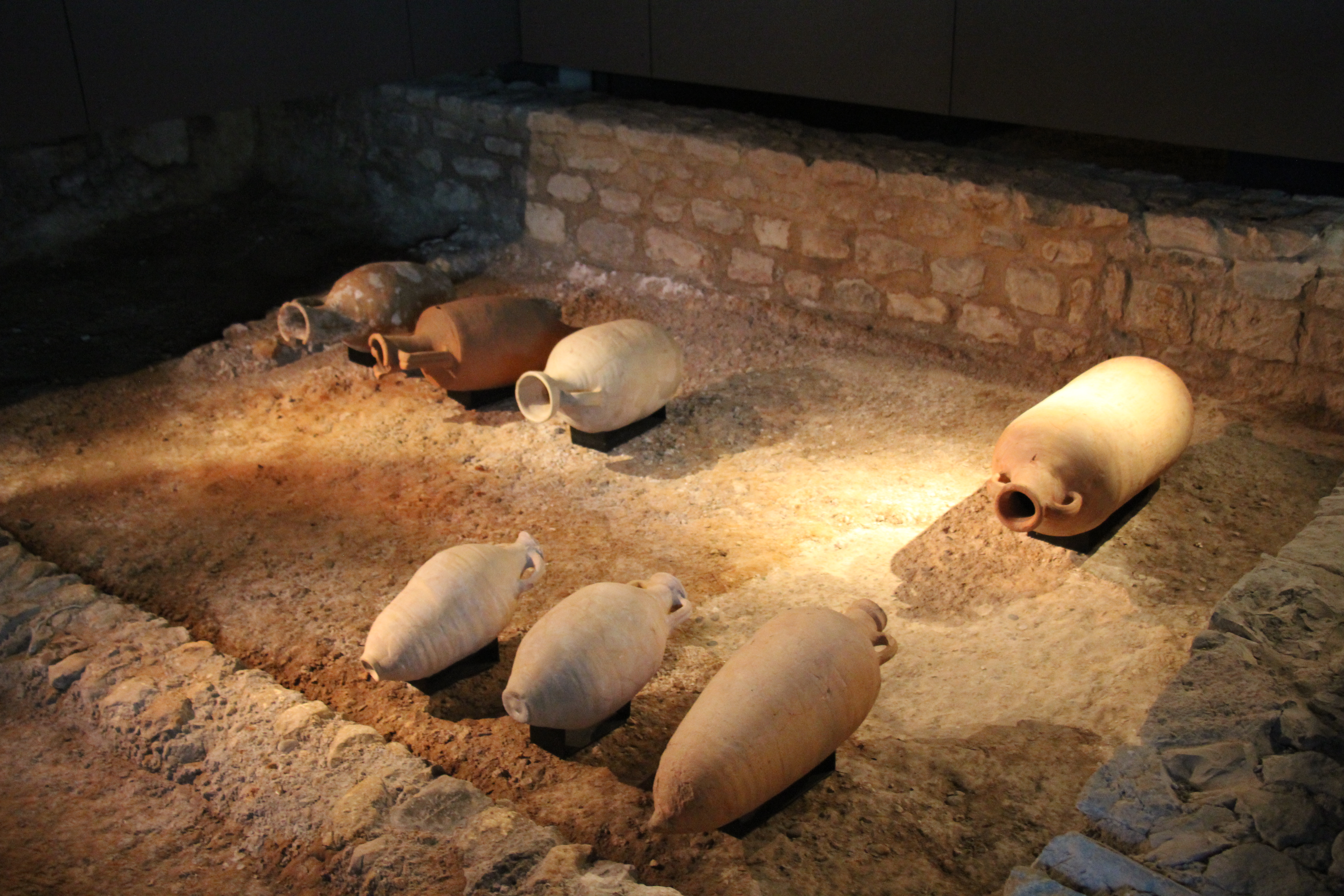
Amphorae, Almoina
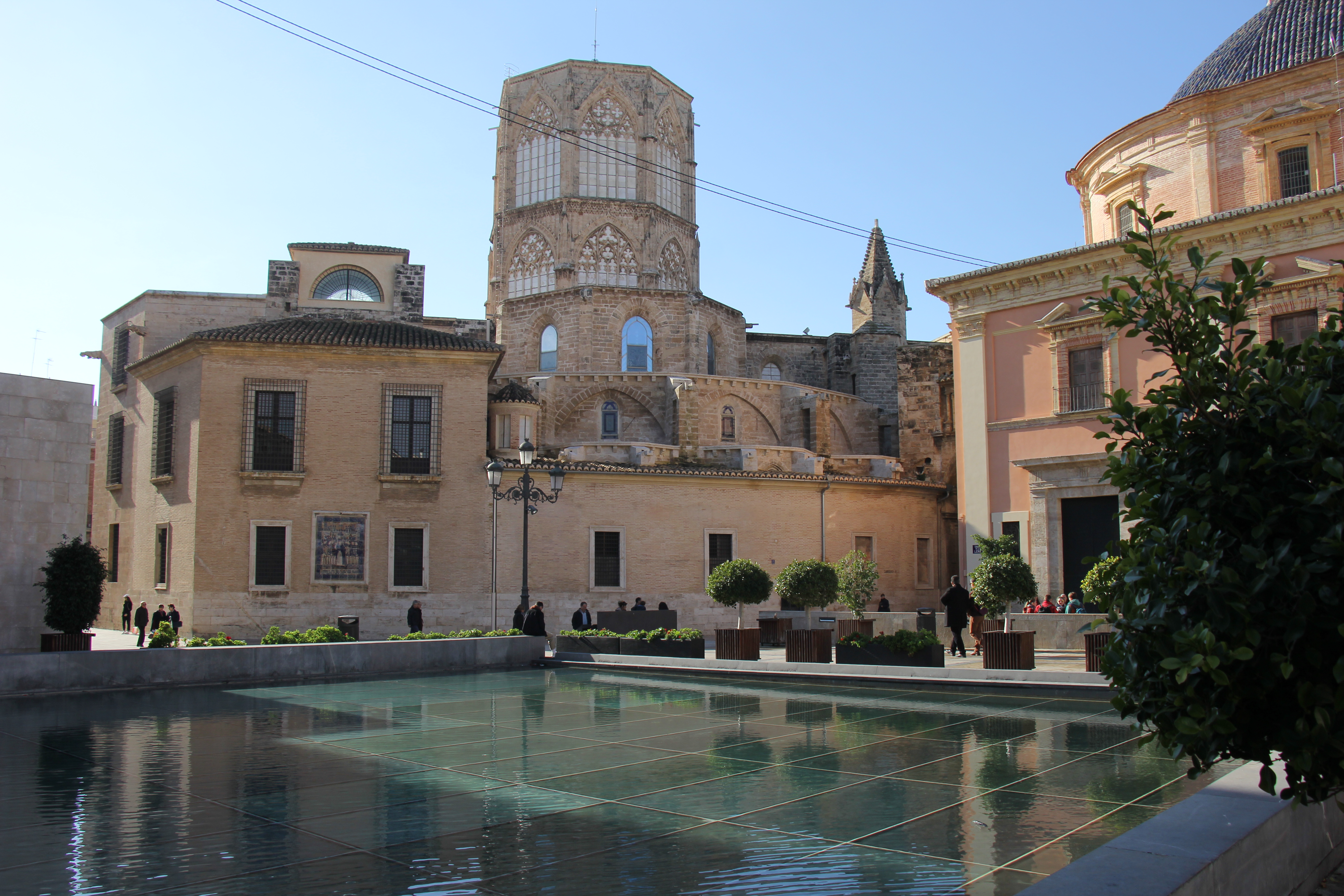
The museum is flooded with natural light thanks to its glass ceiling set above the former thermal baths, which appropriately is covered with a thin layer of water. From the square it looks like a shallow pool of water.
Bar Almudin
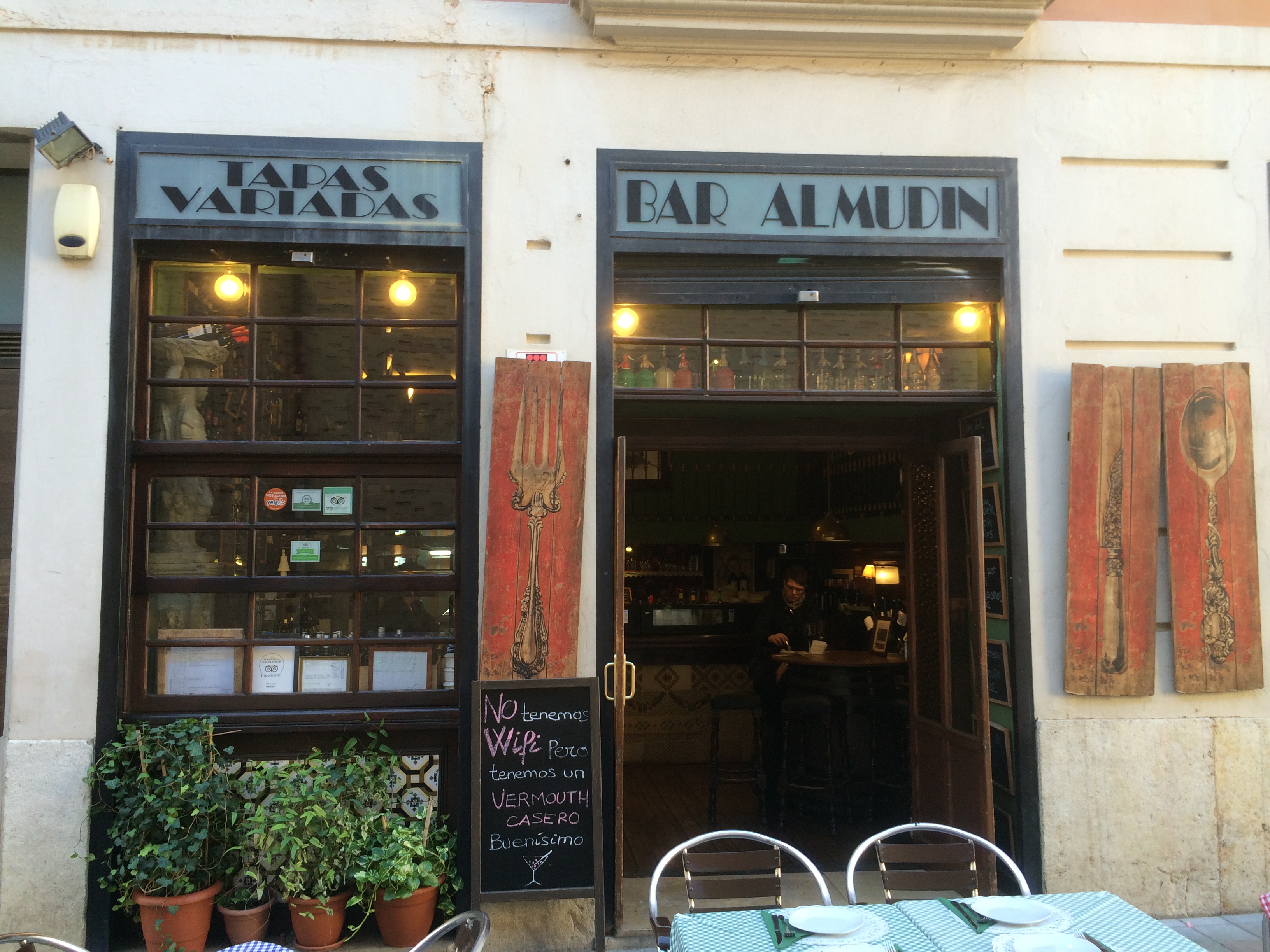
Archaeological excavation is hard work so we decided to reward ourselves with a drink at Bar Almudin, which unsurprisingly is opposite the Almudin. The bar is small and cosy with a polished wooden counter, s few tables set downstairs and a few more on the mezzanine above. Sue has a glass of cava and I try a glass of Bobal.
En route to the Torres de Quart we stop to take a few photos of the graffiti on Calle Cañete. These murals, like other street art in Valencia, are beautifully executed, but some of them are also politically charged. This makes parts of the city, especially El Carmen, like an open air art gallery.
Two Towers – Torres de Quart
The Torres de Quart, like the Serrano Towers, were part of the medieval wall around Valencia. Construction of the Quart Towers began in 1441 and was completed in 1460. In the 18th century any lime being brought into the city had to pass through this gate and for a time it was known as the Towers of Lime. From the top of the towers, only one of which was accessible when we visited, there is a 360 panoramic view of the city. We could look down at Quart street and trace the route we had walked from the historic centre of the city.
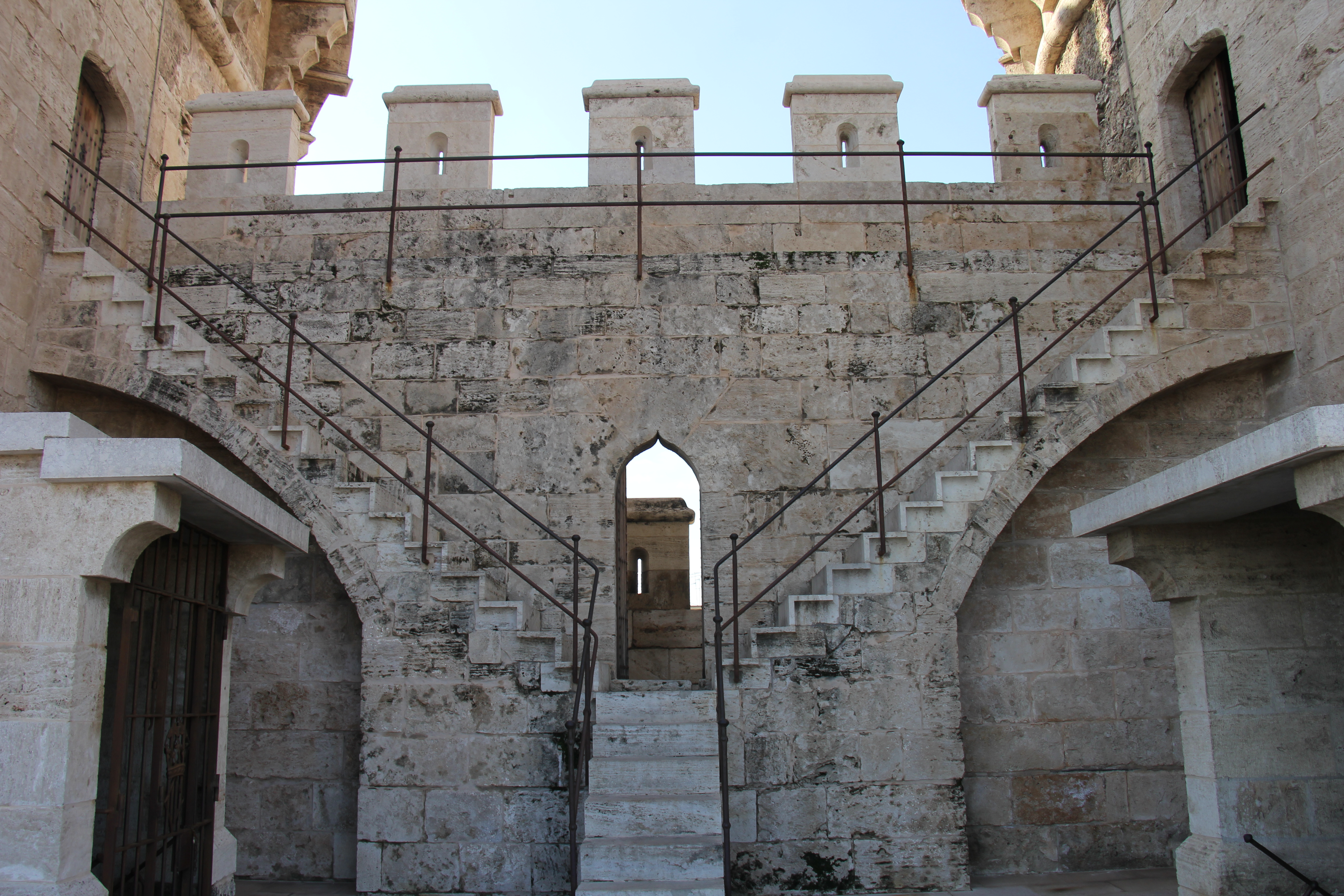
Torres de Quart 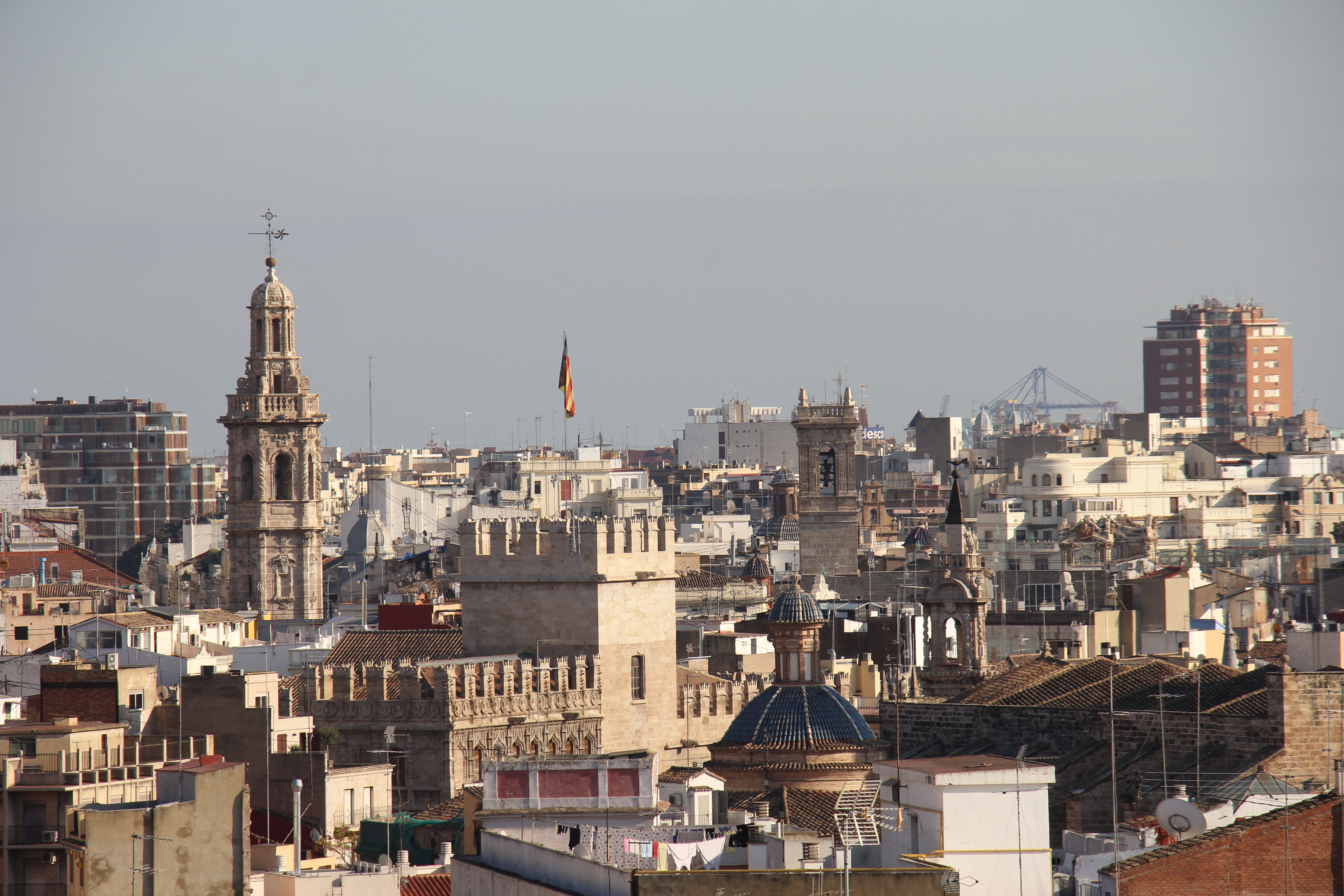
View from Torres de Quart
Retail therapy
Our last stop for the afternoon is a foray into Cortes Ingles to buy some magazines and a book for Gracie as well as stock up on some Spanish provisions from the supermercado.
Back to Bar Almudin
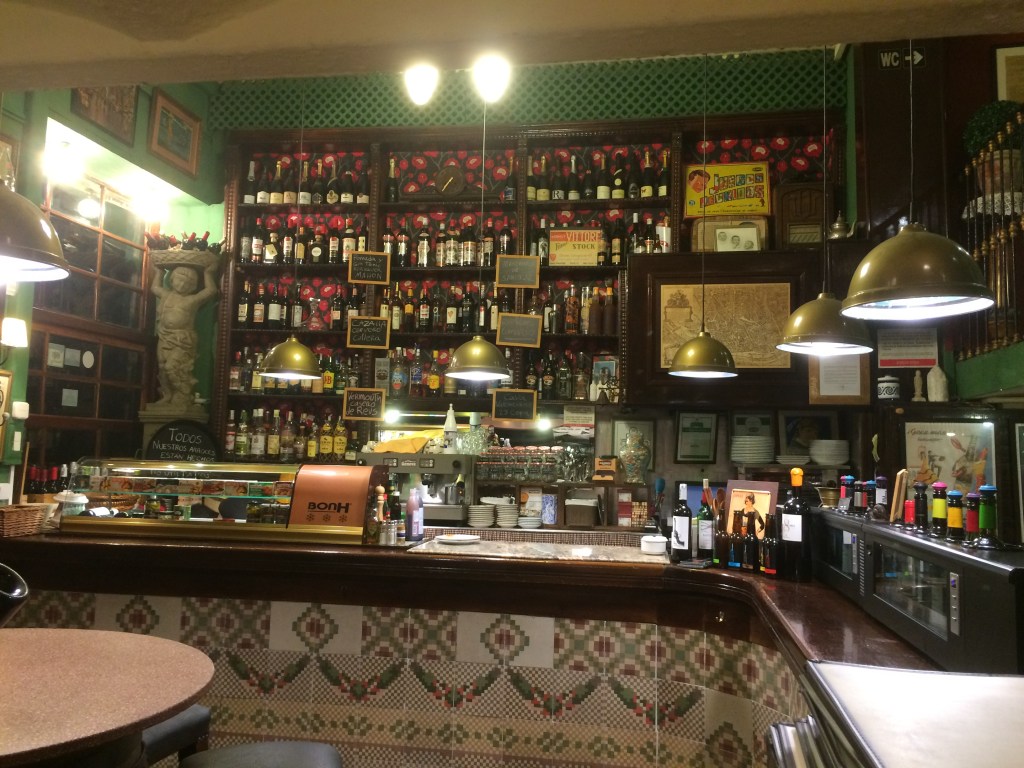
We returned to Bar Almudin for our final dinner. Perhaps because we were impressed with the tapas we had at lunchtime – patatas bravas and Russian salad – we thought that dinner would be as equally appetising. From the menu the selection was reasonably varied but none of the dishes really stood out – nevertheless it was well cooked and well presented. Perhaps our expectations were too high, the only other downside being the speed at which the dishes were served up, leaving little time to chat and linger between. The evening was eventful with the now infamous flying Valencian sausage and the newly established game of drinks dominoes – the object of which is to see how many glasses you can knock over in one go. It may well become a Valencian tradition. Sue, who must take credit for inventing this new game, managed to knock over three! However, despite being new to the game I managed to deny her a fourth and saved my glass of Bobal just in time!
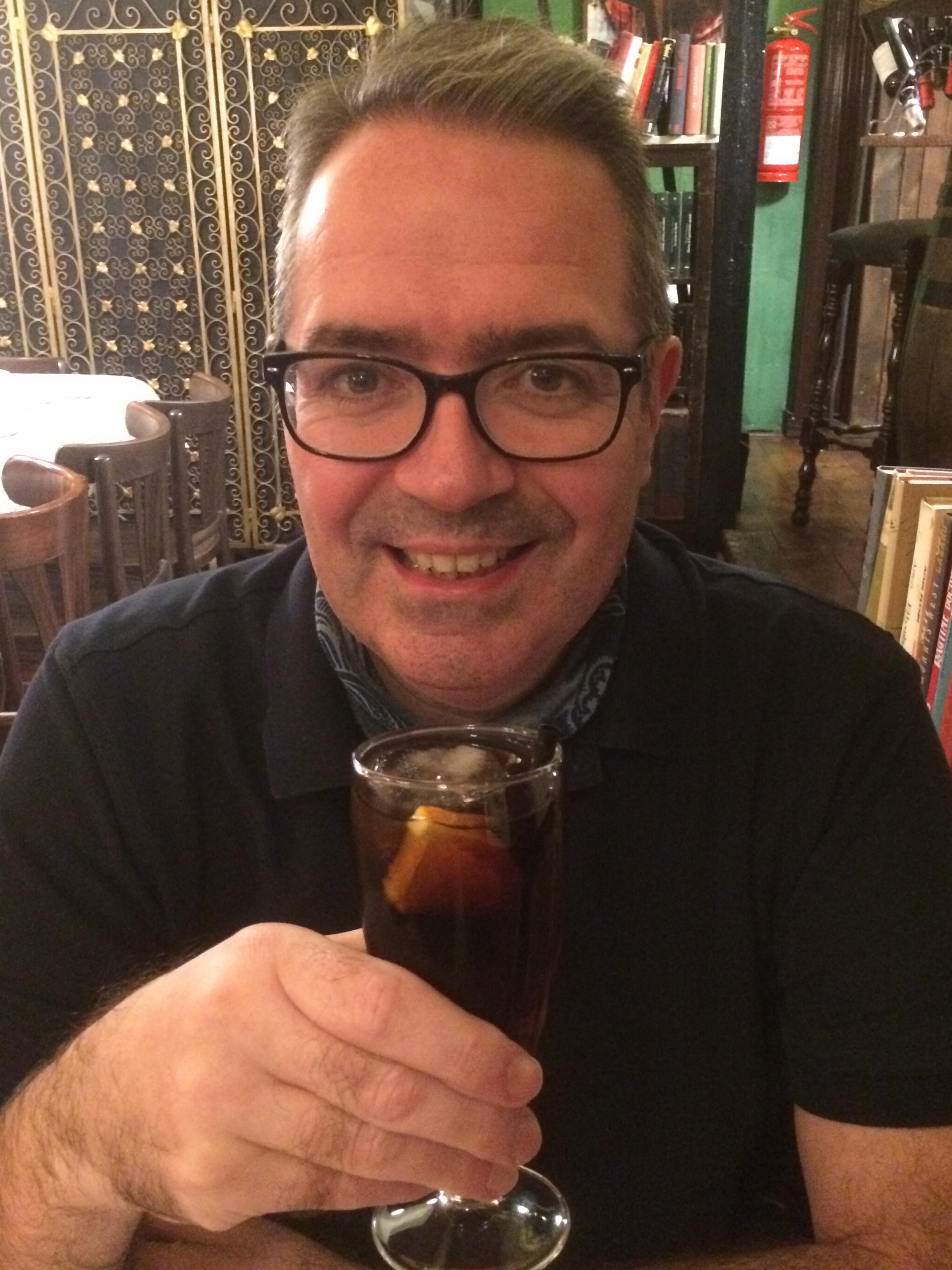
Tony, Bar Almudín 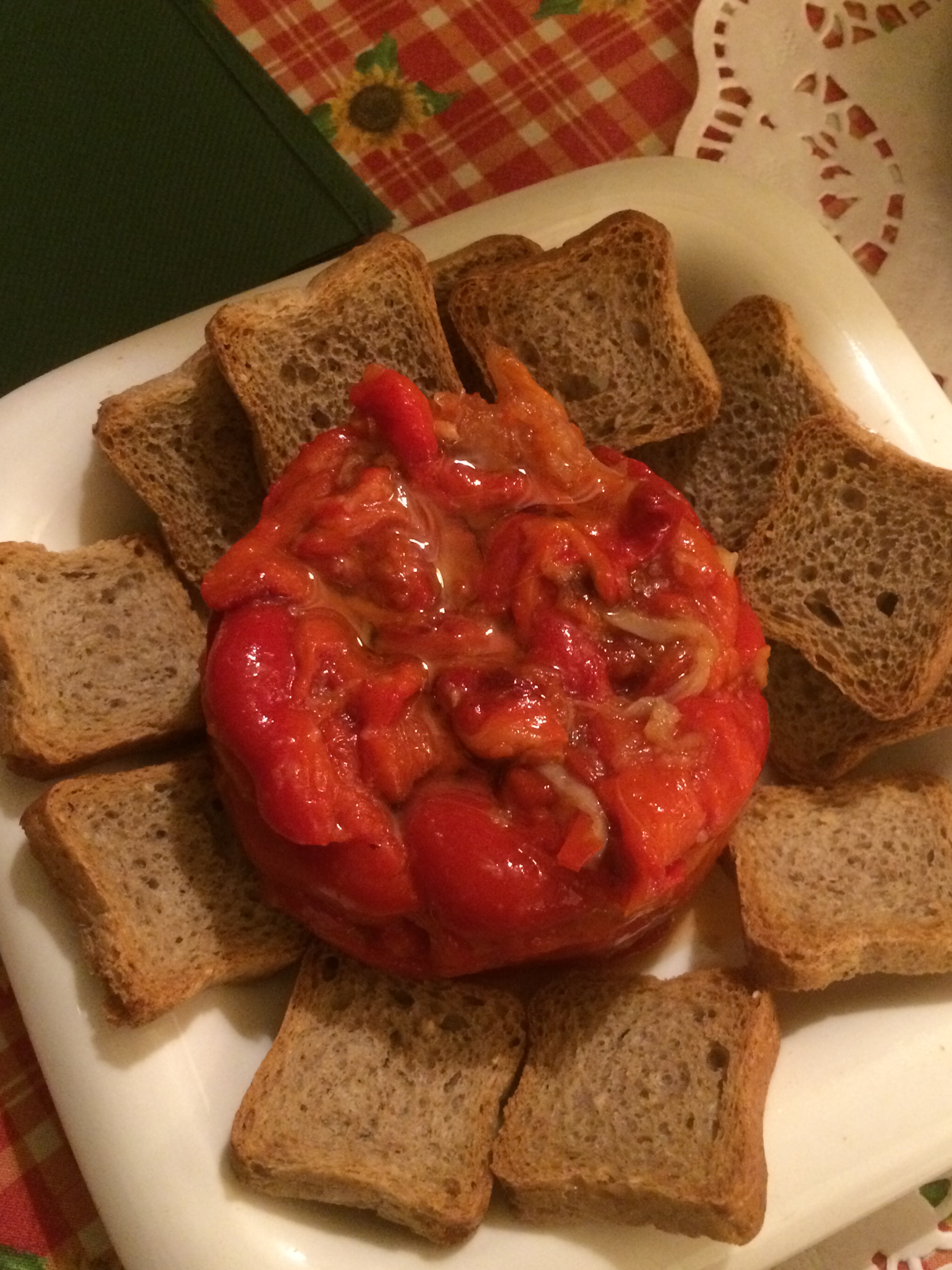
Esgarrat, Bar Almudín 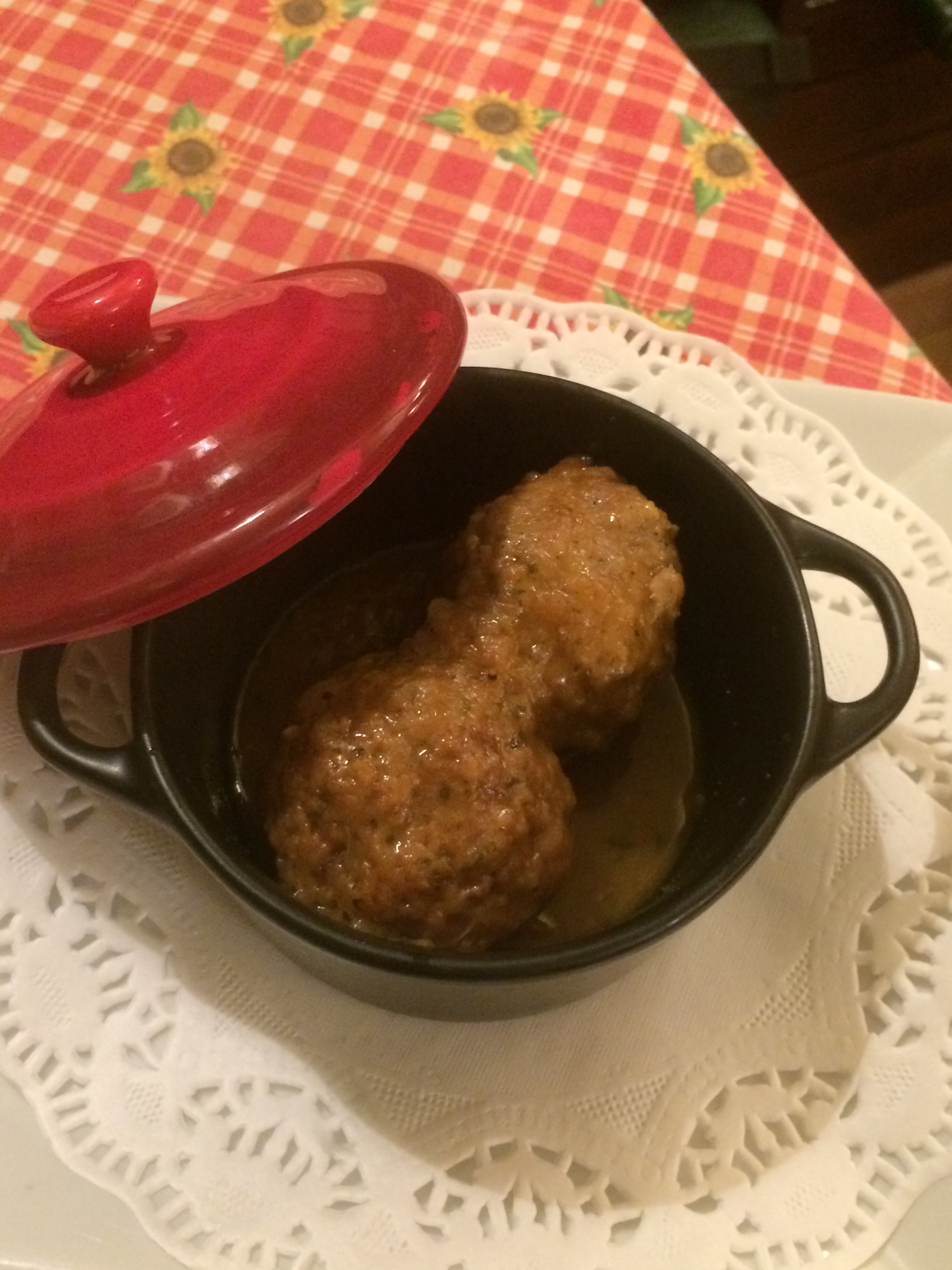
Albondigas, Bar Almudín 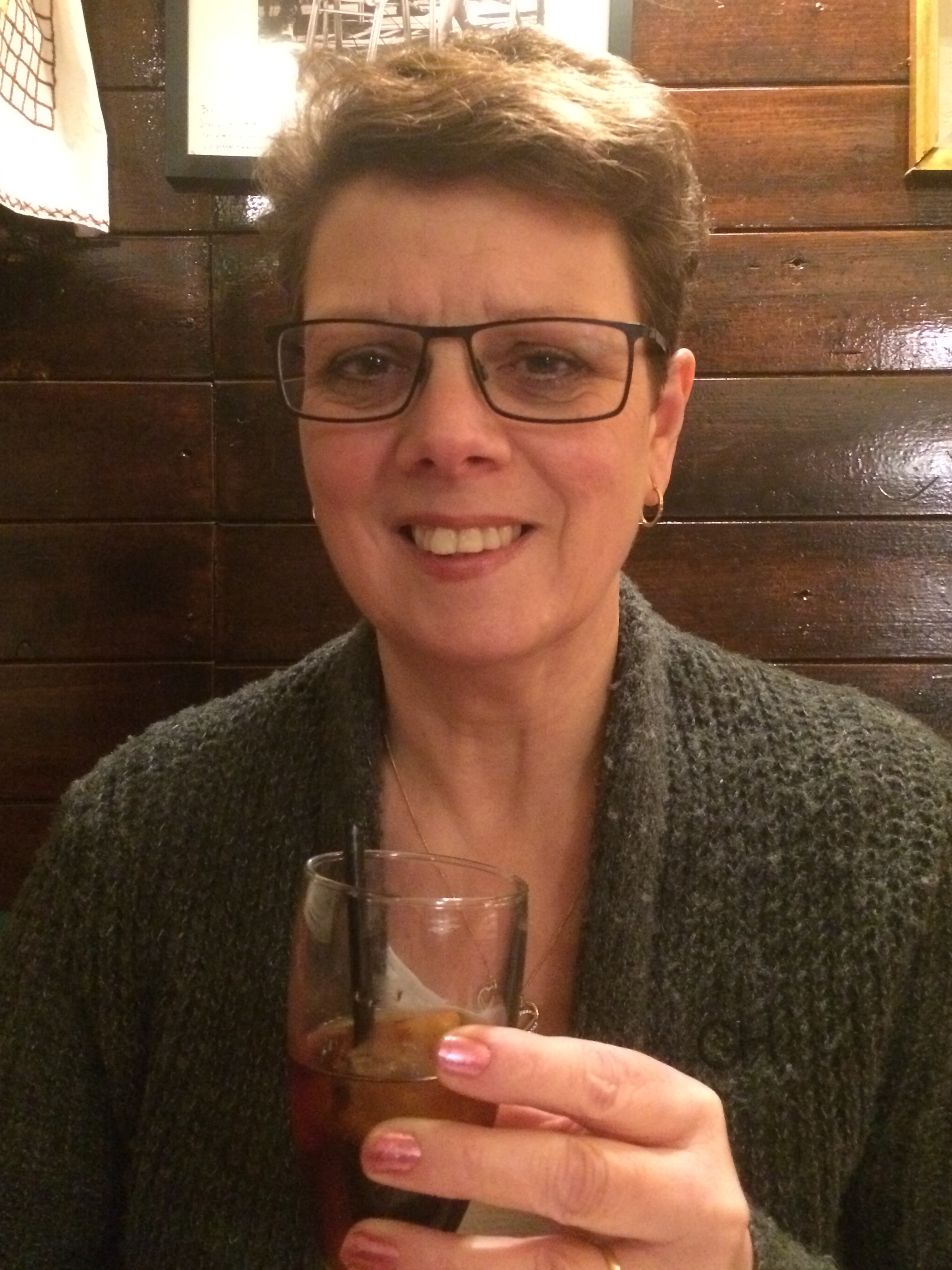
Sue, Bar Almudín 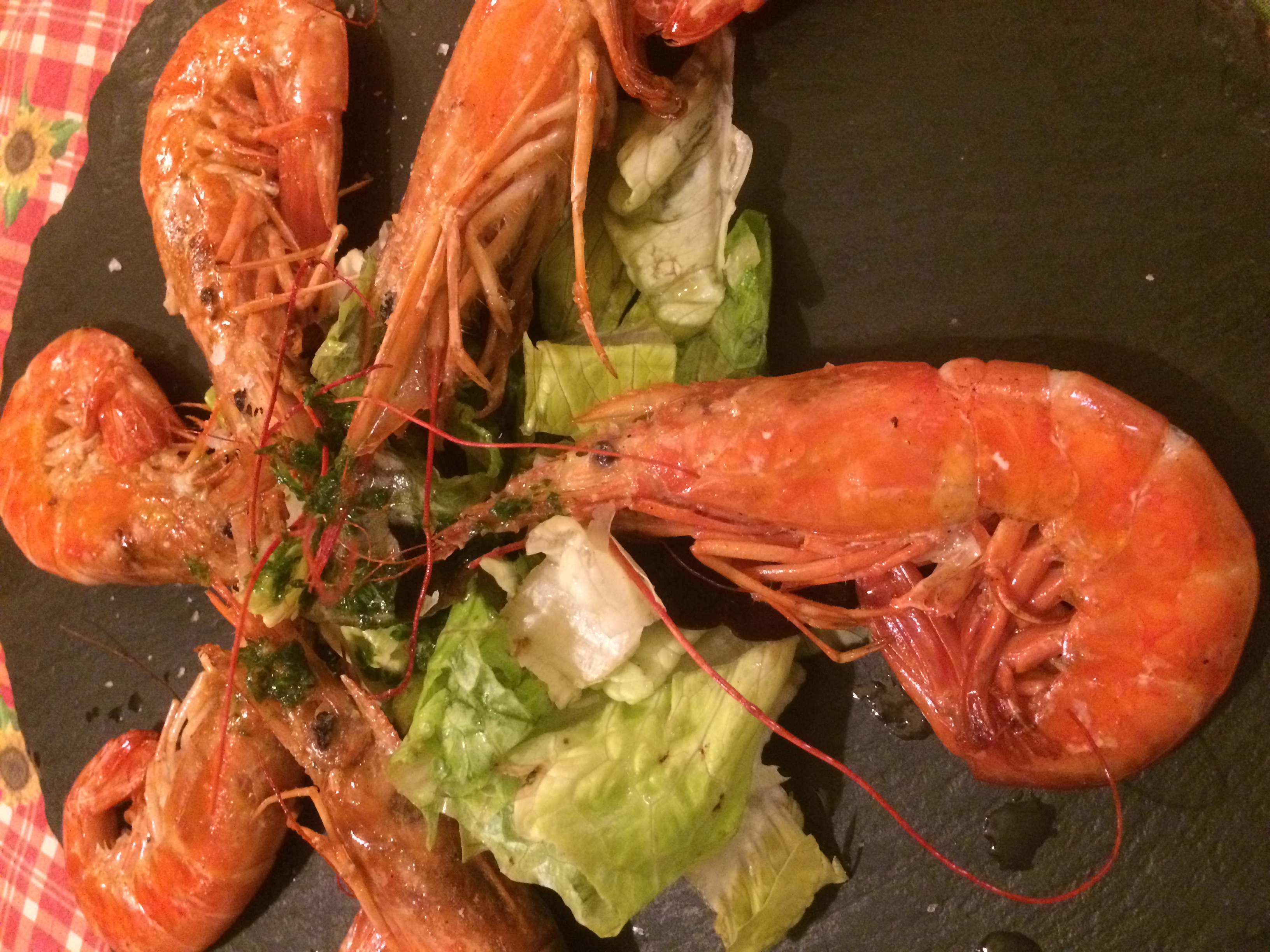
Langostinos, Bar Almudín 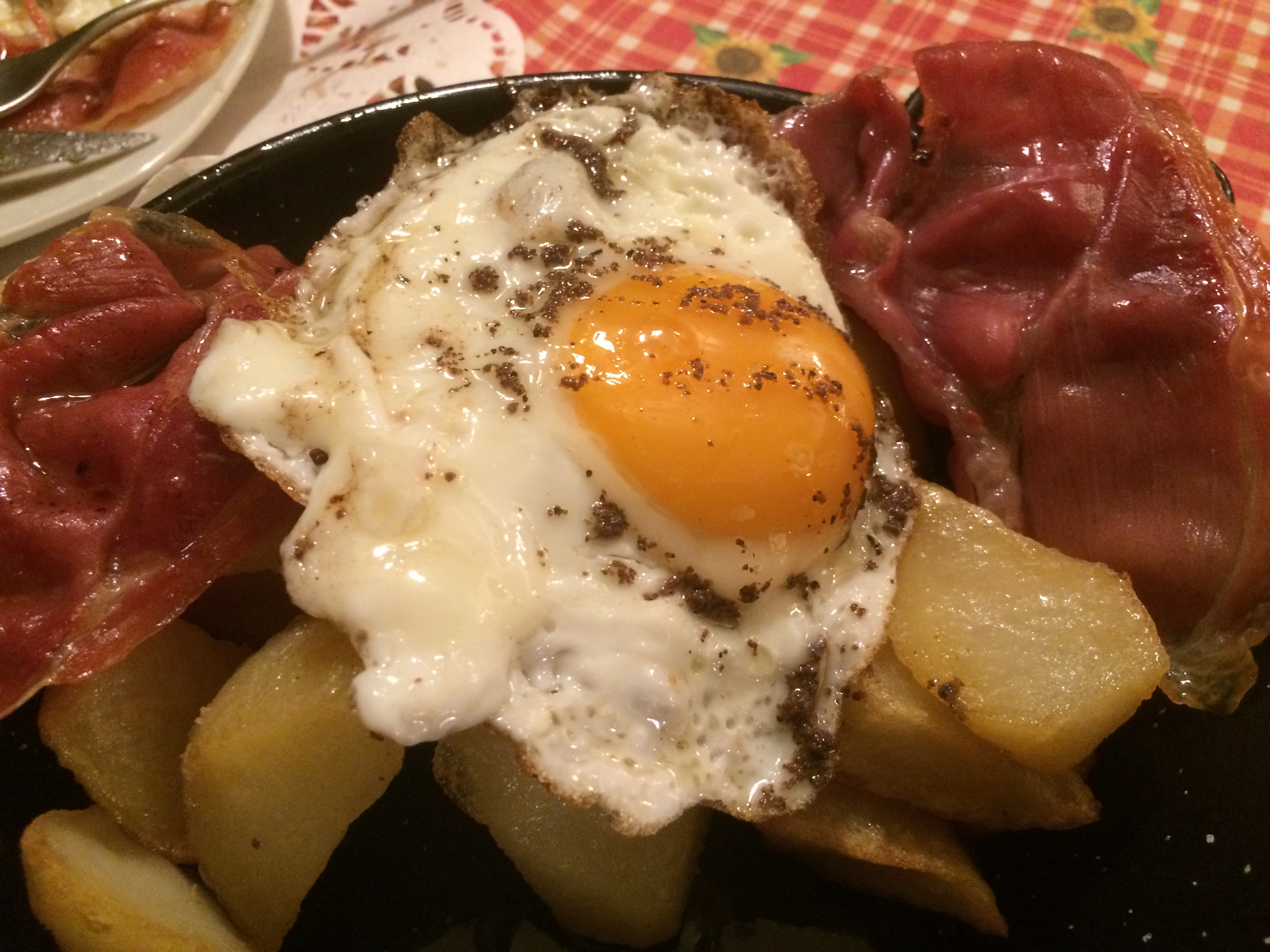
Patatas Sartén, Bar Almudín
Estació del Nord – Breakfast stop
Saturday, 31 December, 2016 – Valencia, Valencia, Spain
A final carajillo
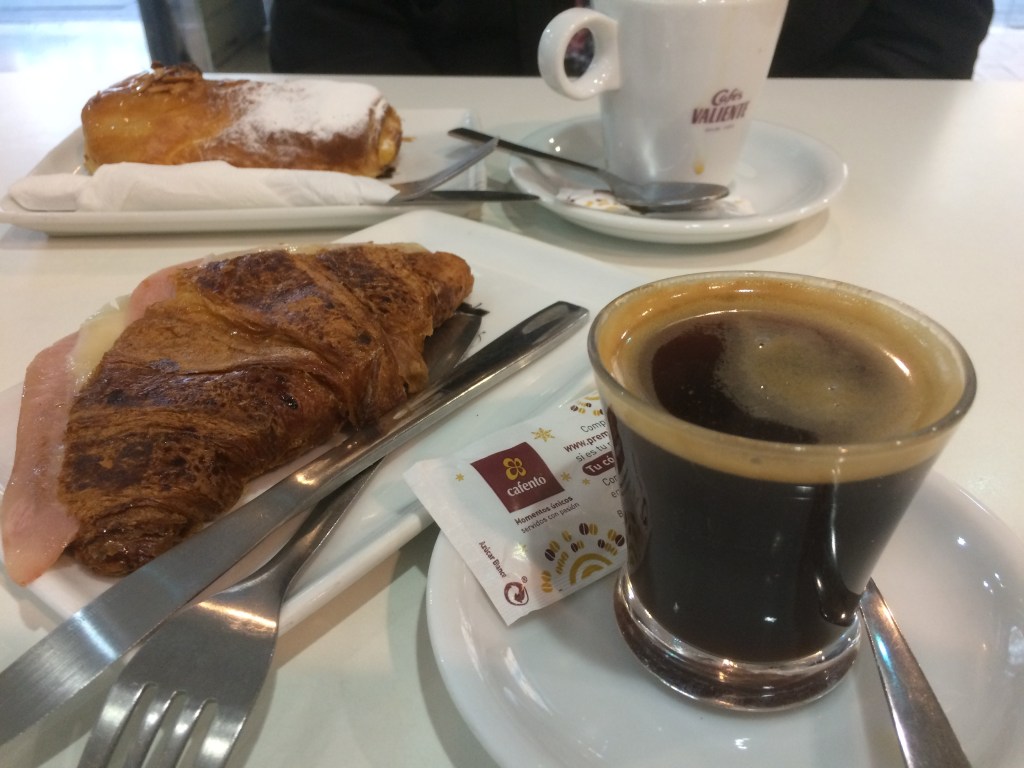
Unfortunately we have an early flight so to save time we have breakfast at the cafe in the Estació del Nord (Estación del Norte) opposite the hotel. Sue has a coffee and pastry whilst for me its a final chance to enjoy a carajillo and a mixto. It’s time to say: ¡Adiós Valencia. Hemos pasado bien!
Find the bus stop!
Saturday, 31 December, 2016 – London, UK
We landed at just after 12:30, swiftly passing through passport control and collecting our bags with effortless ease. As is customary, customs was empty, so we emerged into the arrivals hall, holdalls in hand and made our way to the train station. As always there was a snaking queue for the ticket machines, but we moved along quickly and before too long were on the platform waiting for the train to East Croydon.
Our rapid transit was brought to an abrupt halt when we arrived at East Croydon. With the bus stops outside the station closed due to road works we had to find the nearest stop for the 119. Now this may sound like an easy task – and it would have been had we headed towards Hayes – heading the other way gave us the opportunity to play a new game. This new game was called: Find the bus stop, which we did eventually, but not after interrogating a couple of bus drivers who were unable to direct us! Anyway, bus stop found, the bus arrived, we boarded, and after a quick journey we disembarked for the short walk home.
 Hudsons Travel