
Prologue
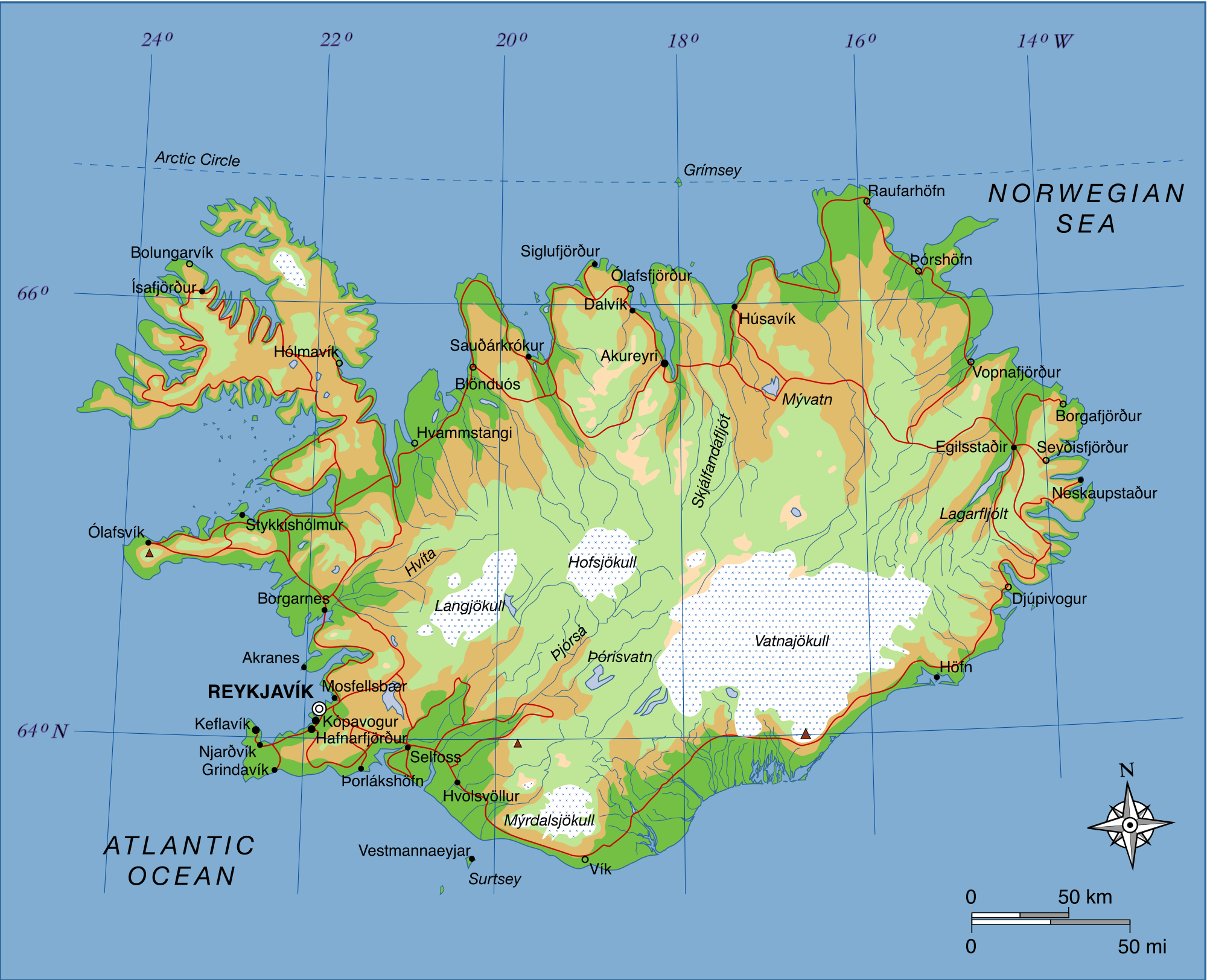
Iceland has been described by some as the land of fire and ice, because it was created through volcanic eruptions over the millennia, and up to 8,000 years ago was covered in ice. As the glaciers retreated they carved the island’s spectacular landscape of valleys and deep fjords. Today there are over 100 active volcanoes and more than 250 named glaciers and ice caps. For early settlers, life would have been challenging in such a harsh and barren environment. Some argue that these environmental factors led Icelanders to develop a seemingly carefree attitude which is captured in the phrase “Þetta reddast” that whatever the challenge, there will be a solution and that ‘it will all work out OK’
Sunday 23 December – London to Reykjavik
The voyage and landfall
We were fortunate to get away to Iceland before Christmas, not least because over 1,000 flights in and out of Gatwick had been disrupted between 19 and 21 December due to reports of a drone sighting. It was rather ironic given our destination that this was the biggest disruption since ash from an Icelandic volcano, Eyjafjallajökull, closed the airport in 2010. After three days of disruption, flight operations were back to normal by the time we left – “Þetta reddast!”
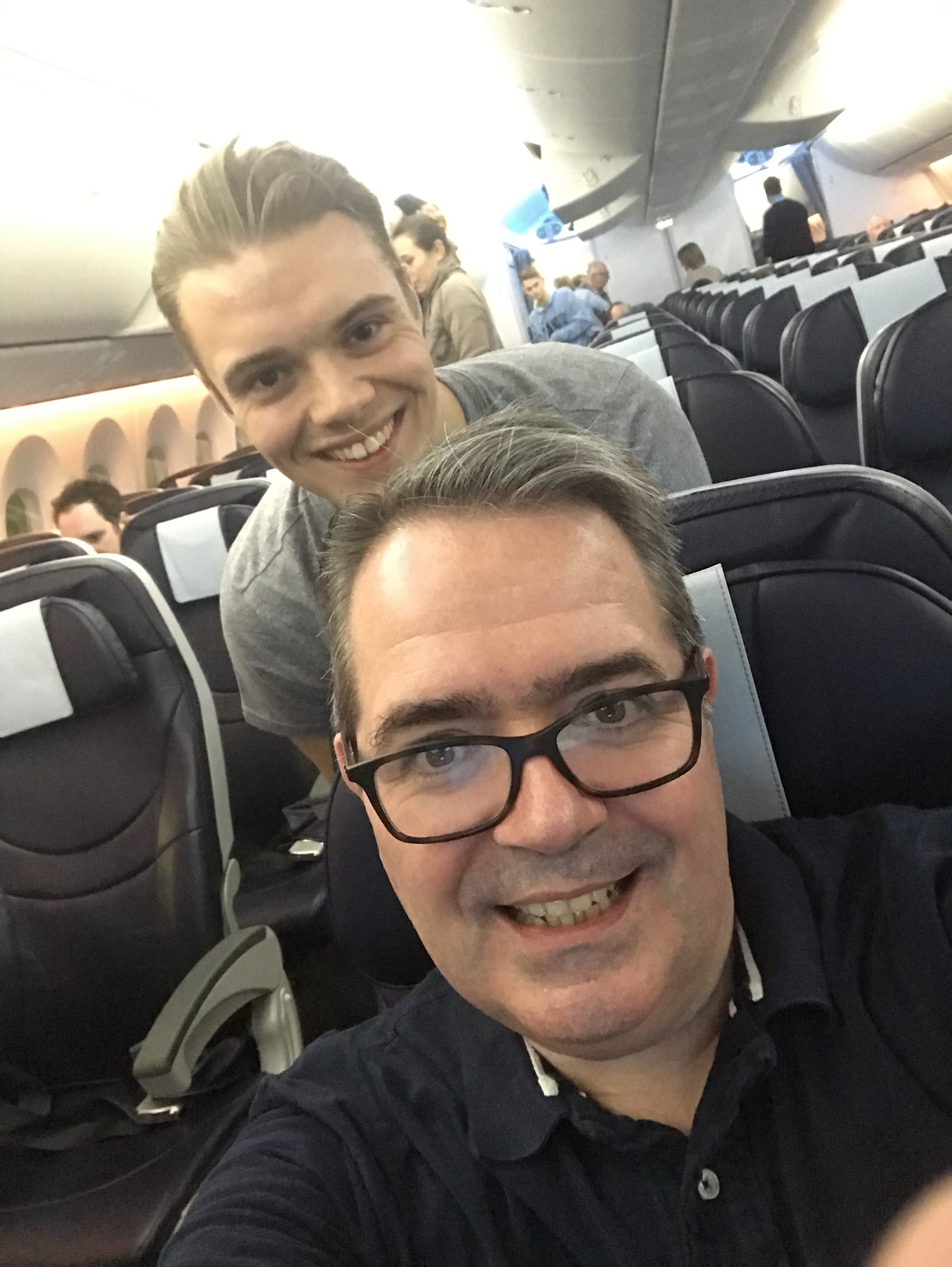
On board TOM 4748 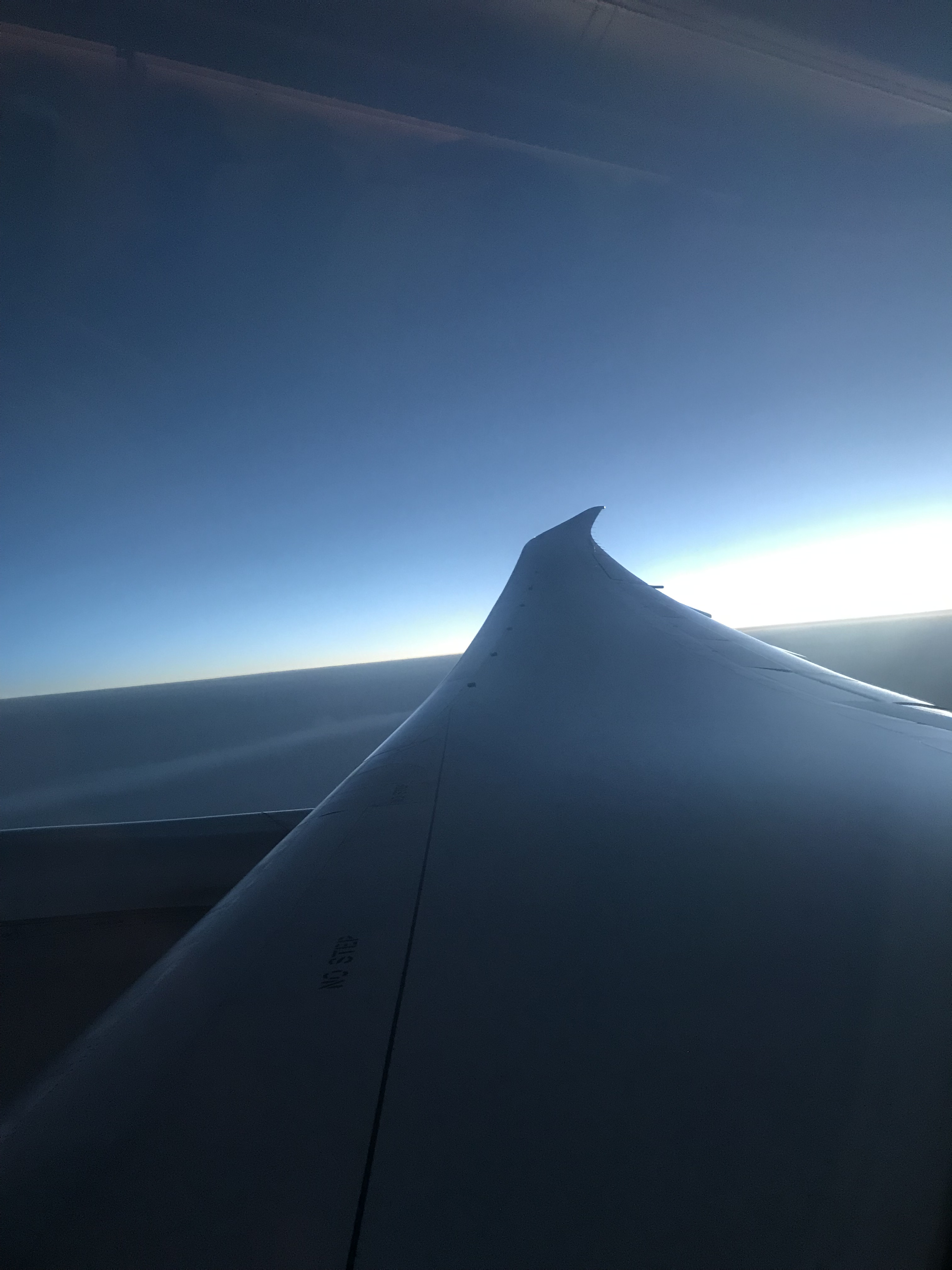
Winging it! 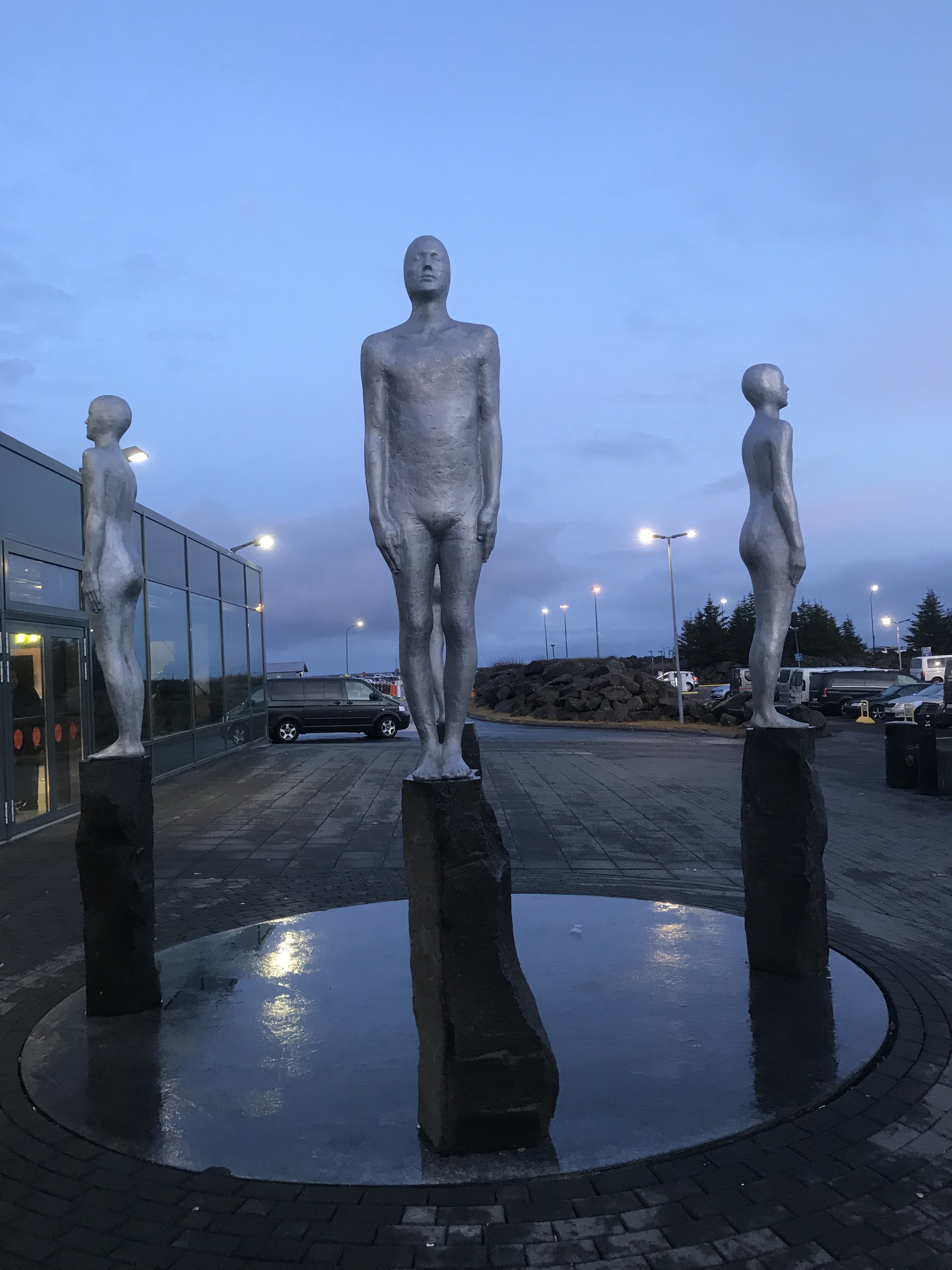
Twilight Saga
Our flight heads east on take-off before turning left and heading north, flying over Maidstone in Kent and then onwards east of London. We continue northward, flying over Bedford and Corby before passing to the east of Leicester and Loughborough. Continuing northwards we fly just to the east of Nottingham and Sheffield and then over the Yorkshire Dales National Park. We leave England passing over Carlisle, and then fly over Gretna Green and Lockerbie in Scotland. We pass to the east of Glasgow before flying over Loch Lomond and the Trossachs National Park. We fly over Stornaway in the Western Isles before crossing the Norwegian Sea. We landed at Keflavik in twilight at 10:20 in the morning and didn’t see daylight until an hour later when we arrived at our hotel.
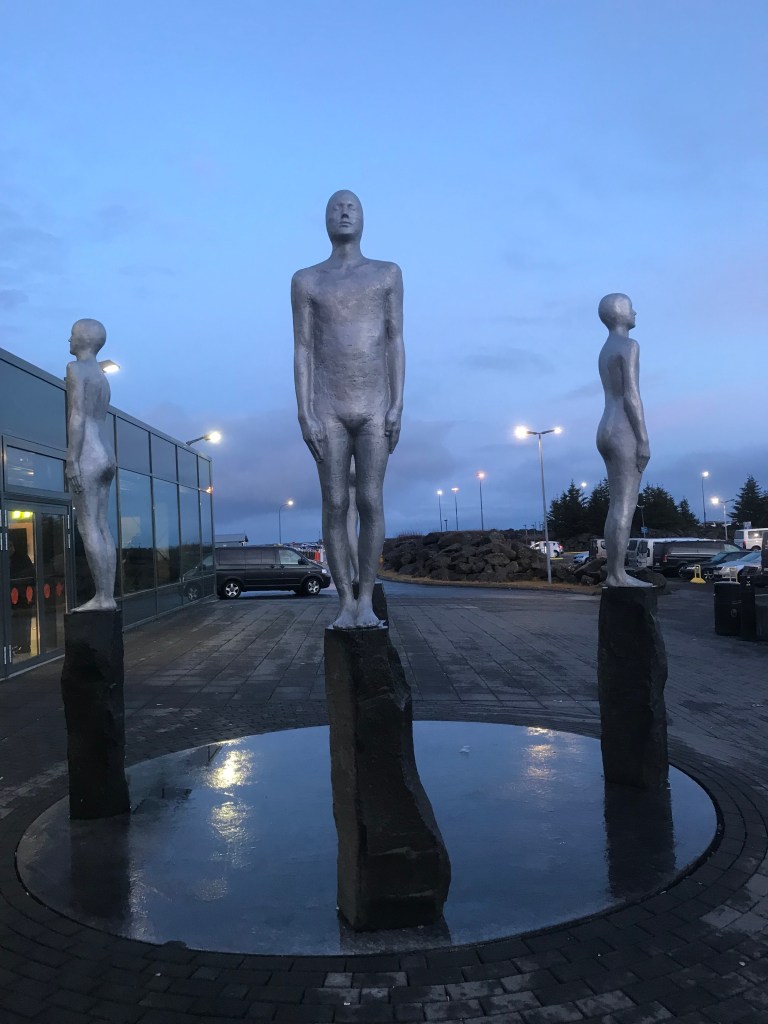
Áttir (Directions, 2007) is a sculptural installation by the Icelandic sculptor, Steinunn Þórarinsdóttir. Originally installed inside the airport it was relocated and is now installed outside the arrival building. It features four human-like figures all cast in aluminium from the same mould. Standing on Icelandic basalt columns, each figure faces one of the four cardinal directions: north, south, east and west.
Commenting on her work Steinunn Þórarinsdóttir said: “Of course, the piece strongly suggests travel by pointing in the four cardinal directions. It also refers to the fact that we can all lose direction in life, at which point it becomes necessary to find the right way.”
Reykajavik
Check in and out to explore
We stayed in the Centrehotel Arnhovel, Reykajavik which is just under 50km – a short 45 minute drive – from the airport. Located opposite the Harpa concert hall our hotel is within walking distance of both the city centre and the harbour. After checking in and unpacking we headed out to explore the city in the rain. Our first stop was the Bæjarins Beztu kiosk near the harbour where we had hot dogs with the works before pressing on towards Hallgrímskirkja, the largest church in Iceland.
Hot dogs! – Bæjarins Beztu
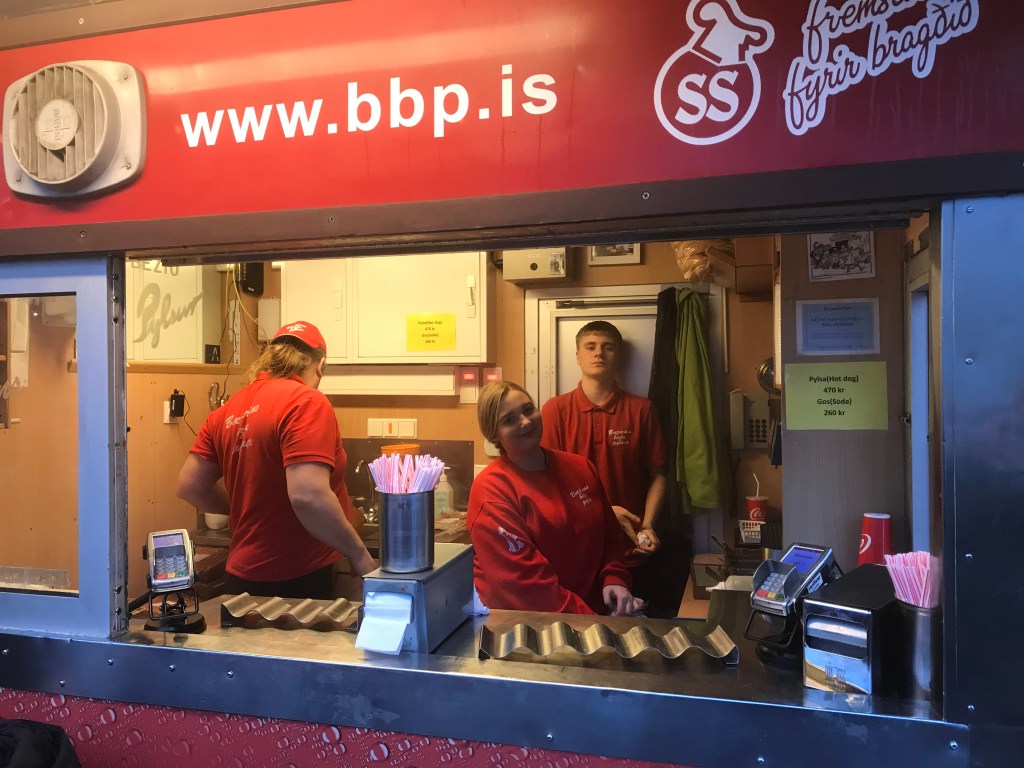
We tried the hot dogs from the Bæjarins Beztu Pyslur kiosk at the harbour in Reykjavik. Whilst hot dogs are usually made from pork and beef, Bæjarins Beztu’s include lamb in the mix. We ordered ours with “eina með öllu” – the works – ketchup, sweet mustard, fried onion, raw onion and remolaði, a mayonnaise-based sauce with sweet relish. Bæjarins Beztu Pyslur, which translates as: ‘the town’s best hot dogs’ has been in town since 1937. Although the small chain of four kiosks has always been popular with the locals, many tourists now stop for a hot dog following in the footsteps of Bill Clinton who stopped there in 2004. Today the chain serves over 1,000 hot dogs a day.
Bæjarins Beztu Pyslur 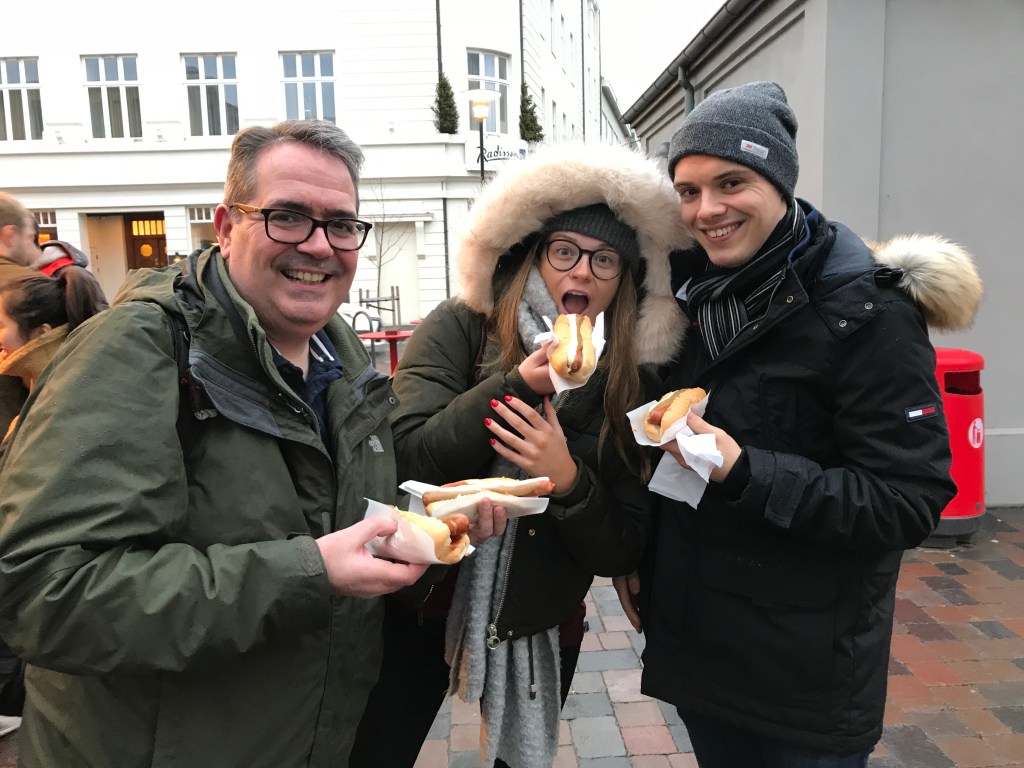
The raisin at the end of the hot dog 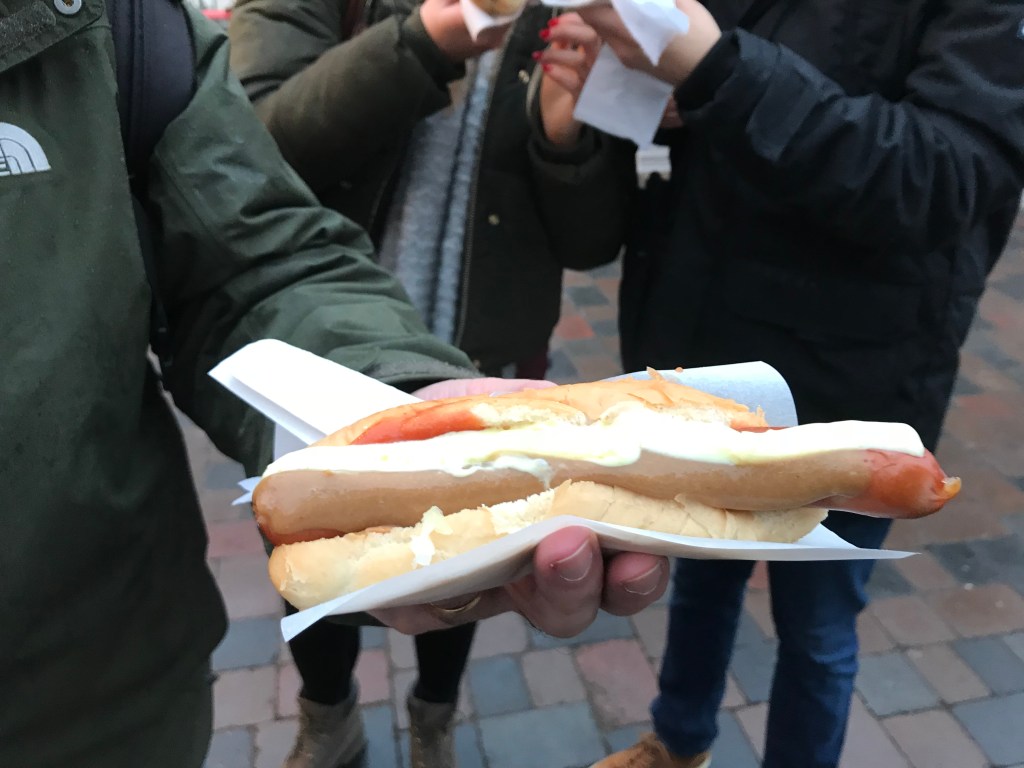
Hot dog with the works
Hallgrímskirkja – the church on the hill
Walking up hill on Skólavörðustígur only the tower of Hallgrímskirkja is visible from the bottom of the street. But as we get closer the wings on either side of the church unfold. The concrete columns of the side wings rise out of the ground, culminating in the tower. Some have described the church as rising like a concrete geyser, but for the architect, Guðjón Samúelsson, they were meant to evoke the cascading form of cooling lava.
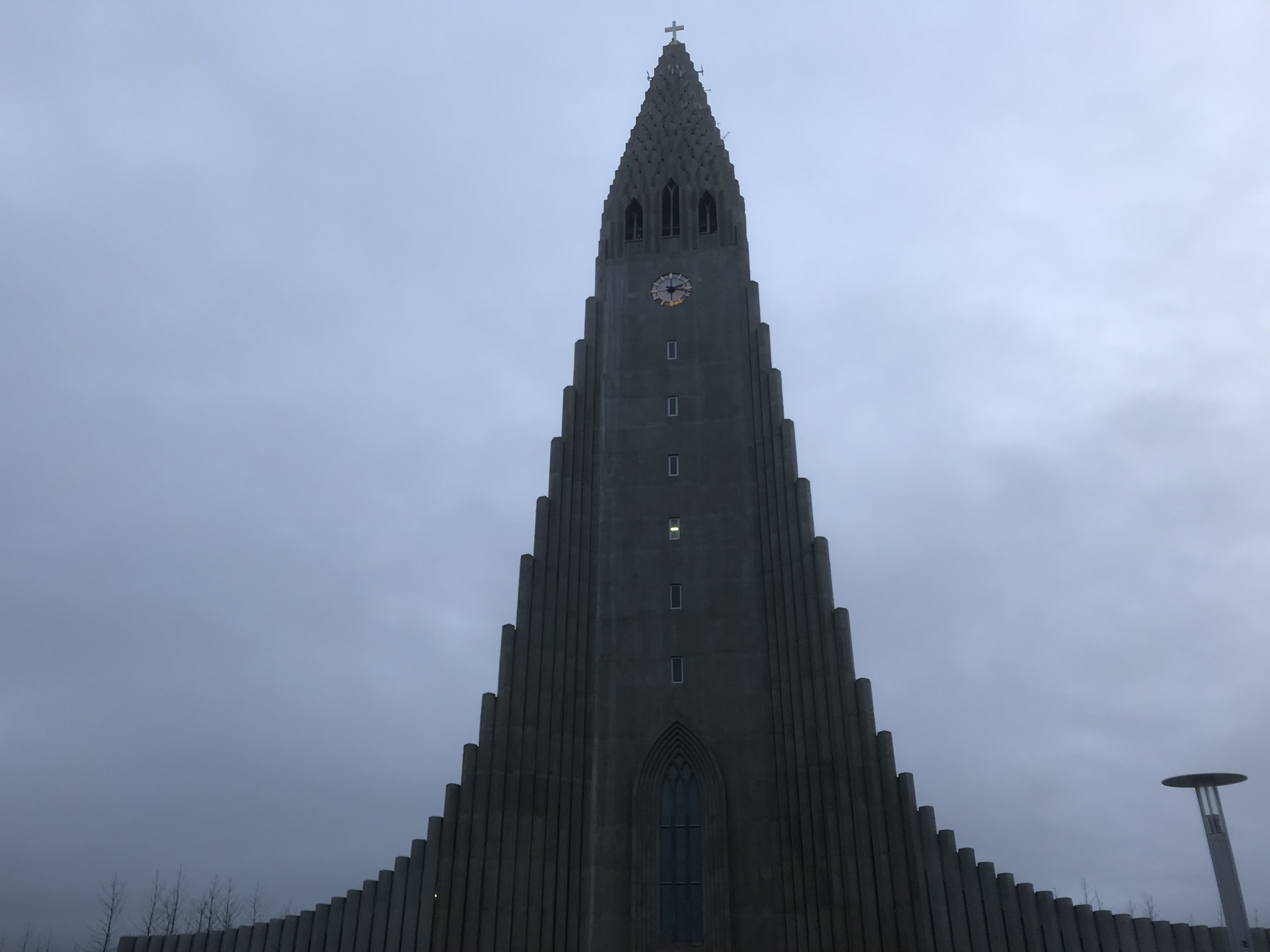
Hallgrimskirkja (1)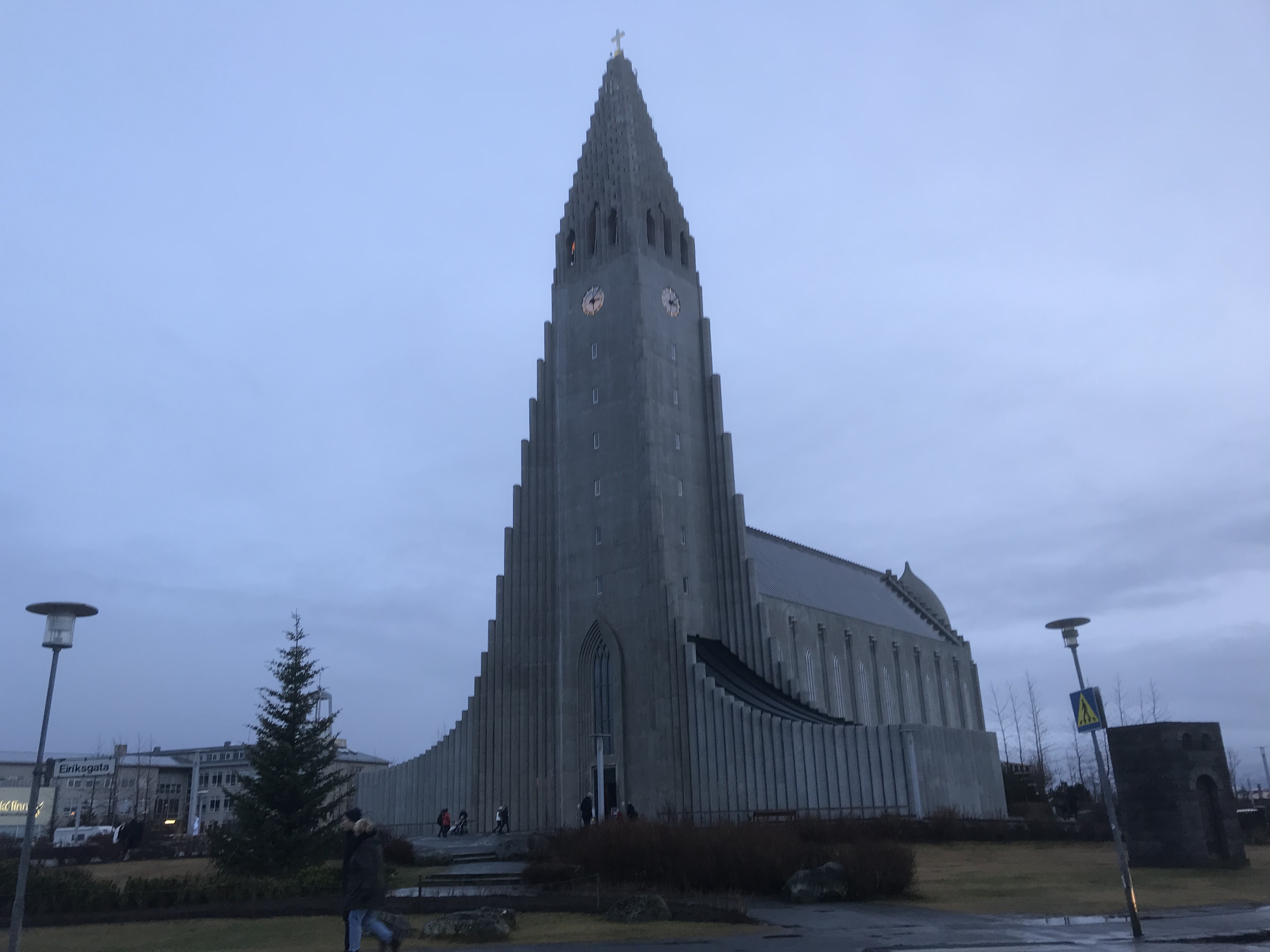
Hallgrimskirkja (2)
Inside the church is white, light and airy which makes the church decorations standout, particularly the stained glass windows. Josh and I took the elevator to the top of the tower. From the observation deck we have a 360° panoramic view of Reykjavik, the mountains and the ocean stretching west to Greenland and the Americas.
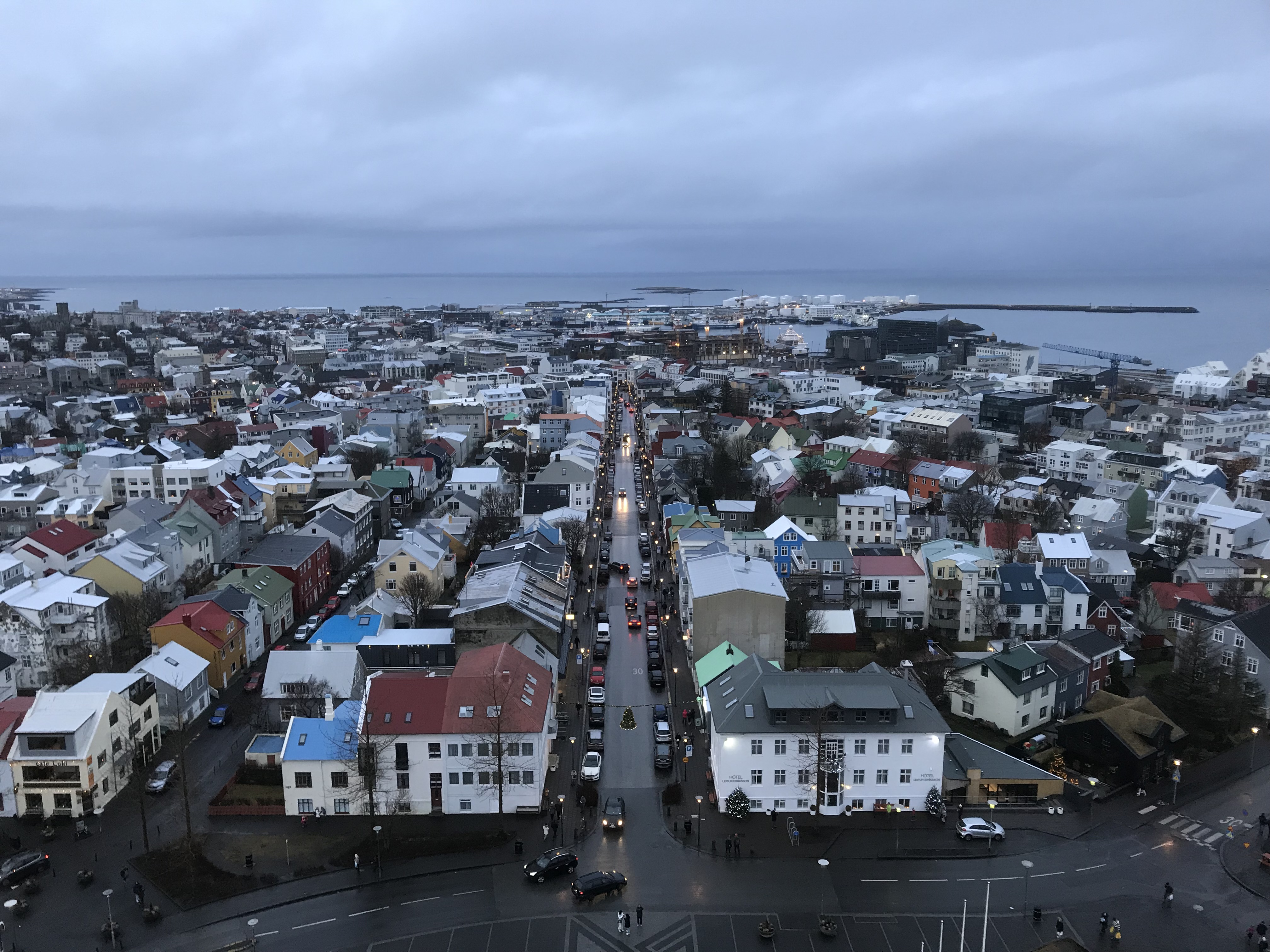
View from Hallgrimskirkja tower (1)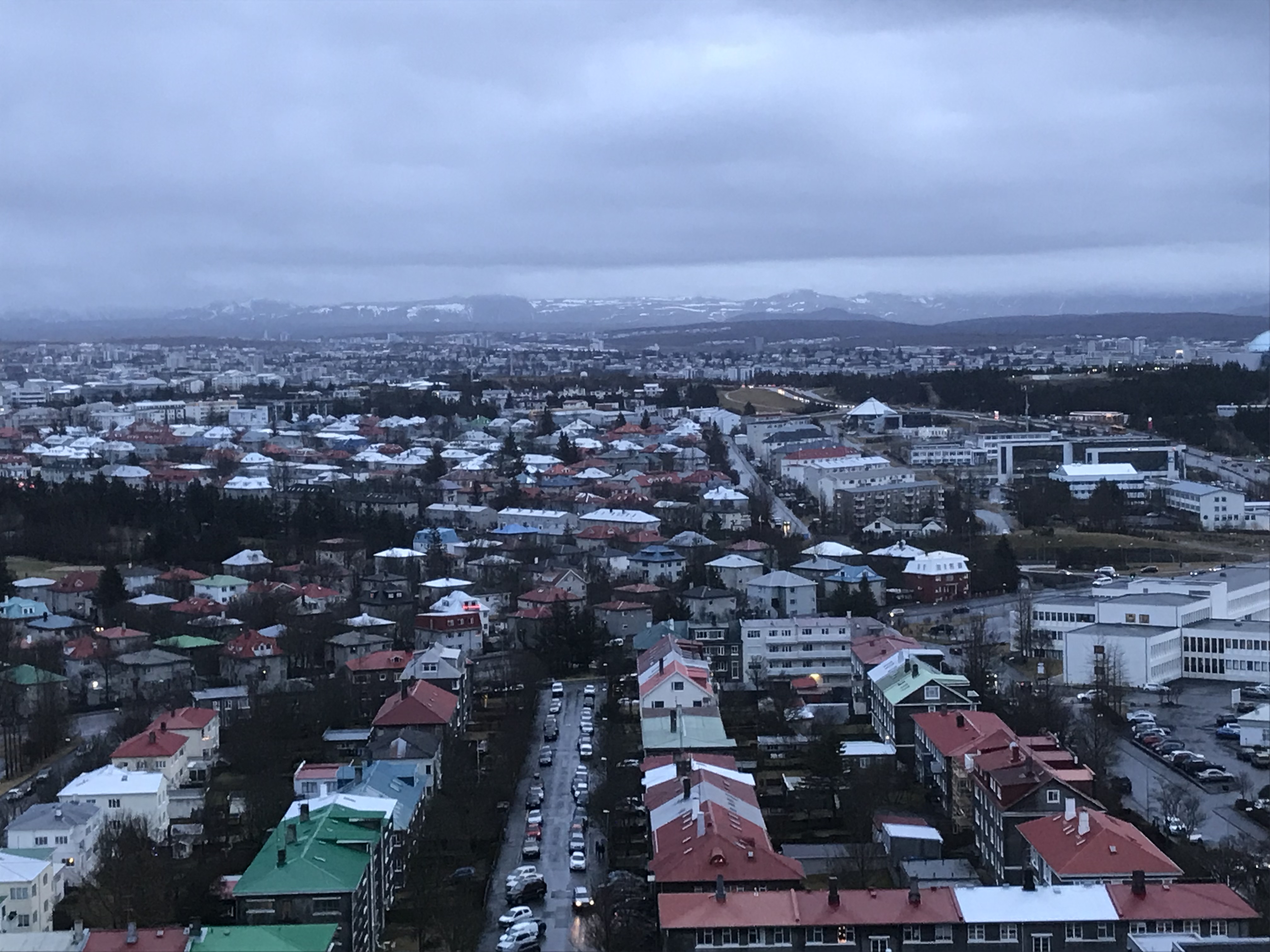
View from Hallgrimskirkja tower (2)
In front of the church, there is a dramatic statue of Leif Erikson striding forward with an axe in his hand and his cape unfurled by the wind. Erikson was thought to be the first European explorer to land in North America, some 500 years before Columbus.
Feeling spiritually refreshed we stride forward in the wind like Erikson, but in search of food rather than the new world! Our journey is a short one across the church precinct to the Cafe Loki on the other side of the road.
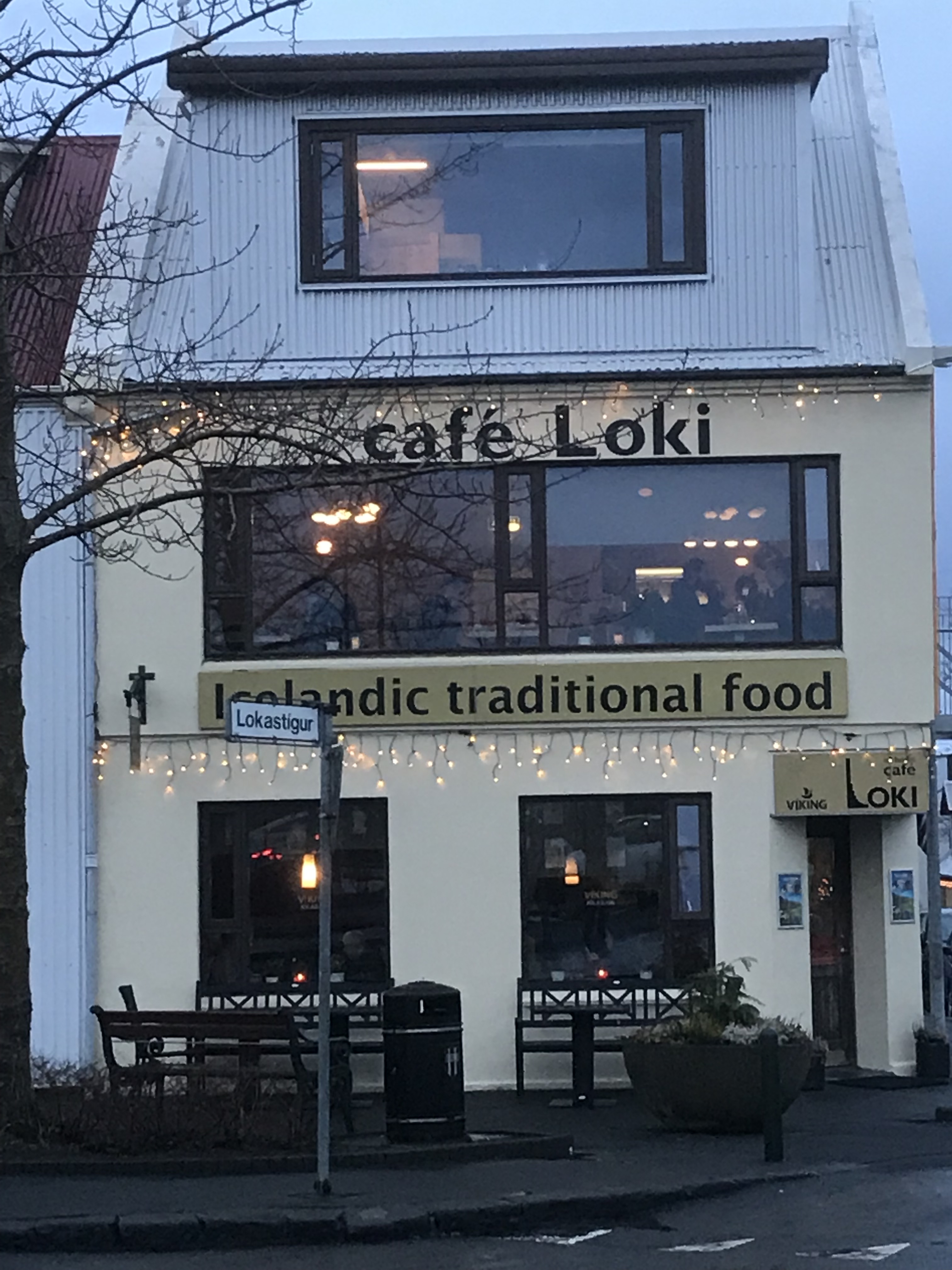
Traditional food – Cafe Loki
Cafe Loki offered the first opportunity to sample some traditional Icelandic cuisine. Our order included two lamb soups (Sue and Gracie), a sampling platter (Tony) and a bagel (Josh)! The lamb soup (Kjötsúpa) is a hearty dish of lamb and vegetables, which is both filling and warming. Usually made with potatoes, rutabagas – a cross between a turnip and wild cabbage – and carrots, it may also contain leeks, onions, and dried herbs. The sampling platter included: mashed fish (Plokkfisker), smoked trout, and smoked lamb (Hangikjöt) on rye bread slices. Dried fish (Harðfiskur) with butter and a few chunks or cubes of fermented shark (Kæstur hákarl) completed the plate.
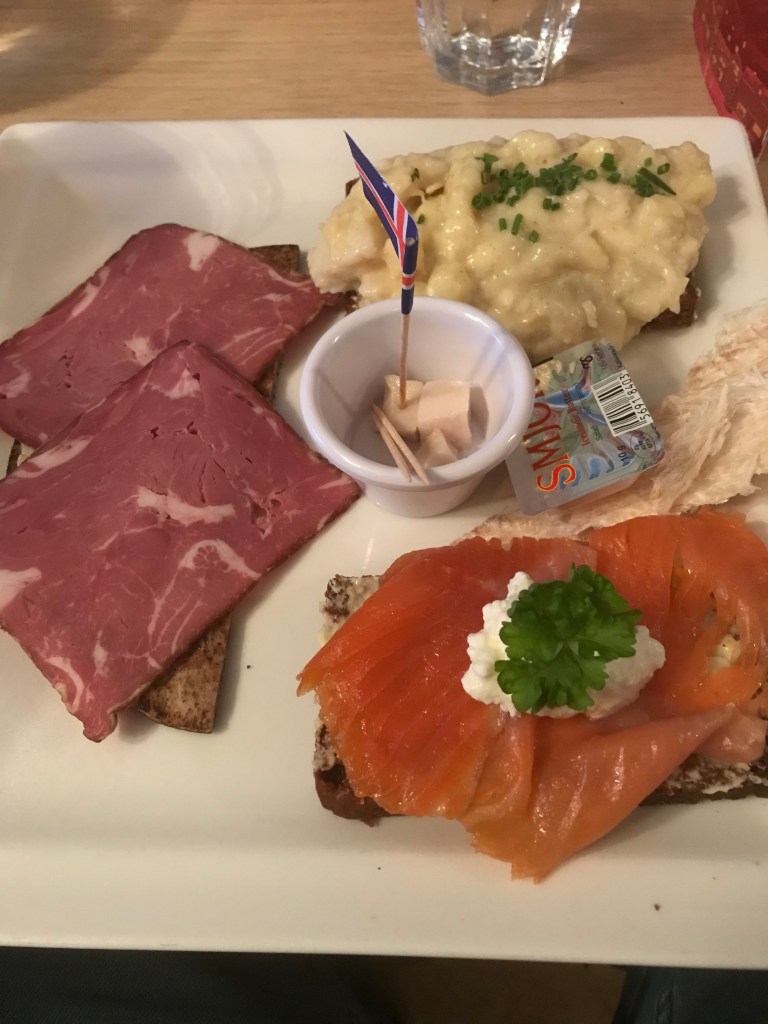
Icelandic platter 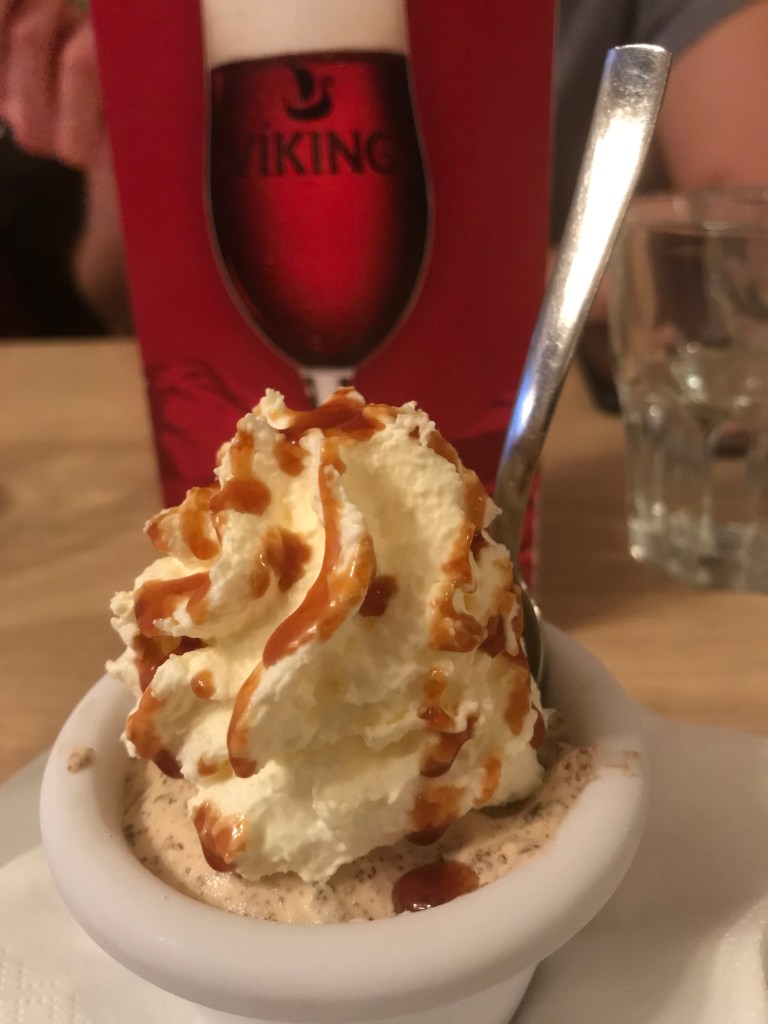
Rye bread ice cream
We were warned that the fermented shark was an aquired taste, not least because of the strong ammonia odour. Gracie tried the fermented shark and we both agreed that it had the texture and smell of a very strong blue cheese. I moved on to the mashed fish, which is probably a better description of Plokkfisker than fish stew. This traditional dish is made from any cod fish, potatoes, onion and milk. Some recipes also add cheese. Baked in the oven it is delicious served, as was mine, on sliced rye bread. Continuing the fish theme I moved onto the Harðfiskur, or dried fish. Spreading butter on the fish makes it easier to chew and adds to the flavour released as you chew and chew and chew. You get the idea. From fish jerky I moved onto the smoked lamb (Hangikjöt) which was also served on rye bread. What better to finish off our introduction to Icelandic cuisine than with rye bread ice cream!
Monday 24 December – Golden Circle tour
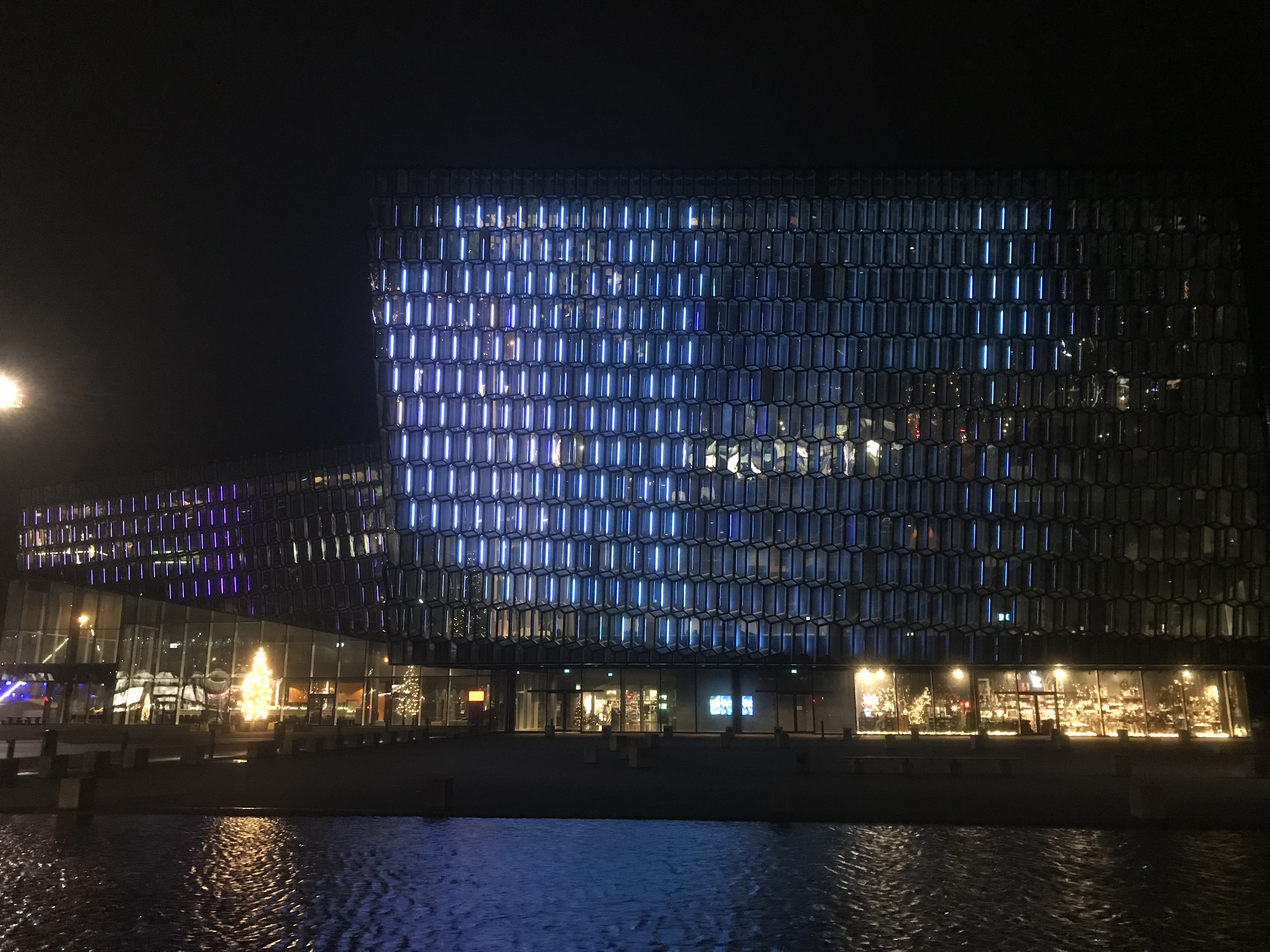
Cool artic blue to golden circle
We had an early start for our Golden Circle tour which took us to the three most popular natural attractions in Iceland: the Geysir Geothermal Area; Gullfoss Waterfall; and Þingvellir National Park. Our journey takes us along Ring Road 1 and then just outside Selfoss we take Biskupstungnabraut, the first section of Route 35 which leads to Geysir. In the early morning twilight the Harpa concert hall’s lights were a cool arctic blue!
The Geysir Geothermal Area
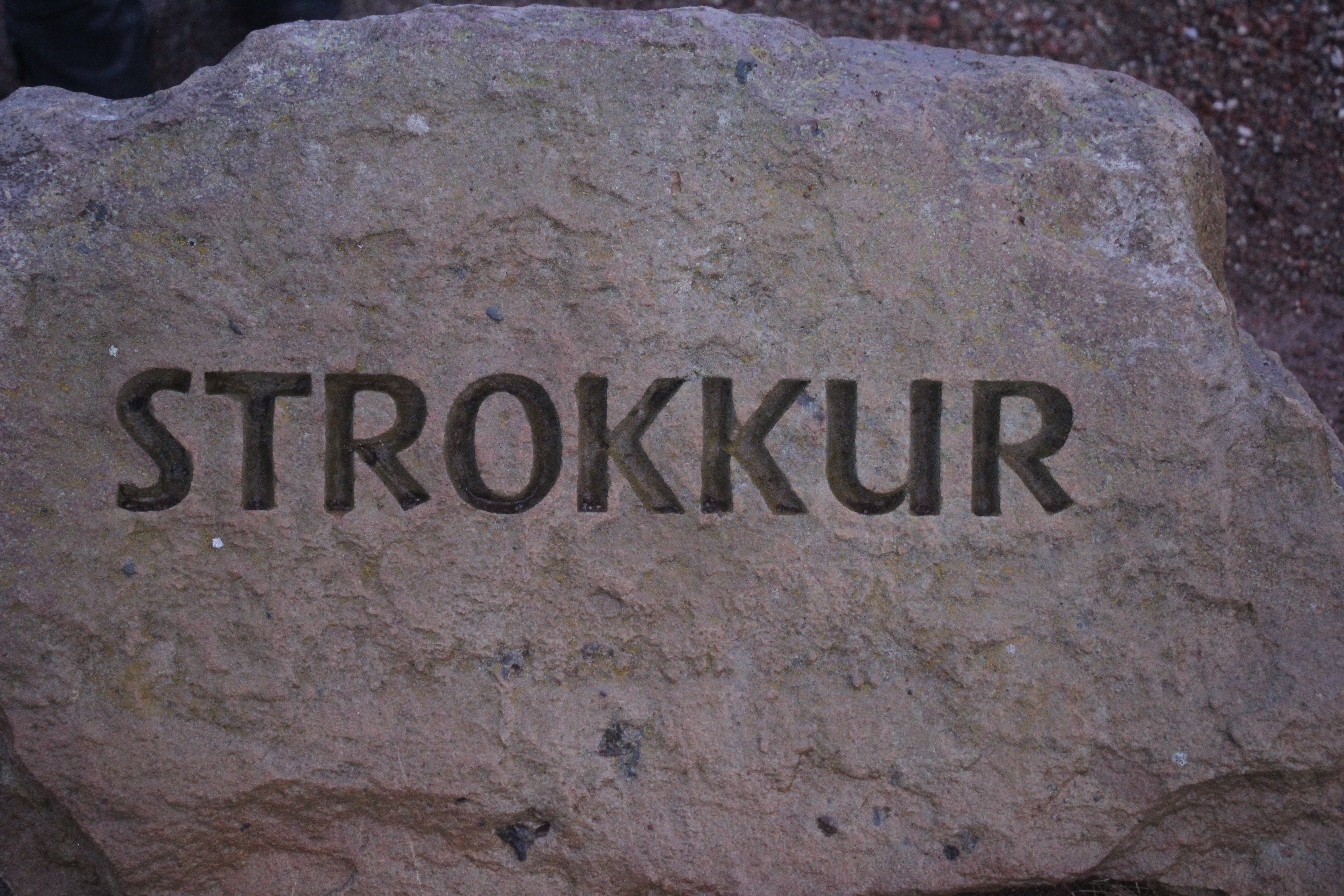
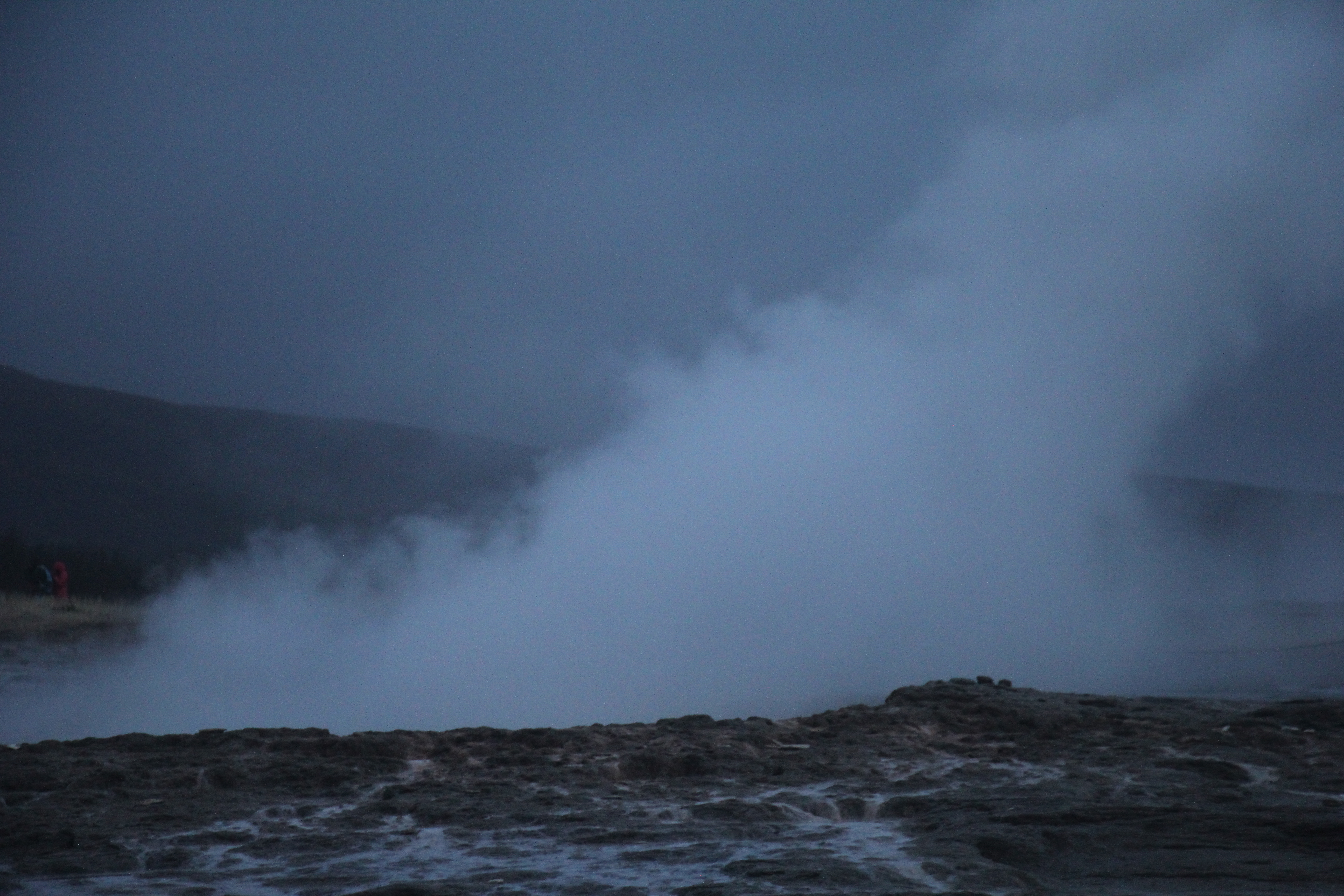
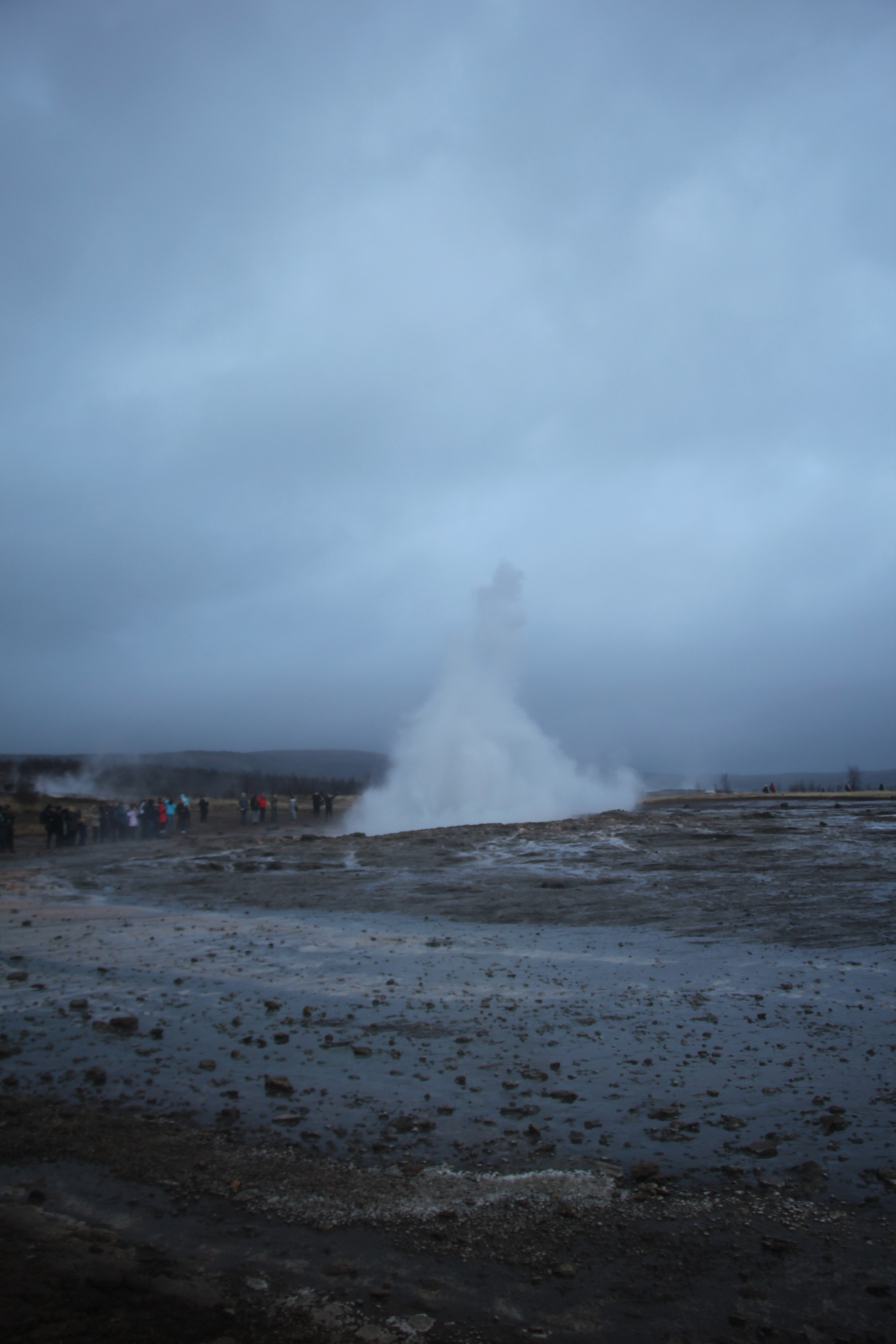
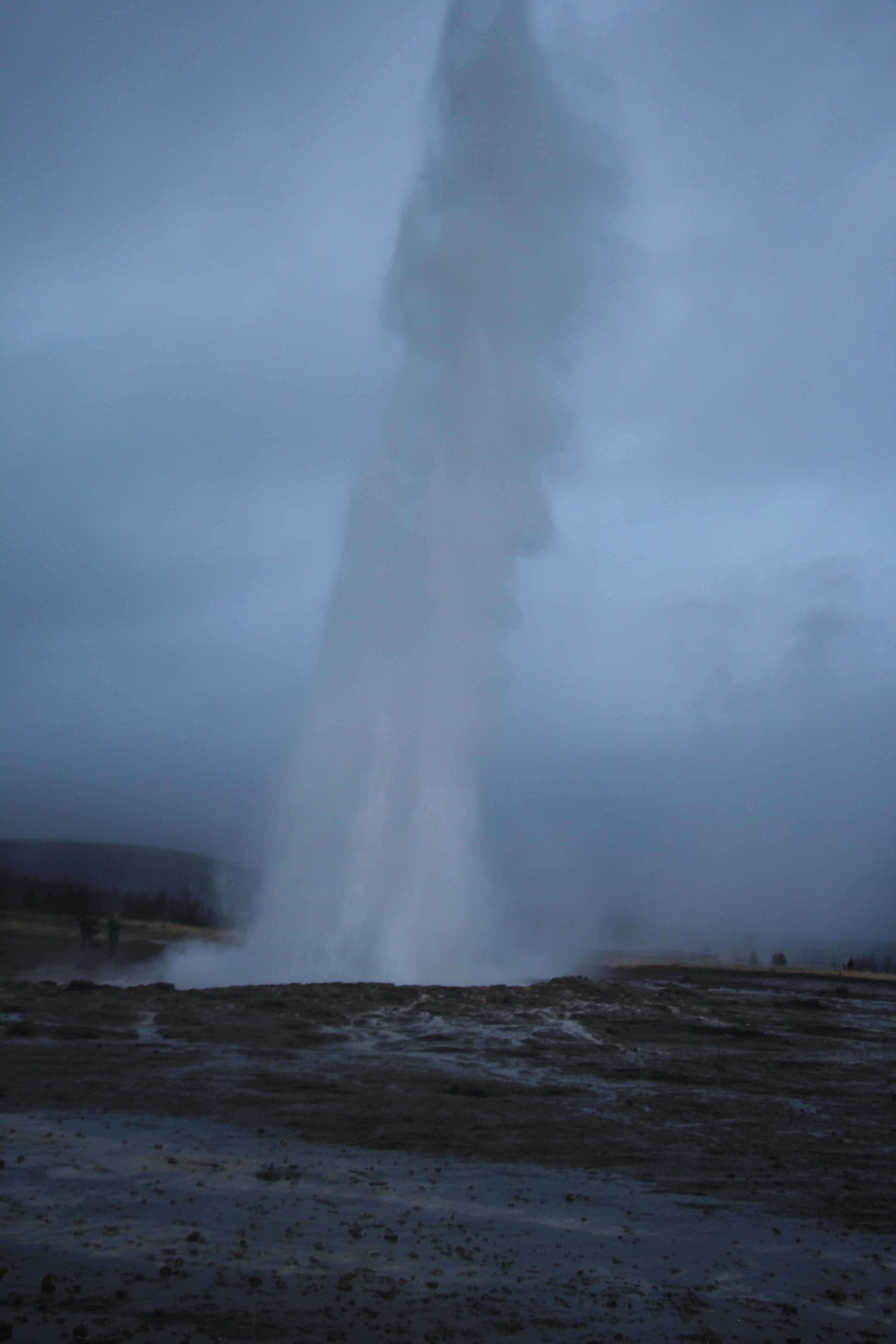
Located in the Haukadalur valley, the famous geyser – from which all others take their name – is currently in an inactive phase. During its active period water would gush up to 70 metres into the air. A few metres away Strokkur geyser, which is currently active, sends a column of boiling water 15 to 20 metres into the air every 10 to 15 minutes. We managed to catch one of Strokkur’s less impressive erruptions. Perhaps it was the cold, but the time between activity certainly seemed longer than 15 minutes!
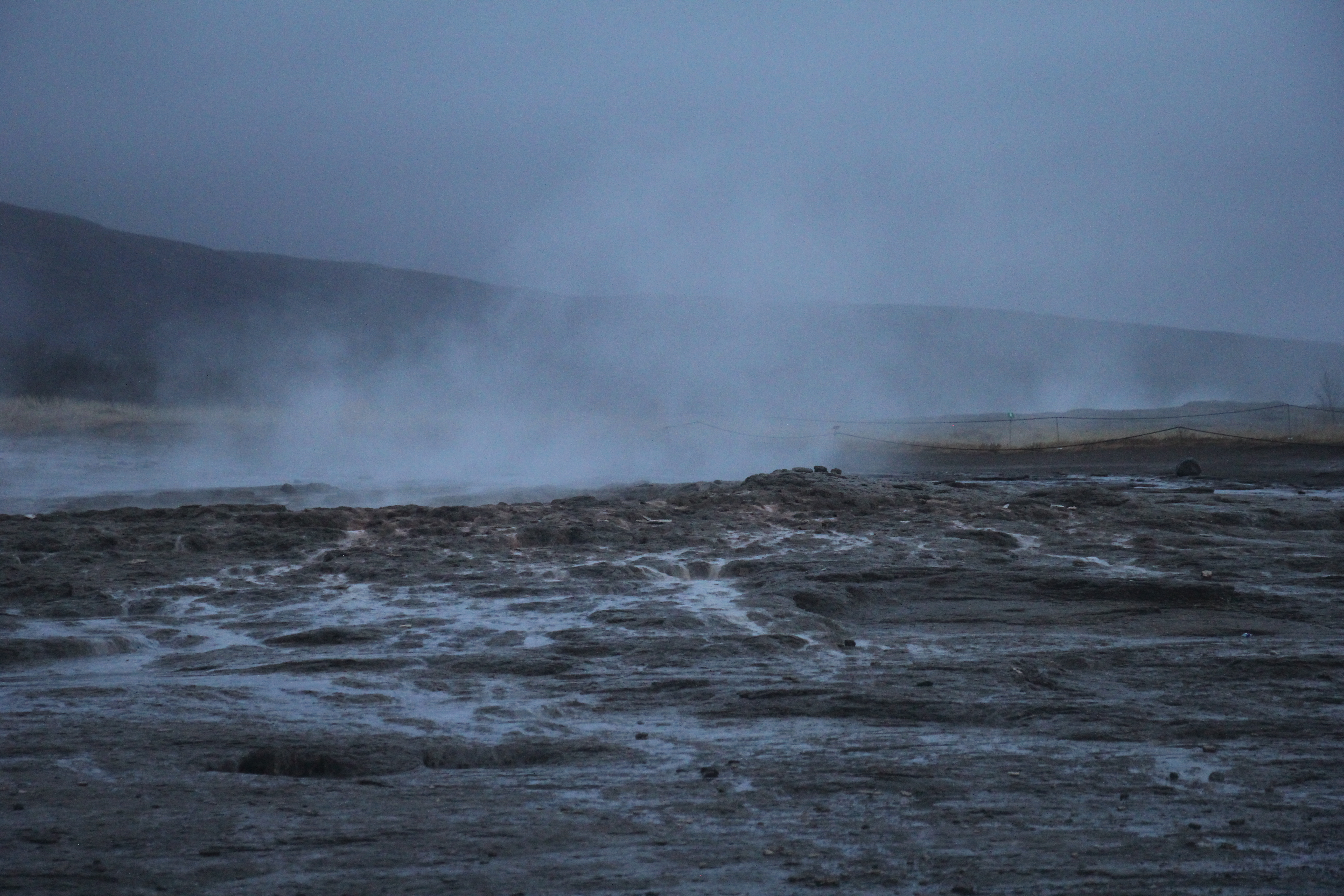
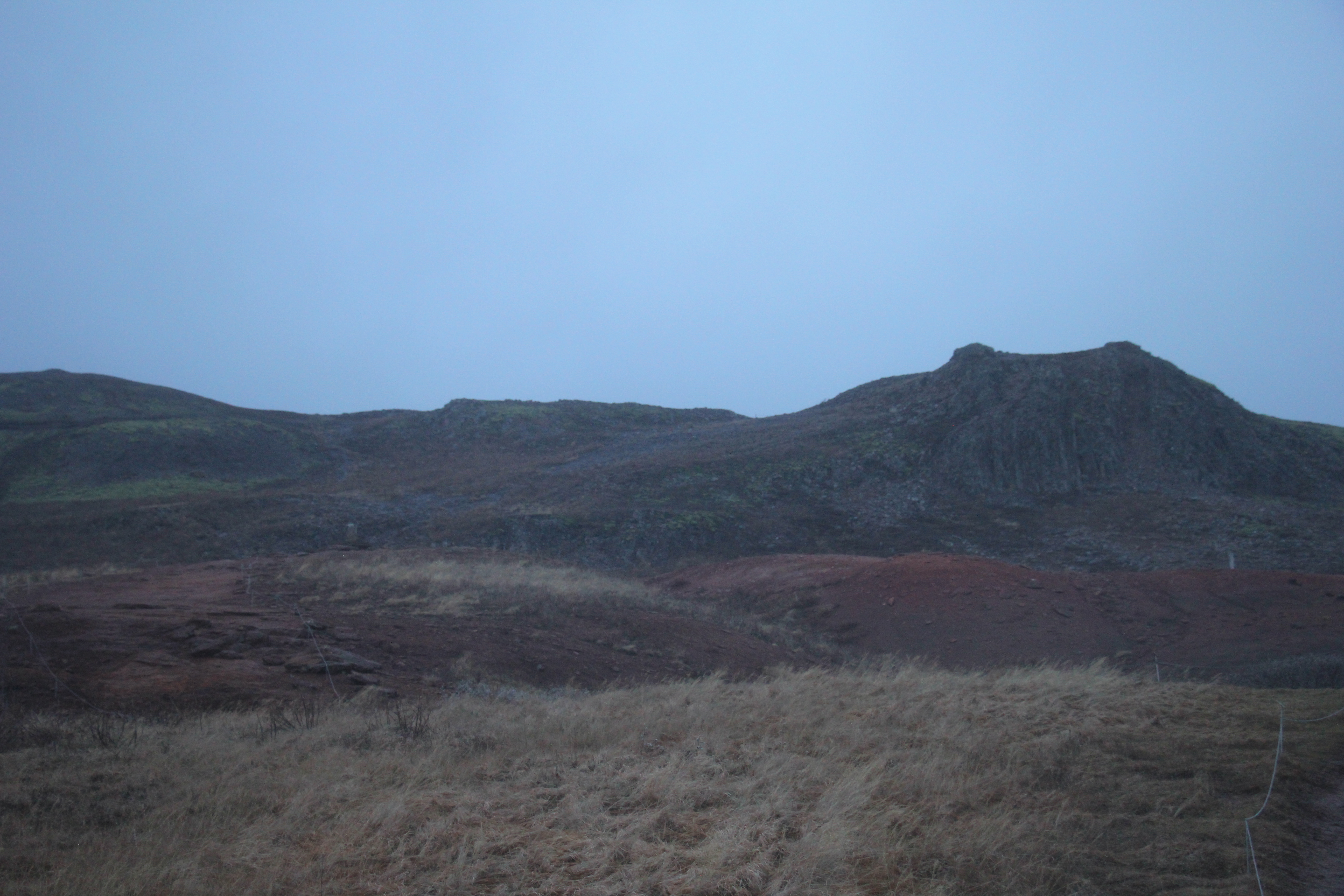
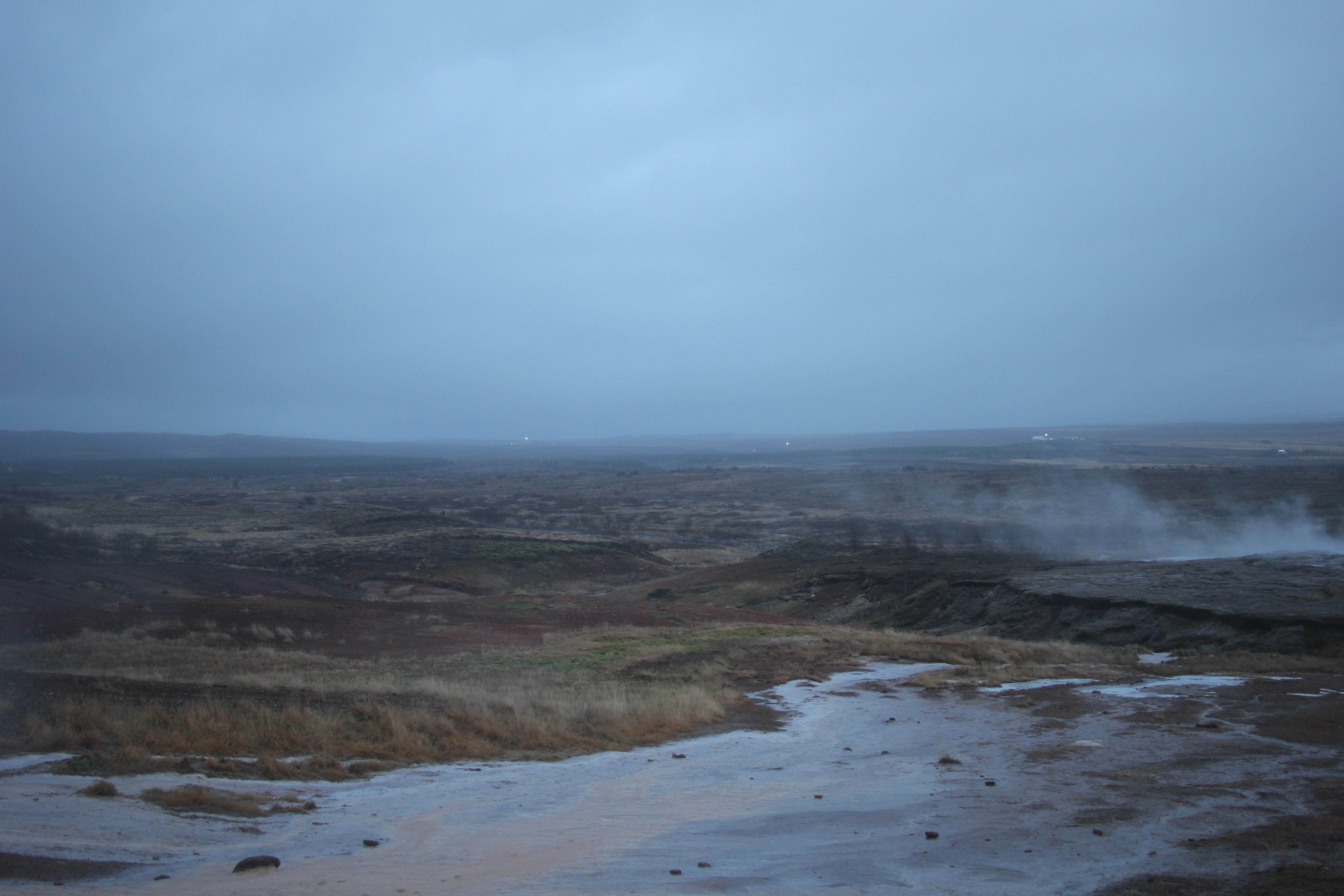
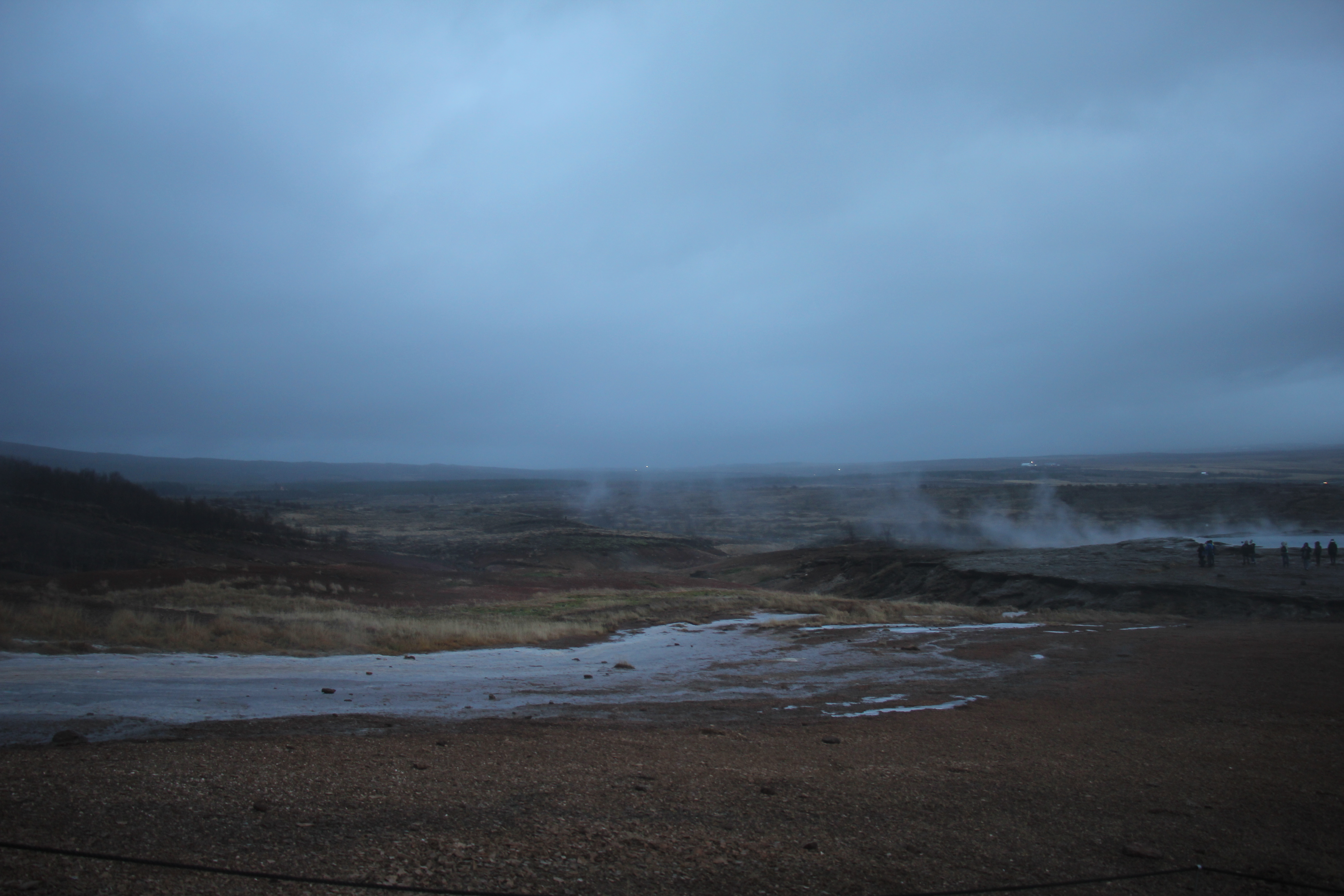
In the surrounding area there are hot springs, mud-pits and fumaroles from which sulphurous gases emerge. On the ground in between the swathes of dull green moss there are stretches of colour, mainly shades of yellow from the sulphur and red and brown shades from iron oxidation. At fumaroles, sulphur deposits are normally yellow, whereas in mudpots, they mix with other minerals and turn to a black or a bluish grey colour.
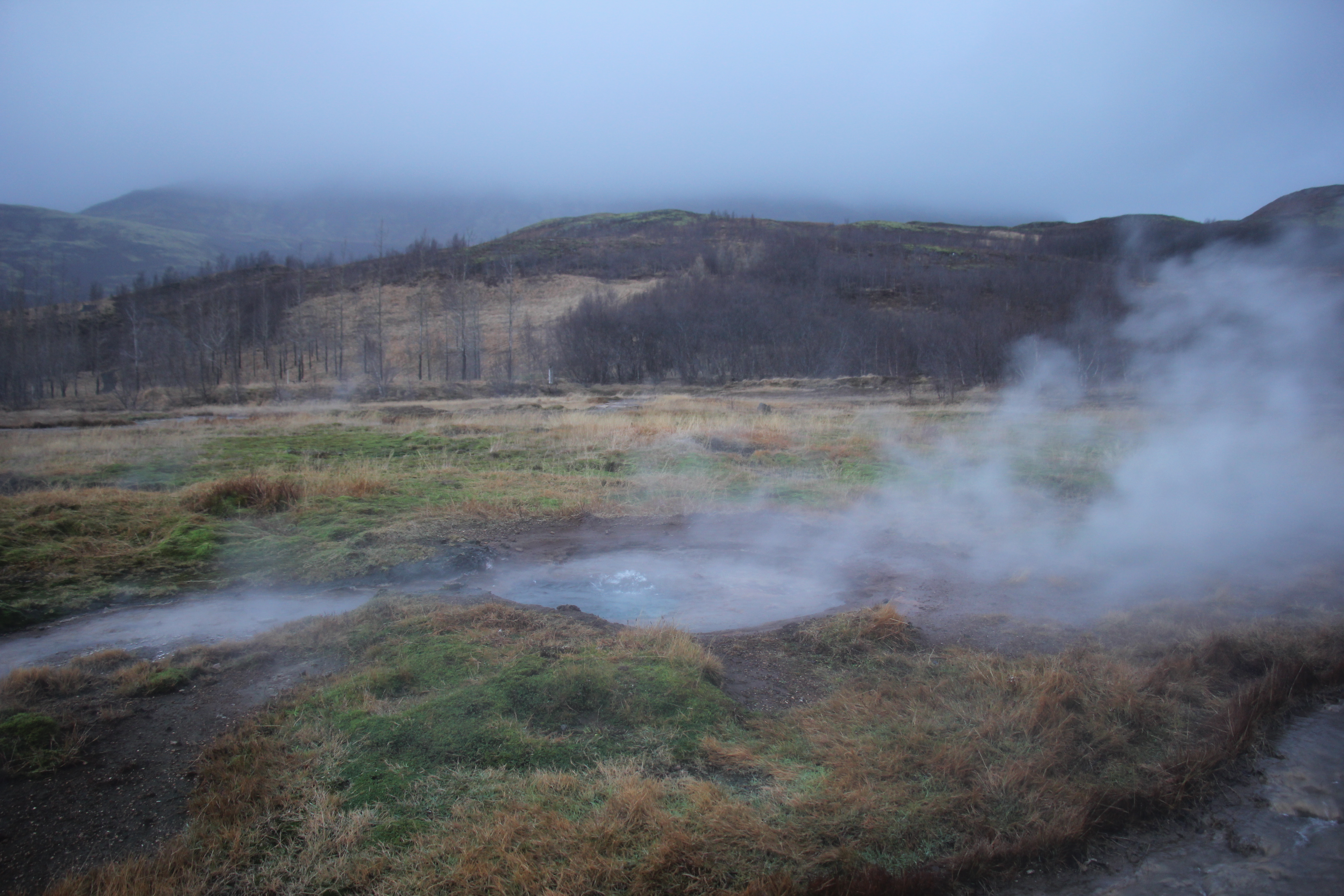
Fumarole – Geysir (1)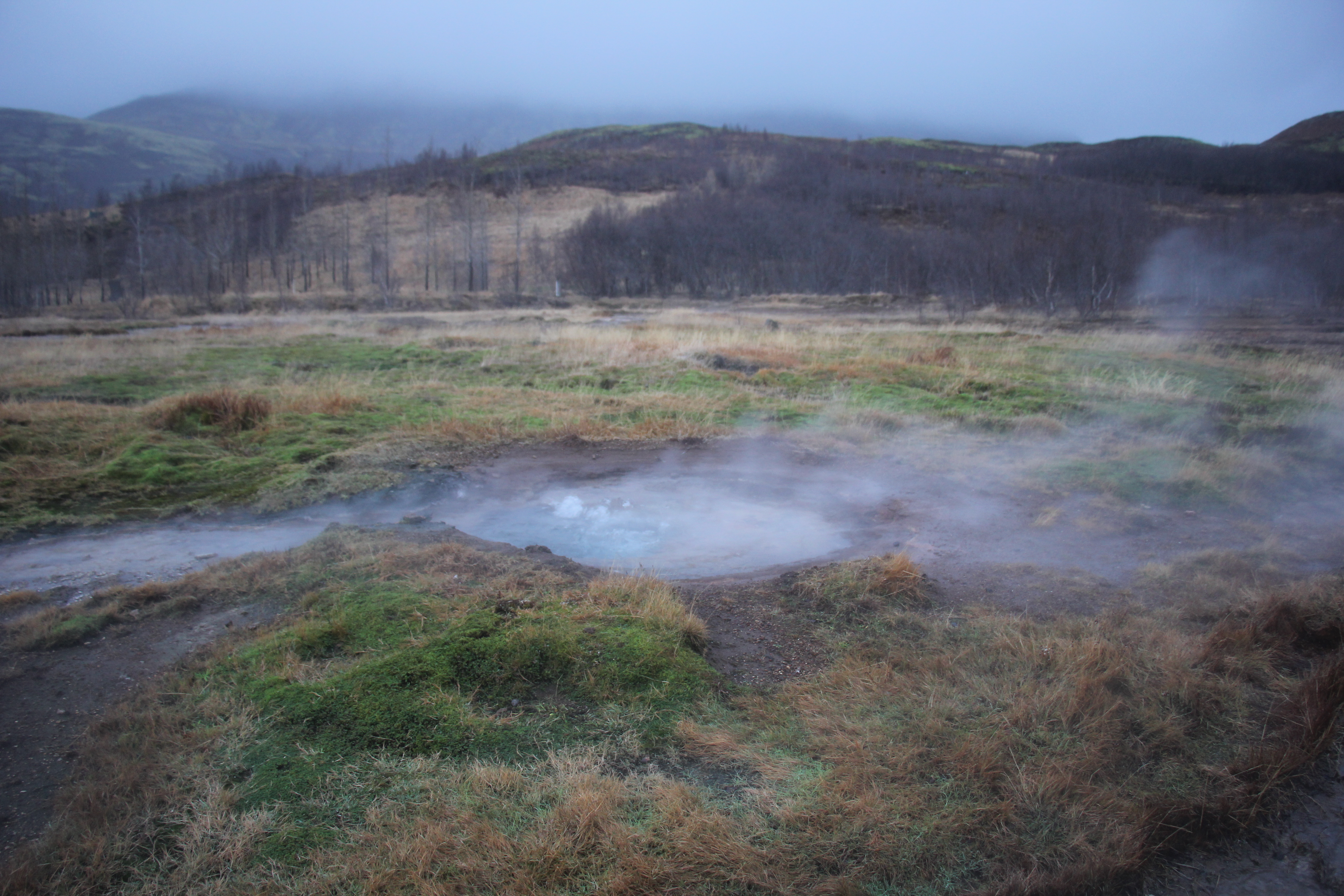
Fumarole – Geysir (2)
From Geysir, we continue a further 10km along Route 35 to Gulfoss where we stop for lunch – lamb stew followed by chocolate cake – before walking to the waterfall.
Gullfoss
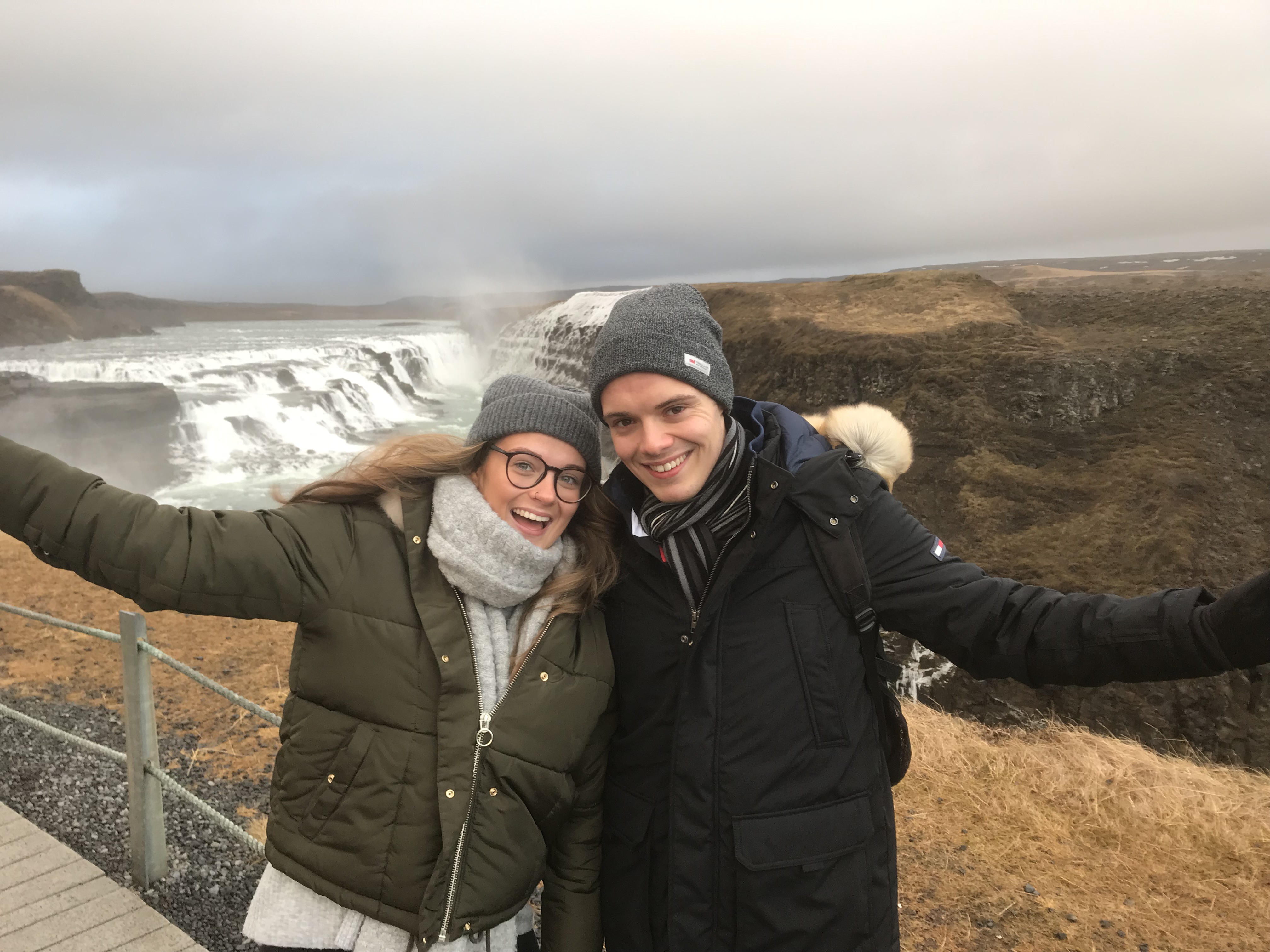
Gullfoss or ‘golden falls’ is located on the Hvítá (White) river which is fed by Iceland´s second biggest glacier, the Langjökull. Although it is known as the golden waterfall, on an overcast day it was more golden brown, but spectacular nevertheless. The waterfall is unusual because of its two tier or two step drop, water falls 32 metres in two stages into a rugged and narrow canyon with walls which reach up to 70m in height.
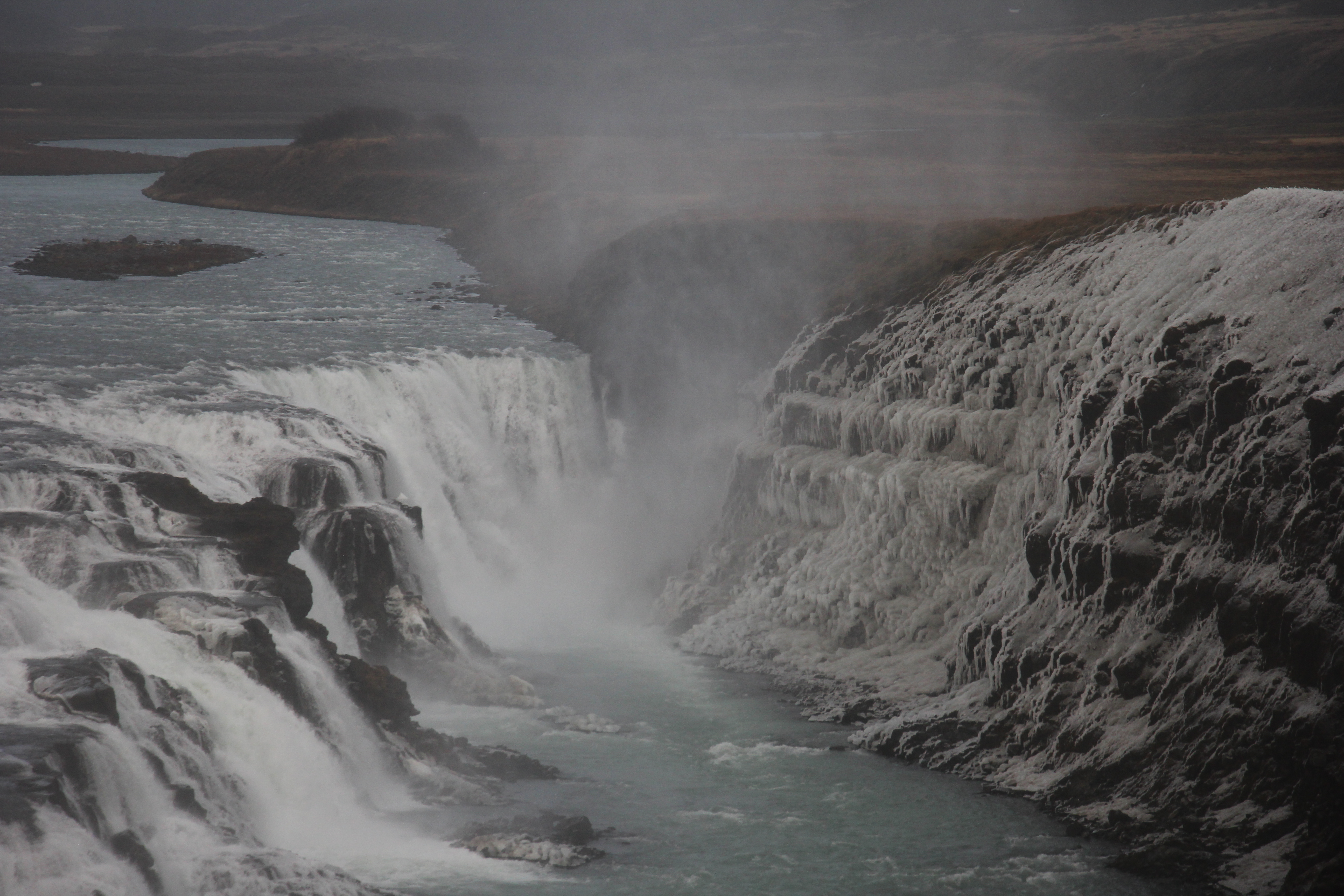
Gullfoss (1)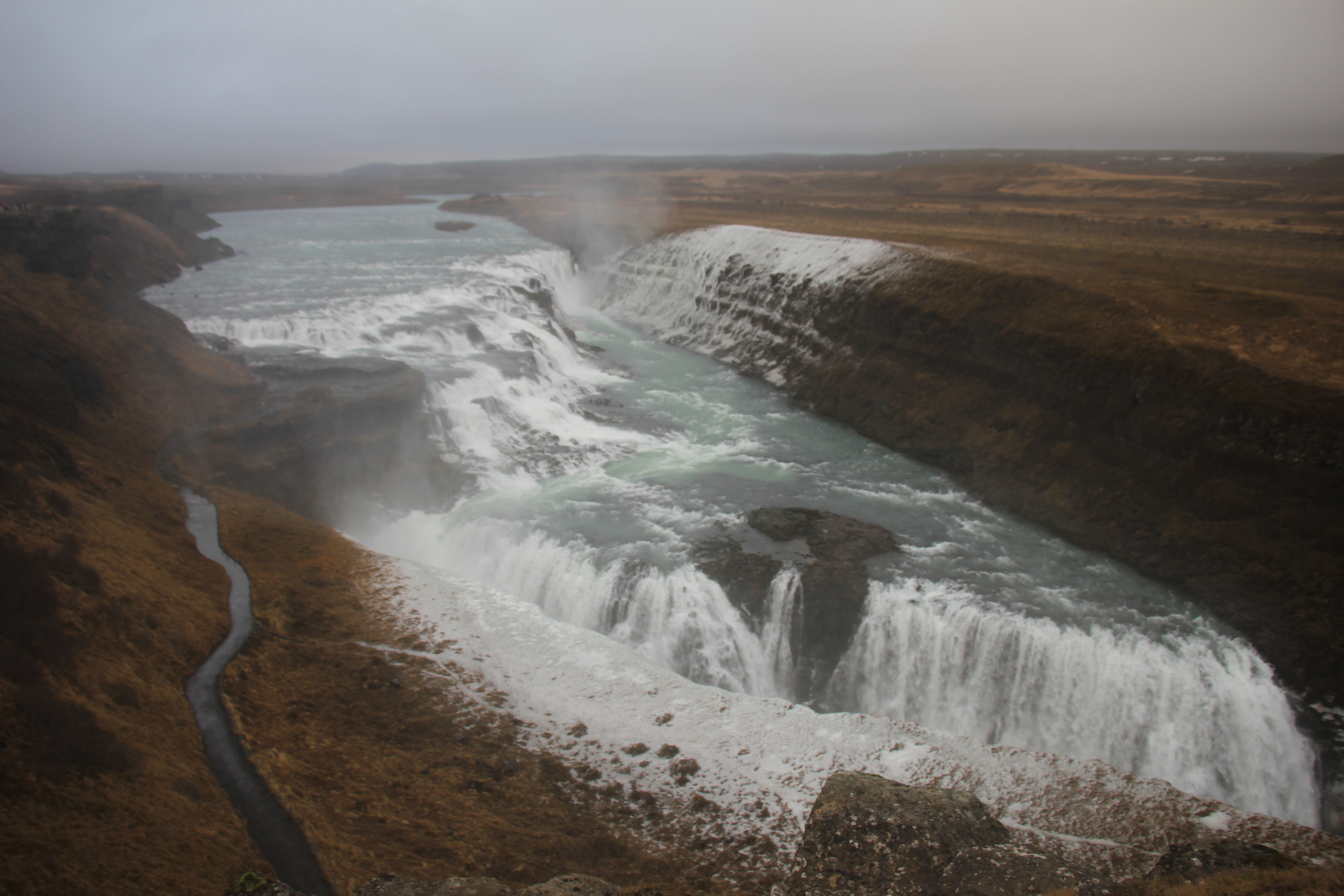
Gullfoss (2)
Developers be damned!
This natural feature would have been lost in the early 1900s but for the tenacity and determination of Sigríður Tómasdóttir, who took legal action to prevent the construction of a hydro-electric dam across the Hvítá River that would resulted in Gulfoss being submerged.
In 1907 a number of landowners, including Tómasdóttir’s father Tómas Tómasson, signed a lease allowing an English developer to construct a hydro-electric dam. Sigríður Tómasdóttir’s protest started a lengthy legal case which eventually exhausted the developers’ resources and they withdrew their plans. Tómasdóttir is considered one of Iceland’s first environmentalists and all waterfalls in Iceland are now protected from foreign investment due to her actions.

Tony, Gracie & Josh – Gullfoss
Sue, Gracie & Josh – Gullfoss
Þingvellir – Assembly Plains
Our final stop of the day is the national park, Þingvellir, which is surrounded by beautiful mountain and volcanic ranges. Located in a rift valley directly between the North American and Eurasian tectonic plates, this is one of the few places in the world where you can walk between the continents, in the Mid-Atlantic Rift.
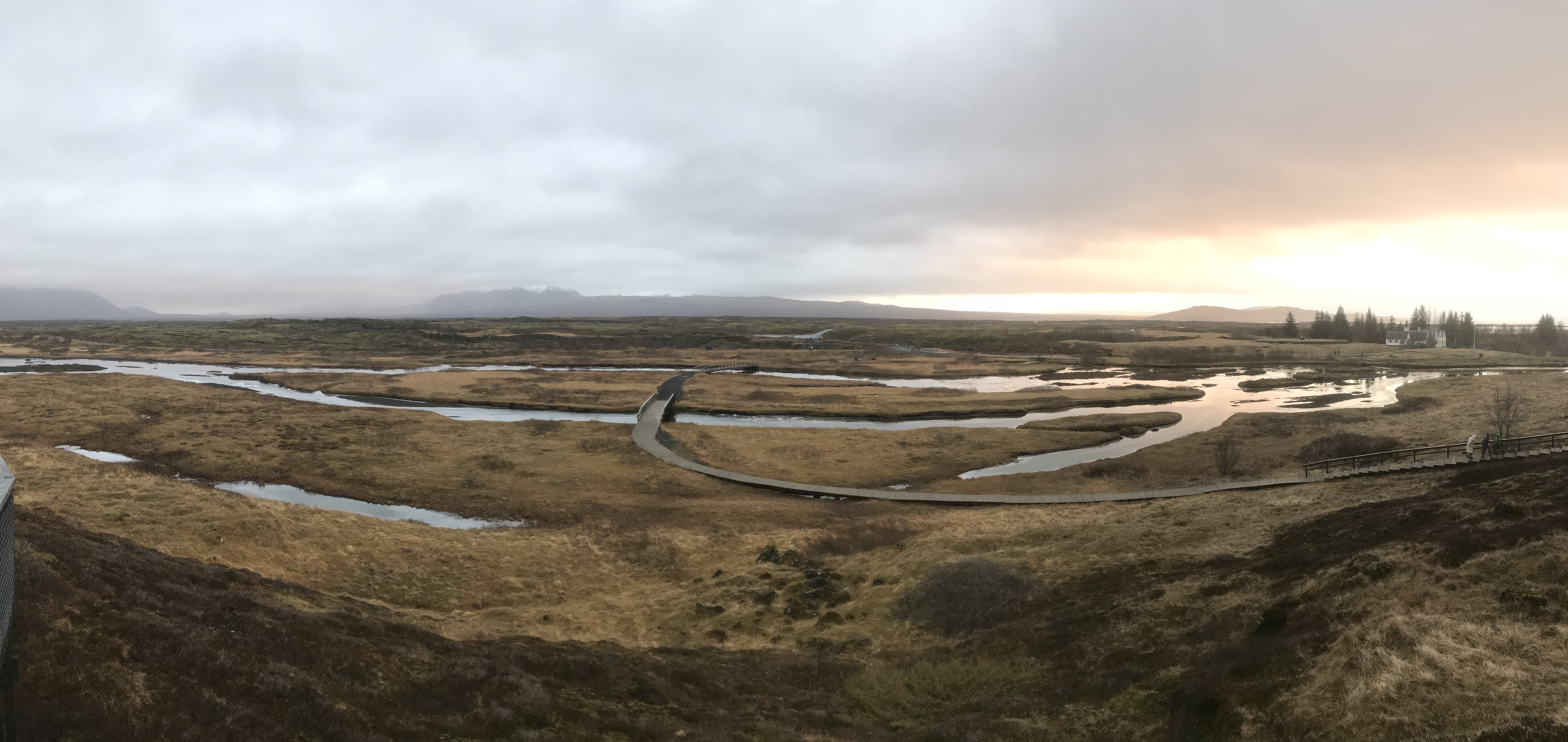
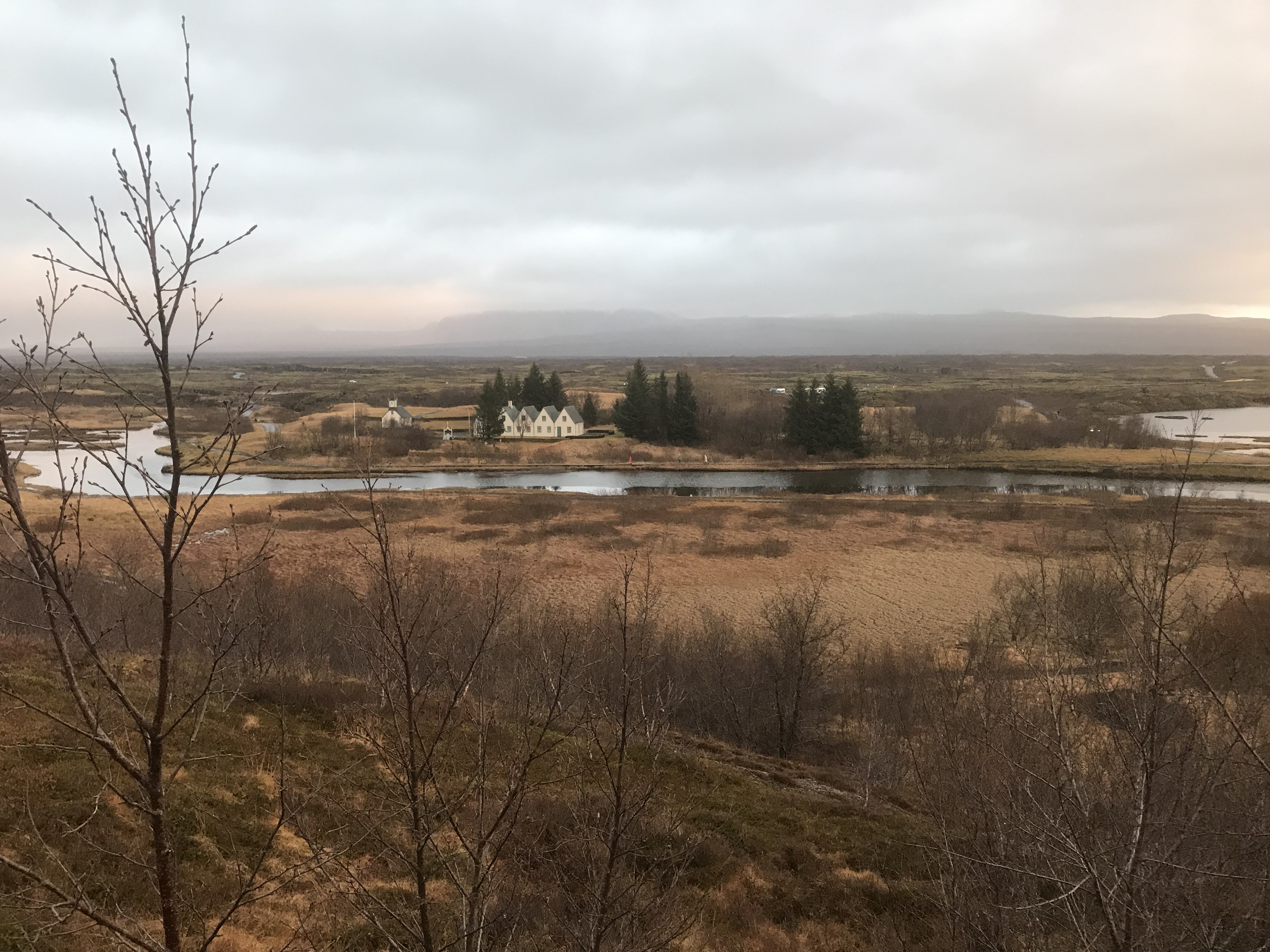
Church & Cottages Thingvellir National Park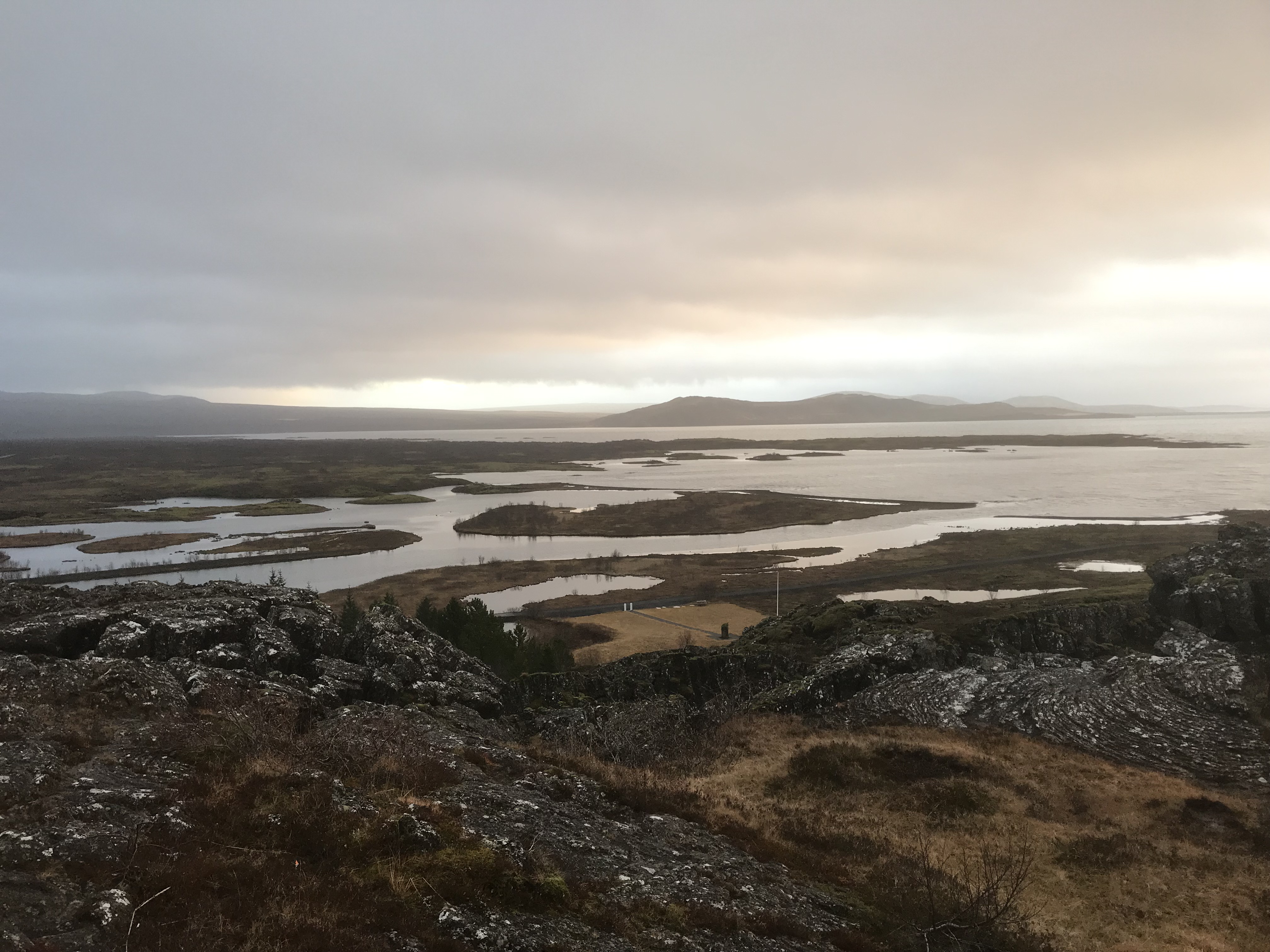
Thingvellir Lake
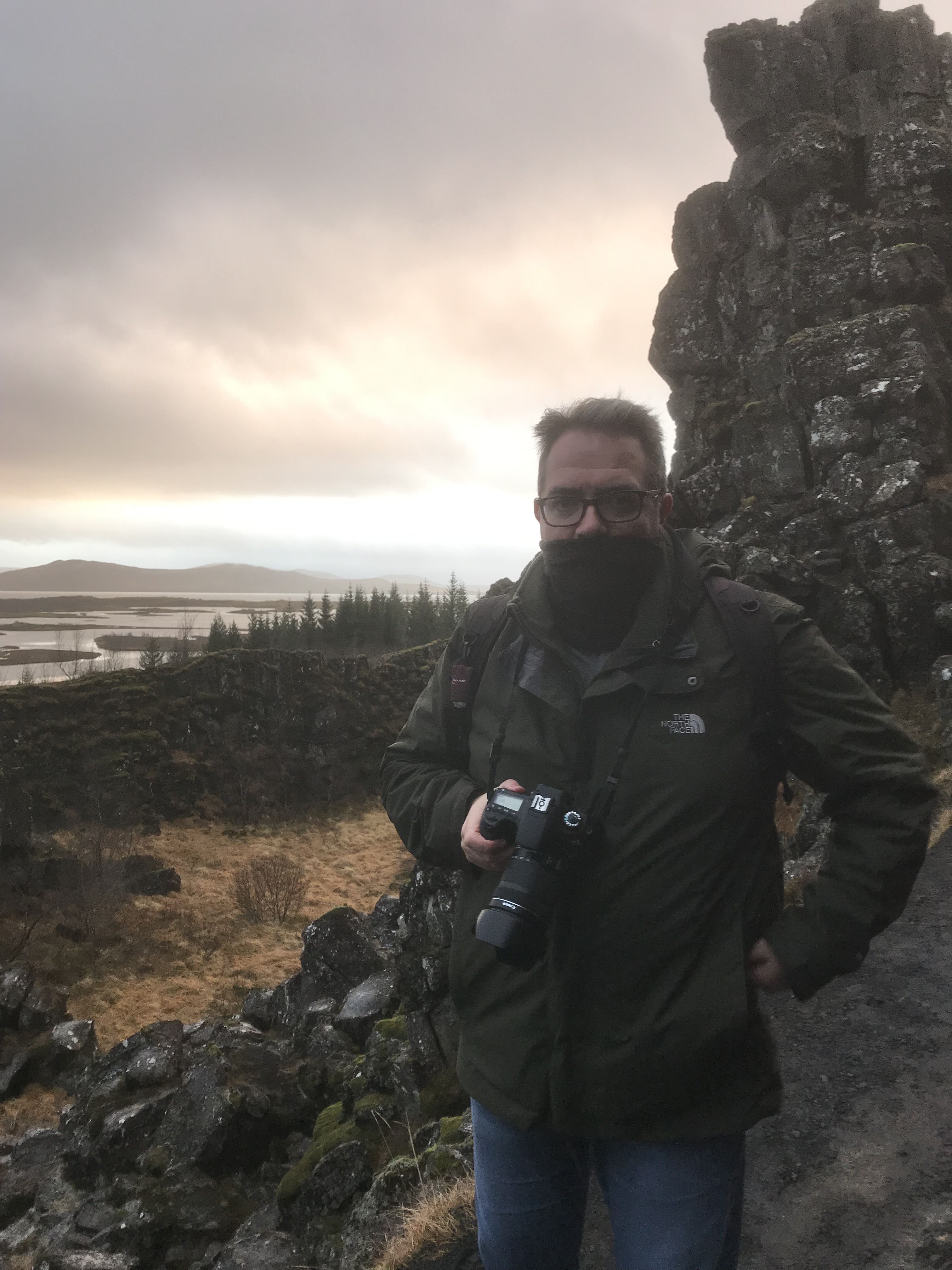
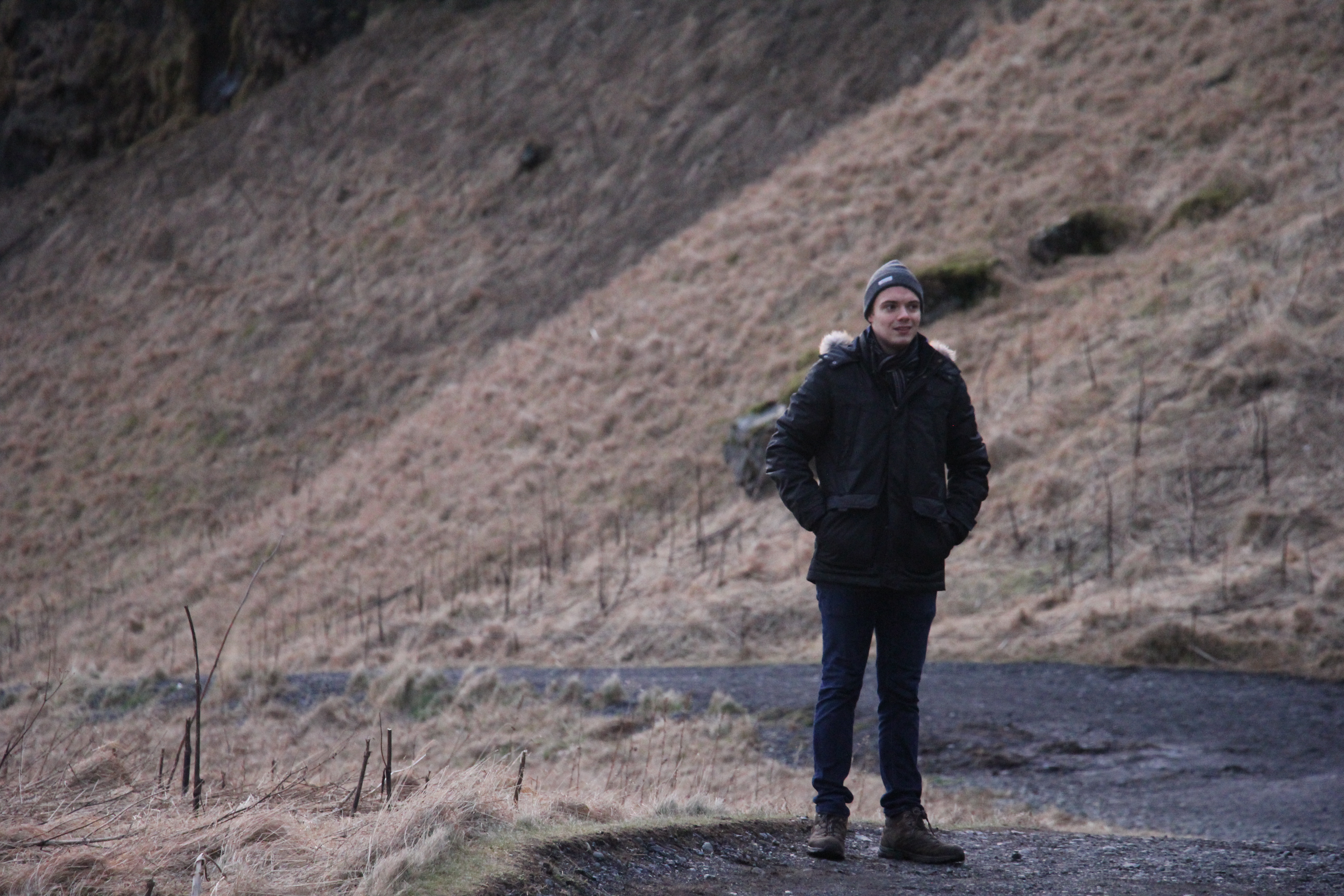
Tony – Thingvellir National Park
Josh – Thingvellir National Park
Alþing
The Alþing an open air assembly was founded at Þingvellir – Assembly Plains in 930. It was Iceland’s supreme legislative and judicial authority from its establishment in 930 until 1262 when the Commonwealth ended.
The assembly convened over two weeks every year until 1800. Some sources suggest that up to 5,000 people participated in the early gatherings. It was a meeting place for people from across the island. Merchants would sell their wares, whilst others such as sword sharpeners would sell their services. Performers entertained the crowds whilst ale-makers quenched their thirst. Some of the most important scenes in the Icelandic Sagas take place at the Alþing.
In 1800 meetings were discontinued and not restored until 1844 when the assembly relocated to Reykjavík. When Iceland was declared a republic in 1944 it was announced at Þingvellir.
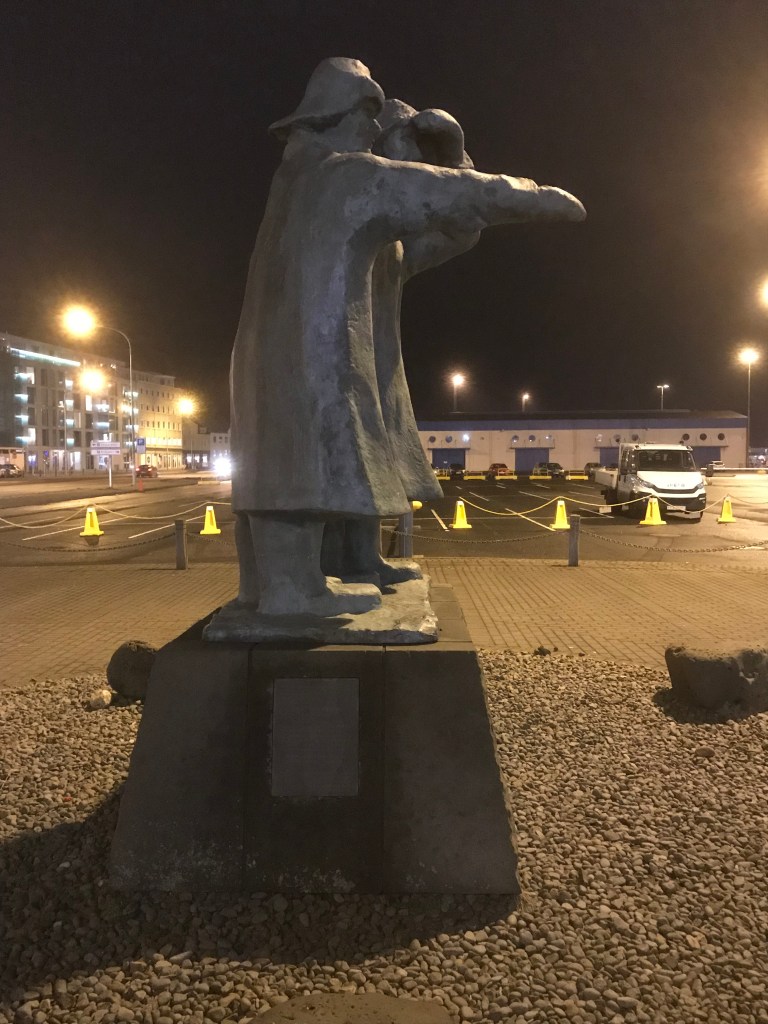
Viking raid – dinner
After a full day on the road we are glad to see the twinkling lights of Reykjavik and the colourful lights of the Harpa concert hall as we alight from the tour bus and head across the road to our hotel. Without a reservation for dinner we may have to do some walking and so we head off towards the harbour where we know there are a few restaurants open. We strike lucky at the Bryggjan Brugghús. Iceland’s first micro brewery and restaurant, Bryggjan Brugghús, is housed in a former fishing company building on the old harbour.
Fish, chips and beers – Bryggjan Brugghús
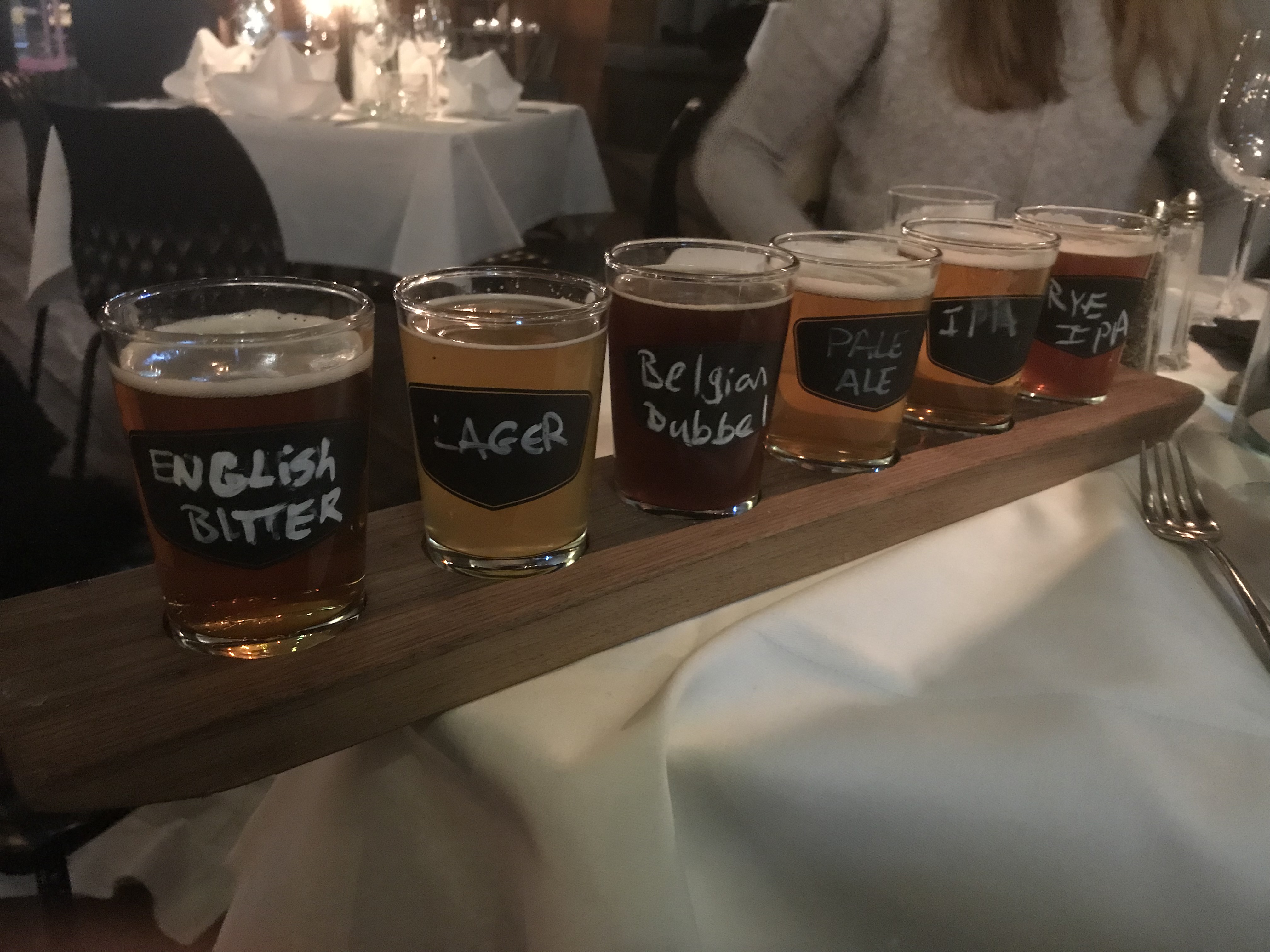
Whilst waiting for a table we ordered drinks a flight of six beers: English Bitter, Lager, Belgian Dubbel, Pale Ale, IPA, and Rye IPA. Fortunately given that this was a shared rather than a solo flight, Sue, Josh and I each found our two favourite beers. No sooner had our flight arrived it was time to depart for our table.
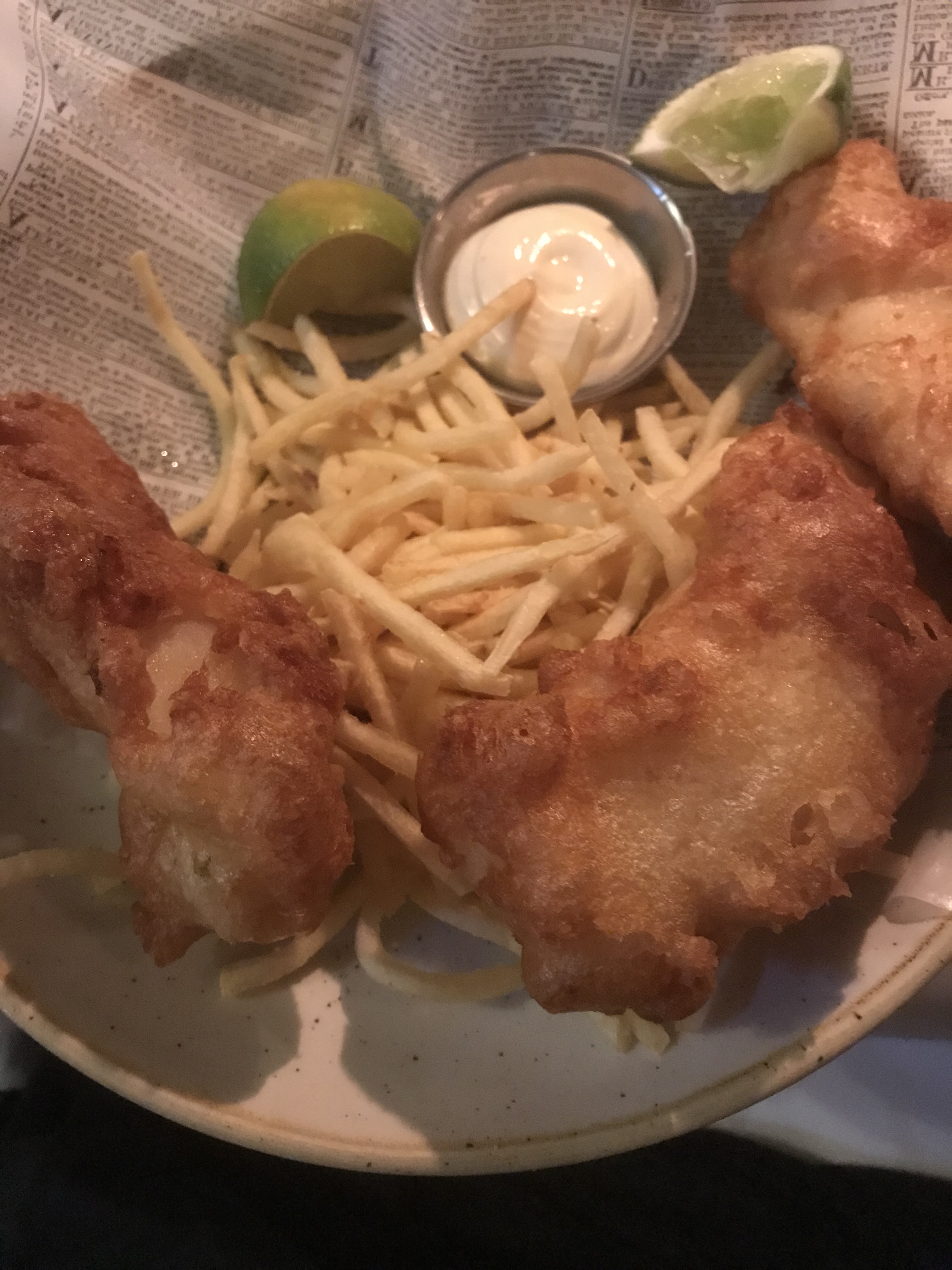
We were fortunate to get a table even though it was only for an hour and a half! To save time and cost we went straight for main course: fish and chips for four. It was fortunate that we did because the portions of fish were generous. The fish was beautifully cooked and flaked away once the delicate crisp batter was cut. Our thirst slaked and hunger sated we headed out into the cold night air. Actually, it wasn’t too cold and we took a slow stroll along the harbour back to the warmth of the Arnarhvoll.
Tuesday 25 December – Christmas on the south shore
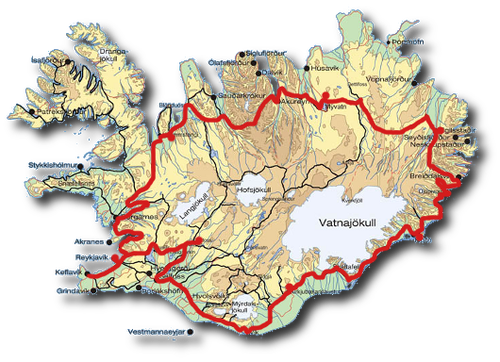
Today Josh and I are off to the beach for Christmas lunch. Heading out of Reykjavik we take Route 1 or Ring Road 1 along the south coast to see the waterfalls at Skógar and Seljaland; and the black sand beach at Reynisfjara. Iceland’s ring road encircles the entire country, covering some 1,287km (800 miles). We’re only driving a short stretch, 187km (116), from Reykjavik to Vik.
Reynisfjara – Black sand beach
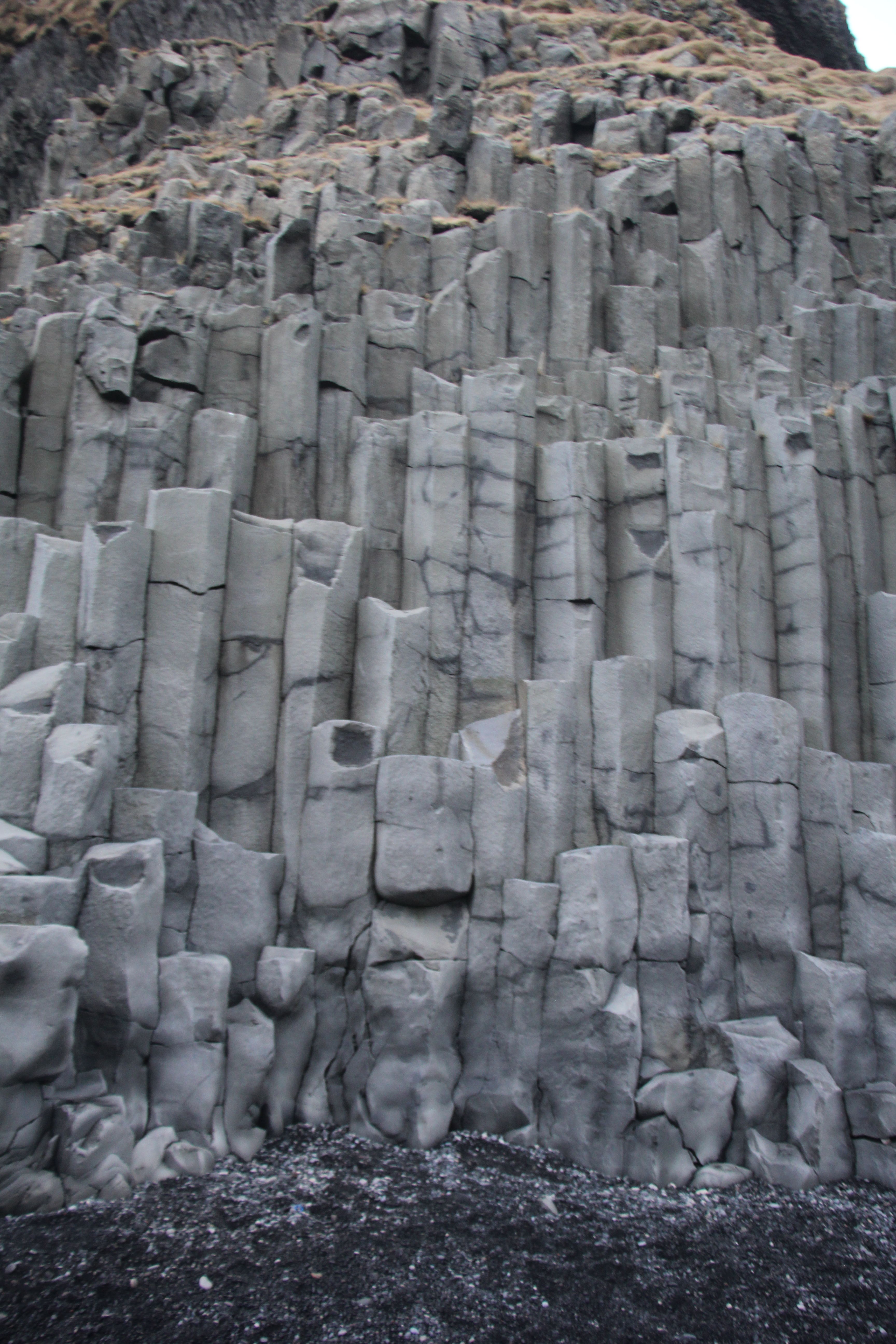
Located just over 10 kilometres by road from the small village of Vik, Reynisfjara is considered to be the most beautiful example of Iceland’s black sand beaches. As you approach the beach from the car park there is a warning sign about ‘sneaker waves.’ Sneaker or sleeper waves are so called because they appear without warning. Larger than the waves which precede them, they can catch the unwary and wash them out to sea. The location and water temperature makes rescue and survival an unlikely prospect for those caught by such waves. With an eye on the sea we make our way to the shore line and the two small caves at the end of the beach opposite the sea stacks.
The beach is impressive, with the black sand, basalt columns and caves. Perhaps not as dangerous as the sneaker waves, but the sand can be biting when whipped up by the strong winds. Walking against the wind when were there difficult and although we didn’t have to take shelter in the cave, we did walk with our back to the wind.
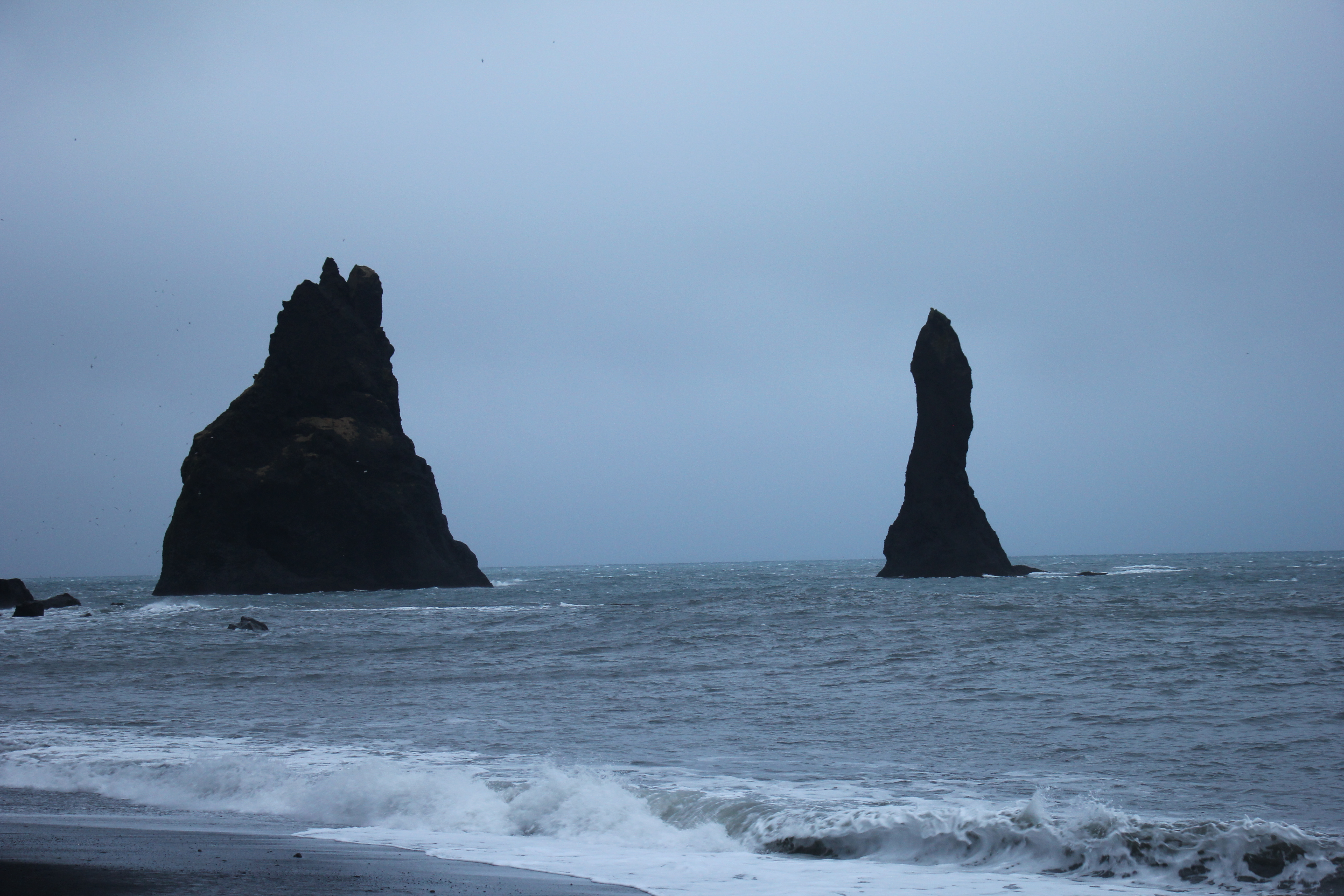
Reynisdrangar Seastacks
From the beach we have a close up view of the spiky basalt sea stacks which rise 66 metres from the ocean into the air. But these sea stacks are not a natural phemonemna. According to local legened two trolls saw a ship sailing near the shore at night so they waded out to it. Dawn broke as the trolls were returning to shore and they were turned to stone together with the ship.
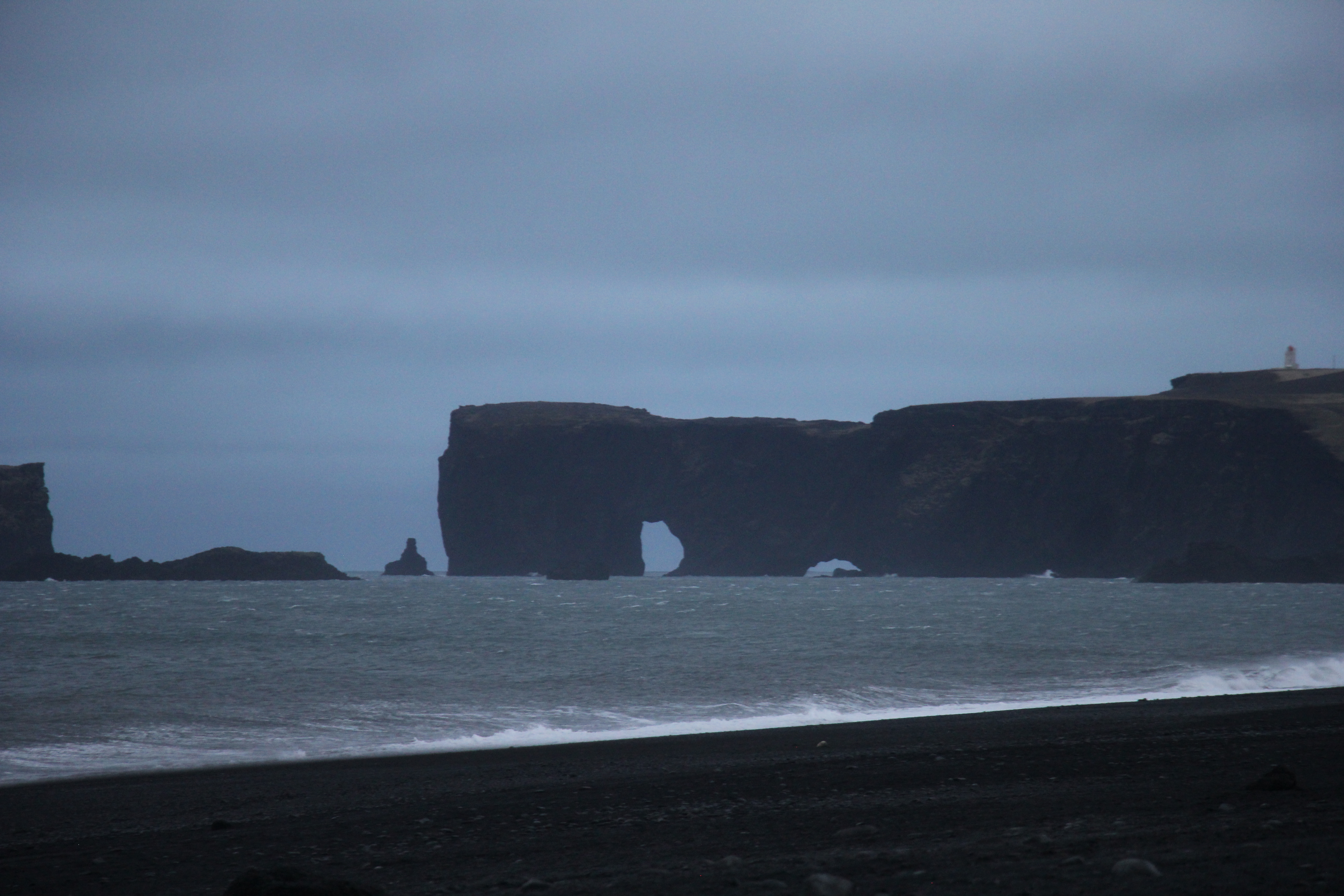
Dyrhólaey
Looking west from the beach we can see Dyrhólaey or Door Hill Island. The promenade, which is of volcanic origin, was once an island and joined up with the mainland. The massive 120m high rock arch or ‘door hole’ is the result of centuries of erosion.
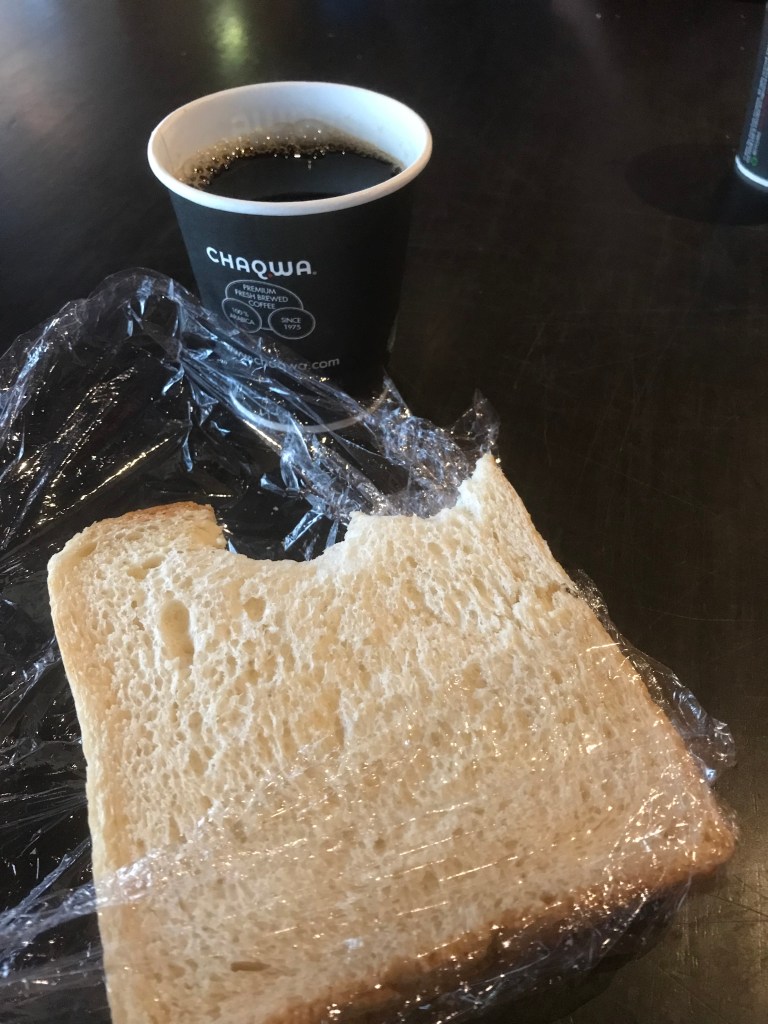
Christmas lunch at Vik
Whilst Icelanders celebrate Christmas with a festive dinner on the eve of 24th December most people still enjoy a late family dinner on Christmas Day. According to a recent survey in Iceland, the majority of people will eat smoked lamb (Hangikjöt). It is served cold, like ham, with béchamel sauce, potatoes, processed peas and sometimes red cabbage. It is also a popular lunchtime meal, served on either rye or flat bread. Unfortunately our Christmas lunch was a pawn sandwich with all the trimmings – mayo!
Culinary note
Hangikjöt, traditional Icelandic smoked lamb, is still made over a fire fuelled by sheep dung. Early explorers and settlers quickly depleted the island’s birch and willow trees. Realising that this was not a sustainable resource the settlers used sheep dung as a fuel. Before smoking, the lamb is either dry salted or brined for 10-12 days. After this, the salt-cured meat is allowed to dry for up to 12 hours before being hung in a smokehouse. Some smokehouses use a combination of birch and sheep dung to smoke the meat over 14 days. After smoking the lamb is boiled and served cold.
From Vik we head to the waterfalls of Skógafoss and Seljalandsfos.
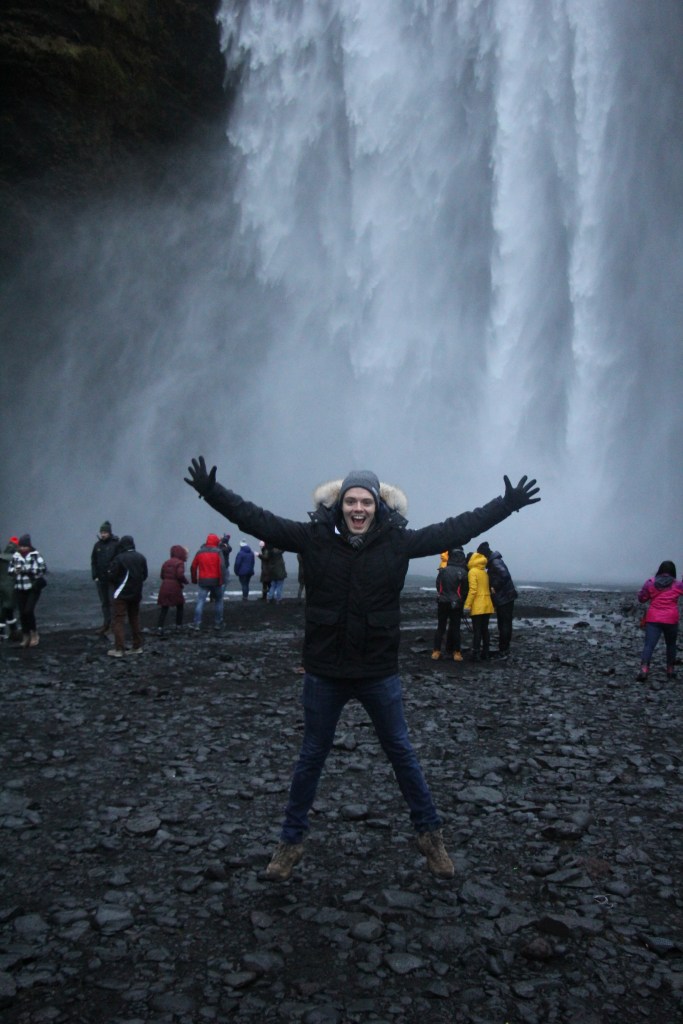
Skógarfoss
The next stop on our journey is Skógar, or rather the waterfall, Skógafoss, just outside the village from which it takes its name. Even from a distance the Skógafoss is impressive. At 15m wide and with a drop of 60m it is one of the largest waterfalls in the country. The spray from the waterfall can be felt from quite a distance away and on a sunny day a single or double rainbow can be seen. Unfortunately it wasn’t sunny when we were there. However there is a legend about a chest of gold…we never found that either!
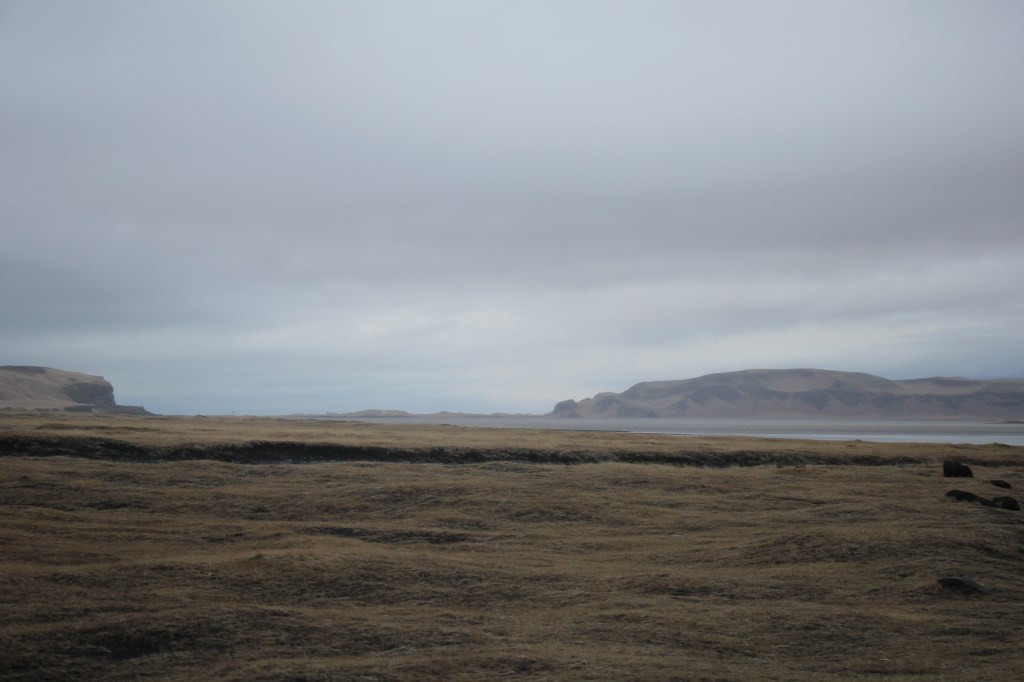
On the road to Skógarfoss (1)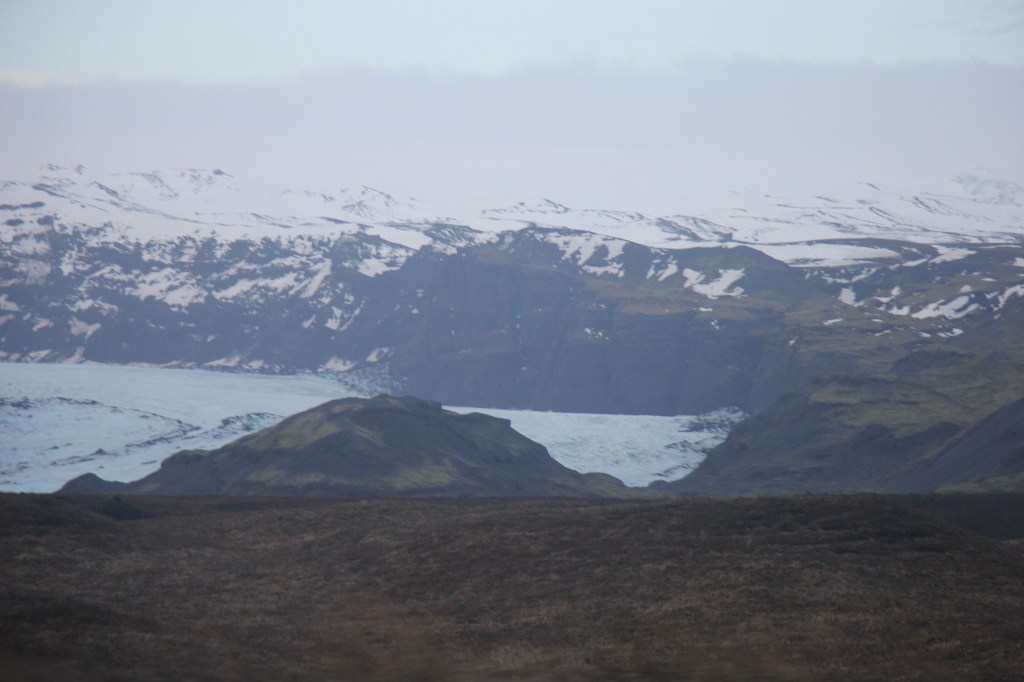
On the road to Skógarfoss (2)
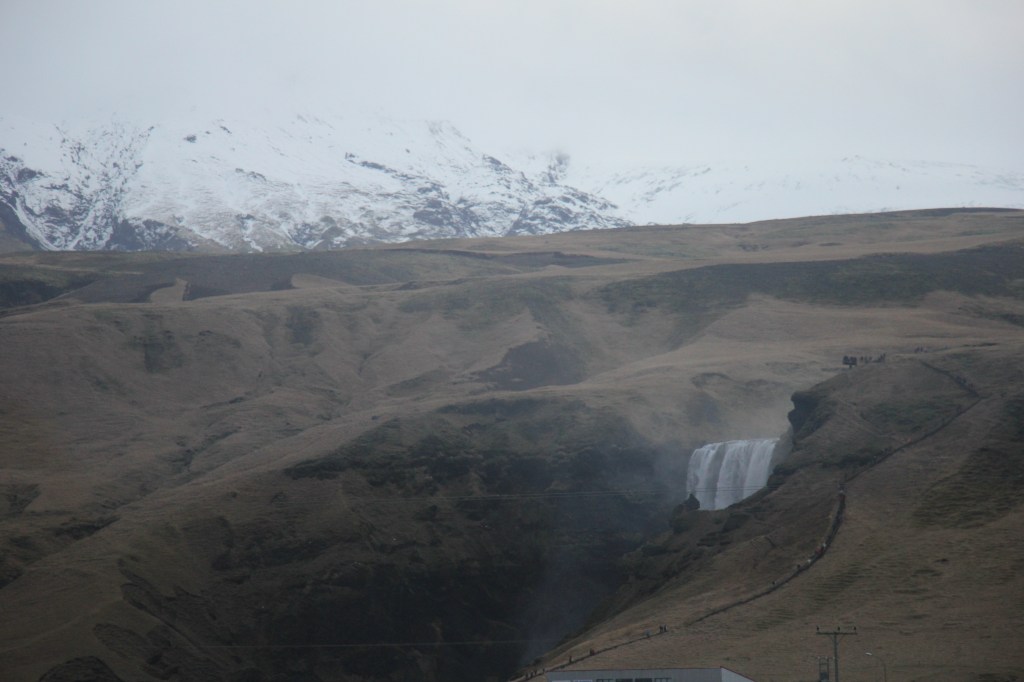
Approaching Skógarfoss 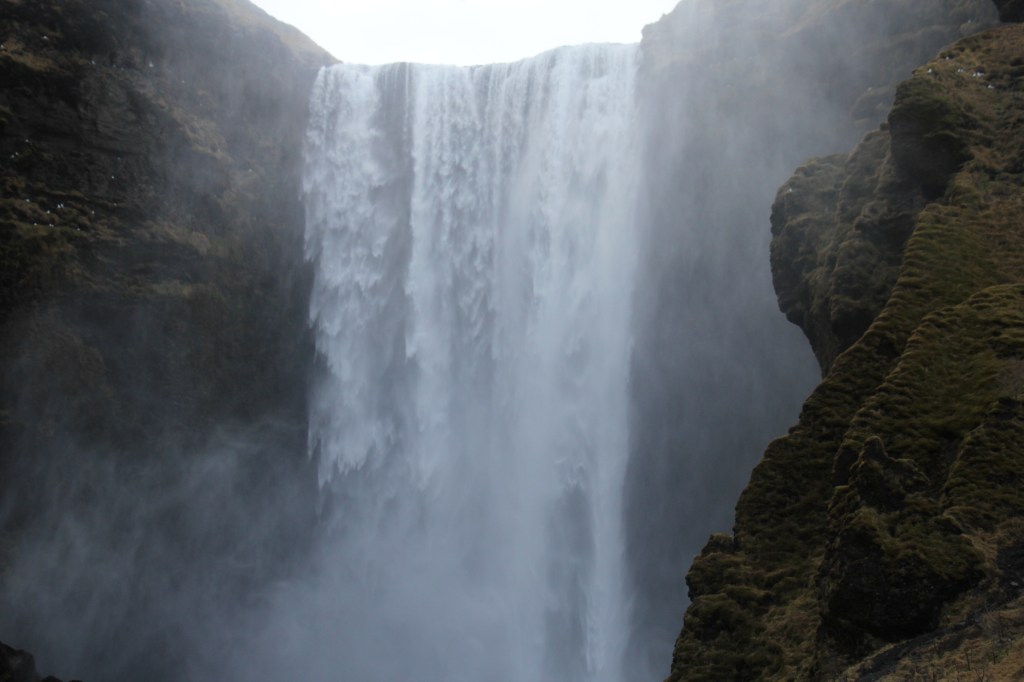
Skógarfoss
Return of the ring
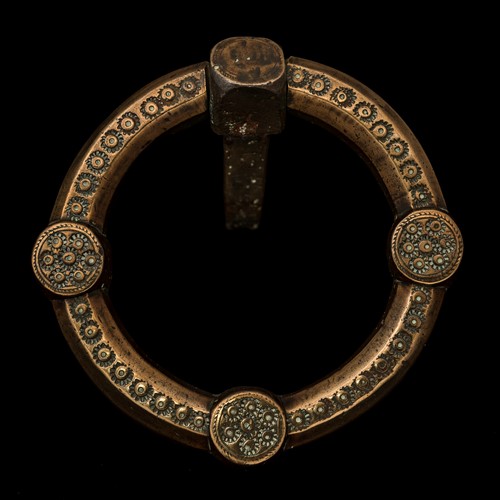
According to legend, the first Viking settler in the area, Þrasi Þórólfsson, was a warrior endowed with supernatural powers. He was the first settler in Skógar and became a wealthy man. When he felt death approaching he filled a chest with his gold and treasure and threw it into the deep pool beneath the waterfall. The legend continues that when locals found the chest years later, they were only able to grasp the ring on the side of the chest before it fell back into the water. The ring was taken back to Skógar where it was eventually fitted on the door of the church until it was deconsecrated and demolished in 1890. The ring found its way to Eyvindarhólar where it was fitted to the church door. When that church was demolished and replaced in 1960 the ring was returned Skógar and is now displayed in the Skógar Folk Museum. With the next waterfall beckoning our tour schedule didn’t permit time for a visit to the Skogar Folk Museum where ring is on display.
Skógar Museum – A trinity of museums
Skógar museum contains over 15,000 regional folk craft artifacts exhibited in 3 museums: Folk Museum, Technical Museum, Open Air Museum and 6 historical buildings.
Seljaland
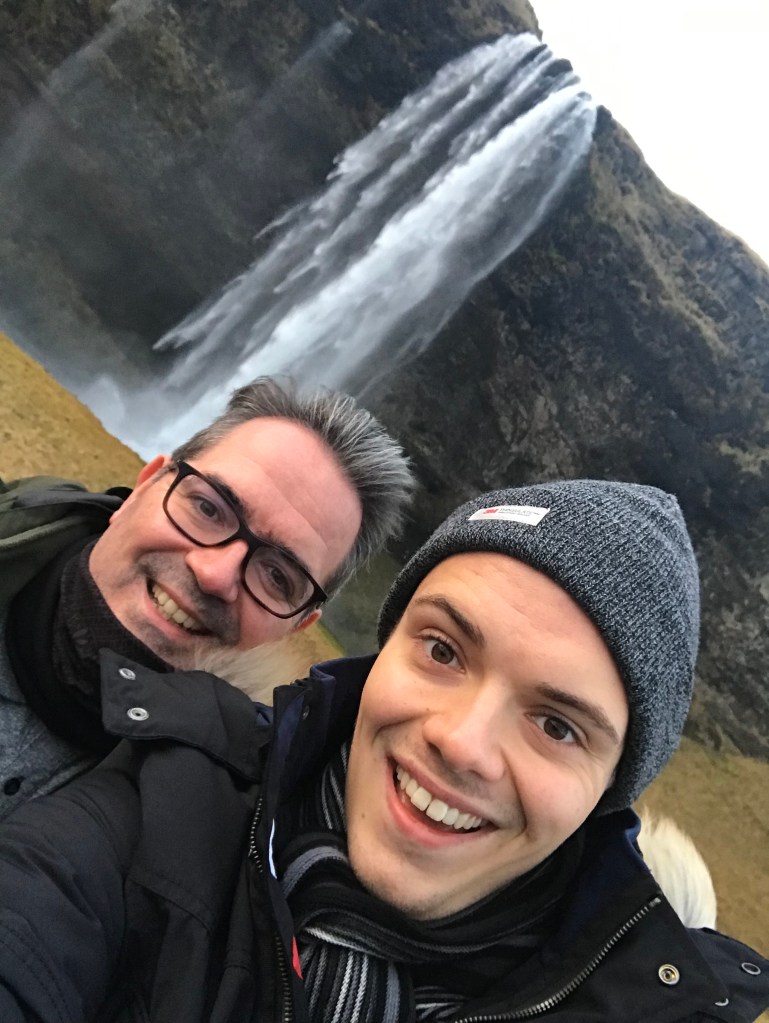
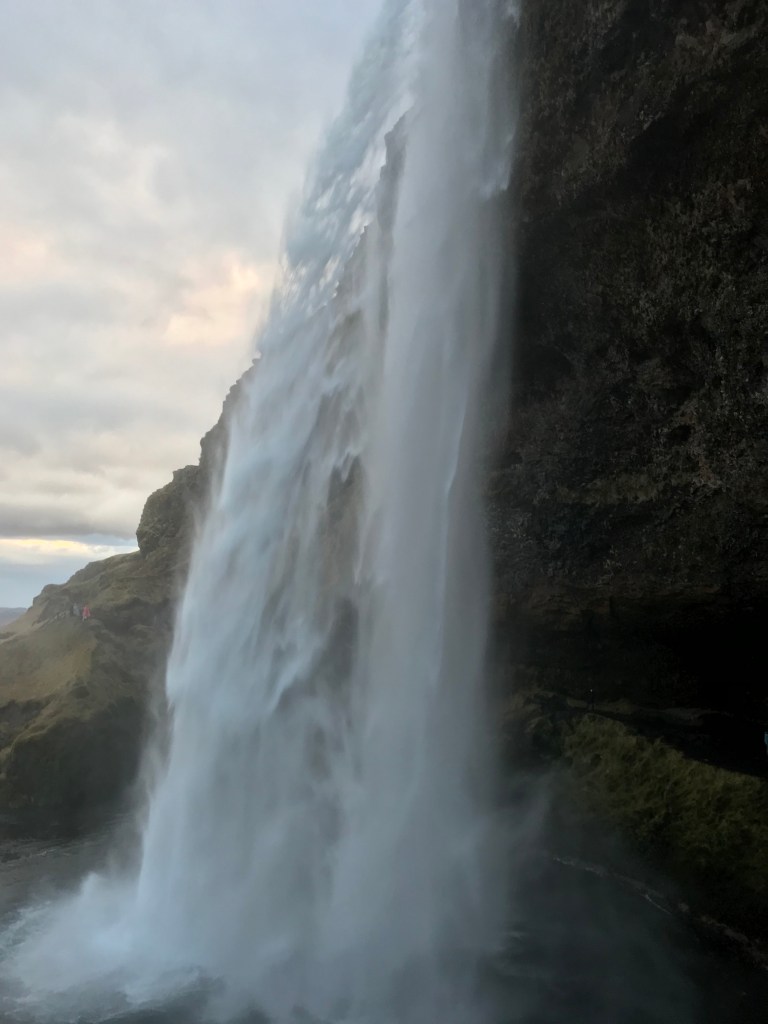
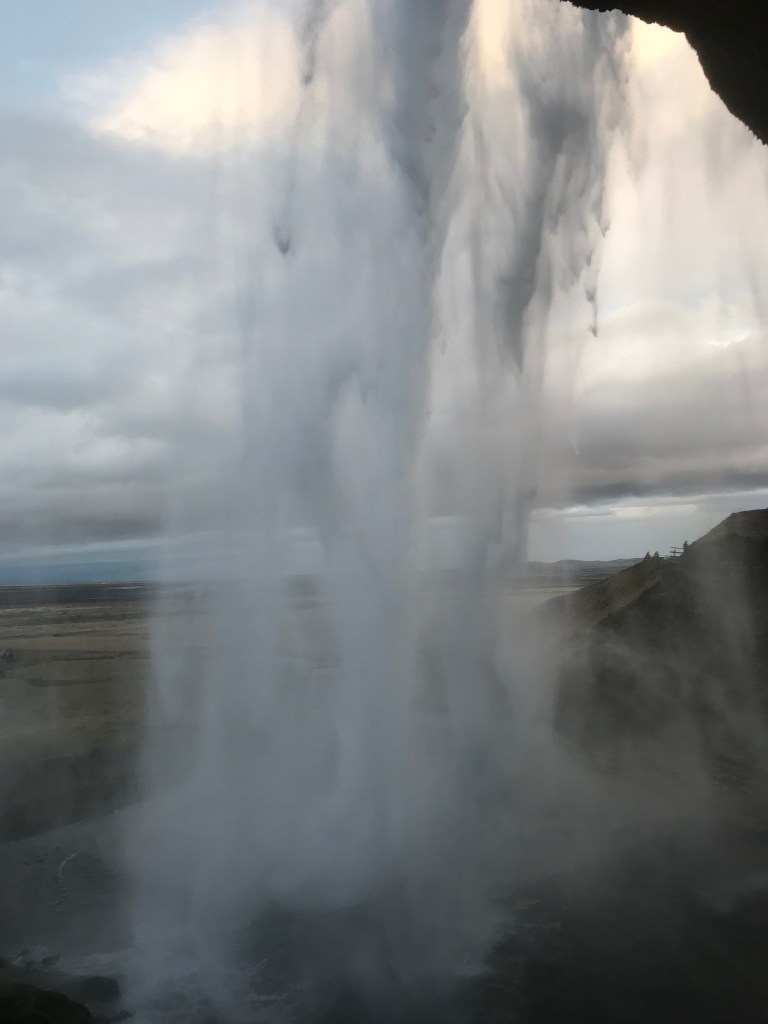
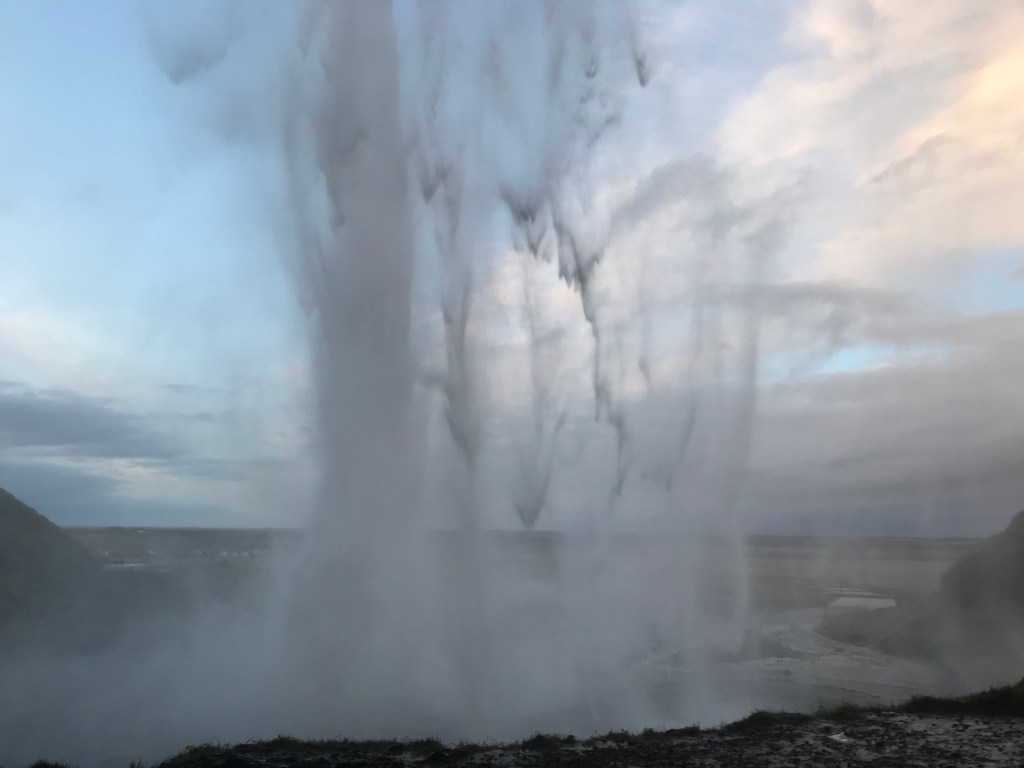
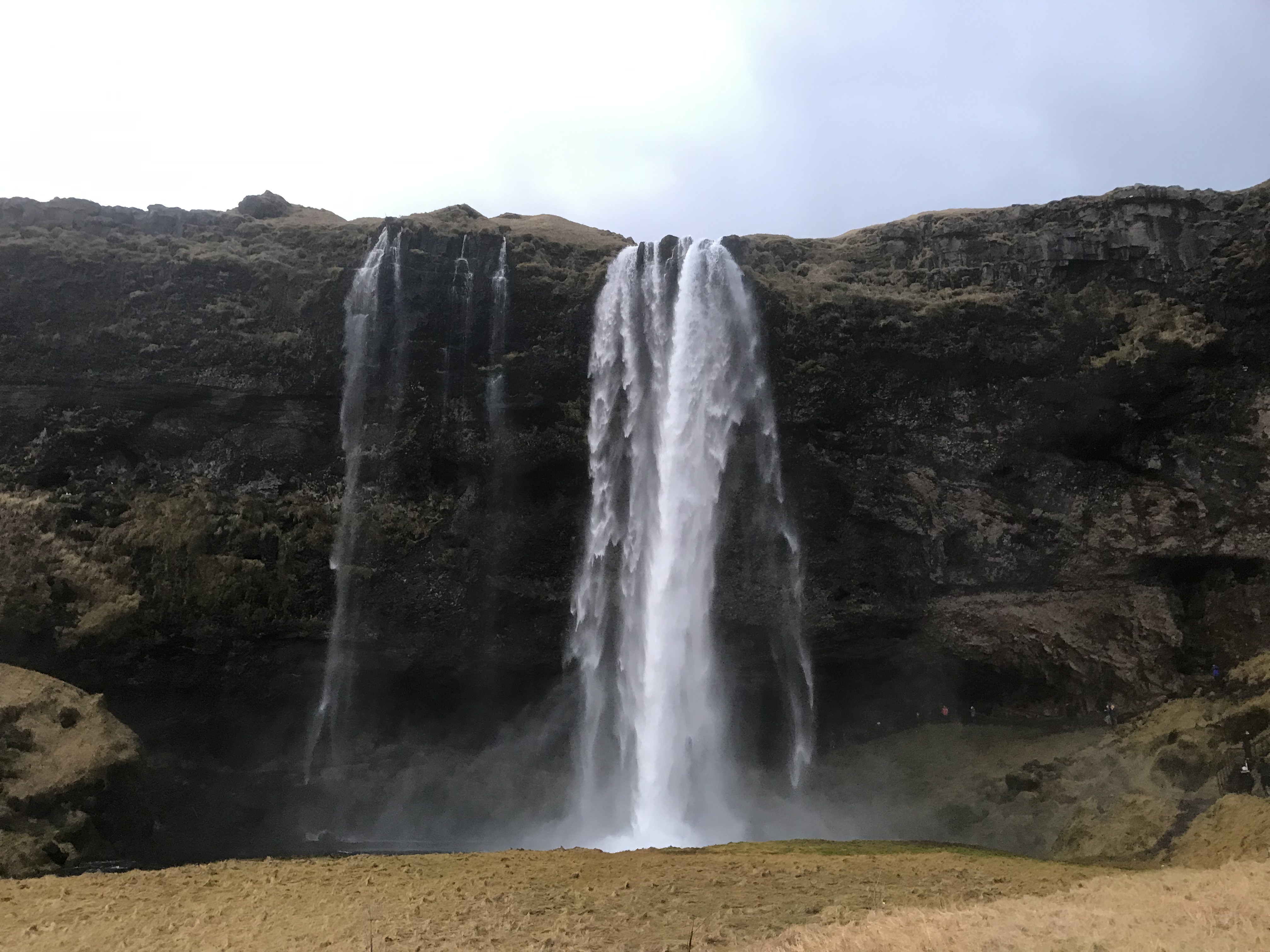
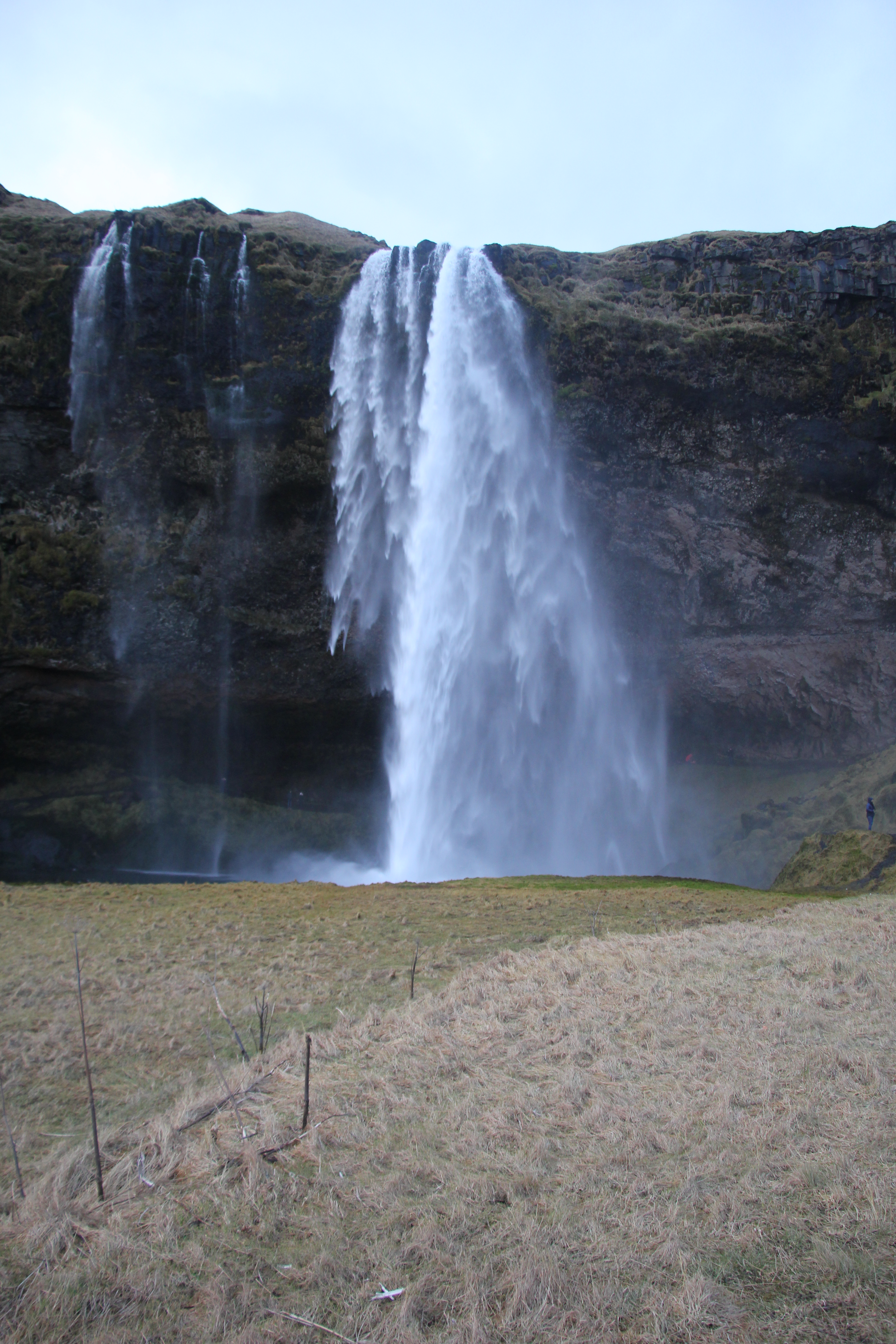
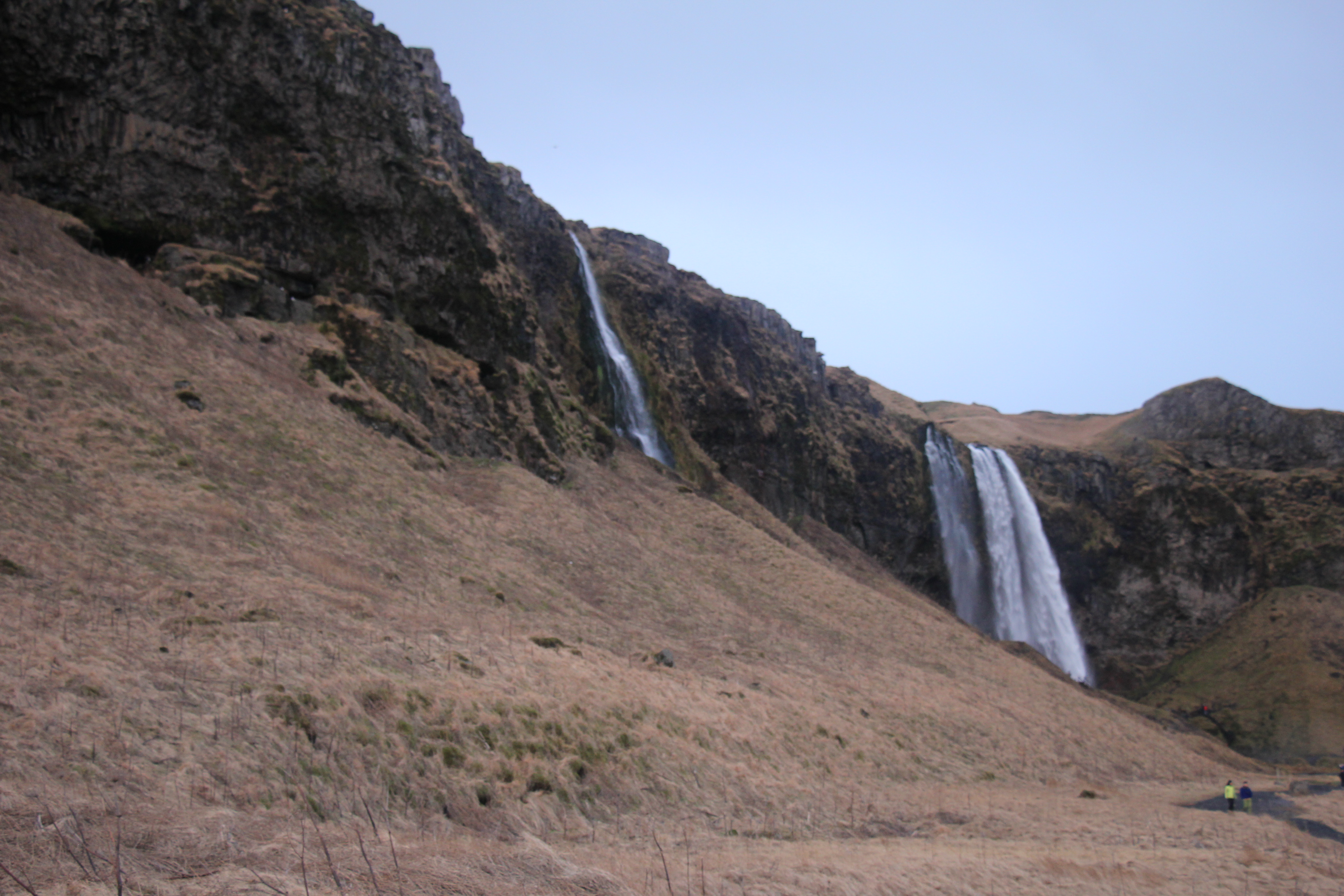
Our final stop of the day was the waterfall Seljalandsfoss at Seljaland. The waterfall has an impressive 60m drop and is fed by the Seljalandsá, river which flows from the volcano glacier Eyjafjallajökull. One of the attractions of Seljalandfoss is that you can actually climb up the cliff face and walk in a wide cavern behind the waterfall. After the short climb standing behind a cascading curtain of water is breath taking, and more than refreshing when the wind blows the water back into the cave.
Christmas dinner in The Sky
After a day travelling along the Southern shore Josh and I return to the Arnhovel to meet up with Sue and Gracie who had spent the morning at the Blue Lagoon. We celebrated Christmas with a glass of prosecco in our room followed by dinner in the Sky restaurant in the hotel. Our choices included cauliflower soup with truffle oil and a trio of fish to start. This was followed by a nut roast for Josh; cod with langoustine for Grace; and lamb with berries for Sue and I. We all finished dinner with a slice of caramel cheesecake.
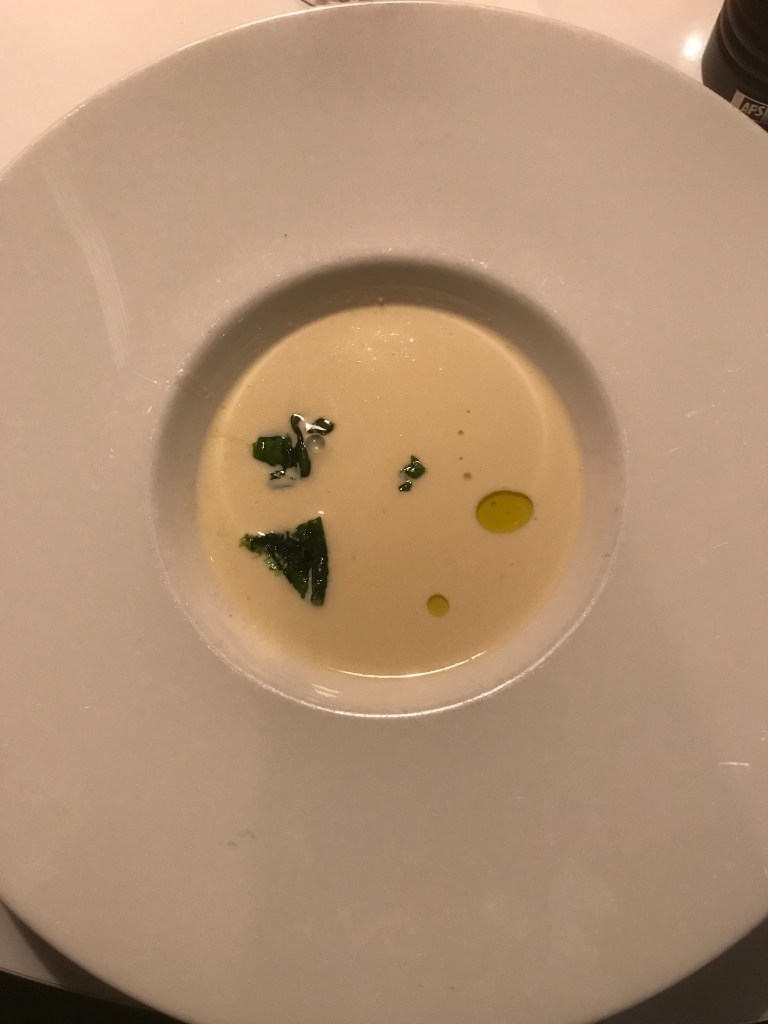
Cauliflower soup 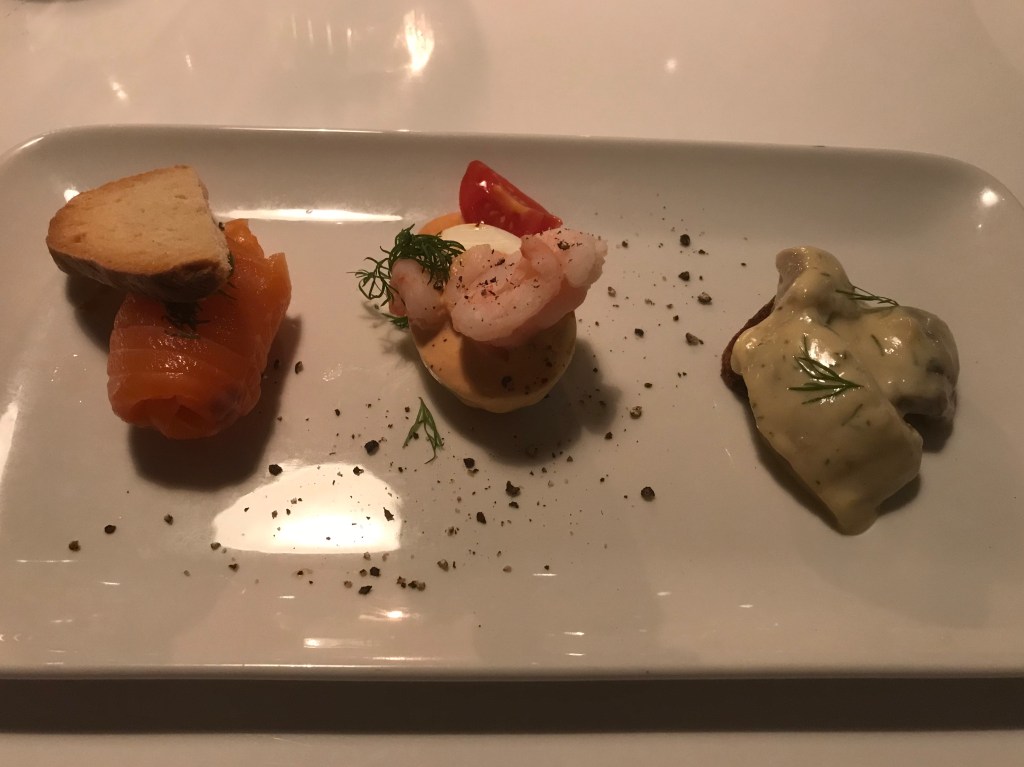
Trio of fish 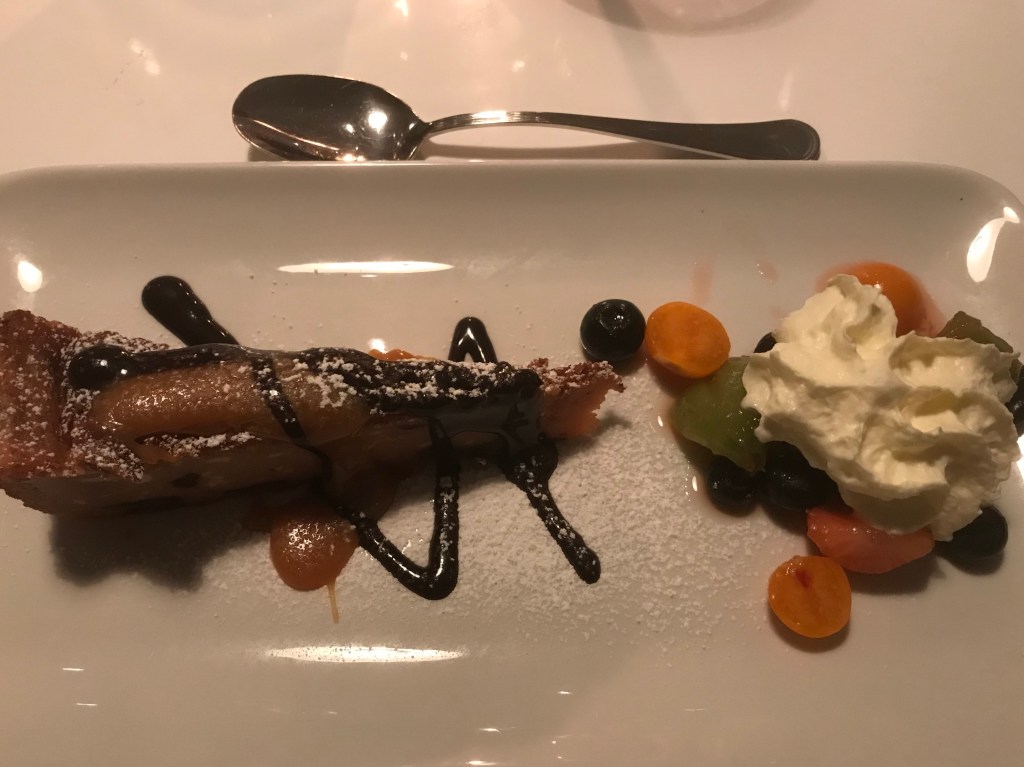
Caramel cheesecake 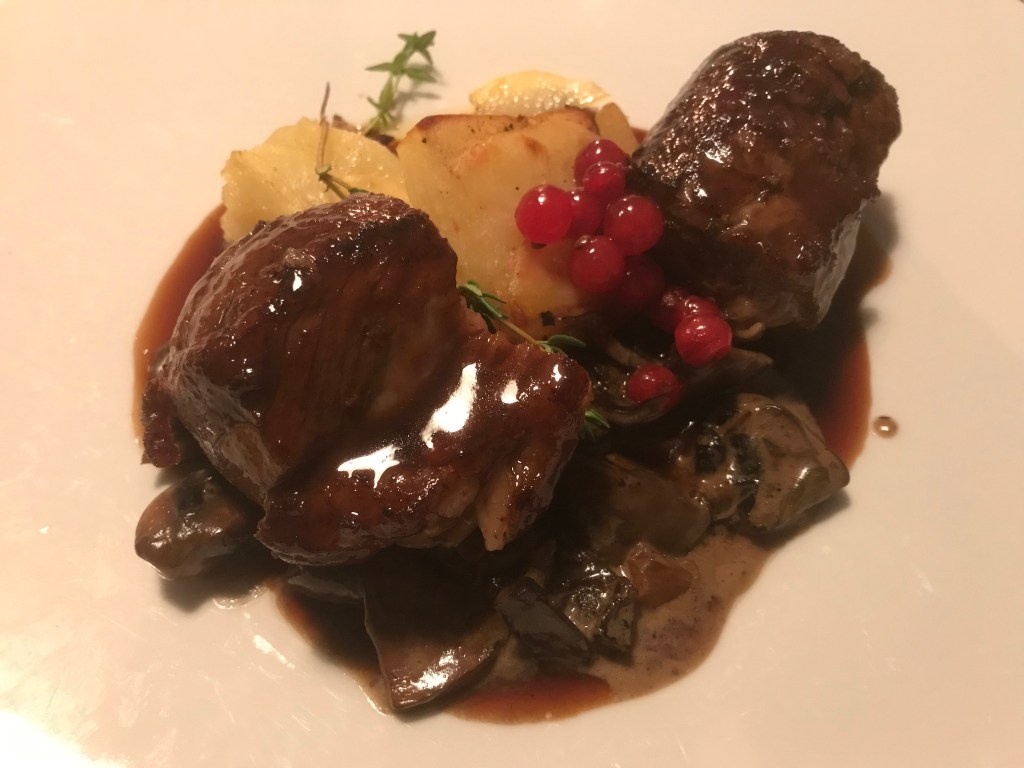
Lamb with berries
Wednesday 26 December – Bless Ísland!
Early Risings
An early departure meant that we only had time for a quick breakfast before checking out of the Centerhotel Arnarhvoll. As we waited at the bus stop opposite the hotel, the lights on the glass façade of the Harpa concert hall looked all the more vibrant against the dark morning sky. We hear the water lapping along the shoreline and can see white spume as the waves break against the rocks. All too soon we board the bus and are enroute to Keflavik airport for the short flight home.
Bless Ísland
Check in at Keflavik airport was speedy, despite the baggage belt breaking, and we were in the departure lounge almost within minutes of arriving. Once on board we had a short delay before pushing back and taxiing along the runway as we head home. And so we say: ‘Bless Ísland’ and ‘bye bye Puffins!’

Vikings return – End of the saga
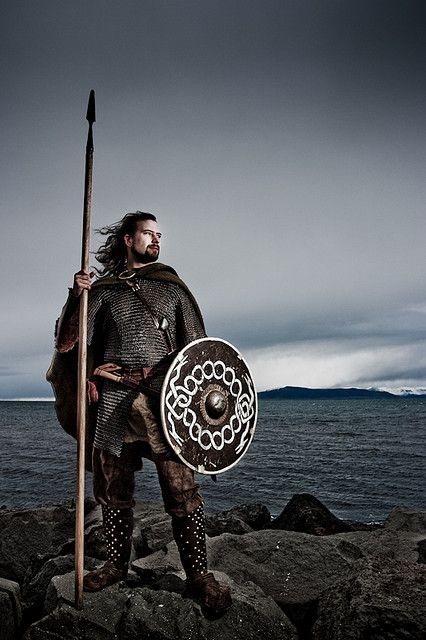
(Viking 1 – Hrund Thorsdottir 2009)
Just under three hours after taking off from Reyjakavik we land safely at Gatwick airport with not a drone in the sky. There are no queues at immigration and we pass through the automatic barriers swiftly. Shortly afterwards we’re heading home in the comfort of a Mercedes AMG. Listening to the mix on Chill radio music from Múm, Bjork, Sigur Rós and Slowblow I’m transported back to the land of fire and ice. With so much more to see I’m sure we’ll return to Iceland in the not too distant future.
Icelandic proverbs
During our short sojourn we learned many Icelandic proverbs, idioms and sayings, most of them shared by our tour guide, ‘Raven’ who escorted us on both the Golden Circle and South Shore tours. Some of our favourites are listed below.
Árinni kennir illur ræðari. A bad rower blames his oars.
Ofleyfingjarnir bregðask mér mest. Those who get praised most loudly, disappoint me the most.
Fullur veit eigi hvar svangur situr. The satisfied do not know where the hungry sit.
Það er rúsínan í pylsuendanum. The raisin at the end of the hot dog – A nice surprise.
Ég kem alveg af fjöllum. I come totally from the mountains – I have no idea what’s going on.
Leggja Höfuðið í Bleyti. To lay your head in water – To do your best thinking.
Ég tók hann í bakaríið. I took him to the bakery – I kicked his ass.
Áfram með smjörið . On with the butter – Get to the point.
Ég mun finna þig í fjöru. I’ll find you on the beach – I will get back at you.
Ég skal sýna þér í tvo heimana. I will show you the two worlds – A threat.
 Hudsons Travel